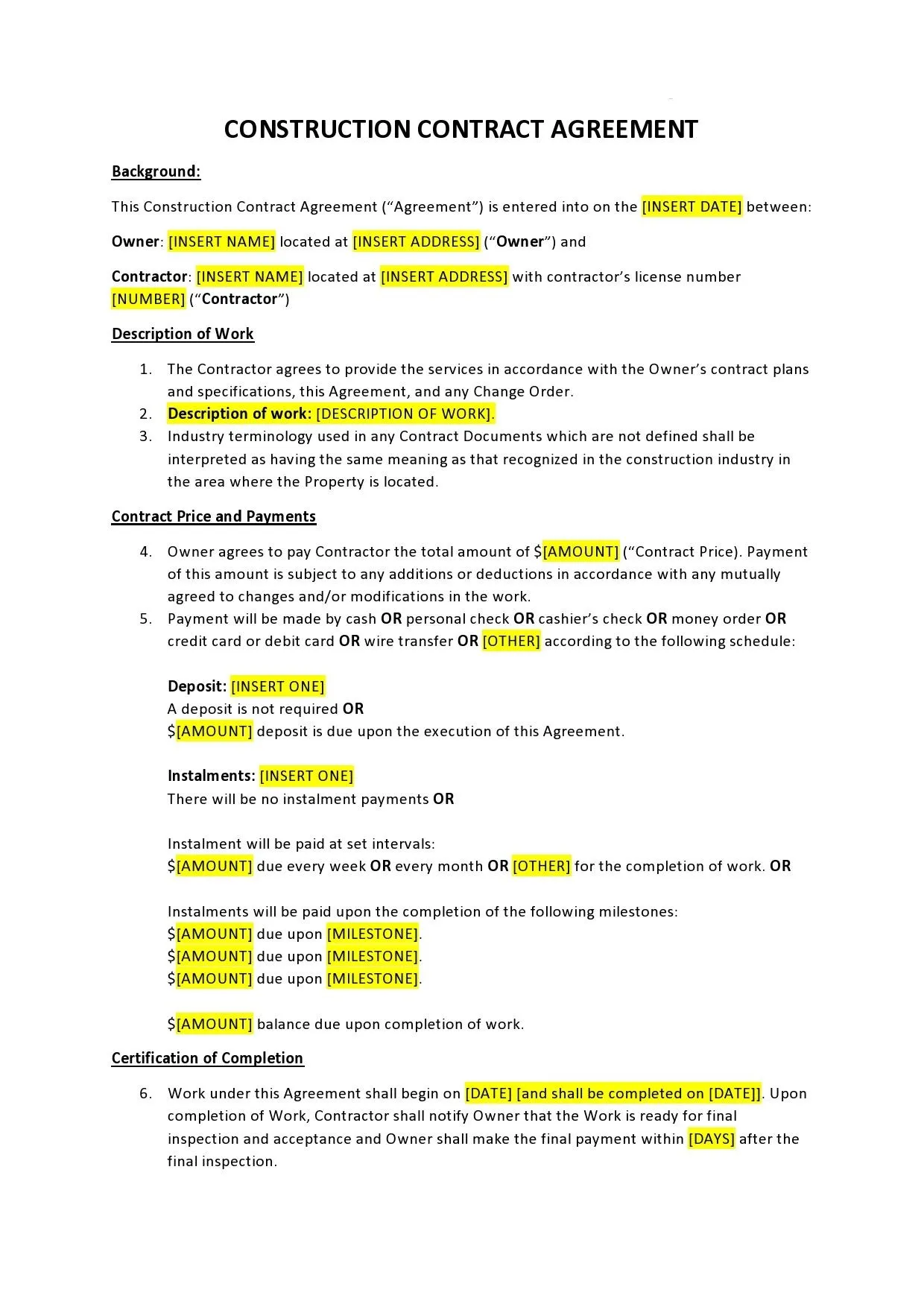
What is a Construction Agreement?
A construction agreement, also known as a construction contract, is a legally binding document that outlines the terms and conditions of a construction project. It serves as a roadmap for the project, clearly defining the scope of work, timeline, cost, responsibilities, quality standards, and payment terms.
This document is essential for protecting the interests of both the property owner and the contractor throughout the construction process.
Why is a Construction Agreement Important?
A construction agreement is important for several reasons, all of which contribute to the successful completion of a construction project. Without a construction agreement in place, both the property owner and the contractor are at risk of facing various challenges and uncertainties throughout the project.
Risk Management
One of the main reasons why a construction agreement is important is that it helps to manage risks associated with the project. By clearly outlining the scope of work, timeline, cost, and responsibilities, the agreement reduces the likelihood of unexpected issues arising during the construction process. This risk management is essential for ensuring that the project stays on track and within budget.
Clarity and Understanding
Clarity and understanding are key components of a successful construction project. A construction agreement provides clarity by clearly defining the terms and conditions of the project. This clarity helps to prevent misunderstandings between the property owner and the contractor and ensures that everyone involved is on the same page throughout the project.
Protection of Interests
Both the property owner and the contractor have specific interests that they want to protect during a construction project. A construction agreement helps to protect these interests by clearly outlining the rights and responsibilities of each party. This protection ensures that both parties are treated fairly and that their interests are safeguarded throughout the project.
Legal Compliance
Construction projects are subject to various laws and regulations that must be followed to ensure compliance. A construction agreement helps to ensure legal compliance by detailing the requirements that must be met during the project. This legal framework provides guidance and structure for the project, reducing the risk of legal disputes or issues arising.
Key Elements of a Construction Agreement
Scope of Work
The scope of work is a critical component of a construction agreement. This section outlines the specific tasks and activities that need to be completed as part of the project. It includes details such as the type of work to be done, materials to be used, and any specific requirements that must be met. The scope of work sets the foundation for the project and provides a clear roadmap for the contractor to follow.
Timeline
The timeline section of a construction agreement establishes the schedule for the project. It includes important dates such as the start and end dates of the project, as well as any milestones or deadlines that need to be met along the way. A realistic and well-defined timeline helps to ensure that the project stays on track and is completed promptly.
Cost
The cost section of a construction agreement outlines the financial aspects of the project. This includes the total cost of the project, as well as any payment terms that need to be followed. Details such as deposit amounts, progress payments, and final payment terms are typically included in this section. A clear understanding of the cost ensures that both parties are in agreement and helps to prevent disputes related to payment.
Responsibilities
The responsibilities section of a construction agreement defines the roles and responsibilities of both the property owner and the contractor. It outlines who is responsible for what tasks, as well as any specific requirements that need to be met. By clearly defining responsibilities, the agreement helps to ensure that everyone knows what is expected of them throughout the project.
Quality Standards
Quality standards are an essential part of any construction project. The quality standards section of a construction agreement sets out the level of quality that must be achieved in the work. This includes standards for materials, workmanship, and construction methods. By establishing clear quality standards, the agreement helps to ensure that the project meets the desired level of quality.
Payment Terms
The payment terms section of a construction agreement details how and when payments will be made for the project. This includes information such as deposit amounts, progress payments, and final payment terms. By clearly outlining the payment terms, the agreement helps to prevent payment disputes and ensures that both parties are aware of their financial obligations.
How to Create a Construction Agreement
Consultation
The first step in creating a construction agreement is to consult with the contractor. This involves discussing the scope of work, timeline, cost, and other important project details. During this consultation, both parties can clarify any questions or concerns they may have and ensure that they are on the same page regarding the project.
Drafting
After the initial consultation, the next step is to draft the construction agreement. This involves putting together a detailed document that outlines all the terms and conditions of the project. The agreement should be clear, concise, and easy to understand for both parties. It should include all relevant information, such as the scope of work, timeline, cost, responsibilities, quality standards, and payment terms.
Review
Once the construction agreement has been drafted, it is important to review it with the contractor. This review allows both parties to ensure that they are in agreement with the terms and conditions outlined in the document. Any discrepancies or misunderstandings can be addressed and resolved during this review process to prevent issues later on in the project.
Signing
After the construction agreement has been reviewed and finalized, both parties must sign the document to make it legally binding. Signing the agreement indicates that both the property owner and the contractor agree to the terms and conditions outlined in the document. It is important to keep a copy of the signed agreement for reference throughout the project.
Retention
Once the construction agreement has been signed, it is important to retain a copy for reference throughout the project. The agreement serves as a roadmap for the project and should be consulted regularly to ensure that all terms and conditions are being met. If any issues or disputes arise during the project, the agreement can be used as a reference point to help resolve them.
Tips for a Successful Construction Agreement
Be Specific
When creating a construction agreement, it is important to be as specific as possible. Include detailed descriptions of the scope of work, timeline, cost, responsibilities, quality standards, and payment terms to avoid misunderstandings. The more specific the agreement is, the less room there is for interpretation or disputes later on in the project.
Communicate Effectively
Effective communication is key to a successful construction agreement. Maintain open communication with the contractor throughout the project to address any issues or changes that may arise. Clear and consistent communication helps to ensure that everyone is on the same page and working towards the same goals.
Document Everything
Keep thorough records of all communication, changes, and payments related to the project. Documenting everything that occurs during the construction process provides a clear record of events and helps to prevent misunderstandings or disputes. These records can be valuable in resolving any issues that may arise during the project.
Seek Legal Advice
Consider seeking legal advice when creating a construction agreement. A legal professional can review the agreement to ensure that it protects your interests and complies with all relevant laws and regulations. Legal guidance can help to prevent disputes and ensure that the agreement is legally enforceable in the event of a disagreement.
Review Regularly
Periodically review the construction agreement throughout the project to ensure that all terms and conditions are being met. Make updates as needed to reflect any changes or deviations from the original agreement. Regular reviews help to keep the project on track and minimize the riskof misunderstandings or disputes. By staying proactive and regularly reviewing the agreement, both parties can ensure that the project progresses smoothly and according to plan.
Consider Including Dispute Resolution Mechanisms
It can be beneficial to include dispute resolution mechanisms in the construction agreement. These mechanisms outline how any disputes or disagreements will be resolved during the project. By establishing a clear process for resolving disputes, both parties can avoid costly legal battles and work towards a fair and efficient resolution of any issues that may arise.
Plan for Changes and Amendments
Construction projects often involve changes or amendments to the original plans. It is important to include provisions in the construction agreement that address how changes will be handled. This can include procedures for requesting changes, approving changes, and adjusting the timeline or cost of the project accordingly. Planning for changes in advance helps to prevent misunderstandings and ensures that the project can adapt to evolving circumstances.
Ensure Compliance with Building Codes and Regulations
Compliance with building codes and regulations is essential in any construction project. The construction agreement should include provisions that ensure compliance with all relevant laws and regulations. This can include obtaining necessary permits, following safety guidelines, and meeting quality standards set forth by regulatory bodies. By incorporating compliance requirements into the agreement, both parties can ensure that the project meets all legal requirements and stays on the right side of the law.
Establish Clear Lines of Communication
Effective communication is crucial in any construction project. The construction agreement should establish clear lines of communication between the property owner and the contractor. This can include designating a project manager or point of contact for each party, setting up regular progress meetings, and outlining how information will be shared throughout the project. Clear communication helps to prevent misunderstandings and ensures that everyone is informed and engaged in the construction process.
Include Insurance and Liability Provisions
Insurance and liability provisions are important components of a construction agreement. These provisions outline the insurance coverage required for the project, as well as the liability of each party in the event of accidents or damages. By including insurance and liability provisions in the agreement, both parties can protect themselves from unforeseen events and ensure that they are adequately covered throughout the project.
Review and Negotiate Terms Carefully
Before signing a construction agreement, it is essential to review and negotiate the terms carefully. Take the time to understand all aspects of the agreement and ensure that it aligns with your expectations and requirements for the project. If there are any terms that are unclear or concerning, discuss them with the contractor and make any necessary revisions before finalizing the agreement.
Engage in Ongoing Project Management
Even after the construction agreement is in place, ongoing project management is essential for a successful project. Stay actively involved in the project by monitoring progress, addressing any issues that arise, and making decisions as needed. By actively managing the project, you can ensure that it stays on track and meets your expectations for quality, timeline, and cost.
Seek Feedback and Learn from Each Project
After the completion of a construction project, seek feedback from all parties involved to learn from the experience. Reflect on what went well and what could be improved for future projects. By seeking feedback and continuously learning from each project, you can refine your approach to construction agreements and ensure that future projects are even more successful.
Continuously Improve Your Construction Agreement
As you gain more experience with construction agreements, continuously improve and refine your approach. Incorporate lessons learned from previous projects, seek feedback from industry professionals, and stay updated on best practices in construction contracting. By continuously improving your construction agreement, you can enhance the success of your projects and build stronger relationships with contractors and clients.
In Conclusion
A construction agreement is a vital document that serves as a roadmap for a construction project, protecting both the property owner and the contractor by clearly defining the terms and conditions of the project. By including key elements such as the scope of work, timeline, cost, responsibilities, quality standards, and payment terms, a construction agreement helps to prevent disputes and ensure that the project is completed successfully. Follow the tips outlined in this article to create a successful construction agreement and enjoy a smooth construction process.
Construction Agreement Template – DOWNLOAD
