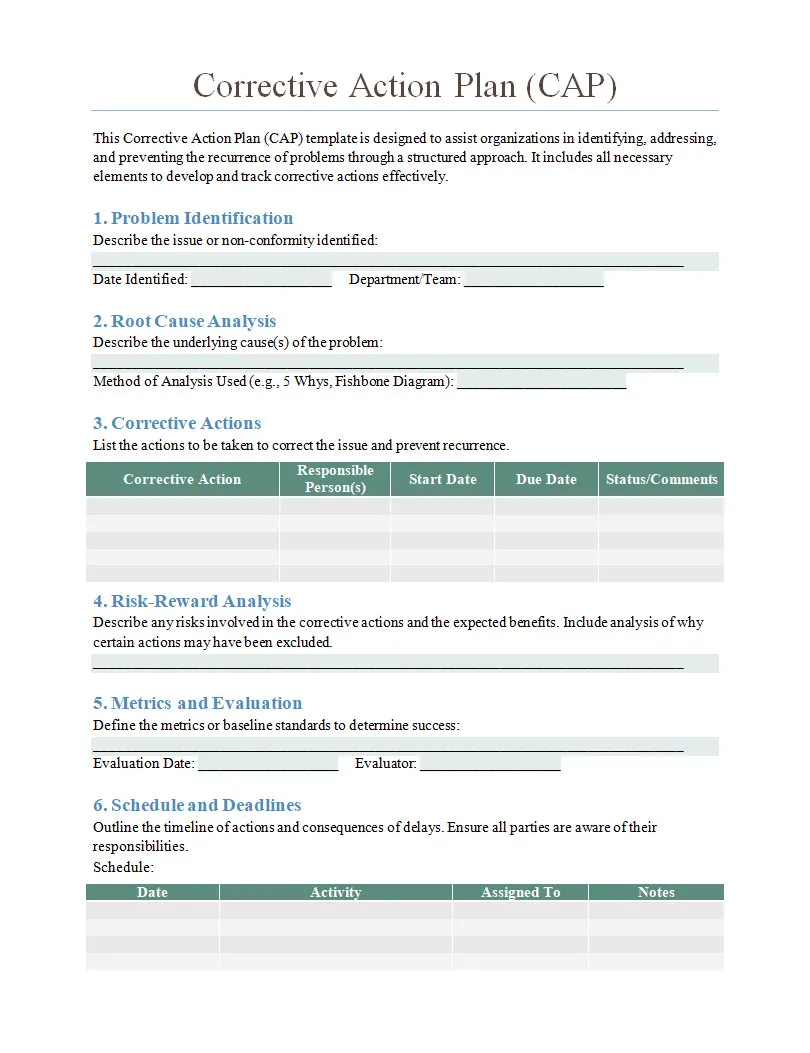
In the world of business and operations management, issues and problems are inevitable. Whether it’s a quality control concern, a safety hazard, or a compliance issue, organizations must have a structured approach to address and resolve these issues effectively. This is where a corrective action plan comes into play.
A corrective action plan is a proactive measure that aims to identify problems, analyze their root causes, and implement solutions to return operations to acceptable standards and prevent recurrence.
What is a Corrective Action Plan?
A corrective action plan is a systematic process that organizations use to address issues and improve processes. It involves identifying problems, analyzing their root causes, and implementing solutions to prevent recurrence.
Corrective action plans are essential for maintaining operational excellence and ensuring compliance with regulations and standards.
Types of Corrective Action
Reduce Accident Risks
One of the key types of corrective action is to reduce accident risks in the workplace. This can involve implementing safety protocols, conducting regular safety training sessions, providing personal protective equipment, and maintaining a clean and organized work environment. By taking proactive measures to reduce accident risks, organizations can create a safer and healthier workplace for their employees.
Staff Training
Another important type of corrective action is staff training. By investing in continuous training and development for employees, organizations can ensure that their workforce is equipped with the necessary skills and knowledge to perform their roles effectively. Training programs can cover a wide range of topics, including technical skills, compliance requirements, customer service, and leadership development.
Improve Current Processes
Improving current processes is essential for enhancing operational efficiency and effectiveness. Organizations can conduct process audits, identify bottlenecks and inefficiencies, and implement process improvements to streamline workflow and maximize productivity. By continuously evaluating and improving processes, organizations can stay ahead of the competition and deliver better results to their customers.
Replace Equipment
Outdated or malfunctioning equipment can hinder operations and pose safety risks. Organizations should regularly assess their equipment inventory, identify equipment that needs to be replaced or upgraded, and invest in new, state-of-the-art equipment to improve performance and reliability. By replacing old equipment, organizations can avoid costly breakdowns and downtime, while also ensuring the safety of their employees.
Raise Awareness
Raising awareness among employees about various issues and best practices is a proactive way to prevent problems from occurring. Organizations can conduct awareness campaigns, provide training sessions, distribute informative materials, and promote a culture of open communication and transparency. By keeping employees informed and engaged, organizations can create a more proactive and vigilant workforce that is focused on preventing issues before they escalate.
Importance of Creating a Corrective Action Plan
Ensuring Compliance
One of the primary reasons why organizations create corrective action plans is to ensure compliance with laws, regulations, and industry standards. By addressing non-conformities and implementing corrective actions, organizations can demonstrate their commitment to meeting legal requirements and upholding ethical standards in their operations.
Improving Quality
Corrective action plans play a crucial role in improving the quality of products, services, and processes. By identifying and addressing root causes of quality issues, organizations can enhance customer satisfaction, reduce defects and errors, and increase overall product and service reliability. Quality improvements achieved through corrective action plans can lead to higher customer loyalty and repeat business.
Preventing Recurrence
One of the key objectives of a corrective action plan is to prevent the recurrence of identified issues. By thoroughly investigating root causes, implementing effective corrective actions, and monitoring progress, organizations can significantly reduce the likelihood of the same problem happening again in the future. Preventing recurrence helps organizations maintain operational continuity and avoid costly disruptions.
Fostering Continuous Improvement
Corrective action plans are essential for fostering a culture of continuous improvement within organizations. By encouraging employees to identify problems, propose solutions, and participate in the corrective action process, organizations can drive innovation, increase efficiency, and stay ahead of market trends. Continuous improvement through corrective action plans allows organizations to adapt to changing business environments and emerging challenges.
Building Trust with Stakeholders
Creating and implementing effective corrective action plans can help organizations build trust with stakeholders, including customers, partners, investors, and regulatory agencies. By demonstrating a commitment to addressing issues transparently and proactively, organizations can enhance their reputation, credibility, and long-term relationships with key stakeholders. Trust built through effective corrective action plans can lead to increased business opportunities and sustainable growth.
Elements of a Corrective Action Plan
Problem Identification
The first step in developing a corrective action plan is to identify the problem or issue that needs to be addressed. This involves conducting thorough investigations, gathering relevant data, and defining the scope and impact of the problem. Clear problem identification is essential for creating targeted and effective corrective actions.
Root Cause Analysis
Once the problem has been identified, organizations must conduct a root cause analysis to determine the underlying reasons for the issue. Root cause analysis involves identifying factors that contributed to the problem, analyzing potential causes, and pinpointing the primary cause or causes. Understanding the root causes is crucial for developing sustainable corrective actions that address the underlying issues.
Action Plan Development
After identifying the problem and conducting root cause analysis, organizations can develop an action plan to address the issue effectively. The action plan should include specific tasks, timelines, responsible parties, resources needed, and success criteria. Clear and actionable plans help ensure that corrective actions are implemented in a timely and efficient manner.
Implementation of Corrective Actions
Once the action plan has been developed, organizations must implement the corrective actions as outlined. This involves assigning tasks to responsible parties, providing necessary resources and support, communicating expectations clearly, and monitoring progress closely. Effective implementation of corrective actions is essential for achieving desired outcomes and preventing the recurrence of the problem.
Monitoring Progress
Throughout the implementation of corrective actions, organizations should monitor progress regularly to track the effectiveness of the actions taken. Monitoring progress involves measuring key performance indicators, comparing actual results to expected outcomes, identifying any deviations or obstacles, and making adjustments as needed. Continuous monitoring helps ensure that corrective actions stay on track and deliver the desired results.
Evaluating Effectiveness
Once the corrective actions have been implemented and sufficient time has passed, organizations should evaluate the effectiveness of the actions taken. This involves assessing whether the identified problem has been resolved, measuring the impact of the corrective actions on performance and quality, and gathering feedback from stakeholders. Evaluation helps organizations determine the success of the corrective action plan and identify areas for improvement.
Documenting the Process
Throughout the entire corrective action process, organizations should document each step taken, including problem identification, root cause analysis, action plan development, implementation of corrective actions, monitoring progress, and evaluation of effectiveness. Documentation helps organizations keep track of the process, communicate findings to stakeholders, and learn from past experiences. Detailed documentation also supports accountability, transparency, and continuous improvement efforts.
How to Write a Corrective Action Plan
Identify the Issue
The first step in writing a corrective action plan is to clearly identify the issue or problem that needs to be addressed. This may involve conducting internal audits, reviewing customer feedback, analyzing performance data, or responding to regulatory requirements. Effective problem identification is essential for creating targeted and actionable corrective actions.
Conduct Root Cause Analysis
Once the issue has been identified, organizations should conduct a root cause analysis to determine the underlying reasons for the problem. Root cause analysis helps organizations understand the factors that contributed to the issue, identify patterns or trends, and uncover systemic issues that may be impacting performance. Thorough root cause analysis is critical for developing effective corrective actions.
Develop an Action Plan
Based on the findings from problem identification and root cause analysis, organizations should develop a detailed action plan that outlines specific steps to address the issue. The action plan should include clear objectives, measurable goals, assigned responsibilities, deadlines, resource requirements, and success criteria. A well-developed action plan provides a roadmap for implementing corrective actions effectively.
Implement Corrective Actions
With the action plan in place, organizations can begin implementing the corrective actions as outlined. This may involve assigning tasks to responsible parties, providing necessary training or resources, communicating expectations clearly, and monitoring progress closely. Effective implementation of corrective actions is essential for achieving desired outcomes and resolving the identified issue.
Monitor Progress
Throughout the implementation of corrective actions, organizations should monitor progress regularly to track the effectiveness of the actions taken. Monitoring progress involves collecting and analyzing data, measuring performance against established metrics,
Identifying Deviations
Monitoring progress also involves identifying any deviations or obstacles that may arise during the implementation of corrective actions. Organizations should be vigilant in recognizing signs of potential issues, such as missed deadlines, budget overruns, lack of resources, or resistance from stakeholders. By identifying deviations early, organizations can take corrective measures to keep the corrective action plan on track.
Adjust as Needed
As organizations monitor progress and identify deviations, they should be prepared to make adjustments to the corrective action plan as needed. This may involve reallocating resources, revising timelines, reassigning tasks, or modifying the action plan to address emerging challenges. Flexibility and adaptability are key to ensuring that corrective actions remain effective and aligned with the organization’s goals.
Evaluate Effectiveness
Once the corrective actions have been fully implemented and sufficient time has passed, organizations should evaluate the effectiveness of the actions taken. This involves assessing whether the identified issue has been resolved, measuring the impact of corrective actions on performance indicators, and gathering feedback from stakeholders. Evaluation helps organizations determine the success of the corrective action plan and identify areas for improvement.
Learn from the Process
Throughout the entire corrective action process, organizations should take the opportunity to learn from their experiences and apply insights to future initiatives. By reflecting on the effectiveness of the corrective action plan, identifying best practices, and documenting lessons learned, organizations can improve their approach to problem-solving, decision-making, and continuous improvement. Learning from the process ensures that organizations build on their successes and avoid repeating past mistakes.
Continuous Improvement Culture
Creating and implementing effective corrective action plans is a reflection of an organization’s commitment to continuous improvement. By fostering a culture of continuous improvement, organizations encourage employees to proactively identify issues, propose solutions, and participate in problem-solving processes. A continuous improvement culture promotes innovation, efficiency, and excellence across all levels of the organization, driving long-term success and sustainability.
How Do Corrective Action Plans Support ISO Certification?
Meeting ISO Standards
Corrective action plans are essential for organizations seeking ISO certification as they help ensure compliance with ISO standards and requirements. By implementing corrective actions to address non-conformities and improve processes, organizations demonstrate their commitment to quality management and continuous improvement, which are fundamental principles of ISO certification. Corrective action plans play a crucial role in helping organizations meet the rigorous standards set by ISO.
Improving Quality Management
Corrective action plans support ISO certification by enhancing quality management practices within organizations. By identifying and addressing quality issues, organizations can improve product and service quality, increase customer satisfaction, and meet ISO requirements for quality management systems. Effective corrective action plans help organizations establish a culture of quality excellence and drive continuous improvement in all aspects of their operations.
Ensuring Compliance
ISO certification requires organizations to comply with specific standards and regulations related to quality management, environmental management, information security, and other areas. Corrective action plans help organizations address non-conformities, prevent recurrence of issues, and maintain compliance with ISO requirements. By implementing effective corrective actions, organizations can demonstrate their commitment to meeting regulatory standards and achieving ISO certification.
Enhancing Organizational Performance
Corrective action plans contribute to enhancing organizational performance by identifying areas for improvement, addressing inefficiencies, and driving operational excellence. Organizations that implement effective corrective actions see improvements in quality, efficiency, productivity, and customer satisfaction, which are key factors in achieving ISO certification. Corrective action plans help organizations optimize their processes, mitigate risks, and enhance overall performance to meet ISO standards.
Optimizing Business Processes
Corrective action plans support ISO certification by optimizing business processes and ensuring consistent adherence to ISO standards. By continuously evaluating and improving processes through corrective actions, organizations can streamline operations, reduce waste, increase efficiency, and enhance overall performance. Effective corrective action plans help organizations align their processes with ISO requirements and drive sustainable business growth.
Building a Culture of Excellence
Implementing corrective action plans as part of the ISO certification process helps organizations build a culture of excellence and continuous improvement. By encouraging employees to identify and address issues, propose solutions, and participate in problem-solving initiatives, organizations foster a culture of accountability, innovation, and quality. A culture of excellence is essential for achieving ISO certification and maintaining high standards of performance and quality.
Implementing Corrective Action Plans
Engaging Key Stakeholders
When implementing corrective action plans, it’s essential to engage key stakeholders from across the organization. By involving employees, managers, executives, and other stakeholders in the process, organizations can gain valuable insights, perspectives, and support for corrective actions. Engaging key stakeholders fosters collaboration, buy-in, and ownership of the corrective action plan, leading to more successful outcomes.
Effective Communication
Communication plays a critical role in the successful implementation of corrective action plans. Organizations should communicate clear objectives, expectations, timelines, responsibilities, and progress updates to all stakeholders involved in the corrective action process. Effective communication ensures that everyone is aligned and informed, minimizes misunderstandings, and enables smooth coordination of efforts to address the identified issue.
Allocating Resources Appropriately
Implementing corrective action plans requires adequate resources, including financial resources, personnel, technology, and time. Organizations should allocate resources appropriately to support the implementation of corrective actions and ensure that they have the necessary tools and support to address the identified issue effectively. Proper resource allocation is essential for the successful execution of corrective action plans and achieving desired outcomes.
Monitoring Progress Regularly
Throughout the implementation of corrective actions, organizations should monitor progress regularly to track the effectiveness of the actions taken. Monitoring progress involves collecting data, analyzing performance metrics, comparing actual results to expected outcomes, and identifying any deviations or obstacles. Regular monitoring helps organizations stay on track, address potential issues proactively, and make informed decisions to ensure the success of the corrective action plan.
Documenting Process and Results
Documenting the entire corrective action process, including problem identification, root cause analysis, action plan development, implementation of corrective actions, monitoring progress, and evaluation of results, is essential for accountability and transparency. Organizations should maintain detailed records, reports, and documentation of each step taken, outcomes achieved, lessons learned, and best practices identified. Documenting the process and results provides a valuable resource for future reference, analysis, and continuous improvement efforts.
Learning from Experience
As organizations implement corrective action plans, they should take the opportunity to learn from their experiences and apply insights to future initiatives. By reflecting on the effectiveness of the corrective action plan, identifying areas for improvement, and sharing lessons learned with stakeholders, organizations can strengthen their problem-solving capabilities, decision-making processes, and overall performance. Learning from experience enables organizations to build on successes and avoid repeating past mistakes in future corrective action initiatives.
Seeking Feedback and Continuous Improvement
Throughout the implementation of corrective action plans, organizations should actively seek feedback from stakeholders, including employees, customers, partners, and regulators. Feedback provides valuable insights into the effectiveness of corrective actions, areas for improvement, and opportunities for enhancing performance. By soliciting feedback and incorporating suggestions for improvement, organizations can drive continuous improvement, refine their corrective action processes, and achieve greater success in addressing issues and preventing recurrence.
Conclusion
Corrective action plans are essential tools for organizations seeking to address issues, improve processes, ensure compliance, and drive continuous improvement. By implementing structured corrective action plans, organizations can identify problems, analyze root causes, implement effective solutions, and prevent the recurrence of issues.
Corrective action plans support ISO certification by helping organizations meet standards, enhance quality management, ensure compliance, and optimize business processes. By engaging key stakeholders, communicating effectively, allocating resources appropriately, monitoring progress regularly, documenting processes and results, learning from experience, and seeking feedback, organizations can successfully implement corrective action plans and achieve positive outcomes.
A continuous improvement culture is essential for organizations to innovate, excel, and maintain high standards of performance. Implementing corrective action plans with a focus on excellence, collaboration, and transparency can help organizations overcome challenges, achieve their goals, and drive sustainable growth in today’s dynamic business environment.
Corrective Action Plan Template – WORD
