Decision-making can be a daunting task, especially when faced with complex and multifaceted choices. In such situations, a decision tree can serve as a valuable tool to break down intricate decisions into simpler components, map out potential outcomes, analyze probabilities, and guide you towards the best possible results.
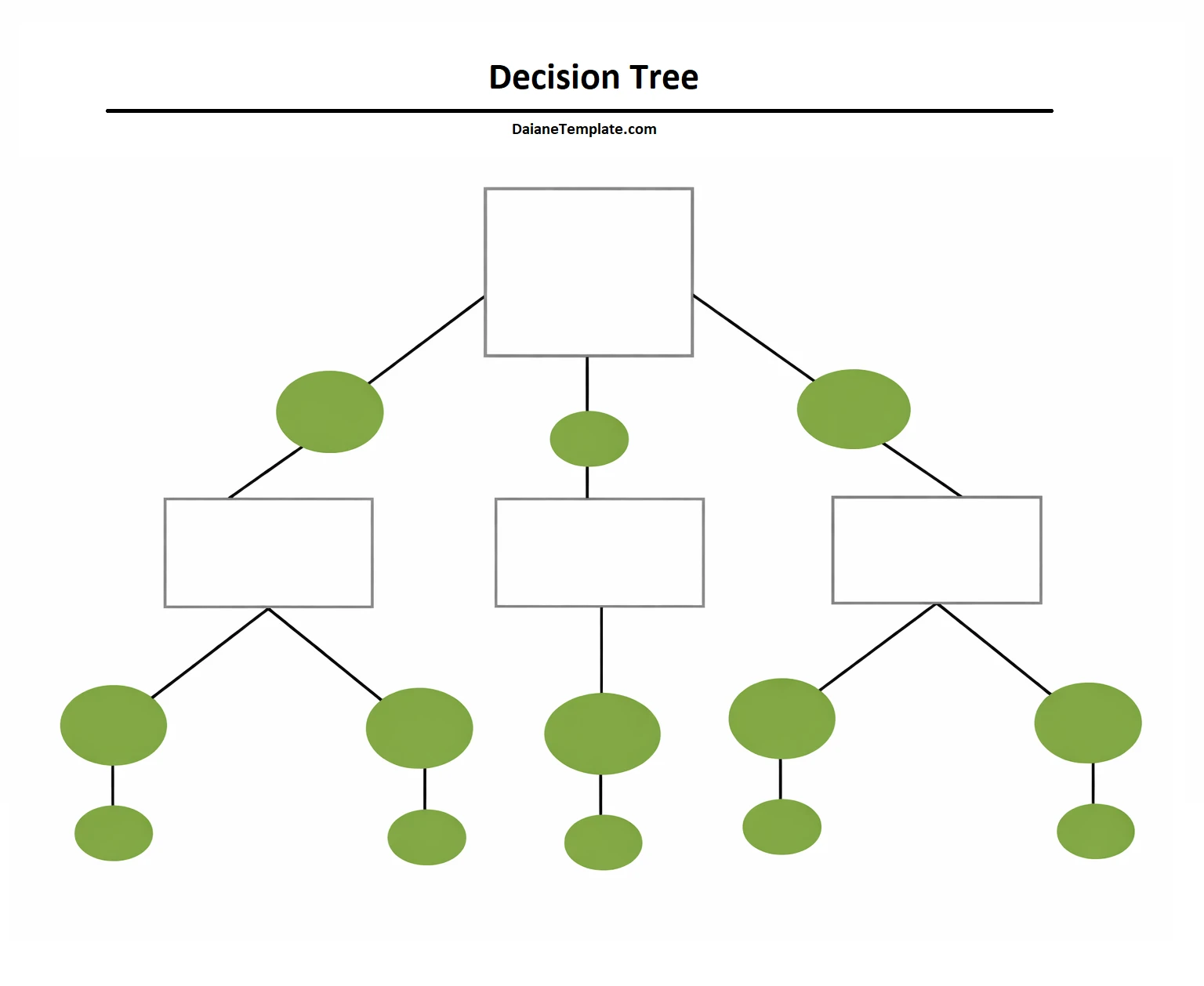
This visual framework is not only useful for strategic planning but also for data analysis, such as classification and regression. By comparing the costs and benefits of different paths, decision trees make complex choices clearer, more logical, and easier to navigate.
What is a Decision Tree?
A decision tree is a graphical representation of a decision-making process that resembles an actual tree, with branches representing different choices and outcomes. It starts with a single node (or root) that branches out into various options, each leading to further nodes until a final decision or outcome is reached. This hierarchical structure allows for a step-by-step analysis of the decision-making process, making it easier to understand and evaluate.
Decision trees are commonly used in various fields, including finance, healthcare, marketing, and more, to help individuals and organizations make informed choices based on data and probabilities. By visually displaying all possible paths and outcomes, decision trees enable users to consider multiple scenarios and their potential consequences before making a final decision.
Why Use Decision Trees?
Decision trees provide a systematic approach to decision-making, enabling individuals and organizations to navigate complex choices with confidence. By utilizing decision trees, users can benefit from:
Enhanced Decision Clarity
Decision trees offer a clear and structured representation of the decision-making process, making it easier for users to visualize the various options, outcomes, and probabilities. This clarity helps individuals understand the potential consequences of their choices and make informed decisions based on available data.
Efficient Decision-Making Process
By breaking down complex decisions into smaller components, decision trees streamline the decision-making process and eliminate unnecessary confusion or uncertainty. Users can focus on each decision point separately, leading to a more efficient and effective decision-making process.
Probability Analysis and Risk Assessment
One of the key benefits of decision trees is their ability to analyze probabilities associated with different choices and outcomes. By assigning probabilities to potential events or results, users can assess the risks and uncertainties involved in each decision path, allowing for more informed and calculated decision-making.
Strategic Planning and Future Forecasting
Decision trees are valuable tools for strategic planning, as they enable organizations to anticipate potential outcomes, plan for contingencies, and make decisions that align with long-term objectives. By mapping out different scenarios and their consequences, decision trees aid in forecasting future trends and adjusting strategies accordingly.
Data-Driven Decision-Making
In data-intensive fields like finance, healthcare, and marketing, decision trees play a crucial role in data analysis, classification, and regression. By leveraging data to inform decision-making processes, decision trees help organizations make evidence-based choices that are grounded in quantitative analysis and statistical probabilities.
What to Include in a Decision Tree?
When creating a decision tree, it is essential to include the following components:
1. Decision Nodes
Decision nodes represent points in the decision tree where a choice needs to be made. These nodes are typically represented by squares and signify critical decision-making junctures. Users must clearly define the options available at each decision node to facilitate the branching out of the tree into different paths.
2. Chance Nodes
Chance nodes depict uncertain events or outcomes with associated probabilities. Represented by circles in the decision tree, chance nodes help users assess the likelihood of different outcomes occurring based on available data or information. Assigning probabilities to chance nodes is crucial for conducting a thorough risk analysis and making informed decisions.
3. Branches
Branches in a decision tree are the connections between nodes that signify the flow of decisions and potential outcomes. Arrows are used to connect decision nodes, chance nodes, and outcome nodes, indicating the possible paths that can be taken at each decision point. Branches help users visualize the logical progression of the decision-making process and understand the relationships between different choices and outcomes.
4. Outcome Nodes
Outcome nodes represent the final results or consequences of a decision path in the tree. These nodes are typically represented by triangles and signify the ultimate outcomes that stem from the choices made at decision and chance nodes. Outcome nodes help users evaluate the potential benefits, risks, and implications of each decision path and determine the best course of action based on the desired results.
By incorporating these components into a decision tree, users can effectively map out the decision-making process, consider multiple scenarios, analyze probabilities, and make informed decisions that align with their goals and objectives.
How to Create a Decision Tree?
Creating a decision tree involves a systematic approach that includes the following steps:
1. Define the Decision
The first step in creating a decision tree is to clearly define the decision that needs to be made. This involves identifying the problem or opportunity at hand, setting clear objectives, and determining the desired outcomes. By defining the decision parameters, users can establish a framework for creating the decision tree and guiding the decision-making process.
2. Identify Alternatives
Once the decision is defined, the next step is to identify all possible alternatives or choices that can be considered. Users should brainstorm different options, strategies, or courses of action that could lead to the desired outcomes. By exploring a variety of alternatives, users can ensure that the decision tree captures all relevant choices and provides a comprehensive analysis of the decision-making process.
3. Determine Outcomes
After identifying alternatives, users must determine the potential outcomes or consequences associated with each choice. This involves evaluating the implications of each alternative, considering the short-term and long-term effects, and assessing the risks and opportunities involved. By clearly defining the outcomes of each decision path, users can make informed decisions that align with their objectives and priorities.
4. Assign Probabilities
Assigning probabilities to different outcomes is a critical step in creating a decision tree. Users must estimate the likelihood of each outcome occurring based on available data, historical trends, expert opinions, or statistical analysis. By quantifying the probabilities associated with each outcome, users can conduct a thorough risk assessment, evaluate the potential impacts of different choices, and make decisions that are grounded in evidence and analysis.
5. Construct the Tree
Once the decision parameters, alternatives, outcomes, and probabilities are defined, users can begin constructing the decision tree. This involves drawing the nodes (decision nodes, chance nodes, outcome nodes) and connecting them with branches to illustrate the flow of decisions and potential outcomes. Users should organize the tree in a logical and structured manner, ensuring that the relationships between nodes are clear and cohesive.
6. Evaluate and Optimize
After constructing the decision tree, users should evaluate the tree to determine the best course of action based on probabilities, costs, benefits, and strategic goals. By analyzing the different decision paths, assessing the implications of each choice, and considering trade-offs, users can optimize the decision tree to reflect their preferences, priorities, and constraints. Regularly reviewing and updating the decision tree ensures that it remains relevant, accurate, and aligned with changing circumstances.
By following these steps, users can create effective decision trees that facilitate informed decision-making, enhance strategic planning, and guide them towards optimal outcomes with confidence.
Tips for Successful Decision Trees
To maximize the benefits of decision trees and ensure successful outcomes, consider the following tips:
1. Keep It Simple
Avoid creating overly complex decision trees that may overwhelm users or obscure key decision points. Focus on essential decisions, outcomes, and probabilities to maintain clarity and coherence in the tree.
2. Use Data Wisely
Ensure that the probabilities, outcomes, and assumptions in the decision tree are based on reliable data and information. Utilize quantitative analysis, historical data, expert opinions, and statistical models to inform the probabilities assigned to different outcomes. By relying on accurate and up-to-date data, users can enhance the accuracy and reliability of the decision tree, leading to more robust decision-making processes.
3. Update Regularly
Regularly review and update decision trees to reflect changes in circumstances, new information, or evolving objectives. As the external environment shifts, new data emerges, or priorities change, it is essential to revise the decision tree accordingly. By keeping the decision tree current and relevant, users can ensure that it remains a valuable tool for guiding decisions and strategic planning.
4. Seek Input
Collaborate with team members, stakeholders, or experts to gather diverse perspectives and insights when creating decision trees. By involving others in the decision-making process, users can benefit from different viewpoints, expertise, and experiences. Seeking input from a variety of sources can help identify blind spots, uncover hidden risks, and generate creative solutions that may not have been considered otherwise.
5. Test Scenarios
Explore different scenarios and sensitivities within the decision tree to assess potential risks and opportunities. Conduct sensitivity analysis by adjusting probabilities, outcomes, or variables to test the robustness of the decision tree under various conditions. By testing different scenarios, users can identify potential vulnerabilities, evaluate the resilience of the decision tree, and prepare for unexpected outcomes or events.
6. Consider Trade-Offs
Evaluate the costs and benefits of each decision path to make informed trade-offs and select the most favorable option. Consider the risks, rewards, implications, and constraints associated with each choice to determine the optimal course of action. By weighing the trade-offs between different options, users can make decisions that align with their priorities, goals, and values.
Free Decision Tree Template
A Decision Tree helps you map out choices, outcomes, and consequences in a clear and visual format. It provides a structured way to analyze options, identify potential paths, and evaluate risks or benefits, supporting logical and informed decision-making. With a well-designed template, you can break down complex decisions and gain clarity.
Download our Decision Tree Template today to visualize decisions and choose the best path with confidence.
Decision Tree Template – DOWNLOAD
