A Social Security direct deposit form helps beneficiaries arrange electronic payments from the Social Security Administration (SSA) into an eligible bank account. Instead of waiting for a paper check, recipients can have their retirement, disability, or survivor benefits deposited directly into their checking or savings account. This payment method offers greater convenience, reduces the risk of lost or stolen checks, and makes managing monthly benefits easier.
Whether you are enrolling for the first time, updating your existing banking information, or preparing the documents needed for enrollment, understanding the direct deposit process can help you avoid unnecessary delays. This guide explains what the form is used for, what information you need, how to enroll, and how to make changes to an existing account. You will also find printable templates to help organize your information before contacting Social Security.
What Is a Social Security Direct Deposit Form?
A Social Security direct deposit form is a document used to authorize the electronic transfer of government benefit payments into a designated financial account. It allows the Social Security Administration or the appropriate government payment agency to identify where your monthly benefits should be deposited.
Depending on your location and benefit type, enrollment may be completed online, through your financial institution, by telephone, or with a country-specific paper form. Many beneficiaries in the United States do not need to complete a traditional paper form because they can manage direct deposit through their personal my Social Security account.
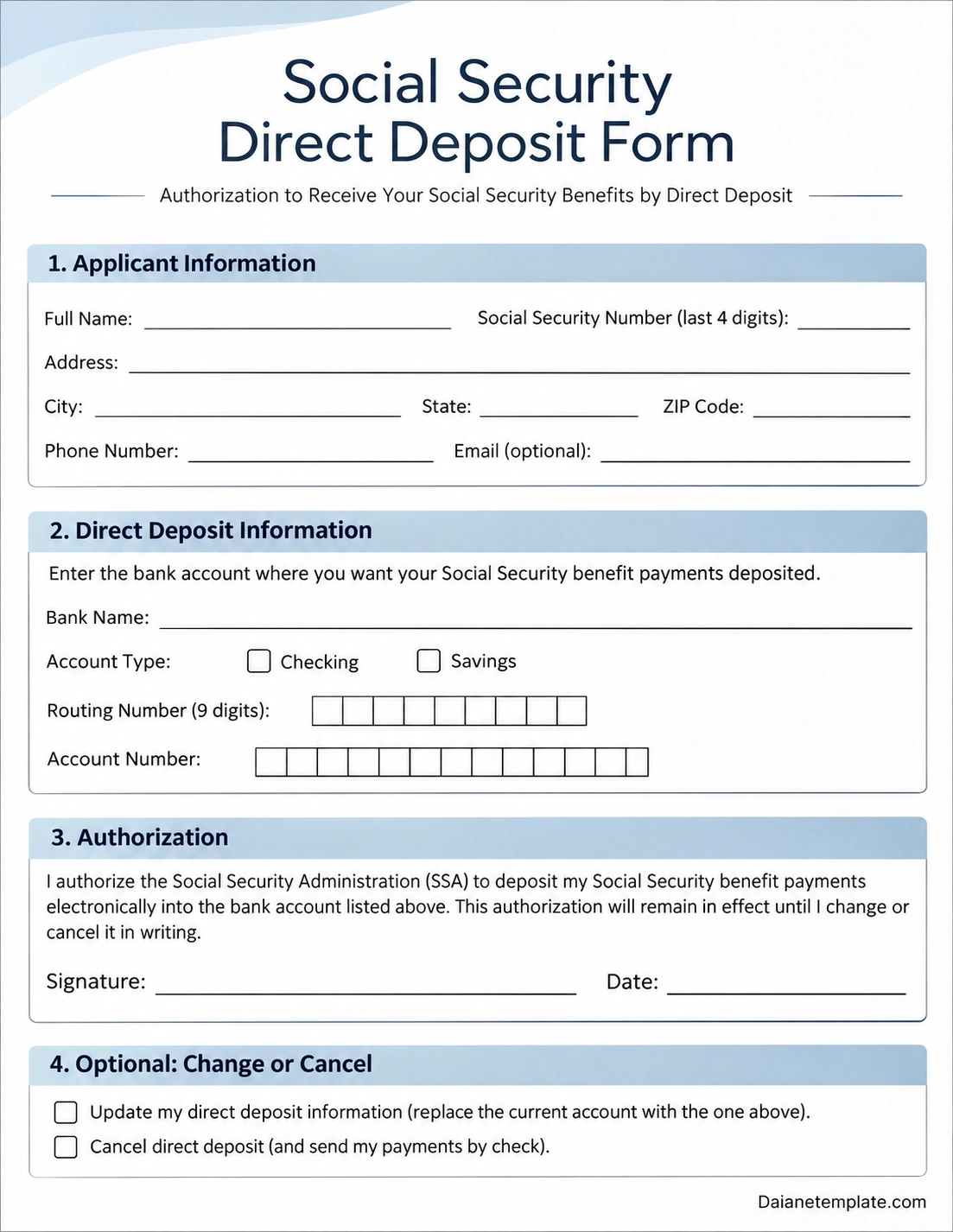
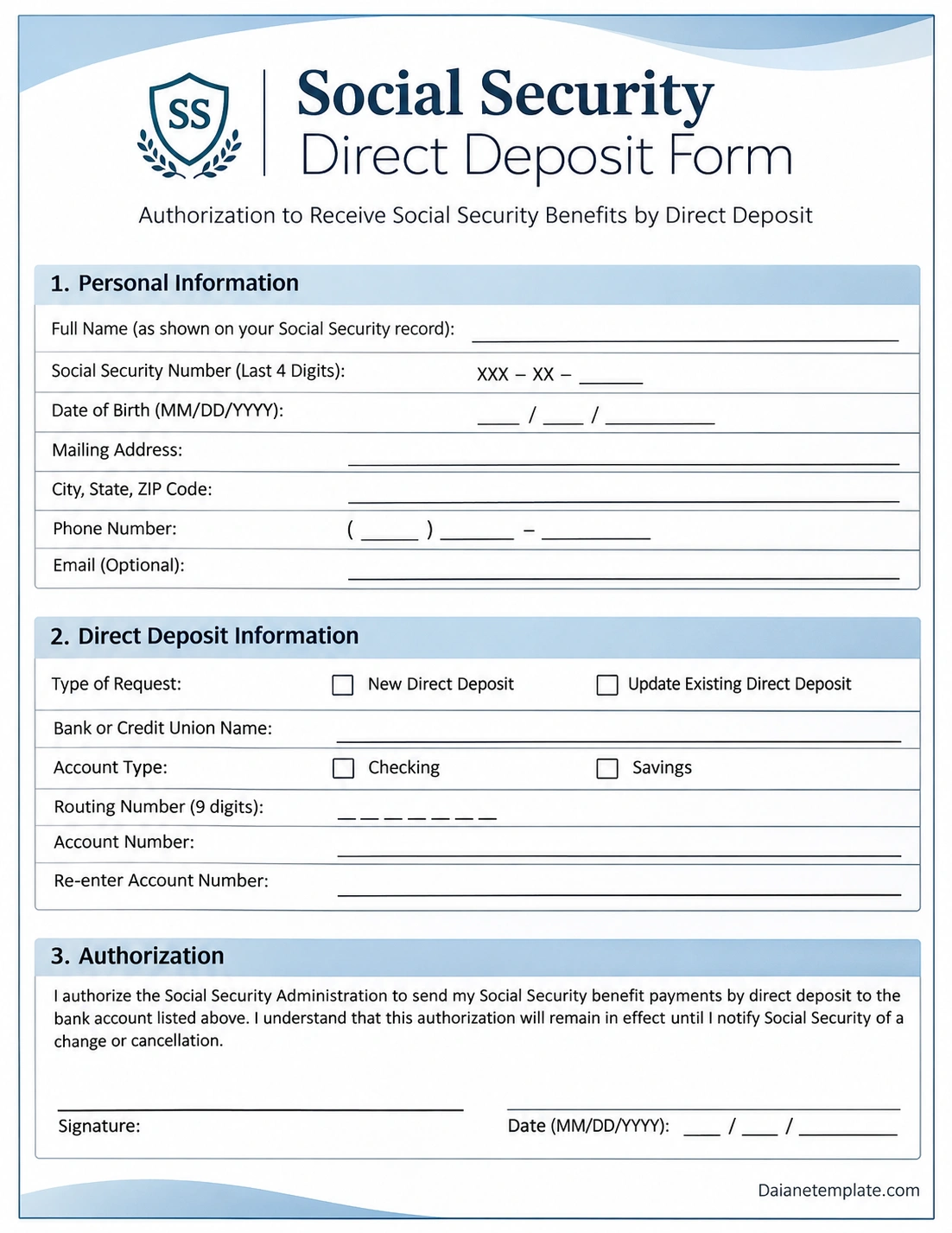
For beneficiaries who need a paper document, a direct deposit worksheet can help organize the necessary information before completing the official enrollment process. However, a printable template from a third-party website is not an official SSA document and does not independently authorize government payments.
Why Choose Social Security Direct Deposit?
Direct deposit is a convenient way to receive Social Security benefits without relying on physical checks. Electronic payments offer several advantages for retirees, people with disabilities, and other eligible beneficiaries.
1. Improved Payment Security
Paper checks can be lost, stolen, or delayed during delivery. Direct deposit reduces these risks because payments are transferred electronically into your designated account. Beneficiaries also avoid carrying or storing physical benefit checks.
2. Convenient Access to Benefits
Once a payment reaches your account, you can access the funds through your bank’s available services. Depending on your financial institution, you may use online banking, a debit card, an ATM, or an in-person branch.
3. Reliable Payment Delivery
Direct deposit eliminates the need to wait for a check to arrive by mail. Your payment is sent electronically according to the applicable Social Security payment schedule. Your bank’s processing procedures may affect when the funds become visible in your account.
4. Easier Financial Management
Receiving benefits electronically makes it easier to organize monthly expenses, schedule eligible automatic payments, and review account activity. You can also keep a record of incoming benefit payments through your bank statements.
What Information Is Required for a Social Security Direct Deposit Form?
Before enrolling in direct deposit, prepare the information needed to identify yourself and your bank account. Having these details ready can make the process faster and help prevent incorrect payment information.
Personal Information
The enrollment process may require the following personal details:
- Full legal name: Enter your name as it appears in your Social Security records.
- Social Security number: Have your SSN available when using an official enrollment channel.
- Social Security claim number: Provide this information if requested for your benefit account.
- Mailing address: Enter your current address when required.
- Telephone number: Provide a contact number for enrollment-related questions.
Bank Account Information
Your financial institution’s account information is equally important. Incorrect numbers can prevent a successful deposit or send payments to the wrong account.
- Bank name: The official name of your bank or credit union.
- Routing number: The nine-digit routing transit number for an eligible US bank account.
- Account number: The number identifying your individual checking or savings account.
- Account type: Indicate whether the account is checking or savings.
- Account ownership: Confirm that the account can receive your benefit payments.
You can usually find your routing and account numbers on a bank statement, through your bank’s online banking service, or by contacting your financial institution. Do not rely on numbers from an unrelated account or an old check without verifying that the information is still correct.
Use the following printable template as a visual guide when gathering the information needed for enrollment.
How to Enroll in Social Security Direct Deposit
The Social Security Administration provides several ways for eligible beneficiaries to arrange direct deposit. The appropriate method depends on the type of benefits you receive and where you live.
1. Enroll Through Your my Social Security Account
For eligible Social Security beneficiaries, using an online my Social Security account is a convenient way to start or manage direct deposit.
- Visit the official Social Security website at SSA.gov.
- Open the my Social Security account sign-in page.
- Sign in using your available Login.gov or ID.me credentials.
- Locate the direct deposit management option.
- Enter your bank account information as requested.
- Review the information carefully before submitting your request.
- Follow any additional instructions provided by Social Security.
Online services may vary depending on your benefit type and eligibility. If the direct deposit option is unavailable for your situation, Social Security will provide instructions for another enrollment method.
2. Contact Your Bank or Credit Union
Some financial institutions can help customers enroll in government direct deposit through an automated enrollment service. This allows participating banks to transmit the necessary banking information to Social Security.
Contact your bank and ask whether it offers direct deposit enrollment for Social Security benefits. If available, the bank can explain what identification and account information you need to provide.
3. Contact the Social Security Administration
You can also contact Social Security for assistance with direct deposit enrollment. If you cannot complete the process online or through your bank, a representative can explain the available options.
The general Social Security telephone number is 1-800-772-1213. For individuals who are deaf or hard of hearing, the TTY number is 1-800-325-0778.
Depending on your circumstances, you may need to verify your identity or visit a local Social Security office to complete the request.
4. Use a Country-Specific Direct Deposit Form
Beneficiaries who receive US Social Security payments while living outside the United States may need a special international direct deposit form. The SSA provides country-specific versions of Form SSA-1199 because banking requirements and payment instructions differ between countries.
For example, beneficiaries receiving payments in Indonesia can use the official SSA-1199-OP36 form. This document includes sections for the beneficiary, payment mailing instructions, and financial institution information.
International beneficiaries should obtain the correct form from the official Social Security website or the appropriate US embassy or Federal Benefits Unit. Follow the instructions provided for the specific country rather than submitting a general printable worksheet.
How to Complete a Social Security Direct Deposit Form
If your enrollment process requires a paper form, carefully review each section before providing your information. The following steps can help you understand the information commonly requested.
Step 1: Enter Your Personal Details
Complete the personal information section using accurate details that match your Social Security records. Check your name, address, and other requested information before continuing.
Step 2: Provide Your Bank Information
Enter your bank’s name, routing number, account number, and account type. If you are unsure about any number, contact your financial institution before completing the document.
Step 3: Review the Authorization Statement
Read the authorization statement carefully. It explains that you are permitting the appropriate government agency to deposit your benefit payments into the designated account. Make sure you understand the terms before signing.
Step 4: Sign and Date the Document
Provide your signature and the date wherever required. Some international forms also require a bank representative to complete and certify a separate section.
Step 5: Follow the Official Submission Instructions
Submit the completed document using the mailing address, online service, or other submission method specified by the official agency. Keep a copy for your personal records.
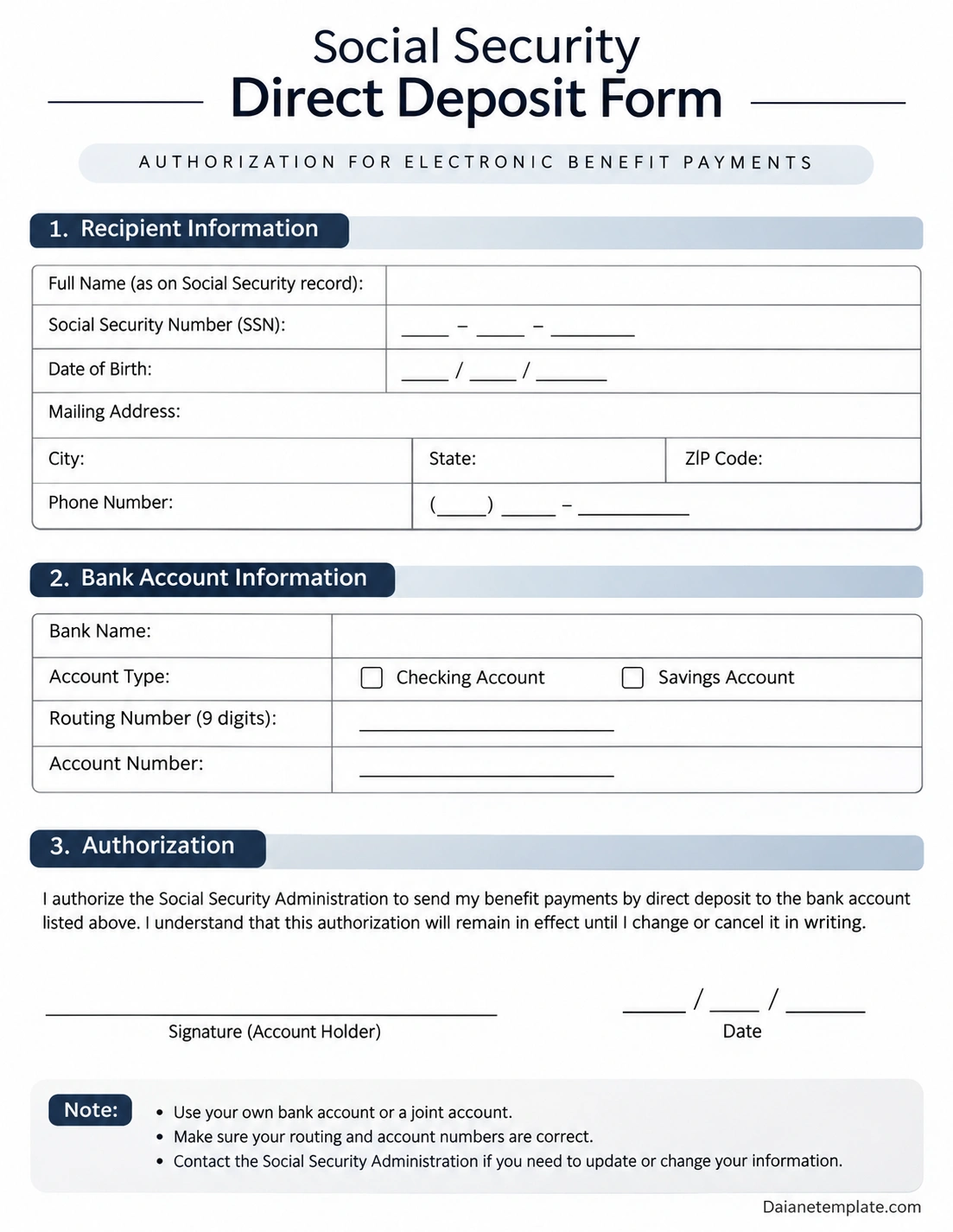
The following alternative printable layout provides another way to organize banking details and authorization information before completing the official enrollment process.
Tips for Avoiding Direct Deposit Problems
Even small mistakes in banking information can create unnecessary payment issues. Follow these practical tips when preparing your enrollment request.
- Double-check your routing number: Confirm that the number belongs to the correct financial institution and account type.
- Verify your account number: Compare the number with your current bank statement or confirm it with your bank.
- Check account eligibility: Make sure your financial institution permits the account to receive government benefit deposits.
- Use official enrollment channels: Submit sensitive personal and financial information only through verified government or financial institution services.
- Keep confirmation records: Save any confirmation notice or reference number associated with your enrollment request.
- Monitor your bank account: Check your account activity to confirm that future benefit payments are deposited correctly.
Never send your full Social Security number, bank account number, or other sensitive information through an unsecured email or an unverified website. A printable worksheet should be used only as a preparation aid and stored securely.
What to Do When You Need to Change Your Bank Account
If you close your existing bank account or decide to receive benefits through another financial institution, you should update your direct deposit information as soon as possible.
For eligible Social Security beneficiaries, the change can generally be requested through a personal my Social Security account. Some banks can also submit updated information through their automated enrollment service.
If online changes are unavailable for your benefit type, contact Social Security for assistance. Certain beneficiaries, including people receiving Supplemental Security Income (SSI), may have different procedures and eligibility requirements.
Before closing your old bank account, make sure you understand when the new direct deposit information will take effect. Keeping the existing account open until the change is confirmed may help prevent interruptions in receiving your benefits.
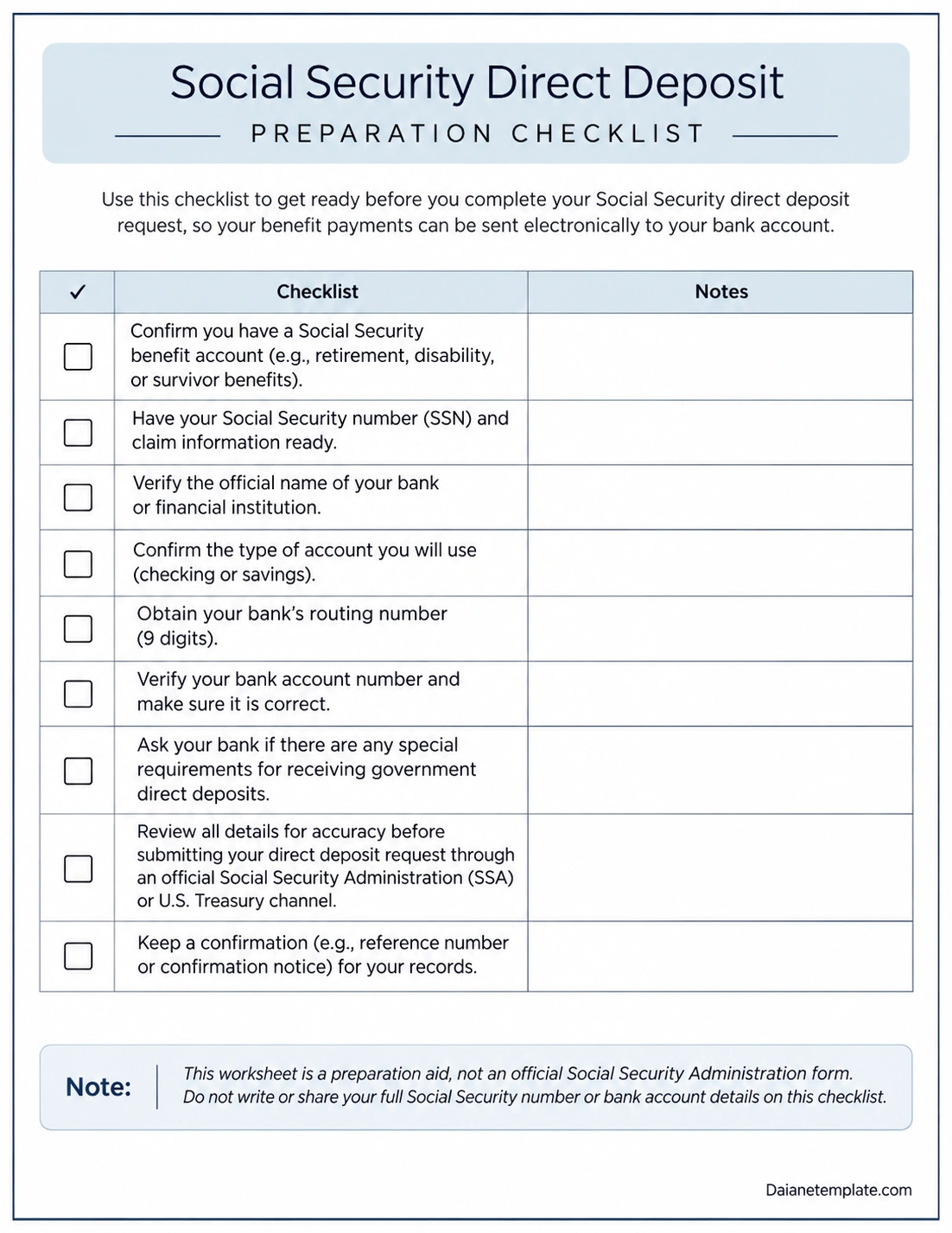
Social Security Direct Deposit Preparation Checklist
Preparing the necessary information in advance can make the enrollment process easier. Use this checklist to review the details you may need before starting your request.
- Confirm that you are receiving or applying for eligible Social Security benefits.
- Have your Social Security information available.
- Verify your full legal name and current contact details.
- Identify the bank account you want to use.
- Obtain your bank’s routing number.
- Confirm your account number.
- Choose the correct account type.
- Check whether your bank offers direct deposit enrollment assistance.
- Identify the official SSA enrollment method that applies to your situation.
The following printable checklist can help you track these preparation tasks without recording sensitive account information.
Frequently Asked Questions
1. Where Can I Get an Official Social Security Direct Deposit Form?
You can find official direct deposit information and enrollment instructions through the Social Security Administration website at SSA.gov. Many US beneficiaries can enroll online or through their bank without completing a traditional paper form. International beneficiaries may need a country-specific SSA-1199 form.
2. Can I Set Up Social Security Direct Deposit Online?
Yes. Eligible Social Security beneficiaries can generally start or change direct deposit through their personal my Social Security account. Online availability depends on your benefit type and circumstances. Visit the official SSA website for current instructions.
3. What Bank Information Do I Need for Direct Deposit?
You generally need your bank’s name, nine-digit routing number, account number, and account type. You may also need personal identification and Social Security claim information to complete enrollment.
4. Can I Use a Savings Account for Social Security Direct Deposit?
Yes. An eligible savings account can generally receive Social Security direct deposits. Confirm with your bank that the account supports electronic government payments before submitting your enrollment request.
5. How Long Does It Take to Start Direct Deposit?
The processing time can vary depending on your enrollment method, benefit type, and financial institution. Follow the confirmation instructions provided by Social Security and continue monitoring your payment arrangements until the change takes effect.
6. Can I Change My Direct Deposit Information After Enrollment?
Yes. Eligible beneficiaries can update their banking information through my Social Security or other available enrollment methods. You can also contact your bank or Social Security if you need assistance with the change.
7. Is a Printable Social Security Direct Deposit Template an Official Government Form?
No. A printable template from an independent website is not an official Social Security Administration document. It can help you organize information and prepare for enrollment, but you must use an approved SSA or Treasury enrollment method to authorize your benefit payments.
8. Can People Living Outside the United States Receive Social Security Direct Deposit?
Yes. Eligible beneficiaries living abroad may receive payments through participating international financial institutions. However, the enrollment requirements depend on the destination country. Contact the appropriate Social Security office or Federal Benefits Unit to obtain the correct country-specific instructions.
Conclusion
A Social Security direct deposit form helps beneficiaries organize the information needed to receive government benefit payments electronically. With accurate personal details and banking information, the enrollment process can be more straightforward and convenient.
Whether you are setting up direct deposit for the first time or changing an existing bank account, always follow the official instructions provided by the Social Security Administration. Use the printable templates and preparation checklist in this guide to organize your information, review important details, and avoid common mistakes.
Remember that third-party printable templates are for personal preparation only. For secure enrollment and changes to your benefit payments, always use an authorized government or financial institution service.
Download: Social Security Direct Deposit Form
