A service invoice is an essential document for businesses and independent professionals that provide services to clients. Whether you work as a consultant, freelancer, contractor, designer, or maintenance provider, sending a clear invoice helps you formally request payment for work you have completed. It also gives your client a detailed record of the services provided and the amount owed.
Beyond requesting payment, a professional service invoice helps organize business finances, establish clear payment expectations, and maintain accurate accounting records. It documents important transaction details, including service descriptions, rates, quantities, applicable taxes, payment terms, and due dates. With the right information in place, both parties can better understand the transaction and avoid unnecessary misunderstandings.
In this guide, you will learn what a service invoice is, what information it should include, how to create one, and how to manage invoices more effectively. You will also find practical tips and answers to common questions about service billing.
What Is a Service Invoice?
A service invoice is a business document sent by a service provider to a client to request payment for services that have already been performed or delivered. It acts as an itemized bill that explains what work was completed, how much each service costs, and when payment is expected.
Unlike a product invoice, which primarily lists physical goods sold, a service invoice focuses on labor, professional expertise, time, project milestones, or other non-physical work. For example, a graphic designer may invoice a client for logo design, while a plumber may bill for installation and repair services.
A typical service invoice contains the provider’s business information, the client’s billing details, an invoice number, the issue date, a description of services, the total amount due, and payment instructions.
Why Is a Service Invoice Important?
Using a consistent invoicing process benefits both service providers and their clients. It creates a written record of the transaction and makes payment expectations easier to understand.
1. Creates a Formal Payment Request
A service invoice clearly communicates that payment is due for completed work. It provides the client with the amount owed, the services covered, and the payment deadline. This is more professional and easier to track than relying on informal messages or verbal payment requests.
2. Maintains Accurate Financial Records
Invoices help businesses record their income and monitor outstanding payments. Each invoice can be stored with other accounting documents, making it easier to review revenue, prepare financial reports, and organize transactions.
3. Improves Communication With Clients
An itemized invoice helps clients understand exactly what they are paying for. Listing individual services, hours, quantities, rates, and additional charges reduces confusion and provides a useful reference if a client has questions about the bill.
4. Supports Accounting and Tax Documentation
Service invoices can support bookkeeping and tax preparation by documenting business transactions. Depending on the location and type of business, invoices may also need to include specific tax details or other legally required information. Always check the applicable local requirements.
5. Provides a Useful Audit Trail
When invoices are numbered, dated, and stored consistently, they create a traceable record of business activity. This can help with internal reviews, payment reconciliation, financial audits, and resolving billing disputes.
What Information Should a Service Invoice Include?
A complete service invoice should contain enough information for the client to identify the transaction, understand the charges, and make payment without needing to request clarification.
Consider including the following details when preparing a professional service invoice:
- Business information: Your business name, address, phone number, email address, and website if applicable.
- Client information: The client’s name, company name, billing address, and contact details.
- Invoice number: A unique reference number used to identify and track the invoice.
- Invoice date: The date the invoice is issued.
- Due date: The deadline for completing payment.
- Service description: A clear explanation of the work performed or services delivered.
- Quantity or hours: The number of hours, units, sessions, or other measurable service quantities.
- Rates and amounts: The price per hour, unit, or service, along with each line item’s total.
- Subtotal: The amount before applicable taxes, discounts, or additional charges.
- Taxes and discounts: Any applicable tax, discount, or other adjustment, clearly identified.
- Total amount due: The final amount the client needs to pay.
- Payment terms: The accepted payment methods and the time allowed for payment.
- Additional notes: Relevant project references, service dates, purchase order numbers, or other instructions.
Not every business needs every field. Choose the details that are relevant to your services and applicable invoicing requirements.
Service Invoice Template
A service invoice template provides a ready-made structure for recording billing information. Instead of designing a new invoice for every transaction, you can reuse the same layout and update the client details, service descriptions, prices, and payment dates.
A useful template should be easy to read, simple to customize, and organized into clearly labeled sections. It should also provide enough space to describe multiple services and calculate the total amount due.
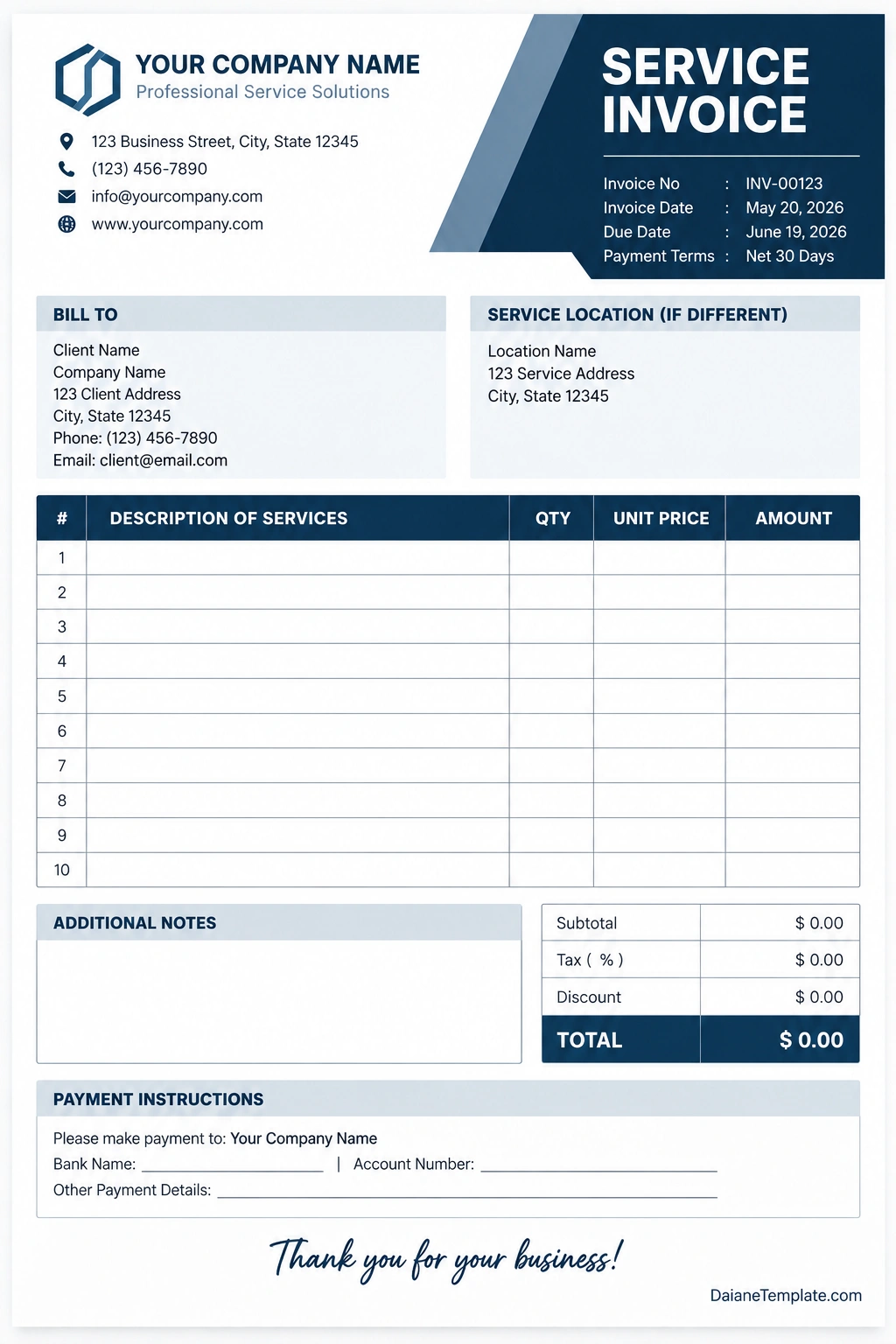
You can use this printable service invoice layout as a starting point for different types of service businesses. Add your business information, enter the client’s details, list the completed work, and review the payment calculation before sending the invoice.
How to Create a Service Invoice
Creating a service invoice does not need to be complicated. Follow these steps to prepare a clear and professional document.
Step 1: Add Your Business and Client Information
Start by entering your business name and contact information. Then add the client’s billing details. Check that names, addresses, and email addresses are correct so the invoice reaches the right person.
Step 2: Assign a Unique Invoice Number
Give every invoice a unique identification number. You can use a simple sequence, such as INV-001, INV-002, and INV-003. Consistent numbering makes it easier to locate invoices and match payments with the correct transactions.
Step 3: Enter the Invoice and Due Dates
Include the date the invoice is issued and the date payment is expected. Make sure the due date follows the payment terms agreed upon with the client.
Step 4: Describe the Services Provided
List each service separately and use descriptions that are specific enough for the client to understand the work performed. Include service dates, hours, quantities, or project milestones when relevant.
For example, instead of writing only “Consulting,” use a more informative description such as “Three hours of business strategy consulting for the September project.”
Step 5: Calculate the Charges
Enter the applicable rate and quantity for each service. Calculate the line-item amounts, add them together, and then apply any relevant discounts, taxes, or additional charges. Clearly display the final balance due.
Step 6: Include Payment Instructions
Tell the client how to pay. Depending on your business, accepted methods may include bank transfer, check, card payment, or an approved online payment service. Provide the necessary payment details securely and accurately.
Step 7: Review and Send the Invoice
Before sending the document, verify the calculations, invoice number, client details, service descriptions, and due date. Save a copy for your records and send the invoice using an agreed communication method, such as email or an invoicing platform.
Common Types of Service Invoices
Different businesses may use different invoice formats depending on how they charge clients and deliver their services.
- Hourly service invoice: Used by professionals who charge based on the number of hours worked, such as consultants, tutors, and technicians.
- Fixed-fee service invoice: Used when a service has an agreed price, regardless of the exact time required to complete it.
- Project-based invoice: Used for larger assignments, such as website development, renovation, or marketing projects.
- Recurring service invoice: Used for regular services billed weekly, monthly, or at another agreed interval.
- Milestone invoice: Used when payment is divided into stages based on project progress or completed deliverables.
- Final service invoice: Used to request the remaining balance after the agreed work has been completed.
Select an invoice format that reflects your pricing arrangement and clearly explains what the client is being charged for.
Tips for Managing Service Invoices Effectively
A well-organized invoicing process can reduce administrative work and help your business manage cash flow. These practical habits can make invoice management more efficient.
- Use a consistent format: Keep the same general layout across invoices so clients can recognize and understand your documents.
- Send invoices promptly: Issue the invoice as soon as the agreed billing milestone has been reached.
- Set clear payment terms: State when payment is due and identify accepted payment methods.
- Keep descriptions specific: Avoid vague service labels that may cause questions or disputes.
- Track payment status: Record whether each invoice is unpaid, partially paid, overdue, or paid in full.
- Keep organized copies: Store invoices and payment confirmations in a secure, accessible location.
- Follow up professionally: Send a polite reminder when an invoice approaches or passes its due date.
- Check local requirements: Confirm whether your business must include particular tax numbers, disclosures, or invoice fields.
Service Invoice vs. Receipt: What Is the Difference?
A service invoice and a receipt are related financial documents, but they serve different purposes.
A service invoice requests payment for work performed or services delivered. It tells the client how much is owed and when payment is expected. A receipt, on the other hand, confirms that a payment has been received.
For example, a freelance designer may send an invoice for a completed logo project. After the client pays the amount due, the designer can issue a receipt as proof of payment.
In short, an invoice generally documents an amount payable, while a receipt documents an amount already paid. Businesses may use both documents to maintain complete transaction records.
Frequently Asked Questions About Service Invoices
1. What is the purpose of a service invoice?
The purpose of a service invoice is to formally request payment for services provided to a client. It also records the work performed, itemizes charges, communicates payment terms, and supports business accounting.
2. When should I send a service invoice?
Send an invoice at the time specified in your agreement with the client. This may be after completing the work, reaching a project milestone, or completing a scheduled billing period. Make sure the timing matches the agreed payment arrangement.
3. Can I create a service invoice without accounting software?
Yes. You can create a service invoice using a printable template or a document or spreadsheet application. Accounting software can be helpful when you need automated calculations, payment tracking, recurring billing, and financial reports, but it is not essential for every small business.
4. What payment terms should I include on a service invoice?
Common payment terms include Due on Receipt, Net 7, Net 15, and Net 30. These terms indicate when payment is expected. Use terms that have been agreed upon with the client and comply with applicable rules.
5. Is a service invoice legally binding?
A service invoice can serve as evidence of a billing request and transaction details, but it does not automatically establish every contractual obligation between the parties. Its legal significance depends on the agreement, applicable law, and surrounding circumstances.
6. Do service invoices need to include tax?
Tax requirements depend on the type of service, business registration, and jurisdiction. Some services may be taxable, while others may be exempt or subject to different rules. Check the requirements that apply to your business before adding or collecting tax.
7. What should I do if a client does not pay an invoice?
Start by checking that the invoice was delivered and that the payment details are correct. Then send a polite reminder that includes the invoice number, outstanding balance, and due date. If payment remains overdue, follow the collection process agreed upon in your contract and applicable local laws.
8. Can I use one service invoice template for different clients?
Yes. You can reuse a general service invoice template for multiple clients. However, update the invoice number, client information, service descriptions, dates, charges, and payment terms for every transaction. Never send an invoice with another client’s confidential details.
Conclusion
A service invoice is more than a request for payment. It is an important business document that records completed work, explains service charges, establishes payment expectations, and supports accurate financial management.
By including clear service descriptions, correct billing details, itemized costs, payment terms, and due dates, you can make the billing process easier for both your business and your clients. Using a consistent service invoice template can also save time and help maintain organized records as your business grows.
Choose a format that suits your services, review every invoice before sending it, and keep a copy for your accounting records. These simple practices can help you manage payments professionally and build stronger client relationships.
Download: Service Invoice Template
