What are Cornell Notes and What Are They Used For?
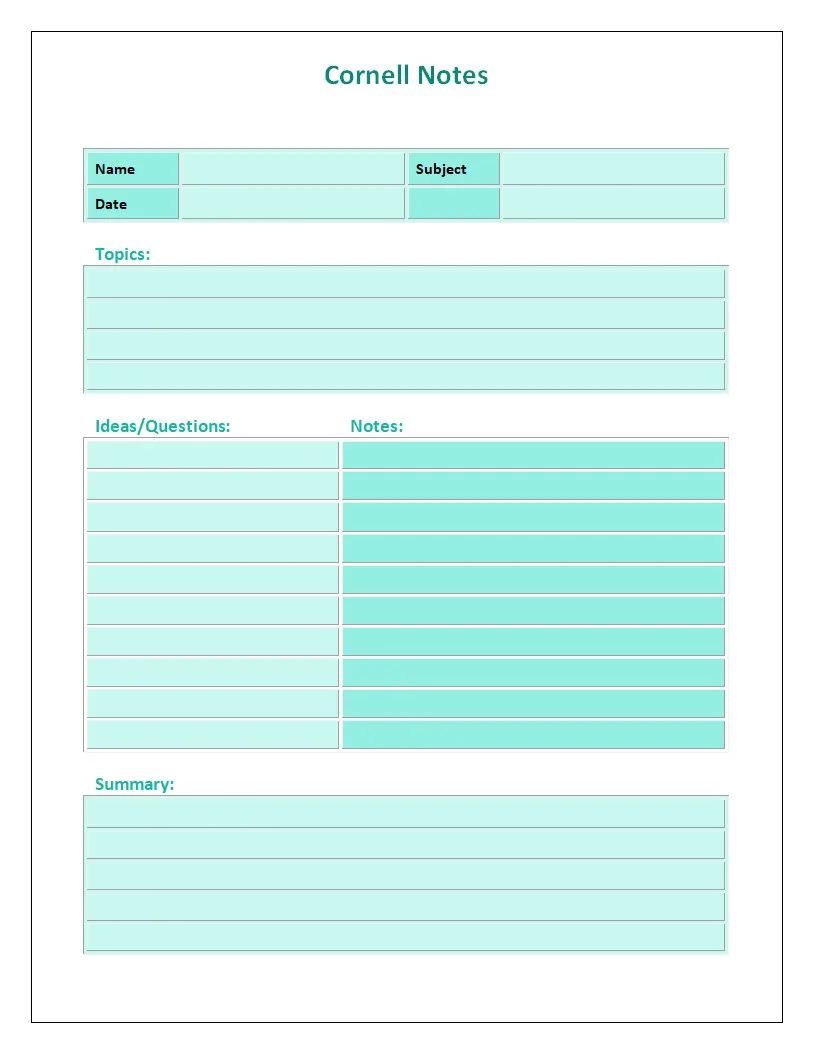
The Cornell note-taking system is a method of taking notes that divides a page into three sections: the note-taking section, the cue questions section, and the summary section. The note-taking section is where you write down key points, facts, and information from the lecture or reading material.
The cue questions section is where you formulate questions based on the notes you have taken, which helps you engage with the material and test your understanding. The summary section is where you summarize the main points of the lecture or reading material.
How Effective is The Cornell Note-Taking System?
The Cornell note-taking system is highly effective in improving students’ learning and retention of information. By providing a structured framework for note-taking, Cornell notes help students organize and synthesize information in a way that is easy to review and study later.
The act of summarizing key points and formulating cue questions encourages active engagement with the material, which has been shown to enhance learning outcomes.
Benefits of the Cornell Note-Taking System
One of the key benefits of the Cornell note-taking system is its effectiveness in improving learning outcomes. By providing a structured framework for organizing information, Cornell notes help students identify key points, make connections between different concepts, and engage with the material in a meaningful way. This active engagement promotes deeper understanding, improved retention, and better performance on tests and exams.
Additionally, the Cornell note-taking system promotes effective study habits and time management skills. By organizing information into note-taking, cue questions, and summary sections, students can easily review and study the material systematically. This helps students stay organized, focused, and on track with their learning goals.
When to Use The Cornell Method?
The Cornell note-taking method can be used in a variety of settings, including lectures, readings, presentations, and discussions. It is particularly useful for capturing key points, main ideas, and supporting details from a lecture or reading material. The Cornell method is best used when you want to organize and synthesize information in a way that is easy to review and study later.
In Academic Settings
Students can use the Cornell note-taking method in academic settings such as classrooms, lectures, and study sessions. By taking structured notes, formulating cue questions, and summarizing key points, students can improve their understanding and retention of information. The Cornell method is especially effective for complex or information-heavy subjects where it is important to organize and synthesize information in a systematic way.
Teachers can also incorporate the Cornell note-taking system into their teaching strategies to help students develop effective note-taking skills. By introducing students to the Cornell method, guiding how to use it effectively, and encouraging regular practice, teachers can help students improve their learning outcomes and academic performance.
In Professional Settings
Professionals can use the Cornell note-taking method in professional settings such as meetings, presentations, and training. By taking structured notes, formulating cue questions, and summarizing key points, professionals can stay organized, focused, and engaged with the material. The Cornell method is particularly useful for capturing action items, decisions, and key takeaways from meetings or presentations.
Employers can also encourage employees to use the Cornell note-taking system as a way to improve communication, collaboration, and productivity in the workplace. By implementing Cornell notes as a standard practice for meeting notes, project updates, or training sessions, employers can promote effective communication, knowledge sharing, and information retention among employees.
How Students Use The Cornell Note Taking System
Students can use the Cornell note-taking system by following a few simple steps:
Step 1: Divide Your Page
Divide your page into three sections: note-taking, cue questions, and summary. This division helps organize your notes and makes it easier to review and study the material later.
Step 2: Take Notes
Take notes in the note-taking section during a lecture or reading material. Focus on capturing key points, main ideas, and supporting details clearly and concisely.
Step 3: Formulate Cue Questions
Formulate cue questions based on your notes in the cue questions section. These questions should test your understanding of the material and help you engage with the content in a meaningful way.
Step 4: Summarize
Summarize the main points in the summary section. This summary should capture the essential ideas, concepts, and themes from the lecture or reading material concisely and clearly.
Step 5: Review and Study
Review, study, and test yourself using the cue questions and summaries. This step helps reinforce your understanding of the material, identify areas of confusion, and prepare for exams or assignments.
Tips to Take Better Cornell Notes
Here are some tips to help you take better Cornell notes:
Stay Organized
Keep your notes neat and organized to make them easier to review later. Use headings, subheadings, bullet points, or numbering to structure your notes clearly and logically.
Use Abbreviations
Use abbreviations, symbols, or shorthand to save time and space when taking notes. Develop a system of abbreviations that you can easily understand and remember while taking notes.</p
Be Selective
Focus on capturing key points and main ideas rather than trying to write down everything. Be selective in your note-taking and prioritize information that is essential for understanding the material.
Review and Revise
Regularly review and revise your notes to reinforce your understanding of the material. Set aside time to go over your notes, fill in any gaps, clarify confusing points, and make connections between different concepts.
Practice Active Listening
Engage with the material by asking questions, making connections, and summarizing key points while taking notes. Actively listen to the speaker, participate in discussions, and interact with the content to enhance your learning experience.
Experiment with Different Formats
Find a note-taking format that works best for you, whether it’s traditional Cornell notes or a modified version that suits your learning style. Experiment with different layouts, colors, fonts, or digital tools to create notes that are visually appealing and easy to understand.
Seek Feedback
Share your notes with classmates, study groups, or instructors to get feedback on your understanding and interpretation of the material. Discuss your notes with others, ask for clarification on confusing points, and incorporate feedback to improve your note-taking skills.
Stay Consistent
Develop a consistent note-taking routine that works for you and stick to it. Set aside dedicated time for note-taking, review, and study sessions to ensure that you stay on track with your academic goals and responsibilities.
Use Technology Wisely
Take advantage of technology tools and apps to enhance your note-taking experience. Use digital note-taking platforms, voice recording apps, or study apps to supplement your Cornell notes and make studying more efficient and effective.
Practice Regularly
Practice taking Cornell notes regularly to improve your note-taking skills and retention of information. The more you practice, the more comfortable and confident you will become in using the Cornell method effectively in various academic and professional settings.
Cornell Notes Template
A Cornell Notes helps students and professionals take organized, effective notes by dividing the page into clear sections for key points, detailed notes, and summaries. This structured method improves focus, comprehension, and retention, making it easier to review and study important information. With a ready-to-use template, you can take cleaner notes, save time, and enhance learning efficiency.
Download our Cornell Notes Template today to improve your note-taking skills and study more effectively.
Cornell Notes Template – DOWNLOAD
