A price quotation is an essential business document that outlines the cost of products or services before a customer makes a purchase. It provides a clear breakdown of prices, quantities, deliverables, payment terms, and other conditions so both parties understand what is being offered. A professional quotation helps customers compare options, plan their budgets, and make informed purchasing decisions.
For businesses, issuing a detailed price quotation can build trust, reduce misunderstandings, and establish clear expectations before work begins. Whether you sell products, provide professional services, manage construction projects, or operate a small business, a written quotation gives customers a reliable reference for the proposed transaction.
In this guide, you will learn what a price quotation is, what information it should contain, how to prepare one, and how to use a printable price quotation template to create accurate and professional offers.
What Is a Price Quotation?
A price quotation is a formal document that states the proposed price and terms for specific goods or services. It is usually prepared by a seller or service provider in response to a customer’s request for pricing information.
Unlike a general price list, a quotation is typically tailored to a particular customer, project, quantity, or scope of work. It may include a validity period, delivery arrangements, payment conditions, taxes, discounts, and other details that affect the final price.
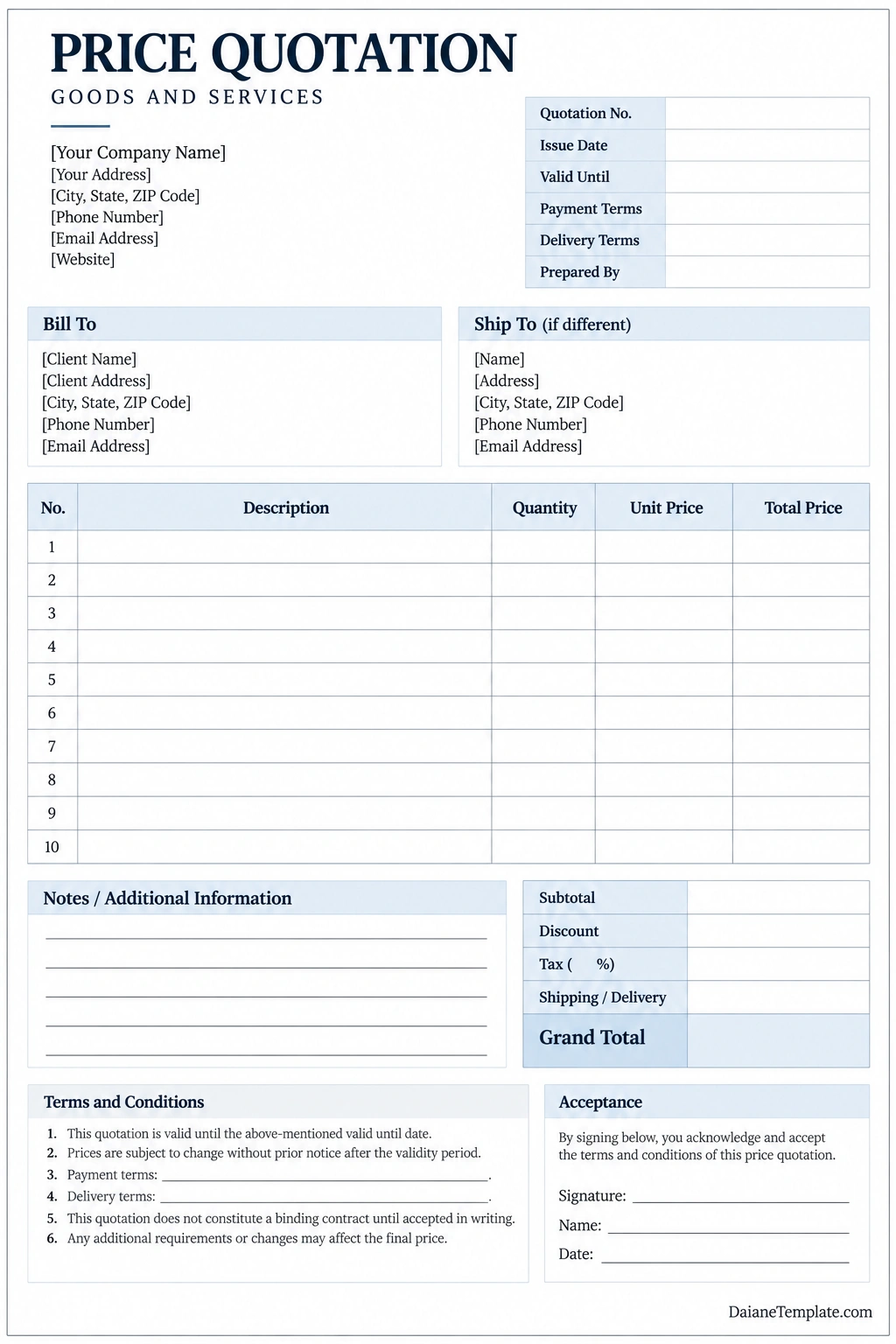
A price quotation commonly includes:
- Business information: The seller’s company name, address, phone number, email, and website.
- Quotation details: A unique quotation number, issue date, and expiration date.
- Customer information: The buyer’s name, business details, billing address, and delivery address when applicable.
- Product or service description: The items being offered, quantities, specifications, and scope of work.
- Pricing breakdown: Unit prices, line totals, discounts, taxes, delivery charges, and the grand total.
- Commercial terms: Payment methods, delivery dates, warranty details, and other relevant conditions.
- Acceptance section: A space for the customer to approve the offer when required.
Why Is a Price Quotation Important?
A well-prepared quotation helps both the seller and the customer understand the proposed transaction before committing to it. It also provides a written record that can be referred to during negotiations and order processing.
1. Creates Pricing Transparency
A detailed price quotation explains how the proposed total is calculated. Customers can see the price of each item or service, along with applicable taxes, delivery fees, and optional extras. This reduces uncertainty and helps prevent unexpected charges.
2. Helps Customers Plan Their Budgets
When customers receive a clear breakdown of expected costs, they can compare the offer with their budget and evaluate alternatives. For larger projects, the quotation can also help customers decide whether to adjust quantities, remove optional services, or change the scope of work.
3. Builds Trust and Professionalism
A consistent, well-organized quotation shows that a business takes its pricing and customer communication seriously. Accurate details and clearly stated conditions make it easier for customers to evaluate the offer and ask informed questions.
4. Reduces Disputes and Misunderstandings
Problems can arise when the customer and seller have different expectations about what is included in a price. A written quotation helps clarify deliverables, quantities, exclusions, deadlines, and additional charges before the transaction moves forward.
5. Supports Sales and Purchasing Decisions
A quotation gives the customer a specific offer to review, discuss, and potentially accept. For the seller, it creates a record of the proposed price and terms that can support follow-up communication and order preparation.
What to Include in a Price Quotation Template
A useful price quotation template should make important information easy to find. The exact layout may vary by industry, but the following sections are suitable for many businesses.
Business and Customer Details
Include the seller’s legal or trading name and current contact information. Add the customer’s name, company, billing address, and delivery address if applicable. Verify these details before sending the quotation to avoid administrative errors.
Quotation Number and Validity Period
Assign each quotation a unique reference number so it can be identified in emails, sales records, and future orders. Include the issue date and a clear expiration date. A validity period helps both parties understand how long the proposed prices and terms are intended to remain available.
Itemized Product or Service List
Describe each product or service in enough detail for the customer to understand what is included. Where relevant, specify model numbers, dimensions, materials, service hours, project phases, or delivery quantities.
For each line item, include:
- Item number or reference.
- Product or service description.
- Quantity or unit of measurement.
- Price per unit.
- Total price for that item.
Subtotal, Taxes, Discounts, and Grand Total
Show how the final amount is calculated. List the subtotal, applicable discounts, taxes, shipping charges, and other fees separately when appropriate. Make sure the grand total reflects the stated quantities and pricing rules.
Tax rates and disclosure requirements vary by location and transaction type. Use the applicable rules for your business rather than assuming that the same tax treatment applies to every quotation.
Payment and Delivery Terms
Explain when payment is due, which payment methods are accepted, and whether a deposit is required. For physical goods, specify the estimated delivery date, shipping method, and delivery location. For services, define the expected start date, milestones, completion timeline, and any customer responsibilities.
Terms, Exclusions, and Acceptance
State any conditions that affect the offer, such as warranty coverage, cancellation terms, installation fees, or work that is not included. If customer acceptance is required, provide a suitable approval section and explain how the customer should respond.
How to Prepare a Professional Price Quotation
Preparing an accurate quotation requires more than entering a price into a form. Follow these steps to make sure the offer reflects the customer’s needs and your business requirements.
Step 1: Understand the Customer’s Requirements
Confirm exactly what the customer needs before calculating the price. Ask about quantities, specifications, deadlines, service expectations, delivery locations, and any special requirements. If essential information is missing, clarify it before preparing the offer.
Step 2: Calculate the Costs
Review the costs associated with fulfilling the order. Depending on the business, these may include materials, labor, production, subcontractors, packaging, transport, and other operating expenses. Make sure the proposed price covers the agreed scope and supports your intended profit margin.
Step 3: Create an Itemized Breakdown
List the goods or services separately where practical. Show quantities and unit prices, then calculate the line totals. An itemized quotation helps the customer understand the offer and makes later revisions easier to manage.
Step 4: Define the Terms and Validity
Set a reasonable period during which the quotation remains valid. Explain payment schedules, delivery expectations, assumptions, exclusions, and any conditions that could change the final price. If material costs or exchange rates are volatile, state clearly how price changes will be handled after the validity period.
Step 5: Check the Calculations and Details
Before sending the quotation, verify the arithmetic, tax treatment, contact details, dates, and item descriptions. Check that the stated grand total matches the line items and that no required service or charge has been omitted.
Step 6: Send the Quotation Professionally
Send the quotation in a format the customer can review and retain, such as a PDF. Use a clear file name and a short message explaining what is attached, how long the offer is valid, and how the customer can ask questions or accept the terms.
Step 7: Follow Up and Record the Outcome
Follow up within an appropriate timeframe to answer questions and learn whether the customer needs a revision. Record whether the quotation was accepted, declined, or remains under consideration. If the scope or price changes, issue a revised quotation with a new reference or version identifier.
Price Quotation vs. Invoice vs. Estimate
These business documents serve different purposes, even though they may contain similar pricing information.
Price Quotation
A price quotation presents a proposed price and the terms under which a seller is willing to supply goods or services. Its purpose is to help the customer evaluate an offer before proceeding. Whether it becomes binding depends on its wording, acceptance, and applicable law.
Invoice
An invoice requests payment for goods or services supplied or billed according to an agreed arrangement. It usually includes an invoice number, payment due date, amount owed, and payment instructions. An invoice is not simply another name for a quotation.
Estimate
An estimate provides an approximate cost based on the information available at the time. The final amount may change if the scope, quantities, or underlying conditions change. A quotation generally presents a more specific offer, although its level of commitment depends on the stated terms and relevant law.
Tips for Creating Accurate and Effective Quotations
- Use clear descriptions: Avoid vague labels that make it difficult to understand what the customer will receive.
- Be transparent about extra charges: Identify taxes, shipping, installation, and optional services separately when applicable.
- Set a clear expiration date: Avoid leaving the validity of the offer open to interpretation.
- Review profit margins: Make sure the price covers the costs and risks of delivering the agreed work.
- State exclusions explicitly: Explain what is not included so the customer can make an informed decision.
- Keep a copy: Store the quotation and related communications in an organized business record system.
- Control revisions: Identify updated quotations clearly so customers do not rely on outdated prices or terms.
- Use consistent branding: Include your business name, contact information, and a clean, readable layout.
Common Price Quotation Mistakes to Avoid
Even a professional-looking quotation can cause problems if important details are missing. Avoid these common mistakes when preparing a quotation for a customer.
- Incomplete scope: A vague description can lead to disagreement over what the quoted price covers.
- Incorrect calculations: Errors in quantities, discounts, taxes, or totals can affect profitability and customer trust.
- Missing validity dates: Without a clear expiration date, it may be difficult to manage changes in costs or availability.
- Unclear payment terms: Customers should understand whether a deposit is required and when the balance is due.
- Unstated exclusions: Important costs or services may be disputed if the quotation does not explain what is outside the agreed scope.
- Uncontrolled changes: Verbal revisions or multiple versions without clear identification can create confusion about the current offer.
Frequently Asked Questions
What is a price quotation used for?
A price quotation is used to present the proposed cost and terms for goods or services before a customer commits to a purchase. It helps the customer understand the offer and allows both parties to review the scope, price, and conditions.
Is a price quotation legally binding?
A price quotation may become legally binding depending on its wording, how it is accepted, the circumstances of the transaction, and applicable law. Clearly state the offer’s terms and acceptance process, and seek qualified legal advice when the transaction carries significant risk.
How long should a price quotation be valid?
The validity period depends on the industry, product availability, project complexity, and price volatility. Some offers remain valid for a short period, while others may be valid for several weeks. State the exact expiration date and explain what happens if the customer responds after it expires.
What is the difference between a price quotation and a price list?
A price list provides general prices for products or services, while a price quotation usually presents a tailored offer for a specific customer, quantity, or project. A quotation may include discounts, delivery costs, validity dates, and transaction-specific terms.
Can I revise a price quotation after sending it?
You can generally issue a revised quotation, but you should identify the changes clearly and communicate them to the customer. Whether you can withdraw or change an existing offer may depend on its terms, whether it has been accepted, and applicable law.
Should a price quotation include tax?
Include tax information according to the applicable legal requirements and the type of transaction. Where relevant, show the tax rate and amount separately so the customer can understand how the final total is calculated.
Can I use a printable price quotation template?
Yes. A printable price quotation template helps standardize the layout and reminds you to include essential information such as customer details, itemized prices, payment terms, and validity dates. Customize the template to suit your business and applicable requirements.
Conclusion
A well-prepared price quotation helps businesses communicate prices clearly, establish expectations, and provide customers with the information they need to make purchasing decisions. By including an accurate itemized breakdown, clear payment and delivery terms, a validity period, and any relevant exclusions, you can reduce misunderstandings and present a more professional offer.
Use a price quotation template to organize the details consistently, check your calculations before sending it, and keep a record of each version. Clear communication at the quotation stage helps both parties understand the proposed transaction before moving forward.
Disclaimer: This article is provided for general informational purposes only and does not constitute legal, tax, or financial advice. The legal effect of a quotation and the requirements for pricing disclosures vary by jurisdiction and transaction. Consult a qualified professional when necessary.
