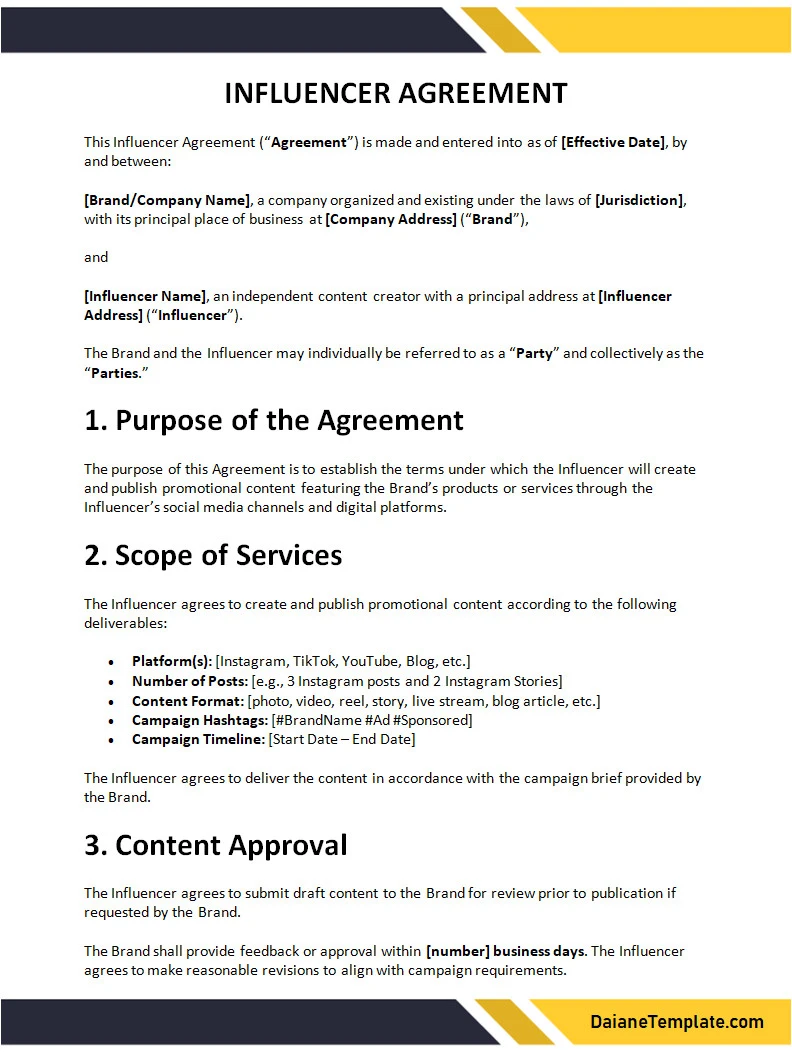
In today’s digital age, influencers have become powerful voices in the marketing world. With their large followings on social media platforms, influencers have the ability to reach and influence a wide audience. As brands increasingly turn to influencers to promote their products or services, it has become essential to have a clear and comprehensive influencer agreement in place.
An influencer agreement is a contract between a brand and an influencer that outlines the terms and conditions of their collaboration.
This article will provide a detailed guide to influencer agreements, covering what they are, why they are important, what to include in them, how to create one, and tips for successful influencer partnerships.
What is an Influencer Agreement?
An influencer agreement is a legally binding contract between a brand and an influencer that governs the terms of their collaboration. It outlines the expectations and responsibilities of both parties, including the scope of work, deliverables, compensation, and other key details. By having an influencer agreement in place, both the brand and the influencer can protect themselves and ensure a successful partnership.
Creating an influencer agreement can help prevent misunderstandings and disputes down the line. It provides clarity on important aspects of the collaboration, such as the content to be created, the timeline for deliverables, and the payment terms. Additionally, an influencer agreement can help establish a professional relationship between the brand and the influencer, setting the tone for a successful partnership.
- Scope of Work: Clearly define the type of content the influencer is expected to create, including the number of posts, videos, or other content formats.
- Deliverables: Specify the deliverables the influencer is responsible for, such as social media posts, blog articles, or product reviews.
- Compensation: Outline the payment terms, including the amount of compensation, payment schedule, and any additional fees or expenses to be covered.
- Usage Rights: Specify how the brand can use the influencer’s content, including whether the brand has the right to repost, repurpose, or distribute the content.
- Timeline: Set a timeline for the collaboration, including deadlines for content creation, review, and publication.
- Confidentiality: Include provisions for confidentiality and non-disclosure to protect sensitive information shared during the collaboration.
- Termination Clause: Include a clause outlining the circumstances under which either party can terminate the agreement.
- Dispute Resolution: Specify how disputes will be resolved, whether through mediation, arbitration, or litigation.
- Indemnification: Include provisions for indemnifying the brand against any claims or liabilities arising from the influencer’s content.
Why are Influencer Agreements Important?
Influencer agreements are important for several reasons. Firstly, they provide clarity and structure to the collaboration between a brand and an influencer. By outlining the expectations and responsibilities of both parties, an influencer agreement can help prevent misunderstandings and conflicts.
Additionally, influencer agreements can help protect both the brand and the influencer by establishing clear terms for the partnership.
What to Include in an Influencer Agreement
When creating an influencer agreement, there are several key elements that should be included to ensure a successful collaboration. These include the scope of work, deliverables, compensation, usage rights, timeline, confidentiality, termination clause, dispute resolution, and indemnification.
By including these elements in the influencer agreement, both the brand and the influencer can set clear expectations and avoid potential disputes.
How to Create an Influencer Agreement
Creating an influencer agreement involves several steps. Firstly, both the brand and the influencer should discuss and agree on the terms of the collaboration, including the scope of work, deliverables, compensation, and other key details. Once the terms have been finalized, the influencer agreement should be drafted and reviewed by both parties. It is important to ensure that the agreement is clear, comprehensive, and legally enforceable. Finally, both parties should sign the influencer agreement to make it legally binding.
Tips for Successful Influencer Partnerships
- Communicate Clearly: Establish open and transparent communication with the influencer to ensure a smooth collaboration.
- Set Expectations: Clearly outline the expectations and responsibilities of both parties in the influencer agreement.
- Be Flexible: Be open to feedback and adjustments during the collaboration to ensure a successful partnership.
- Monitor Performance: Track the influencer’s performance and the impact of their content to evaluate the success of the collaboration.
- Build a Relationship: Foster a positive and professional relationship with the influencer to create a strong partnership.
- Respect Creativity: Allow the influencer creative freedom to express their unique voice and style in their content.
- Follow Legal Guidelines: Ensure compliance with legal regulations, such as FTC guidelines for disclosing sponsored content.
- Evaluate Results: Analyze the results of the collaboration to determine its effectiveness and identify areas for improvement.
- Provide Feedback: Offer constructive feedback to the influencer to help them improve and grow their content.
Conclusion
Influencer agreements are essential for successful collaborations between brands and influencers. By outlining the terms and expectations of the partnership, influencer agreements can help prevent misunderstandings, protect both parties, and ensure a professional and productive relationship.
By following the tips outlined in this article and creating a comprehensive influencer agreement, brands can build strong partnerships with influencers and effectively reach their target audience.
Influencer Agreement Template – Word
