A Purchase Order is an important business document used to formally request goods or services from a supplier. It records what a buyer wants to purchase, including item descriptions, quantities, prices, delivery details, and other order terms. By documenting the agreement before the transaction is completed, a purchase order helps both parties understand exactly what has been ordered.
A well-organized purchase order can also make the purchasing process easier to manage. Businesses can use the purchase order number to connect an order with the supplier’s invoice, delivery records, and internal purchasing records. This helps buyers verify that the goods received match the original order and that they are charged the appropriate amount.
What Is a Purchase Order?
A Purchase Order, often abbreviated as PO, is a document issued by a buyer to a seller or supplier to specify the products or services the buyer intends to purchase. It typically includes information such as the purchase order number, order date, supplier details, item descriptions, quantities, prices, shipping information, and payment terms.
The document creates a clear reference for the transaction. Instead of relying on emails, phone calls, or informal conversations, the buyer and supplier can refer to the same written order details.
Purchase orders are commonly used by businesses of different sizes. A small company may use a simple purchase order for office supplies, while a larger organization may use a more detailed procurement system for recurring purchases and complex supplier relationships.
Why Is a Purchase Order Important?
A purchase order helps establish a clear connection between what a buyer requests and what a supplier delivers. This documentation can reduce misunderstandings and make it easier to review transactions later.
Some of the main benefits of using a purchase order include:
- Clear order documentation: The buyer can specify exactly what products or services are requested.
- Better purchasing control: Orders can be reviewed and approved before purchases are completed.
- Easier invoice matching: The PO number can be matched with the supplier’s invoice to verify the transaction.
- Fewer ordering mistakes: Written quantities, descriptions, and prices can reduce confusion.
- Improved record keeping: Purchase orders provide useful documentation for accounting and procurement records.
- Better supplier communication: Both parties have a shared reference for the order.
- Improved budget management: Planned purchases can be documented before expenses are incurred.
What Information Does a Purchase Order Include?
The exact format of a purchase order can vary depending on the business and type of purchase. However, most purchase orders contain several standard sections.
Purchase Order Number
The PO number is a unique reference assigned to the order. It allows the buyer and supplier to identify the transaction quickly and makes it easier to connect the purchase order with related documents.
Order Date
The order date records when the purchase request was issued. This information can be useful when tracking delivery schedules, payment terms, and purchasing history.
Buyer Information
The purchase order should identify the company or individual placing the order. Depending on the business, this may include the company name, address, contact information, and purchasing department.
Vendor Information
Supplier information identifies the company responsible for fulfilling the order. Include the vendor name and relevant contact details so the order can be communicated clearly.
Item Description
Each product or service should be described clearly. Specific descriptions can help prevent confusion, particularly when similar products have different models, sizes, specifications, or variations.
Quantity
Specify the quantity requested for each item. Clear quantities make it easier to compare the original order with the goods received.
Unit Price and Total Price
When applicable, list the agreed unit price and calculate the total price for each line item. The purchase order can also include subtotal, taxes, shipping costs, discounts, and the final order total.
Delivery Information
Include the requested delivery date, shipping method, and delivery address when these details are relevant to the transaction.
Payment Terms
Payment terms explain when and how the buyer is expected to pay according to the agreed purchasing arrangement. These terms should be consistent with the applicable agreement between the buyer and supplier.
Purchase Order Template
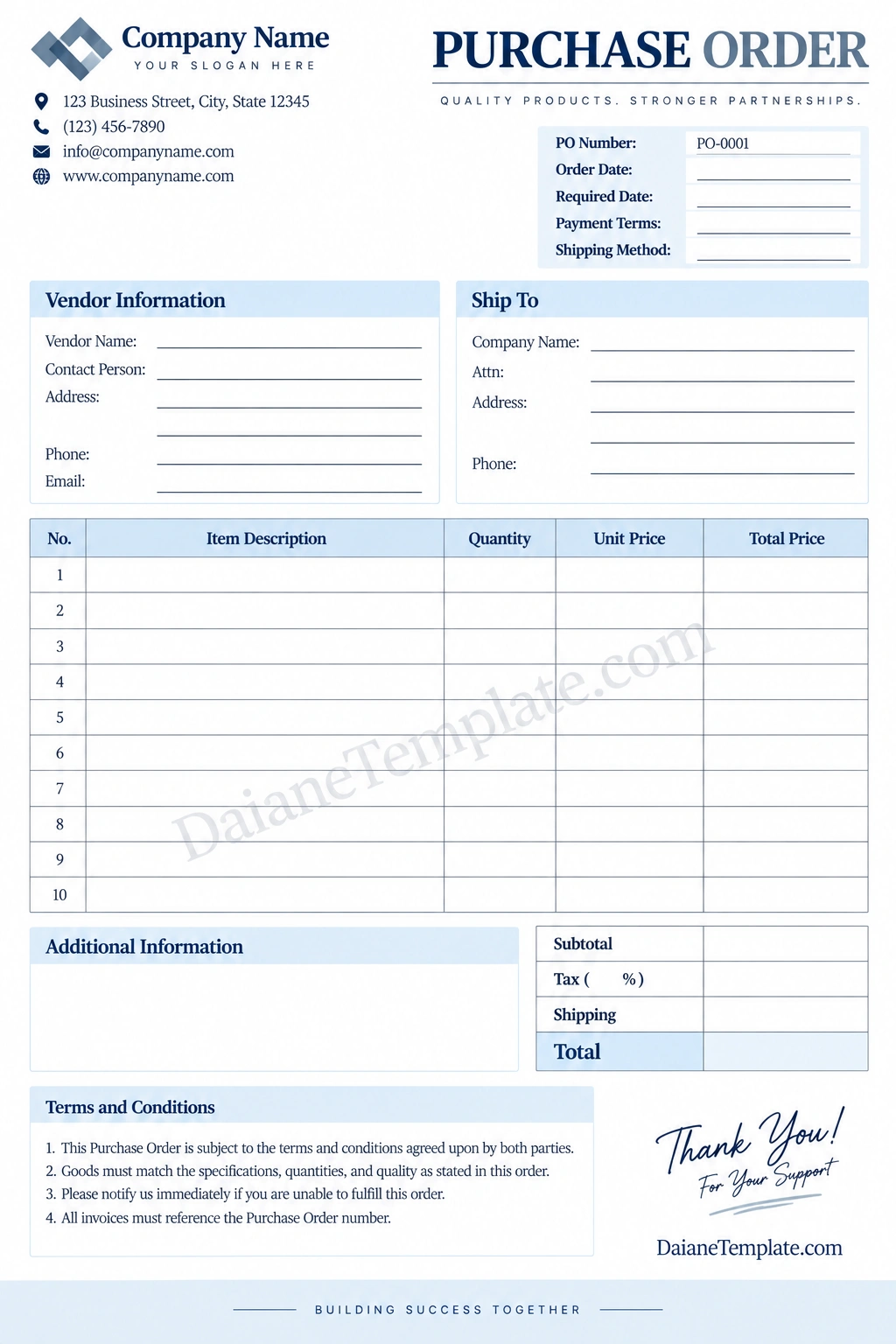
A Purchase Order Template provides a convenient structure for creating and organizing purchase information. Instead of designing a new document every time an order is placed, a business can use a reusable template and fill in the transaction-specific details.
A practical template can include the PO number, order date, vendor information, shipping information, itemized order table, pricing details, additional instructions, and terms and conditions.
How Does a Purchase Order Work?
The purchasing process can vary between businesses, but a purchase order commonly follows a series of steps from identifying a purchasing need to receiving and paying for the order.
Step 1: Identify the Purchasing Need
The process begins when a business determines that it needs specific goods or services. The requester may identify the required products, quantities, specifications, and desired delivery date.
Step 2: Select a Supplier
The buyer selects an appropriate supplier based on factors such as product availability, pricing, quality, delivery requirements, existing agreements, or internal purchasing policies.
Step 3: Create the Purchase Order
The buyer prepares the purchase order with the relevant transaction information. Each item should be described clearly, and quantities and prices should be checked before the document is submitted.
Step 4: Approve the Order
If the organization uses an internal approval process, the purchase order may need to be reviewed by a manager, purchasing department, or another authorized person before it is sent to the supplier.
Step 5: Send the Purchase Order to the Supplier
The completed PO is sent to the supplier through the agreed communication channel. The supplier can then review the order and confirm whether it can be fulfilled.
Step 6: Receive the Goods or Services
When the order arrives, the buyer can compare the received goods with the information documented on the purchase order. Check item descriptions, quantities, specifications, and other relevant details.
Step 7: Match the Invoice to the Purchase Order
The supplier’s invoice can be compared with the purchase order to confirm that the billed products, quantities, and prices correspond to the original order. The PO number provides a useful reference during this process.
Step 8: Complete the Payment Process
After the transaction has been reviewed and approved according to the company’s procedures, the invoice can proceed through the applicable payment process.
Purchase Order vs. Invoice
A purchase order and an invoice serve different purposes even though they are closely connected.
The purchase order is generally created by the buyer to communicate what the buyer wants to purchase. The invoice is generally issued by the seller to request payment for goods or services that have been provided.
For example, a business may create a PO for 50 office chairs at an agreed price. After the chairs are supplied, the vendor may issue an invoice referencing the PO number. The buyer can then compare the invoice against the original order and receiving information.
Purchase Order vs. Sales Order
A purchase order originates from the buyer, while a sales order is generally created by the seller to record and process a customer’s order.
Both documents contain transaction information, but they represent different sides of the purchasing process. The buyer’s purchase order communicates the requested purchase, while the seller’s sales order supports the fulfillment of that customer order.
Purchase Order vs. Receipt
A purchase order documents what the buyer intends to purchase. A receipt generally provides evidence that a transaction or payment has occurred.
These documents can work together as part of a broader purchasing record. The PO describes the planned purchase, while receiving and payment documentation helps establish what was delivered and paid for.
How to Create an Effective Purchase Order
Use a Unique PO Number
Assign a unique purchase order number to each order. A consistent numbering system makes it easier to search for transactions and match related invoices and records.
Describe Items Clearly
Avoid vague product descriptions. Include relevant specifications such as product names, models, sizes, quantities, or service descriptions when necessary.
Verify Prices Before Sending
Check unit prices, discounts, taxes, shipping charges, and totals before issuing the purchase order. Accurate pricing reduces the chance of disputes later in the purchasing process.
Include Delivery Details
Clearly identify where the order should be delivered and provide relevant delivery instructions. If there is a required delivery date, include it in the appropriate field.
Document Important Terms
Include relevant purchasing conditions, payment terms, shipping requirements, or special instructions that the supplier needs to understand before fulfilling the order.
Keep Copies of Purchase Records
Store purchase orders together with related invoices, receiving documents, and other transaction records. Organized documentation makes it easier to investigate discrepancies and review purchasing history.
Common Purchase Order Mistakes to Avoid
- Using duplicate PO numbers: Each purchase order should have a clear and unique identifier.
- Leaving item descriptions vague: Unclear descriptions can cause suppliers to provide incorrect products.
- Entering incorrect quantities: Always verify the requested quantity before submitting the order.
- Forgetting the delivery address: Missing shipping information can delay fulfillment.
- Not checking prices: Review unit prices and totals before the PO is issued.
- Failing to update order changes: Significant changes should be properly documented so both parties have the same information.
- Ignoring invoice matching: Comparing invoices with purchase orders can help identify discrepancies before payment.
- Failing to retain records: Keep purchase documentation organized for future reference.
How Purchase Orders Help With Invoice Matching
One of the most practical uses of a purchase order is connecting the original order with the supplier’s invoice. The PO number provides a common reference that can make this process more efficient.
For example, suppose a company creates Purchase Order PO-1025 for a specific quantity of products. When the supplier sends an invoice, the buyer can use the PO number to locate the original order. The buyer can then compare the invoice details with the purchase order and receiving information.
This process can help identify differences such as incorrect quantities, unexpected prices, missing items, or other discrepancies that may need clarification before payment.
Purchase Order Checklist
Before sending a purchase order to a supplier, review the following details:
- PO number is unique and accurate.
- Order date is correct.
- Buyer information is complete.
- Vendor information is accurate.
- Item descriptions are clear.
- Quantities have been verified.
- Unit prices are correct.
- Totals have been calculated correctly.
- Shipping address is included.
- Required delivery date is documented.
- Payment terms are clear.
- Special instructions are included when necessary.
When Should a Business Use a Purchase Order?
Businesses can use purchase orders whenever formal documentation of a planned purchase is useful or required by their internal procedures. They are particularly helpful for recurring purchases, larger orders, purchases involving multiple items, and transactions where accurate documentation is important.
Small businesses can benefit from them as well. A simple purchase order system can provide better organization without requiring a complicated procurement process.
Final Thoughts
A Purchase Order provides a clear written record of what a buyer intends to purchase from a supplier. By documenting products or services, quantities, prices, delivery information, and other important terms, it creates a useful reference for both purchasing and receiving processes.
The PO number is particularly valuable because it can connect the original order with the supplier’s invoice and related records. When businesses consistently compare purchase orders, received goods, and invoices, they can make discrepancies easier to identify and maintain more organized purchasing records.
Using a Purchase Order Template can simplify the process by providing a reusable structure for each transaction. With accurate information, consistent numbering, and organized record keeping, purchase orders can become an effective part of a company’s procurement and financial workflow.
