A Professional Resignation Letter is a formal document used to notify an employer that you have decided to leave your position. It creates a clear written record of your resignation, confirms your intended final working day, and gives your employer an opportunity to prepare for the transition.
Leaving a job can be an important career decision, but the way you communicate your departure can also affect your professional relationships. A well-written resignation letter should be clear, respectful, and concise. It does not need to explain every detail behind your decision. Instead, it should provide the essential information your employer needs while helping you leave on a positive and professional note.
What Is a Professional Resignation Letter?
A Professional Resignation Letter is a formal written notice that communicates an employee’s decision to resign from a position. It is normally addressed to a manager, supervisor, human resources representative, or another appropriate person within the organization.
The letter typically states the employee’s intention to resign, identifies the position being left, and provides the proposed final working date. It may also include a brief expression of appreciation and an offer to assist with the transition.
A resignation letter is different from an informal conversation about leaving. A conversation can begin the process, but a written resignation provides documented confirmation of the employee’s decision and intended departure date.
Why Is a Professional Resignation Letter Important?
Providing a formal resignation letter helps both the employee and employer maintain a clear record of the departure. It also provides a professional way to communicate important information without unnecessary detail.
A well-prepared resignation letter can help you:
- Formally notify your employer of your decision to leave.
- Document your resignation and intended final working day.
- Support a smooth transition by giving the employer time to prepare.
- Maintain a positive professional relationship with your manager and coworkers.
- Protect future professional relationships that may become valuable for references or networking.
- Demonstrate professionalism during the final stage of your employment.
What to Include in a Professional Resignation Letter
A resignation letter does not need to be lengthy. In most situations, the most effective letter focuses on the essential information and uses a respectful professional tone.
Your Contact Information
Depending on the format and workplace requirements, you can include your name, address, email address, and phone number at the beginning of the letter. Including contact information can make the document easier to identify and retain for employment records.
The Date
Include the date on which you are submitting the resignation letter. This establishes when your formal written notice was provided.
Recipient Information
Address the letter to the appropriate manager, supervisor, human resources representative, or other designated recipient. Use the person’s professional name and title when appropriate.
A Clear Resignation Statement
The opening paragraph should make your purpose immediately clear. State that you are resigning from your position and identify your job title if necessary.
Your Final Working Day
Clearly state the date you intend to finish working. Before selecting the date, review your employment agreement, company policies, and any applicable workplace requirements so your notice period is handled appropriately.
An Expression of Appreciation
A brief expression of appreciation can help maintain a positive tone. You might mention the experience, opportunities, skills, or professional relationships you valued during your employment.
Transition Assistance
If appropriate, offer reasonable assistance during the notice period. This might include documenting responsibilities, organizing files, completing outstanding tasks, or helping transfer knowledge to another employee.
Professional Closing
End the letter with a professional closing such as “Sincerely” followed by your signature and printed name.
Professional Resignation Letter Template
Using a Professional Resignation Letter Template can make it easier to organize the required information and create a polished document. A template provides a structure that you can customize according to your position, employer, notice period, and circumstances.
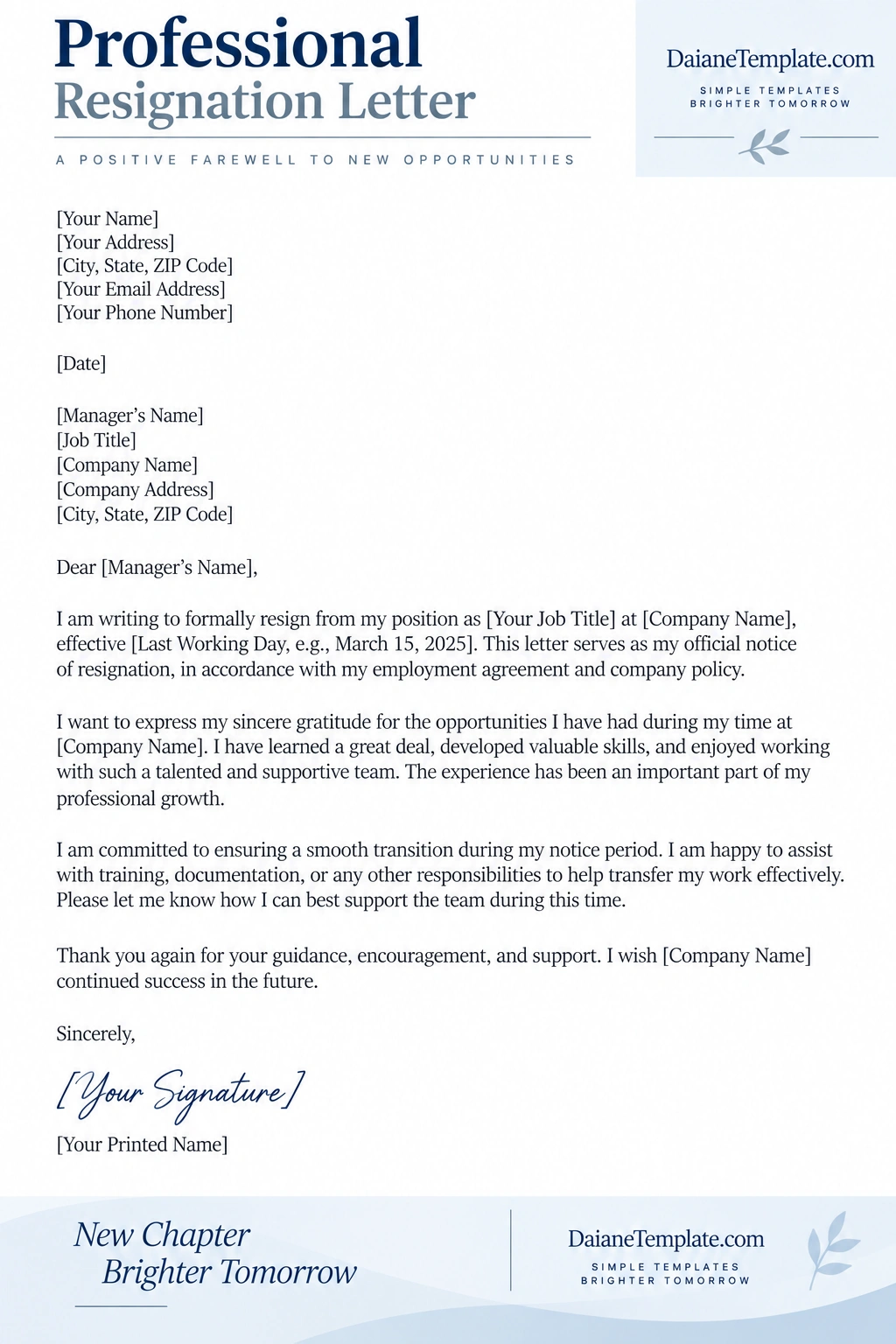
The sample below provides a straightforward format that includes employee information, recipient details, resignation notice, appreciation, transition assistance, and a professional closing.
How to Write a Professional Resignation Letter
Step 1: Review Your Employment Requirements
Before writing your letter, check your employment agreement and workplace policies for information about resignation notice requirements. Make sure the final working date you propose is consistent with the applicable requirements.
Step 2: Use a Formal Business Letter Format
Use a clean and professional format. Include the date, recipient information, greeting, body paragraphs, closing, and your name. A simple layout is usually more effective than excessive formatting.
Step 3: State Your Decision Clearly
Do not make the reader guess why you are writing. State your resignation directly and professionally near the beginning of the letter.
Step 4: Specify Your Final Working Date
Clearly identify the date you expect to leave. Providing a specific date helps your employer understand the timing of your departure and begin planning the transition.
Step 5: Keep the Explanation Brief
You are not generally required to provide a detailed explanation of every reason behind your decision in the resignation letter. If you choose to mention your reason, keep the explanation professional and appropriate for the workplace.
Step 6: Offer Transition Support
Consider offering assistance with the handover process. This can demonstrate consideration for your coworkers and help reduce disruption when your responsibilities are transferred.
Step 7: Proofread Before Sending
Check the spelling of names, dates, job titles, company information, and other important details. A resignation letter becomes part of your professional communication, so it should be accurate and polished.
Professional Resignation Letter Example
A simple resignation letter might begin by formally stating the employee’s intention to resign and identifying the final working day. The following paragraphs can express appreciation for the employment experience and offer assistance with the transition.
The closing should remain courteous and professional. There is no need to include lengthy explanations, complaints, or detailed discussions about workplace problems unless there is a specific reason to document those matters separately.
The goal is to create a clear resignation notice that communicates the necessary information while leaving the employment relationship on a respectful note.
When Should You Submit a Resignation Letter?
The appropriate timing depends on your employment agreement, workplace policies, and applicable requirements. In many workplaces, employees discuss their resignation with their manager and then provide a formal written notice.
It is useful to prepare the letter before the conversation so that you can provide a clear written record of your decision. Make sure the stated final working date matches the notice period you are expected to provide.
How to Keep a Resignation Letter Professional
Be Direct
A professional resignation letter should communicate its purpose quickly. Avoid vague language that could make your intentions unclear.
Remain Respectful
Even if your employment experience has been difficult, keeping the resignation letter professional can help avoid unnecessary conflict. The document should focus on the resignation rather than personal criticism.
Keep It Concise
There is usually no need for several pages. A concise letter containing the key details can be easier for managers and human resources staff to process and retain.
Focus on the Transition
If you have responsibilities that need to be transferred, offer practical assistance where reasonable. This could include preparing documentation, organizing current projects, or explaining important processes to the person taking over your work.
Common Mistakes to Avoid
- Being unclear about the resignation: Make your decision explicit.
- Forgetting the final working date: Include a specific date so the timing is documented.
- Writing an emotional letter: Avoid personal attacks, accusations, or language you may later regret.
- Providing excessive detail: Keep explanations focused on information relevant to the resignation.
- Using an overly casual tone: A resignation letter is a formal workplace document.
- Making negative comments about coworkers: Keep the document professional and focused on your departure.
- Failing to proofread: Incorrect names or dates can create unnecessary confusion.
- Ignoring workplace requirements: Review applicable employment documents and policies before determining your notice period.
Professional Resignation Letter for Different Situations
Resignation for a New Job
If you are leaving to accept another opportunity, you can keep the explanation brief. You do not need to provide extensive information about your new employer or compensation.
Resignation for Personal Reasons
When leaving for personal reasons, you can simply state that you are resigning for personal reasons if you want to provide a general explanation. Detailed personal information is usually unnecessary in the resignation letter.
Career Change Resignation
If you are changing careers, pursuing education, or moving toward a different professional path, you can mention the transition briefly while keeping the primary focus on your formal resignation.
Remote Work Resignation
Employees working remotely can use the same basic resignation letter structure. The transition section may be particularly useful for explaining how files, equipment, projects, accounts, and other responsibilities will be handed over.
Should You Explain Why You Are Leaving?
A resignation letter can include a reason, but it does not necessarily need to provide extensive details. The primary purpose is to formally communicate your resignation and final working date.
If you decide to explain your reason, use neutral and professional language. For sensitive workplace concerns, consider whether a separate conversation with human resources or management is more appropriate than including extensive details in the resignation notice itself.
How to Make the Transition Easier
A professional resignation does not end with the letter. During the notice period, you can help the organization prepare for your departure by keeping your work organized and communicating important information.
- Document important processes and recurring responsibilities.
- Organize project files so they can be accessed easily.
- Identify outstanding tasks and their current status.
- Communicate important deadlines to the appropriate team members.
- Assist with knowledge transfer when requested.
- Complete reasonable outstanding work before your final day.
- Return company property according to workplace procedures.
- Maintain professional communication through your final working day.
Digital and Printed Resignation Letters
A resignation letter may be submitted as a printed document or electronically, depending on the employer’s procedures. If your organization accepts email resignations, you can attach a properly formatted resignation letter or include the necessary information in the email according to company requirements.
When a formal document is requested, a printable resignation letter template can help create a consistent and professional presentation. Keep a copy of the submitted letter and any confirmation of receipt for your personal employment records when appropriate.
Professional Resignation Letter Checklist
Before submitting your resignation, review the letter using this simple checklist:
- Your name and contact information are correct.
- The date is accurate.
- The recipient’s name and title are correct.
- Your resignation is clearly stated.
- Your position is identified.
- Your intended final working date is included.
- The tone is respectful and professional.
- Any explanation is concise and appropriate.
- Transition assistance is offered when appropriate.
- The letter has been proofread.
Final Thoughts
A Professional Resignation Letter provides a clear and respectful way to formally notify an employer about your departure. By including your resignation decision, final working date, appreciation, and transition information, you can create a useful written record while maintaining professional communication.
The best resignation letters are usually straightforward, courteous, and focused on the essential details. A Professional Resignation Letter Template can simplify the process by giving you an organized structure that you can customize for your specific situation. Taking the time to prepare a thoughtful resignation notice can help support a smoother transition and preserve valuable professional relationships as you move toward your next chapter.
