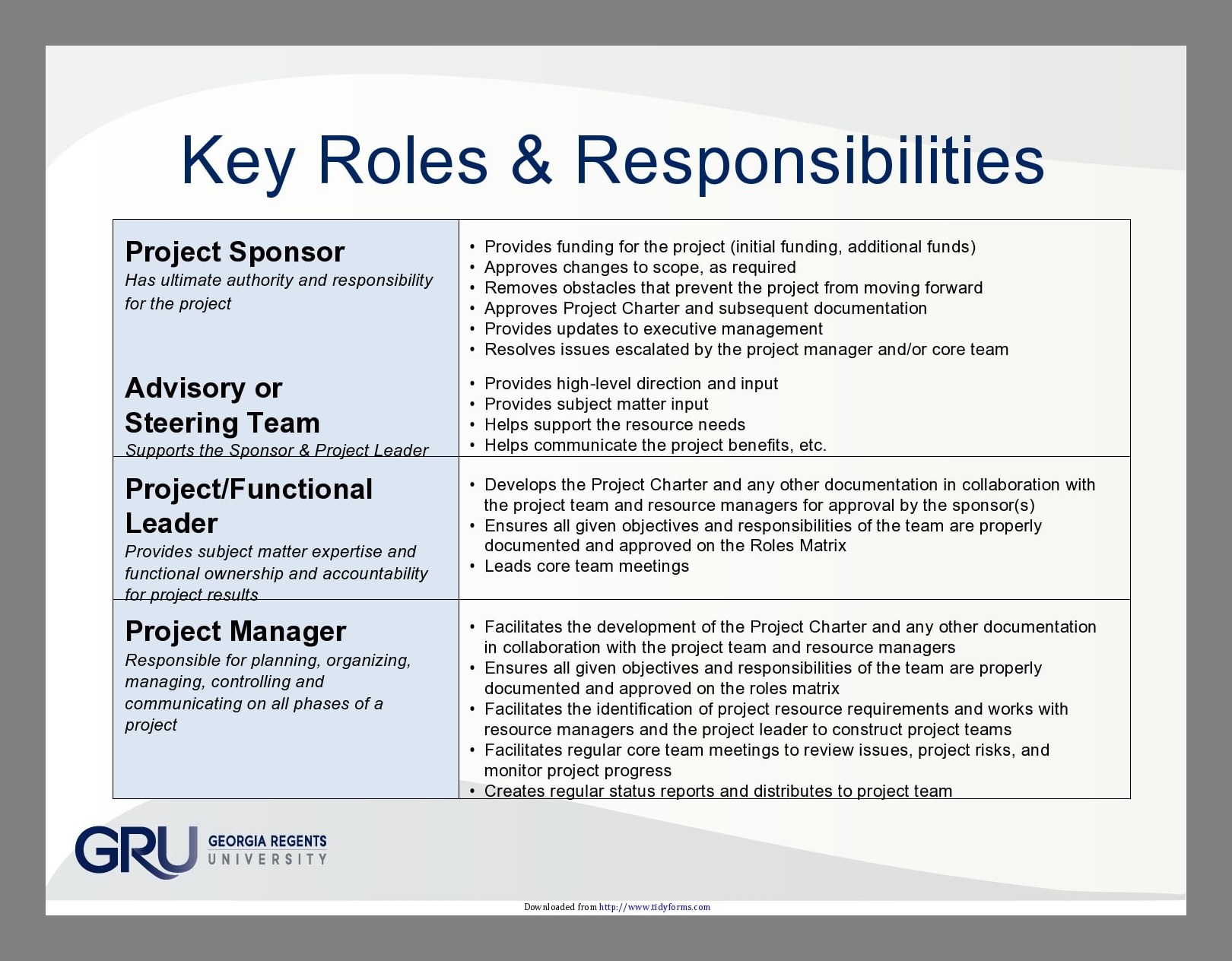
Roles and responsibilities are essential components of any organization, defining the tasks and duties that individuals are expected to perform within their job positions. Understanding these roles is crucial for effective teamwork, communication, and overall productivity in the workplace. By clearly defining roles and responsibilities, organizations can avoid confusion, duplication of efforts, and conflicts among team members. In this article, we will delve into the What, Why, Key Elements, How to, and Tips for Successful implementation of roles and responsibilities in the workplace.
What are Roles and Responsibilities?
Roles refer to the positions or functions that individuals hold within an organization, defining their authority, responsibilities, and tasks. Responsibilities, on the other hand, are the specific duties and obligations that come with a particular role. Both roles and responsibilities are interconnected, with roles providing the framework for the tasks that need to be accomplished.
Why Understanding Roles and Responsibilities is Important
Clear understanding of roles and responsibilities is crucial for the smooth functioning of any team or organization. Some key reasons why this understanding is important include:
- Effective Communication: When everyone knows their roles and responsibilities, communication becomes more efficient, reducing the chances of misunderstandings and conflicts.
- Accountability: Clearly defined roles and responsibilities help in holding individuals accountable for their actions and performance.
- Productivity: When tasks are clearly assigned, team members can focus on their specific responsibilities, leading to higher productivity levels.
- Teamwork: Understanding roles and responsibilities fosters a sense of teamwork, as each member knows their contribution to the overall success of the team.
Key Elements of Roles and Responsibilities
Several key elements make up roles and responsibilities within an organization:
- Clear Job Descriptions: Each role should have a detailed job description outlining the duties, expectations, and requirements for the position.
- Authority and Accountability: Roles should clearly define the level of authority and accountability that comes with the position.
- Task Allocation: Tasks should be allocated based on individual strengths, skills, and expertise to ensure efficient task completion.
- Communication Channels: Clear communication channels should be established to facilitate collaboration and information sharing among team members.
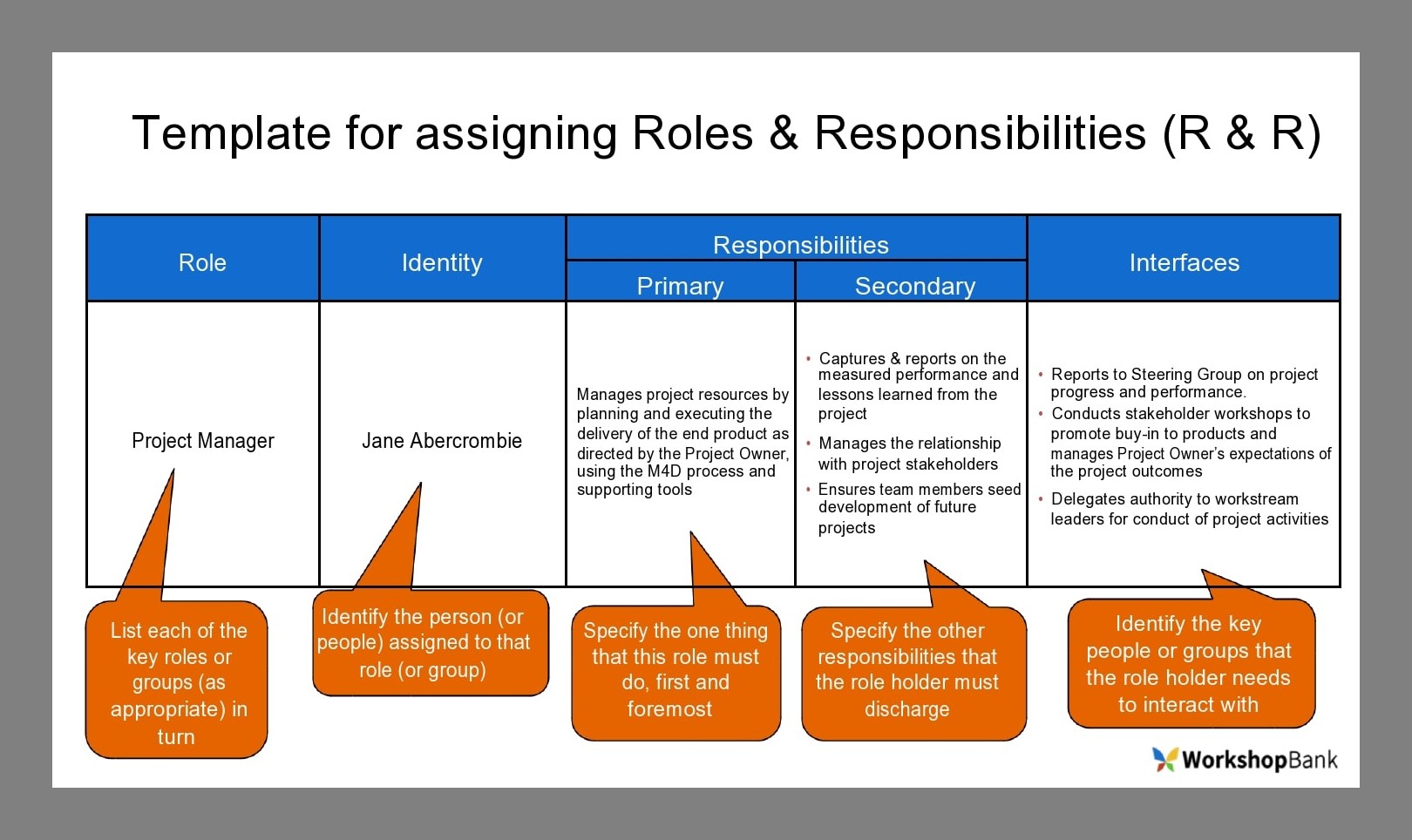
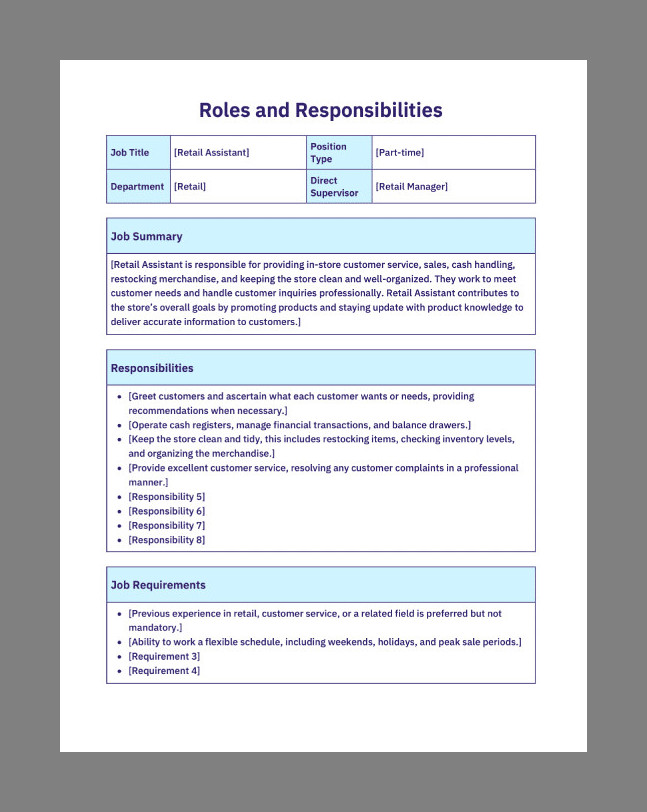
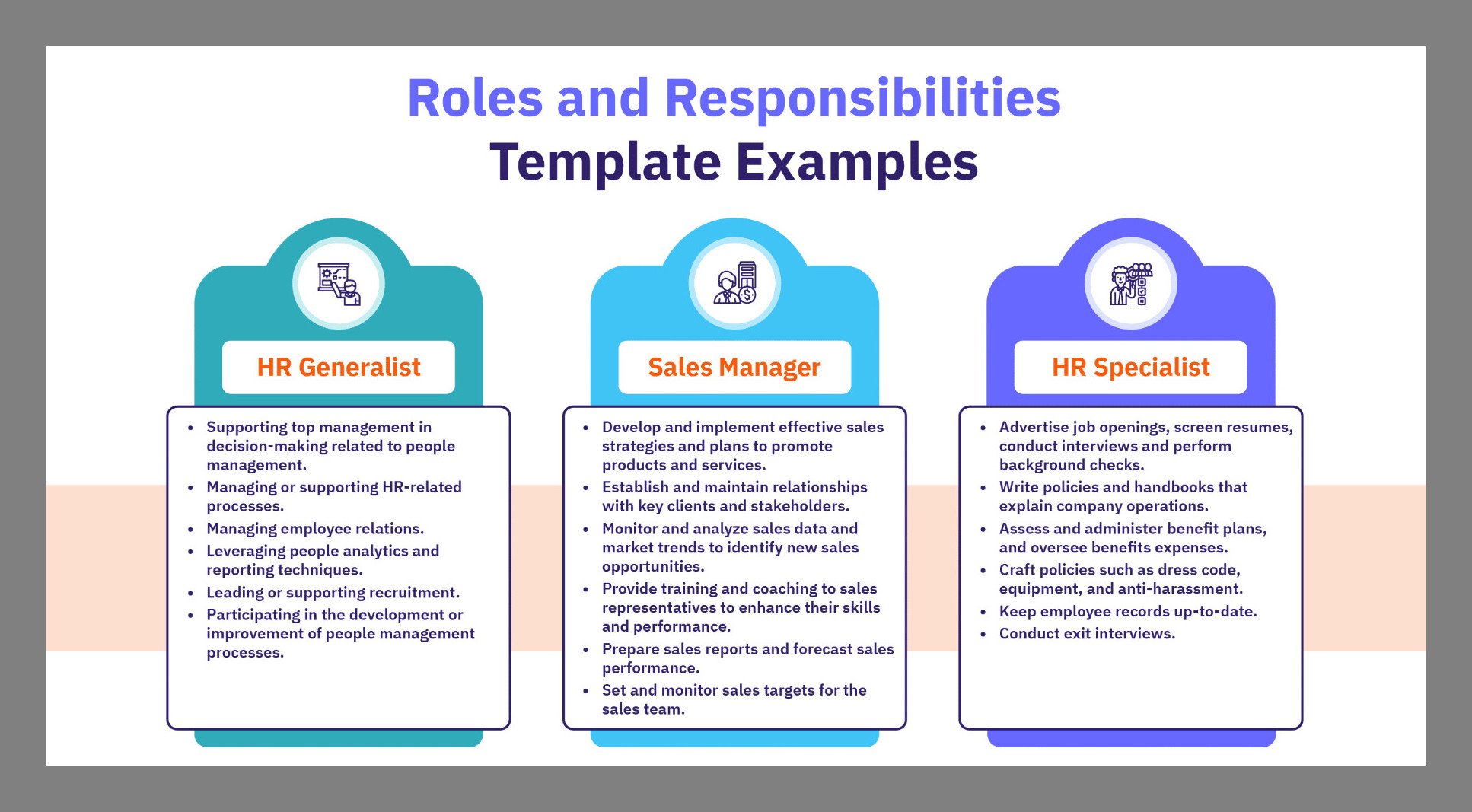
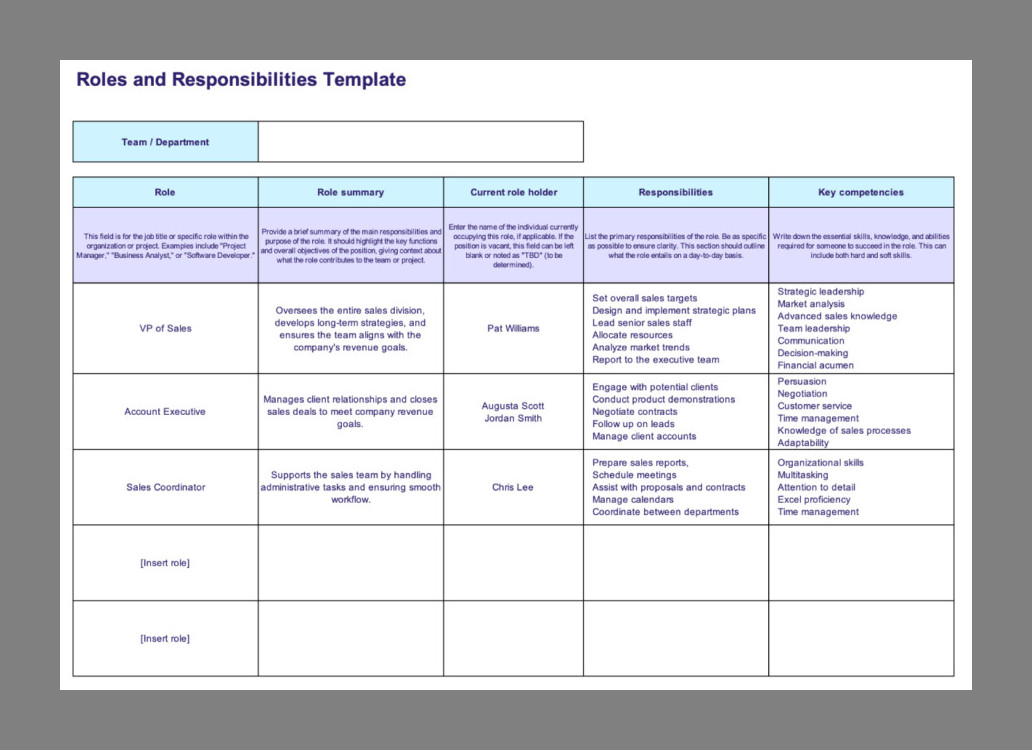
Examples
How to Define Roles and Responsibilities
Defining roles and responsibilities effectively requires a systematic approach. Here are some steps to help you define roles and responsibilities within your organization:
1. Conduct a Role Analysis:
Start by analyzing the current roles within your organization, identifying gaps, overlaps, and areas for improvement.
2. Define Clear Job Descriptions:
Develop detailed job descriptions for each role, outlining the key responsibilities, tasks, and expectations for the position.
3. Establish Communication Protocols:
Set clear communication protocols to ensure that team members are informed about their roles, responsibilities, and any changes in tasks or duties.
4. Assign Tasks Strategically:
Assign tasks based on individual strengths, skills, and expertise, ensuring that each team member is equipped to handle their responsibilities effectively.
5. Provide Training and Support:
Offer training and support to team members to help them fulfill their roles and responsibilities effectively, promoting continuous improvement and growth.
6. Regularly Review and Update Roles:
Periodically review and update roles and responsibilities to adapt to changing business needs, new challenges, and evolving team dynamics.
7. Foster a Culture of Accountability:
Promote a culture of accountability within your organization, where team members take ownership of their roles and responsibilities to achieve common goals.
Tips for Successful Implementation of Roles and Responsibilities
Here are some tips to ensure the successful implementation of roles and responsibilities within your organization:
- Communicate Clearly: Ensure that roles and responsibilities are communicated clearly to all team members to avoid confusion.
- Encourage Collaboration: Foster a collaborative environment where team members work together to achieve common objectives.
- Provide Feedback: Offer regular feedback to team members on their performance in fulfilling their roles and responsibilities.
- Empower Team Members: Empower team members to take ownership of their roles and make decisions within their areas of responsibility.
- Recognize Achievements: Recognize and reward team members for their contributions and achievements in fulfilling their roles.
- Address Issues Promptly: Address any issues or conflicts related to roles and responsibilities promptly to maintain a harmonious work environment.
- Encourage Continuous Learning: Encourage team members to engage in continuous learning and development to enhance their skills and capabilities in fulfilling their roles.
- Lead by Example: As a leader, lead by example by fulfilling your own roles and responsibilities effectively, setting a positive tone for the rest of the team.
By understanding the importance of roles and responsibilities, defining clear expectations, and implementing effective communication and collaboration strategies, organizations can enhance teamwork, productivity, and overall success in the workplace.
Roles and Responsibilities Template – Download
