A proforma invoice is a preliminary commercial document that provides a buyer with an estimated summary of a proposed transaction before the sale is finalized. It typically describes the goods or services, quantities, prices, shipping information, payment terms, and other important details that help both parties understand the expected transaction.
Unlike a standard commercial invoice, a proforma invoice is generally not a final demand for payment. Instead, it works more like a detailed quotation presented in an invoice-style format. It can be especially useful when buyers and sellers need to confirm transaction details before an order is completed.
Proforma invoices are commonly used in international trade, wholesale transactions, bulk purchases, and other situations where the buyer needs detailed information before the final invoice is issued. A well-prepared document can reduce confusion and establish clear expectations between the seller and buyer.
What Is a Proforma Invoice?
A proforma invoice is a document prepared by a seller to describe the expected terms of a transaction before the final sale or shipment is completed. It can include information similar to a commercial invoice, but its purpose is generally preliminary rather than final billing.
The document may show the seller and buyer information, description of goods, quantities, estimated prices, shipping details, payment terms, currency, delivery information, and other conditions relevant to the proposed transaction.
Because a proforma invoice is generally an estimate or preliminary document, the final commercial invoice may contain different information once the transaction is completed.
What Is the Purpose of a Proforma Invoice?
The main purpose of a proforma invoice is to communicate the expected terms and costs of a transaction before it is finalized. It gives the buyer an opportunity to review the proposed order and confirm that the details are correct.
A proforma invoice can help:
- Present estimated transaction costs to the buyer.
- Describe the goods or services included in a proposed order.
- Clarify quantities and pricing before final invoicing.
- Document proposed payment terms.
- Provide estimated shipping and delivery information.
- Support certain customs or import documentation processes when appropriate.
- Help buyers obtain internal purchasing approval.
- Establish a shared understanding of the proposed transaction.
- Reduce misunderstandings before an order is finalized.
The exact purpose and treatment of a proforma invoice can vary depending on the transaction, industry, country, and applicable rules.
Proforma Invoice vs. Commercial Invoice
One of the most important distinctions is the difference between a proforma invoice and a commercial invoice.
A proforma invoice is generally prepared before a transaction is finalized. It communicates expected details and estimated charges, allowing the buyer to review the proposed transaction.
A commercial invoice is typically a final trade document associated with an actual completed or finalized sale. In international transactions, the commercial invoice can be an important document for customs and other official purposes.
In simple terms, a proforma invoice helps establish what the transaction is expected to look like, while a commercial invoice documents the finalized transaction.
The two documents should not automatically be treated as interchangeable. Businesses should follow the documentation requirements applicable to their specific transaction and destination.
When Should You Use a Proforma Invoice?
A proforma invoice can be useful whenever a buyer needs detailed information about a proposed transaction before the final invoice is issued.
International Trade
Importers and exporters may use proforma invoices during the planning stages of an international transaction. The document can provide information about the goods, value, shipping details, and proposed terms that may be needed for certain processes.
Wholesale Orders
Businesses handling large or customized orders can use a proforma invoice to present the expected quantities, unit prices, shipping charges, and estimated total before the order is finalized.
Custom Orders
When a product or service is prepared specifically for a buyer, a proforma invoice can give the customer a detailed overview of the proposed transaction before production or fulfillment begins.
Purchasing Approval
A buyer may use a proforma invoice internally to request purchasing approval or confirm that the proposed transaction fits within an organization’s budget and requirements.
Key Information to Include in a Proforma Invoice
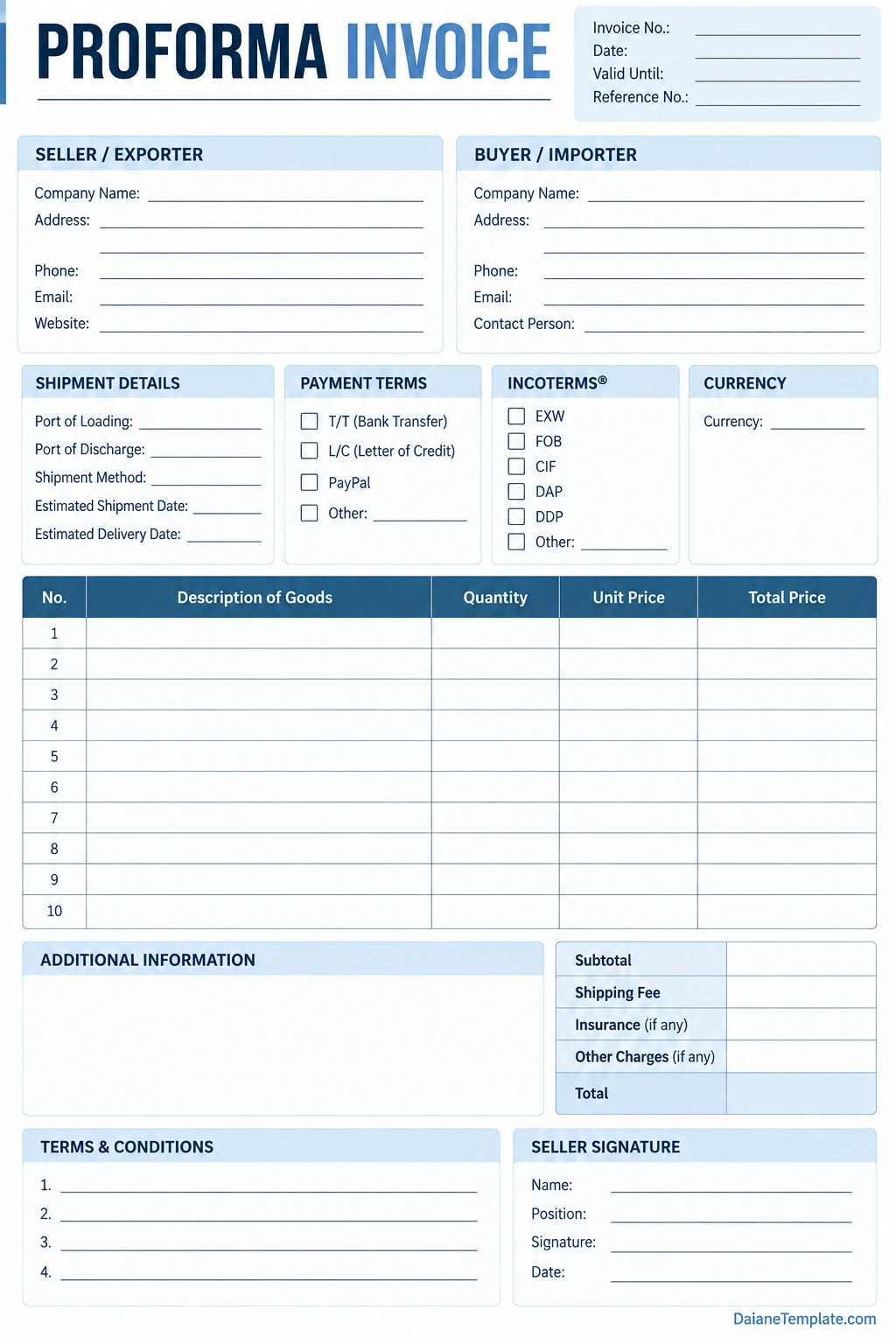
A professional proforma invoice template should provide enough information for the buyer to understand the proposed transaction. The exact requirements vary, but several sections are commonly useful.
Seller Information
Include the seller’s business name, address, telephone number, email address, and other relevant contact information. If the seller has a website or business registration information that is relevant to the transaction, those details may also be included.
Buyer Information
The buyer section should identify the customer or importing company. Include the buyer’s name, address, contact information, and contact person when appropriate.
Invoice Reference Details
The document can include a proforma invoice number, issue date, validity date, and reference number. These identifiers make it easier for both parties to organize and discuss the proposed transaction.
Product or Service Description
Clearly describe each product or service included in the proposed transaction. For goods, useful details may include product names, specifications, model numbers, or other identifying information.
Descriptions should be specific enough to prevent confusion between similar products or variations.
Quantity and Unit Price
For products, list the quantity and applicable unit price for each line item. This makes it easier for the buyer to understand how the estimated transaction value is calculated.
Currency
Clearly identify the currency used for the quoted prices. This is particularly important in international transactions where the buyer and seller operate in different countries.
Shipping Details
Shipping information can include the estimated shipment date, expected delivery date, shipping method, port of loading, port of discharge, and other relevant transportation details.
Payment Terms
State the proposed payment method and payment conditions when applicable. Examples may include bank transfer, letter of credit, or another agreed payment method.
Incoterms
International transactions may reference applicable Incoterms to clarify responsibilities related to delivery, transportation, costs, and risk. When Incoterms are used, businesses should ensure that the correct current rule and named place are specified.
How to Calculate the Estimated Total
A proforma invoice should make the proposed transaction value easy to understand. Start by calculating the value of each line item based on its quantity and unit price.
The document may then show additional estimated charges such as shipping, insurance, or other applicable costs. These amounts can be presented separately before calculating the estimated total.
For example, a simple structure may include:
- Product subtotal
- Estimated shipping charges
- Estimated insurance costs, if applicable
- Other applicable charges
- Estimated total
Any taxes, duties, fees, or other amounts should be presented accurately and in accordance with the circumstances of the transaction. Not every charge necessarily belongs on every proforma invoice.
How to Create a Proforma Invoice
Creating a proforma invoice becomes easier when the document follows a consistent structure.
1. Add the Seller and Buyer
Start by entering the complete contact information for both parties. Check names and addresses carefully because these details may also be used in other transaction documents.
2. Assign a Reference Number
Give the document a unique reference or proforma invoice number. This makes it easier to track revisions and correspondence.
3. Describe the Transaction
List the goods or services being proposed. Include relevant descriptions, quantities, and unit prices.
4. Add Shipping and Delivery Details
Enter the expected shipping method, shipment dates, delivery information, and other relevant logistics details.
5. Specify Payment Terms
Document the proposed payment method and any important payment conditions that have been agreed upon or proposed.
6. Calculate the Estimated Total
Show the subtotal and any relevant estimated additional charges. Make the calculation easy for the buyer to review.
7. Add Terms and Conditions
Use a terms section to document important conditions, assumptions, validity dates, or other transaction-specific information.
8. Review Before Sending
Check product descriptions, quantities, prices, currency, shipping information, and buyer details before sending the proforma invoice to the customer.
Benefits of Using a Proforma Invoice
A well-prepared proforma invoice can provide practical benefits for both buyers and sellers.
- Clear communication: Both parties can see the proposed transaction details in one document.
- Better planning: Buyers can estimate expected costs before committing to the purchase.
- Fewer misunderstandings: Product descriptions, quantities, prices, and terms can be reviewed in advance.
- Professional presentation: A structured document creates a clear record of the proposed transaction.
- Easier internal approval: Organizations can use the document as supporting information for purchasing decisions.
- Useful for international transactions: Detailed preliminary information can assist with certain trade and logistics processes.
Common Mistakes to Avoid
A proforma invoice should be reviewed carefully because inaccurate preliminary information can create confusion later.
- Using an unclear or incomplete product description.
- Failing to specify the currency.
- Mixing estimated amounts with final charges without explanation.
- Leaving the validity period unclear when the quoted prices are time-sensitive.
- Using incorrect quantities or unit prices.
- Omitting important shipping information for international orders.
- Using outdated or incorrect Incoterms terminology.
- Failing to distinguish the proforma invoice from the final commercial invoice.
- Sending the document without checking buyer and seller information.
Using a Proforma Invoice Template
A printable proforma invoice template can provide a convenient starting point for businesses that regularly prepare preliminary transaction documents. Instead of designing every invoice from scratch, users can fill in the relevant seller, buyer, product, shipping, payment, and pricing information.
A good template should provide enough space for itemized products while keeping important transaction information easy to locate. Sections for payment terms, shipment details, currency, totals, terms and conditions, and signatures can make the document more comprehensive.
Templates should still be customized for the specific transaction. Businesses should verify that the information included in the document is accurate and appropriate for the destination country, industry, customer, and transaction type.
Proforma Invoice Checklist
Before sending a proforma invoice, review the following checklist:
- Seller information is complete and accurate.
- Buyer information is correct.
- Proforma invoice number is included.
- Issue date and validity date are clear when applicable.
- Products or services are described accurately.
- Quantities and unit prices are correct.
- Currency is clearly identified.
- Shipping details are included when relevant.
- Payment terms are clearly stated.
- Applicable delivery terms are correctly identified.
- Additional charges are clearly explained.
- Estimated total has been checked.
- Terms and conditions are appropriate.
- The document is clearly identified as a proforma invoice.
Final Thoughts
A proforma invoice is a useful preliminary document for communicating the expected details of a transaction before the final sale is completed. By presenting product information, quantities, estimated pricing, shipping details, payment terms, and other conditions in an organized format, it helps buyers and sellers establish clear expectations.
Although it resembles a commercial invoice, a proforma invoice generally serves a different purpose. It is typically used as a preliminary document rather than a final demand for payment. The final documentation required will depend on the transaction and applicable rules.
For businesses that regularly prepare preliminary quotes or international trade documents, a proforma invoice template can make the process faster and more consistent. With accurate information, clear terms, and careful review, a well-prepared proforma invoice can help create a smoother transaction from the initial proposal through to the final sale.
Download: Proforma Invoice Template
