A self-employed invoice is a professional document used by freelancers, independent contractors, consultants, and other self-employed individuals to request payment for products or services they have provided. It gives the client the information needed to make payment while creating a clear record of the transaction for the business owner.
For self-employed professionals, invoicing is more than simply asking a client to pay. A properly prepared invoice can document the work performed, establish the amount owed, communicate payment terms, support bookkeeping, and help organize income records for accounting and tax purposes.
Whether you provide freelance writing, graphic design, consulting, web development, photography, home services, or another type of independent service, a clear invoice can make the payment process easier and more professional.
What Is a Self-Employed Invoice?
A self-employed invoice is a payment request issued by an individual who works independently rather than as a traditional employee. It typically identifies the seller or service provider, the client, the services or products provided, the amount due, and the terms for payment.
Unlike an employee pay stub, a self-employed invoice is generally prepared and issued by the person or business providing the goods or services. The invoice serves as a written record of the transaction and can be retained by both parties for their records.
A typical self-employed invoice may include:
- Business or freelancer name
- Contact information
- Client name and billing information
- Invoice number
- Invoice date
- Payment due date
- Description of products or services
- Quantity or hours worked
- Rate or unit price
- Subtotal
- Applicable taxes
- Total amount due
- Accepted payment methods
- Payment terms
- Additional notes or instructions
Why Is a Self-Employed Invoice Important?
Invoicing provides structure to the financial side of independent work. A professional invoice makes it clear what the client is being charged for and how much is owed.
Creates a Formal Payment Request
An invoice clearly communicates that payment is due for goods or services that have been provided. Instead of relying on an informal message or verbal request, the client receives a document containing the relevant transaction details.
Provides a Business Record
Invoices can help self-employed individuals maintain organized records of sales and service income. Keeping invoices together with receipts, contracts, expenses, and other financial records can make bookkeeping more systematic.
Clarifies What the Client Is Paying For
An itemized invoice can show exactly which services or products were included in the charge. This can reduce confusion when a client receives an invoice covering multiple tasks, project phases, hours, or deliverables.
Establishes Payment Terms
An invoice can state when payment is expected and which payment methods are accepted. Common payment terms may include payment due upon receipt, Net 15, Net 30, or another arrangement agreed upon with the client.
Essential Elements of a Self-Employed Invoice
A useful self-employed invoice should contain enough information for the client to understand the transaction and complete the payment without unnecessary back-and-forth communication.
1. Your Business Information
Start by identifying yourself or your business. Include the name under which you provide services and relevant contact information such as an address, email address, phone number, or business website.
If applicable, include other business identification details required for your circumstances.
2. Client Information
Identify the customer receiving the invoice. Include the client’s name or company name and appropriate billing contact information.
Accurate client information is particularly important when working with larger organizations that have specific invoice processing requirements.
3. Invoice Number
Assign a unique invoice number to each invoice. A consistent numbering system makes invoices easier to identify, organize, and reference when communicating with clients.
For example, you might use sequential numbers such as INV-001, INV-002, and INV-003, or create a numbering system that includes the year.
4. Invoice and Due Dates
Include the date the invoice was issued and the date payment is due. These dates help establish the payment timeline and make outstanding invoices easier to track.
5. Description of Services or Products
Describe what you are billing the client for. Be specific enough that the client can easily understand the charge.
For example, instead of simply writing “Design Services,” you could identify the specific project, deliverable, or service performed.
6. Quantity, Hours, and Rates
If you charge by the hour, project, unit, or quantity, include the relevant calculation. An itemized structure might show the number of hours, hourly rate, and resulting amount.
For fixed-price projects, the invoice can identify the agreed project fee or individual project milestones.
7. Subtotal, Taxes, and Total
Show how the final amount was calculated. Depending on the transaction, this may include a subtotal, applicable taxes, discounts, adjustments, and the final total amount due.
Tax requirements vary depending on factors such as location, business structure, products or services, and applicable rules, so use the tax treatment appropriate to your situation.
8. Payment Information
Tell the client how payment can be made. Depending on your business, you may accept bank transfer, online payment services, checks, card payments, or other methods.
Only include payment instructions that are appropriate and secure for your business.
How to Create a Self-Employed Invoice
Creating an invoice becomes easier when you use the same basic structure for every client and project. A consistent format also makes your financial records easier to organize.
Start With a Professional Header
Place your name or business name prominently at the top of the invoice. Add your contact information so the client can quickly identify who issued the invoice and how to reach you.
Assign a Unique Invoice Number
Use a consistent numbering system and avoid assigning the same invoice number to multiple transactions. This makes it easier to reference a specific invoice later.
List the Client Details
Add the client’s name and billing information. If the client has provided specific invoicing instructions, follow those requirements where appropriate.
Itemize the Work
List each service or product separately when doing so makes the charges easier to understand. Include quantities, hours, rates, or fixed fees as applicable.
State the Payment Terms
Clearly indicate the payment deadline and accepted payment methods. If you agreed on specific payment terms with the client before starting the work, make sure the invoice reflects that agreement.
Review the Invoice Before Sending It
Check names, dates, invoice numbers, descriptions, calculations, payment instructions, and totals before sending the document. A quick review can prevent avoidable billing errors.
Self-Employed Invoice Example
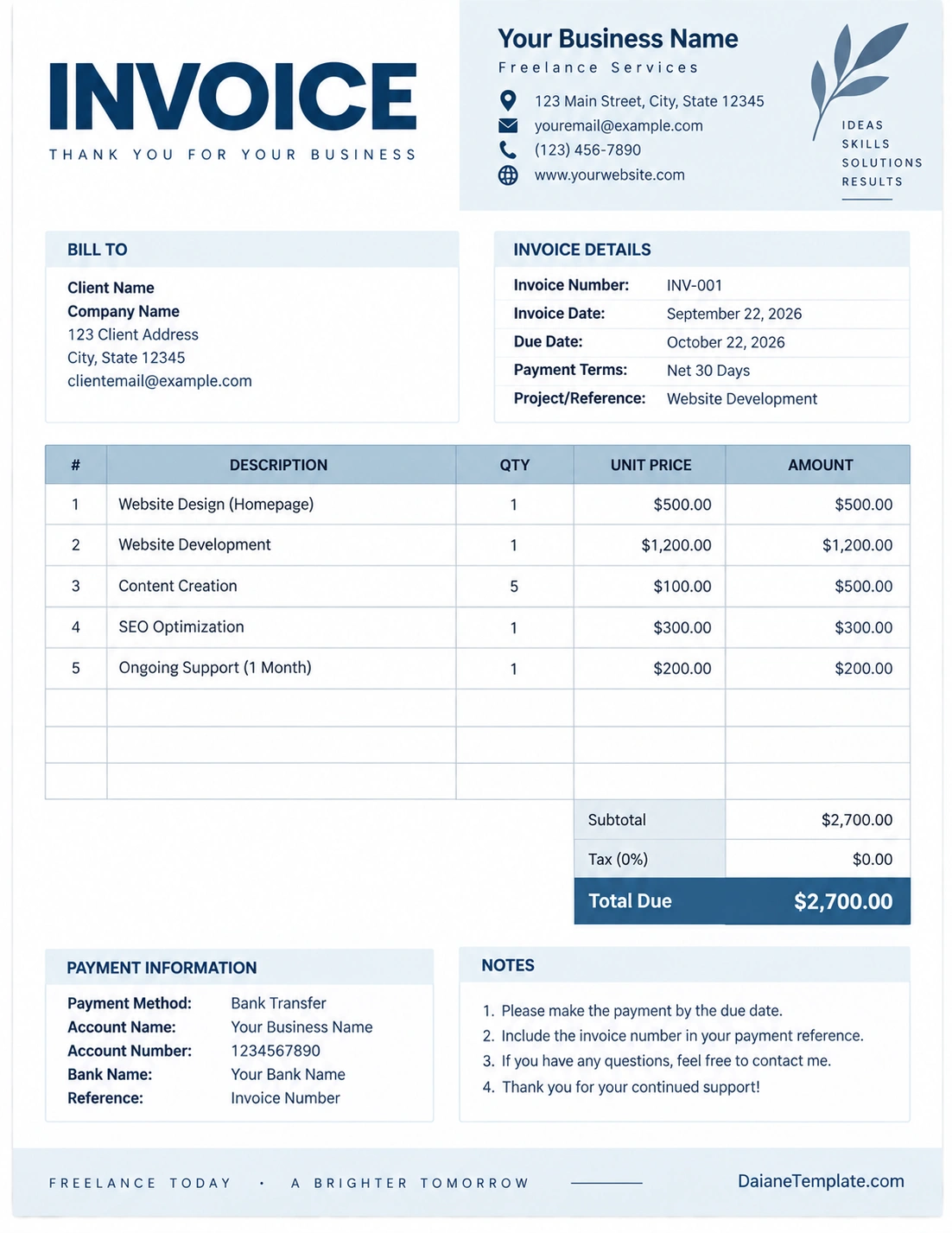
A self-employed invoice can be simple while still looking professional. The goal is to provide the client with all the information needed to understand the charge and make payment.
A typical example might include a freelance service provider’s business name and contact information at the top, followed by the client’s billing details and invoice information. The center of the document can contain an itemized table showing services, quantities, rates, and amounts, followed by the subtotal, applicable tax, and total amount due.
Best Practices for Self-Employed Invoicing
Good invoicing habits can make it easier to manage income and maintain professional relationships with clients.
- Invoice promptly: Send invoices according to the payment schedule agreed upon with the client.
- Use consistent invoice numbers: A predictable numbering system makes records easier to organize.
- Be specific: Describe services and products clearly instead of using vague descriptions.
- Keep copies: Retain copies of invoices and related records for your bookkeeping.
- Use consistent terms: Make sure your payment terms match the agreement you made with the client.
- Check calculations: Verify quantities, rates, taxes, discounts, and totals before sending.
- Track outstanding invoices: Maintain a simple record of invoices that have been paid and those still awaiting payment.
- Follow applicable requirements: Use the invoice information and tax treatment appropriate for your business and jurisdiction.
Common Self-Employed Invoicing Mistakes
Small invoicing errors can create unnecessary delays or confusion. Reviewing common problems can help you develop a more reliable invoicing process.
Missing Payment Terms
An invoice without a clear due date or payment expectation may leave the client uncertain about when payment should be made. Include the agreed payment terms whenever appropriate.
Vague Service Descriptions
A description such as “work completed” does not give the client much information. Identify the actual service, project, milestone, or product being billed.
Incorrect Totals
Calculation errors can damage confidence in an invoice and delay payment. Double-check all arithmetic before sending the final document.
Inconsistent Records
Invoices should be organized so that you can easily identify what was billed, when it was billed, and whether payment has been received. Consistent records can be particularly useful when preparing financial reports or working with an accountant.
Using the Wrong Client Information
Verify the client’s name, company details, billing address, and other required information before issuing the invoice. Some businesses may reject or delay invoices that do not meet their billing requirements.
Self-Employed Invoice for Accounting and Tax Records
Invoices can form part of a self-employed person’s business records by documenting amounts billed to clients. They can be useful when reconciling payments, reviewing revenue, preparing financial reports, or organizing information for tax-related recordkeeping.
However, an invoice is only one part of a complete financial record. Depending on the business and jurisdiction, you may also need to retain contracts, receipts, expense records, payment confirmations, bank records, and other supporting documentation.
Tax and recordkeeping requirements vary, so self-employed individuals should follow the rules applicable to their business and seek professional accounting or tax advice when necessary.
When Should You Send a Self-Employed Invoice?
The appropriate time to issue an invoice depends on the agreement with the client. Some freelancers invoice immediately after completing a project, while others bill on a recurring schedule or when a project milestone is reached.
For ongoing services, monthly invoicing may be appropriate if that is what the client and service provider have agreed upon. For larger projects, milestone-based invoices can help align payment with completed stages of the work.
The most important point is to establish the billing schedule before work begins and apply it consistently.
How a Self-Employed Invoice Supports Professional Client Relationships
Invoicing is part of the overall client experience. A clear, accurate, professional invoice shows that the business owner has an organized process for managing projects and payments.
When the invoice clearly explains what was provided, how the amount was calculated, when payment is due, and how payment can be made, clients have fewer reasons to request clarification before paying.
A consistent invoice format can also make your independent business look more established and help create a predictable process for recurring clients.
Final Thoughts on Self-Employed Invoices
A self-employed invoice serves several important purposes: it requests payment, documents a business transaction, communicates billing information, and supports organized financial recordkeeping. A well-designed invoice should clearly identify the parties, describe the goods or services provided, show the amount due, and explain how and when payment should be made.
Using a self-employed invoice template can simplify the process by giving you a consistent structure for every transaction. Customize the template to match your business, client requirements, payment terms, and applicable accounting or tax obligations, then keep accurate copies of your invoices and supporting records.
Download: Self-employed Invoice Template
