Starting a small business can be exciting, but turning an idea into a successful business requires careful planning. Before investing time and money, it is important to understand what you want to sell, who your customers will be, how your business will operate, and how you expect to make a profit. A small business plan helps bring all these details together in one organized document.
A small business plan does not have to be complicated or filled with lengthy financial reports. For new entrepreneurs and small business owners, a simple fill-in-the-blank business plan can provide a practical roadmap. It helps organize business ideas, evaluate economic viability, identify potential challenges, and establish clear goals before launching.
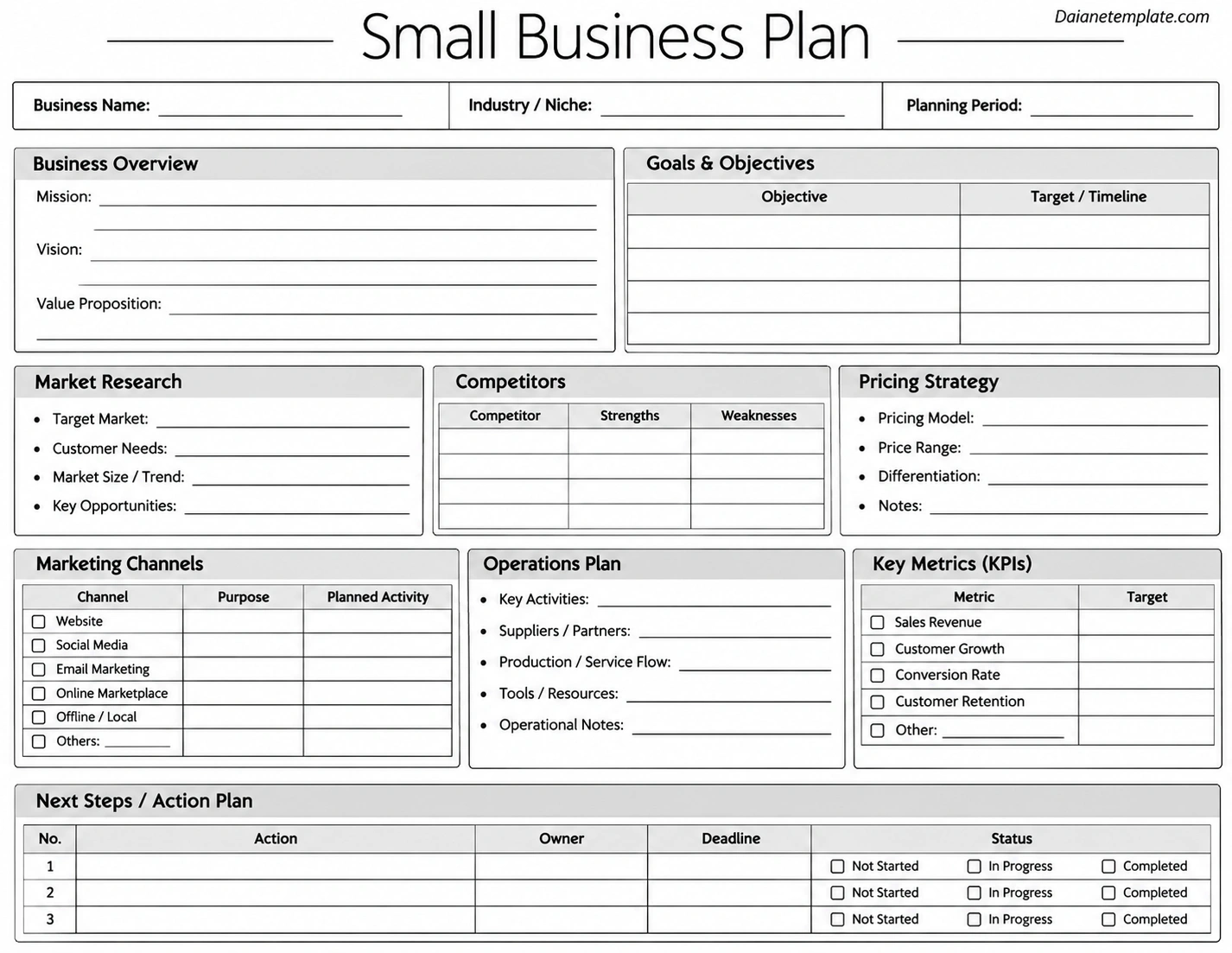
In this guide, you will learn what to include in a small business plan, how to write one step by step, and how to use a simple printable template to organize your business preparations.
What Is a Small Business Plan?
A small business plan is a written document that explains your business idea, target market, products or services, marketing strategy, operational structure, and financial expectations. It serves as a roadmap for starting, managing, and growing a small business.
Unlike a traditional corporate business plan, a simple small business plan focuses on essential information. It allows entrepreneurs to outline their ideas without spending too much time on complicated reports or unnecessary details.
A small business plan typically covers:
- Business overview: A description of your business idea, mission, and objectives.
- Target market: Information about the customers you want to reach.
- Products or services: Details about what your business offers.
- Market research: An overview of competitors, customer needs, and market opportunities.
- Marketing strategy: How you plan to promote your business and attract customers.
- Operations plan: How your business will function on a daily basis.
- Financial plan: Estimated startup costs, operating expenses, pricing, and expected revenue.
These sections help you understand whether your business idea is realistic and what you need to do before opening.
Why Do You Need a Small Business Plan?
Even a small business with only one owner can benefit from having a written plan. Without a clear direction, it is easy to overlook important expenses, misunderstand customer demand, or spend money on activities that do not support business growth.
Here are several reasons why creating a small business plan is important.
1. Organize Your Business Ideas
A business idea may sound promising, but it needs structure before you can turn it into a practical operation. Writing down your goals, products, customers, and business model helps transform general ideas into specific plans.
2. Evaluate Business Opportunities
Market research helps you determine whether people are interested in your products or services. It also allows you to identify competitors, understand customer expectations, and discover opportunities to differentiate your business.
3. Understand Financial Requirements
Planning your finances helps you estimate how much money you need to start and maintain your business. You can identify essential expenses, calculate pricing, and estimate how many sales are necessary to cover operating costs.
4. Set Clear Business Goals
A written plan makes it easier to establish measurable objectives. For example, you might aim to acquire your first 50 customers, launch an online store within three months, or achieve a specific monthly sales target.
5. Prepare for Potential Challenges
Every business faces risks. These may include low customer demand, unexpected expenses, supply problems, or strong competition. Identifying potential challenges early allows you to prepare practical solutions.
What to Include in a Small Business Plan
A useful small business plan should contain enough information to guide your decisions without becoming overwhelming. The following sections cover the most important details to include.
1. Business Overview
Start with a brief description of your business. Explain what you want to establish, what products or services you will offer, and what you hope to achieve.
Include the following information:
- Business name.
- Business type or industry.
- Business location.
- Products or services offered.
- Business mission and vision.
- Main business objectives.
Keep this section simple and clear. Someone reading it should understand your business concept without needing additional explanations.
2. Target Market and Customer Research
Understanding your target customers is essential for building a sustainable business. Your products may appeal to many people, but identifying your ideal customers helps you create more effective marketing strategies.
Consider these questions:
- Who is most likely to purchase your products or services?
- What problems or needs do these customers have?
- Where do they usually shop or search for products?
- How much are they willing to spend?
- What factors influence their purchasing decisions?
You can gather information through customer surveys, online reviews, competitor research, and conversations with potential buyers.
3. Products or Services
Describe exactly what your business will sell. Explain the main features, benefits, and value customers will receive.
If you plan to sell several products, identify your primary offerings first. You can also explain whether you intend to introduce additional products or services as the business grows.
Focus on what makes your offering useful and why customers might choose it over competing alternatives.
4. Competitor Analysis
Competitor research helps you understand the existing market and identify ways to position your business. Look at businesses offering similar products or services and evaluate their strengths and weaknesses.
Pay attention to:
- Product quality and variety.
- Pricing and available packages.
- Customer reviews and satisfaction.
- Marketing channels and promotional activities.
- Customer service and delivery options.
Use this information to identify opportunities to provide better value, improve customer experiences, or serve an underserved market.
5. Marketing and Sales Strategy
Your marketing strategy explains how you will reach potential customers and encourage them to purchase your products or services.
Small businesses can use several affordable marketing channels, including:
- Social media platforms.
- Business websites and search engine optimization.
- Email marketing.
- Online marketplaces.
- Local advertising and community events.
- Customer referrals and loyalty programs.
Choose marketing channels based on where your target customers spend their time. You do not need to use every platform. Start with a few channels you can manage consistently.
6. Operations Plan
The operations plan describes how your business will run every day. It covers the practical activities, resources, and responsibilities required to deliver your products or services.
Depending on your business model, include details about:
- Business location and working hours.
- Suppliers and business partners.
- Equipment, software, and other resources.
- Production or service delivery processes.
- Inventory and order management.
- Staffing and daily responsibilities.
A clear operations plan helps you identify what needs to be prepared before accepting your first customers.
7. Financial Plan
The financial section helps determine whether your business can operate within your available budget. You do not need complicated financial projections when starting with a simple business plan, but you should understand your basic financial requirements.
List your estimated startup expenses, such as:
- Business registration and licensing fees.
- Equipment and supplies.
- Initial inventory or materials.
- Website and marketing expenses.
- Rent and utilities, if applicable.
- Packaging, shipping, and delivery costs.
Next, estimate your ongoing monthly expenses and expected sales revenue. Compare your projected income with your expenses to understand how much revenue your business needs to remain financially sustainable.
Remember to separate one-time startup costs from recurring operating expenses. This makes your financial estimates easier to review and update.
How to Write a Small Business Plan Step by Step
Writing a business plan becomes easier when you approach it one section at a time. Follow these steps to create a practical plan for your new business.
Step 1: Define Your Business Idea
Begin by describing the business you want to establish. Identify the products or services you intend to offer and the problem they will solve for customers.
Try to explain your business idea in two or three sentences. A clear description will help guide the remaining sections of your plan.
Step 2: Identify Your Ideal Customers
Research the people most likely to purchase your products or services. Consider their needs, preferences, location, purchasing habits, and spending ability.
A specific customer profile will help you make better decisions about product development, pricing, and promotion.
Step 3: Research Your Competitors
Identify businesses that already serve your target market. Compare their products, prices, customer experiences, and marketing approaches.
Use your findings to determine how your business can offer something valuable or different.
Step 4: Set Realistic Goals
Write down what you want to accomplish during the first few months and the first year. Make your goals measurable and give each one a reasonable deadline.
For example, your initial goals might include:
- Complete business registration within 30 days.
- Prepare the first 10 products before launch.
- Publish a business website within two months.
- Acquire the first 50 customers within six months.
Step 5: Create a Marketing and Operations Strategy
Decide how you will promote your business, manage orders, communicate with customers, and deliver your products or services.
Identify the tools and resources you need. Assign responsibilities if you work with employees or business partners.
Step 6: Estimate Your Startup Costs
Calculate the money required to begin operating. Include equipment, inventory, registration, marketing, and other essential expenses.
Also, estimate your monthly operating costs and expected revenue. Use realistic assumptions rather than relying on overly optimistic sales projections.
Step 7: Review and Update Your Plan
Your business plan should not remain unchanged after you finish writing it. Review your progress regularly and update your assumptions as you learn more about customers, competitors, and operating costs.
A monthly review is a practical starting point for most small businesses.
Small Business Plan Template: A Simple Fill-in-the-Blank Worksheet
If you are unsure where to begin, using a small business plan template can make the planning process much easier. Instead of creating a document from scratch, you can fill in prepared sections and organize your business information in one place.
A printable worksheet is especially useful for new entrepreneurs who want a straightforward planning tool without complicated business terminology.
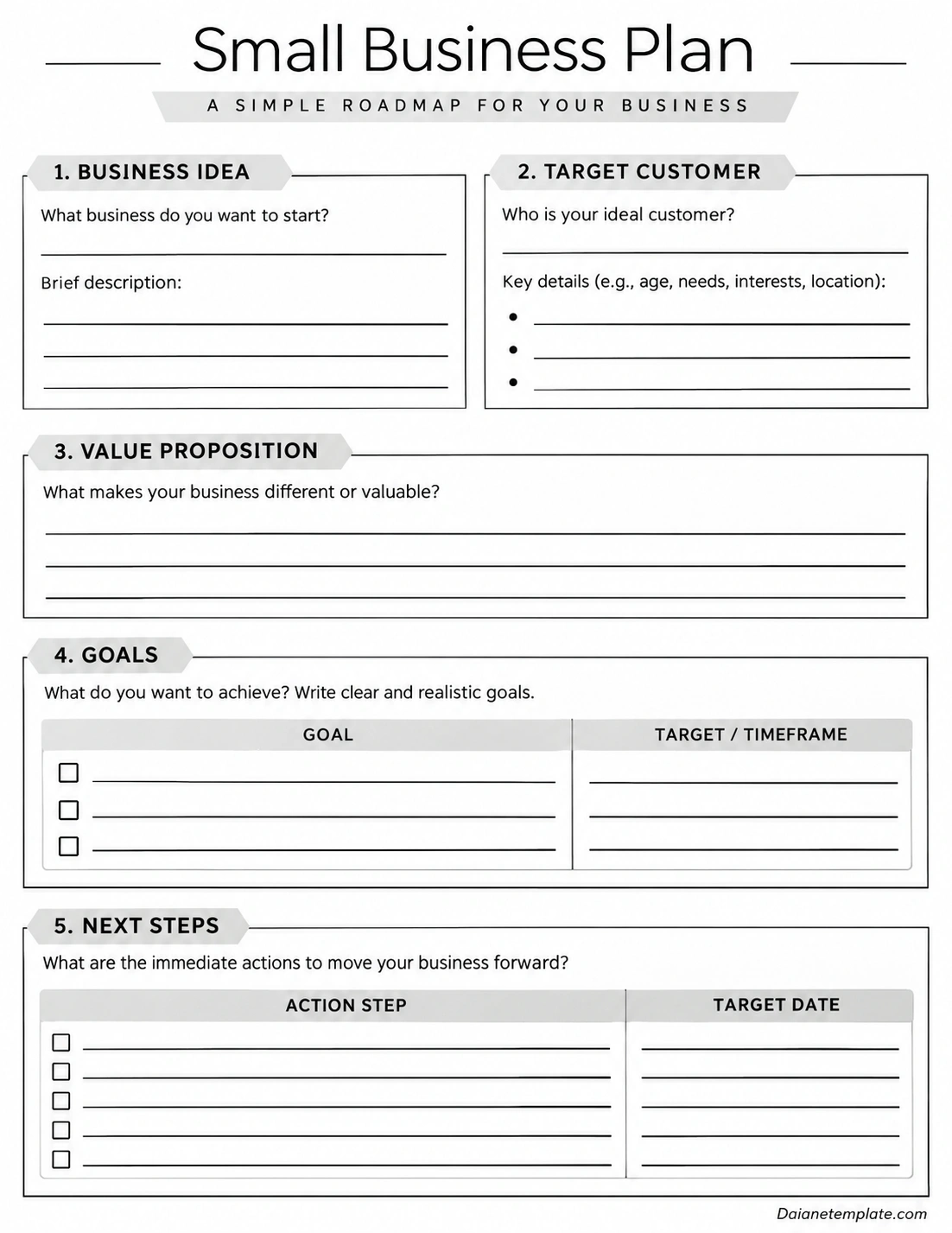
The following template focuses on five essential areas: your business idea, target customers, value proposition, business goals, and immediate action steps.
Use the worksheet to write down your initial ideas and identify the most important decisions you need to make before launching.
How to Use the Business Plan Worksheet
- Business Idea: Describe the business you want to start and the products or services you will provide.
- Target Customer: Identify your ideal customers and list their most important characteristics.
- Value Proposition: Explain why customers should choose your business instead of other options.
- Goals: Write down measurable objectives and realistic completion dates.
- Next Steps: List the actions you need to complete before launching.
Do not worry about making every answer perfect. The purpose of this worksheet is to help you organize your thoughts and identify areas that require further research.
Small Business Planning and Financial Preparation
Financial preparation is one of the most important parts of starting a small business. A good business idea may still struggle if the owner does not understand the costs of operating it.
Before launching, prepare a basic financial overview that includes your initial investment, recurring expenses, expected revenue, and pricing strategy.
Estimate Your Startup Budget
Create a list of everything you need to purchase or pay for before opening. Separate essential expenses from optional purchases so you can prioritize your available resources.
Calculate Your Selling Price
Your pricing should account for product costs, labor, operating expenses, and your desired profit margin. Research competitor prices as well, but avoid setting prices too low simply to attract customers.
Estimate Your Break-Even Point
The break-even point is the sales level at which your total revenue equals your total costs. Understanding this figure helps you estimate how many products or services you need to sell before generating a profit.
For a basic calculation, use this formula:
Break-Even Units = Fixed Costs ÷ (Selling Price per Unit − Variable Cost per Unit)
For example, if your monthly fixed costs are $1,000, your selling price is $25, and your variable cost is $10, you need to sell approximately 67 units to cover those costs.
This simplified calculation assumes a consistent selling price and variable cost per unit. Actual results may differ as your business grows.
Small Business Launch Action Planner
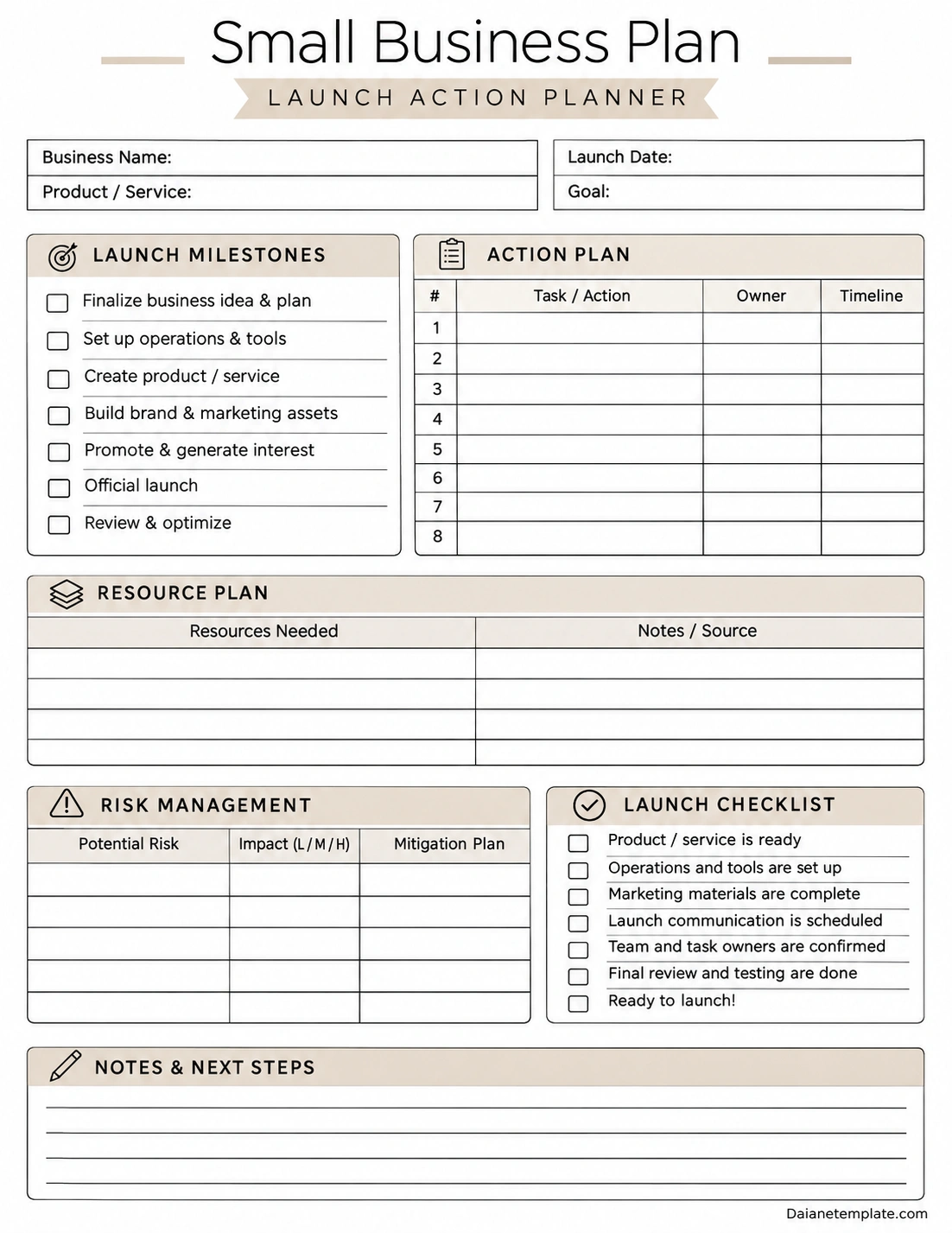
Once your business plan is complete, the next step is turning your ideas into action. A launch action planner helps you track important tasks, organize resources, and monitor your progress toward opening day.
Rather than trying to complete everything at once, divide your preparations into manageable milestones. Assign deadlines and identify the resources needed for each task.
Important Tasks Before Launching
- Finalize your business concept and business plan.
- Complete applicable business registration and licensing requirements.
- Prepare your products or services.
- Identify reliable suppliers and business partners.
- Set up payment and order management systems.
- Create your website and marketing materials.
- Test your products, services, and customer processes.
- Prepare your launch announcement and promotional activities.
Use the checklist to monitor each task and avoid overlooking important preparations.
Common Small Business Planning Mistakes to Avoid
A business plan is useful only when it reflects realistic expectations and practical decisions. Avoid these common mistakes when preparing your document.
1. Setting Unrealistic Sales Expectations
Do not assume that your business will generate high sales immediately. Use market research and realistic estimates to create achievable financial targets.
2. Ignoring Competitors
Failing to research competitors can make it difficult to understand market conditions. Study similar businesses before deciding on your pricing and positioning.
3. Underestimating Expenses
Many new business owners focus on startup costs but overlook recurring expenses. Include operating costs, maintenance, shipping, marketing, and other regular payments in your financial plan.
4. Trying to Do Everything at Once
Starting too many activities simultaneously can create unnecessary pressure. Prioritize essential tasks and expand your operations gradually.
5. Never Updating the Business Plan
Customer preferences, market conditions, and operating costs can change. Review your plan regularly and adjust it based on actual business performance.
Frequently Asked Questions About Small Business Plans
1. What should a small business plan include?
A small business plan should include a business overview, target market, product or service descriptions, competitor research, marketing strategy, operations plan, financial estimates, and business goals. These sections provide a basic roadmap for starting and managing a business.
2. How do I write a simple business plan for a small business?
Start by describing your business idea and identifying your target customers. Next, research competitors, outline your products or services, establish marketing and operational strategies, estimate startup costs, and set realistic goals. A fill-in-the-blank template can help organize these details.
3. Can I create a small business plan without financial experience?
Yes. You can create a basic business plan without having advanced financial knowledge. Start with simple estimates of startup expenses, monthly operating costs, selling prices, and expected sales. Consult an accountant or qualified financial professional when you need more detailed financial guidance.
4. How long should a small business plan be?
A simple small business plan can be just a few pages long if it covers the essential information. The appropriate length depends on your business complexity and intended audience. A plan prepared for a lender or investor may require more detailed information.
5. Is a business plan necessary for a small business?
A business plan is not legally required for every type of small business, but it is highly recommended. It helps organize your ideas, evaluate potential risks, estimate costs, and establish a clear direction. Certain lenders, investors, or licensing processes may require additional business documentation.
6. Can I use a business plan template for a startup?
Yes. A business plan template is an excellent starting point for a new business. It provides a structured format for recording your business concept, target market, financial estimates, and launch strategy. You can customize the sections to match your business needs.
7. How often should I update my small business plan?
Review your business plan at least every few months or whenever significant changes occur. Update your financial estimates, marketing strategies, business goals, and operational plans based on actual results and changing market conditions.
8. What is the difference between a business plan and a business proposal?
A business plan is an internal or external document explaining how a business will operate, generate revenue, and achieve its goals. A business proposal is usually a document presented to a specific client, investor, or organization to recommend a product, service, or business arrangement.
Conclusion
Creating a small business plan is an important step toward turning your business idea into a practical opportunity. It helps you organize your goals, understand your customers, evaluate competitors, prepare your finances, and establish the operations needed to launch.
You do not need a complicated document to get started. A simple fill-in-the-blank worksheet can provide enough structure to organize your ideas and identify the next steps.
Start with the essentials, research your market, and make realistic financial estimates. Then use your business plan as a working document that you can review and improve as your business develops.
With careful preparation and consistent action, you can build a stronger foundation for your small business and make more informed decisions along the way.
Download: Small Business Plan Template Word
