When working with independent consultants, having a consulting agreement in place is crucial for establishing a clear understanding of the relationship, expectations, and responsibilities between both parties. This legally binding contract not only protects the interests of the client and consultant but also helps prevent misunderstandings and disputes down the road.
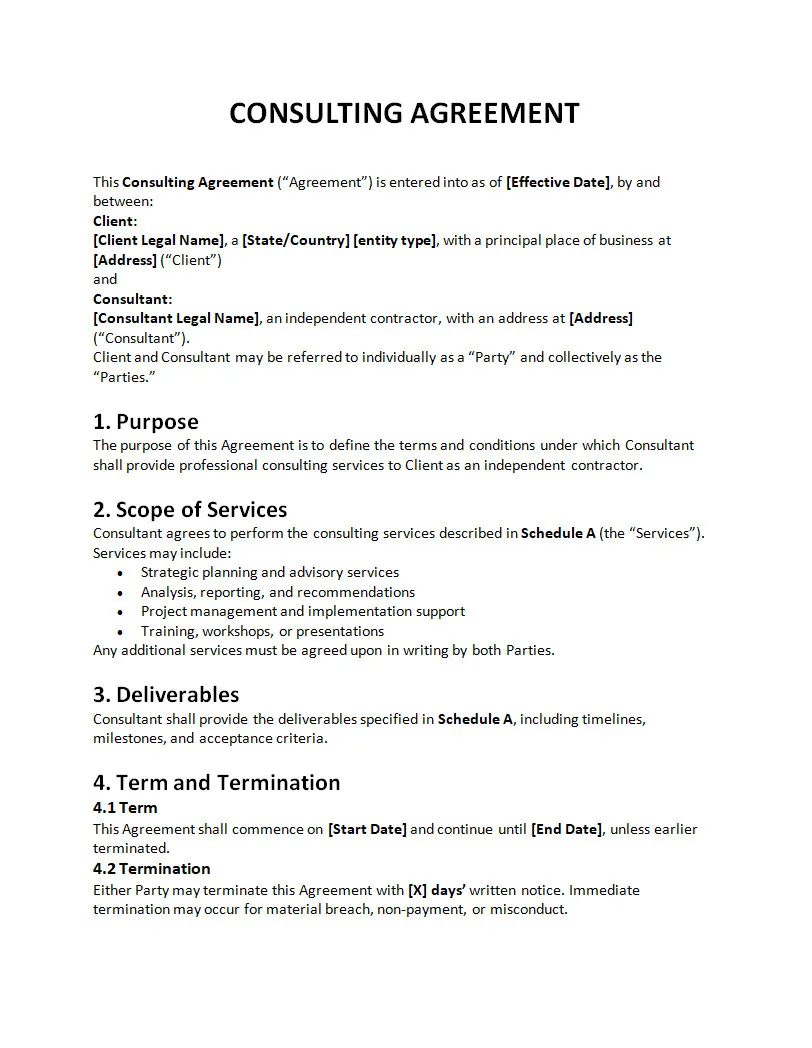
By outlining the scope of work, deliverables, payment terms, timelines, confidentiality agreements, and intellectual property rights, a consulting agreement acts as a roadmap for the project, ensuring a successful engagement for all involved.
What is a Consulting Agreement?
A consulting agreement is a formal contract between a client and an independent consultant that clearly defines the terms of their working relationship. It outlines the specific services to be provided, the project scope, deliverables, payment terms, timelines, confidentiality agreements, and intellectual property rights.
By establishing these parameters upfront, both parties can avoid confusion and disputes during the course of the project.
Why You Need a Consulting Agreement?
Having a consulting agreement in place is essential for several reasons:
Clarity
A consulting agreement is a vital document that helps establish clear expectations, protect both parties’ interests, and ensure a successful working relationship. By outlining the scope of work, deliverables, payment terms, timelines, confidentiality agreements, and intellectual property rights, a consulting agreement provides a roadmap for the project and sets the stage for a productive and collaborative partnership.
Legal Protection
One of the primary reasons to have a consulting agreement is to protect both parties legally. This contract serves as a safeguard in the event of any disputes or disagreements that may arise during the project. By clearly outlining the terms and conditions of the engagement, including payment terms, confidentiality agreements, and intellectual property rights, the consulting agreement helps ensure that both the client and consultant are on the same page and have a clear understanding of their rights and responsibilities.
Clarity and Expectations
Without a consulting agreement, there may be confusion or misunderstandings regarding the scope of work, deliverables, timelines, and other project details. Having a written contract in place helps provide clarity on these aspects and sets clear expectations for both parties. This clarity can help prevent misunderstandings and ensure that the project progresses smoothly and according to plan.
Scope of Work
The consulting agreement should clearly define the scope of work to be performed by the consultant. This includes outlining the specific services to be provided, the project objectives, and any limitations or exclusions. By clearly defining the scope of work, both the client and consultant can ensure that they are aligned on the project’s goals and deliverables, reducing the risk of scope creep or misunderstandings.
Payment Terms
Another critical aspect of a consulting agreement is specifying the payment terms and conditions. This includes detailing the payment amount, schedule, method of payment, and any additional expenses or fees. By clearly outlining the payment terms in the agreement, both parties can avoid any payment-related disputes or issues during the course of the project.
Confidentiality and Intellectual Property Rights
Confidentiality and intellectual property rights are crucial considerations in any consulting engagement. The consulting agreement should include clauses on confidentiality to protect sensitive information shared during the project. Additionally, it should define the ownership of any intellectual property created during the project, ensuring that both parties’ rights are protected and clearly established.
What to Include in a Consulting Agreement?
When drafting a consulting agreement, several key components should be included to ensure a comprehensive and legally sound document:
Parties Involved
The consulting agreement should clearly identify the client and consultant by name and contact information. This section should include details such as the legal names of both parties, addresses, phone numbers, and email addresses. By clearly identifying the parties involved, it is easier to enforce the terms of the agreement and resolve any disputes that may arise during the project.
Scope of Work
One of the most critical components of a consulting agreement is the definition of the scope of work. This section should outline the specific services to be provided by the consultant, including a detailed description of the project objectives, tasks to be completed, and any deliverables expected. By clearly defining the scope of work, both parties can ensure that they are aligned on the project’s goals and responsibilities.
Deliverables
In addition to outlining the scope of work, the consulting agreement should also specify the deliverables expected from the consultant. This section should detail the specific outputs or results that the consultant is responsible for delivering as part of the project. By clearly defining the deliverables, both parties can track progress and ensure that the project stays on schedule.
Payment Terms
The payment terms section of the consulting agreement should detail the financial aspects of the engagement. This includes specifying the payment amount, schedule, method of payment, any additional expenses or fees, and any payment terms or conditions. By clearly outlining the payment terms, both parties can avoid any payment-related disputes or issues during the project.
Timelines
Establishing clear timelines and deadlines is essential for ensuring that the project stays on track and is completed promptly. The consulting agreement should include a section that outlines the project timeline, including key milestones, deliverable due dates, and any other important deadlines. By setting clear timelines, both parties can track progress and ensure that the project progresses smoothly according to plan.
Confidentiality Agreements
Confidentiality agreements are crucial in consulting agreements to protect sensitive information shared during the project. This section should outline the obligations of both parties regarding the confidentiality of any proprietary or confidential information exchanged during the engagement. By including confidentiality clauses in the agreement, both the client and consultant can ensure that sensitive information remains secure and protected from unauthorized disclosure.
Intellectual Property Rights
Defining ownership of intellectual property rights is another essential component of a consulting agreement. This section should specify who owns any intellectual property created during the project, including copyrights, trademarks, patents, and trade secrets. By clearly outlining intellectual property rights in the agreement, both parties can avoid disputes over ownership and ensure that each party’s rights are protected.
Termination Clause
A termination clause is important in a consulting agreement to outline the conditions under which either party can terminate the engagement. This section should specify the reasons for termination, notice periods, and any associated consequences or penalties. By including a termination clause in the agreement, both parties can protect themselves in case the relationship needs to be ended prematurely.
How to Draft a Consulting Agreement
When drafting a consulting agreement, it is essential to follow specific steps to ensure that the document is thorough, comprehensive, and legally sound. Here are some guidelines on how to create an effective consulting agreement:
Identify the Parties
Begin by clearly identifying the client and consultant involved in the agreement. Include their legal names, addresses, phone numbers, email addresses, and any other relevant contact information. By explicitly naming the parties, you can avoid any confusion or misunderstandings about who is involved in the agreement.
Define the Scope of Work
Clearly define the scope of work to be performed by the consultant. Provide a detailed description of the services to be provided, the project objectives, tasks to be completed, and any limitations or exclusions. By outlining the scope of work, both parties can ensure that they are aligned on the project’s goals and deliverables.
Establish Payment Terms
Specify the payment terms and conditions in detail. This includes outlining the payment amount, schedule, method of payment, any additional expenses or fees, and any payment terms or conditions. By clearly defining the payment terms, both parties can avoid any payment-related disputes or issues during the project.
Include Confidentiality Clauses
Protect sensitive information by including confidentiality clauses in the agreement. Outline the obligations of both parties regarding the confidentiality of any proprietary or confidential information exchanged during the engagement. By including confidentiality clauses, both parties can ensure that sensitive information remains secure and protected.
Outline Intellectual Property Rights
Define ownership of any intellectual property created during the project. Specify who owns copyrights, trademarks, patents, and trade secrets resulting from the engagement. By clearly outlining intellectual property rights, both parties can avoid disputes over ownership and ensure that each party’s rights are protected.
Include a Termination Clause
Specify the conditions under which either party can terminate the agreement. This should include reasons for termination, notice periods, and any associated consequences or penalties. By including a termination clause, both parties can protect themselves in case the relationship needs to be ended prematurely.
By following these steps and including all necessary components in your consulting agreement, you can create a comprehensive and effective document that sets the stage for a successful and professional working relationship between a client and an independent consultant.
Tips for a Successful Consulting Agreement
Here are some tips to keep in mind when creating a consulting agreement:
Be Specific
When drafting your consulting agreement, be specific and detailed in outlining the scope of work, deliverables, payment terms, timelines, confidentiality agreements, and intellectual property rights. Avoid vague language or ambiguous terms that could lead to misunderstandings or disputes.
Seek Legal Advice
Consult with a lawyer to ensure that your consulting agreement complies with relevant laws and regulations. An attorney can help you draft a legally sound document that protects your interests and mitigates risks during the project.
Communicate Openly
Keep communication lines open with the consultant throughout the project. Encourage open dialogue and address any issues or concerns promptly to avoid misunderstandings or conflicts that could derail the project.
Review Regularly
Periodically review and update your consulting agreement to reflect any changes in the project scope, deliverables, or other terms. A regular review ensures that the agreement remains relevant and up-to-date throughout the engagement.
Sign and Date
Make sure that both parties sign and date the consulting agreement to indicate their acceptance of the terms. A signed agreement is legally binding and provides both parties with the assurance that the terms have been agreed upon and accepted.
By following these tips and guidelines, you can create a successful consulting agreement that lays the groundwork for a productive and mutually beneficial working relationship with an independent consultant.
Consulting Agreement Template
A Consulting Agreement helps clearly define the relationship between a client and an independent consultant by outlining the scope of services, deliverables, timelines, payment terms, and confidentiality obligations. It protects both parties by setting expectations, clarifying ownership of work, and reducing the risk of disputes. With a professionally structured template, you can create a legally sound agreement that supports a productive and transparent consulting engagement.
Download our Consulting Agreement Template today to establish clear terms and ensure a smooth, professional consulting relationship.
Consulting Agreement Template – DOWNLOAD
