What is a Daily Meal Plan?
A daily meal plan is more than just deciding what to eat for breakfast, lunch, and dinner each day; it’s also about planning and preparing meals that support your overall health and wellness. It involves thoughtful consideration of your nutritional needs, budget constraints, and time availability.
A well-crafted meal plan takes into account your health goals, dietary restrictions, and personal preferences to create a roadmap for healthy eating.
Why Should You Have a Daily Meal Plan?
Having a daily meal plan is essential for maintaining a healthy diet and achieving your wellness goals. By planning your meals, you can ensure that you are consuming a variety of nutrient-dense foods that support your overall health and well-being. Meal planning also helps you save time and money by reducing food waste and preventing impulse purchases.
Health Benefits of Meal Planning
A daily meal plan can have a significant impact on your health. By planning your meals, you can control your portion sizes, ensure you are getting all the essential nutrients your body needs, and avoid the temptation of unhealthy foods. Meal planning can also help you lose weight, lower your risk of chronic diseases, and improve your overall well-being.
Financial Benefits of Meal Planning
In addition to the health benefits, meal planning can also help you save money. By creating a weekly meal plan and grocery list, you can avoid unnecessary trips to the store and reduce food waste. Planning your meals can also help you make more cost-effective choices when shopping for groceries and dining out.
Emotional Benefits of Meal Planning
Meal planning can also have emotional benefits. By knowing what you will be eating each day, you can reduce stress and anxiety around meal times. Meal planning can also give you a sense of control over your diet and help you make healthier choices when faced with temptation.
Key Elements of a Successful Daily Meal Plan
A successful daily meal plan consists of several key elements that work together to help you achieve your health and nutrition goals. These elements include planning your meals, creating a grocery list, controlling portion sizes, avoiding last-minute food choices, and ensuring a balance of nutrients in your meals.
Planning Your Meals in Advance
One of the most important elements of a successful daily meal plan is planning your meals. This involves taking the time to sit down and decide what you will eat for breakfast, lunch, and dinner each day. By planning your meals, you can ensure that you are consuming a variety of foods that provide the nutrients your body needs.
Creating a Grocery List
Once you have planned your meals for the week, the next step is to create a grocery list. A well-thought-out grocery list will help you stay organized when shopping for ingredients and prevent you from making impulse purchases. When creating your grocery list, be sure to include all the ingredients you need for your planned meals, as well as any snacks or pantry staples.
Controlling Portion Sizes
Controlling portion sizes is key to maintaining a healthy diet and achieving your wellness goals. When planning your meals, be mindful of portion sizes and strive to achieve a balanced ratio of proteins, carbohydrates, and fats. Measuring out your portions in advance can help you avoid overeating and ensure you are getting the nutrients your body needs.
Avoiding Last-Minute Food Choices
One of the pitfalls of not having a meal plan is the temptation to make last-minute food choices, such as ordering takeout or grabbing a quick, unhealthy snack. By planning your meals, you can avoid these costly and unhealthy choices and instead opt for nutritious homemade meals. Having a meal plan in place also helps you resist the urge to deviate from your healthy eating goals.
Ensuring a Balance of Nutrients
A well-rounded meal plan should include a balance of macronutrients (protein, carbohydrates, and fats) as well as micronutrients (vitamins and minerals). By planning your meals, you can ensure that you are getting all the nutrients your body needs to function optimally. Be sure to include a variety of fruits, vegetables, whole grains, proteins, and healthy fats in your daily meal plan.
How to Create a Daily Meal Plan
Creating a daily meal plan may seem daunting at first, but with some simple steps and strategies, you can master the art of meal planning. Start by setting aside some time each week to plan your meals, create a grocery list based on your meal plan, prepare your meals in advance, and portion out your meals to ensure you are getting the right balance of nutrients.
Set Aside Time Each Week
One of the keys to successful meal planning is setting aside dedicated time each week to plan your meals. Choose a day and time that works best for you, whether it’s Sunday afternoon or Wednesday evening. By making meal planning a regular part of your routine, you can ensure that you stay on track with your health and nutrition goals.
Include a Variety of Foods
When creating your daily meal plan, be sure to include a variety of foods from all food groups. Aim to incorporate fruits, vegetables, whole grains, lean proteins, and healthy fats into your meals. By including a variety of foods in your meal plan, you can ensure that you are getting all the nutrients your body needs to thrive.
Tips for Successful Daily Meal Planning
Set Aside Time Each Week
Dedicate a specific time each week to plan your meals and create a grocery list. Choose a day and time that works best for you, whether it’s Sunday morning or Wednesday evening. By making meal planning a priority, you can ensure that you have a solid plan in place for the week ahead.
Include a Variety of Foods
Ensure that your meal plan includes a variety of foods from all food groups. Aim to incorporate fruits, vegetables, whole grains, lean proteins, and healthy fats into your meals. By including a diverse range of foods in your meal plan, you can meet your nutritional needs and keep your meals exciting and satisfying.
Portion Out Your Meals
When preparing your meals, consider portioning them out into individual containers or using measuring tools to control portion sizes. This can help you avoid overeating and ensure that you are consuming the right amount of food for your body’s needs. Portioning out your meals in advance can also make it easier to grab a healthy meal on-the-go.
Prepare Meals in Advance
Batch cooking or meal prepping can be a game-changer when it comes to daily meal planning. Spend some time on the weekend preparing meals for the upcoming week, and portion them out into containers for easy access. By having healthy meals ready to go, you can save time during the busy workweek and avoid the temptation of ordering takeout.
Be Flexible
While it’s important to have a meal plan, it’s also crucial to be flexible and adaptable. Life can be unpredictable, and there may be times when you need to make changes to your meal plan. Embrace the unexpected and be willing to adjust your plan as needed to accommodate changes in your schedule or preferences.
Monitor Your Progress
Keeping track of your meals and progress towards your health goals can help you stay on track and make adjustments as needed. Consider using a food journal, meal planning app, or tracking device to monitor your meals, snacks, and hydration. By monitoring your progress, you can identify areas for improvement and celebrate your successes along the way.
Stay Consistent
Consistency is key when it comes to daily meal planning. Make it a habit to plan your meals regularly and stick to your plan as much as possible. By establishing a routine around meal planning, you can create healthy eating habits that support your long-term health and wellness goals.
Seek Support
If you find daily meal planning challenging, don’t be afraid to seek support from a nutritionist, dietitian, or wellness coach. These professionals can provide guidance, accountability, and personalized recommendations to help you succeed with your meal planning efforts. Additionally, joining a meal planning group or community can offer motivation, inspiration, and recipe ideas to keep you on track.
Daily Meal Plan Template
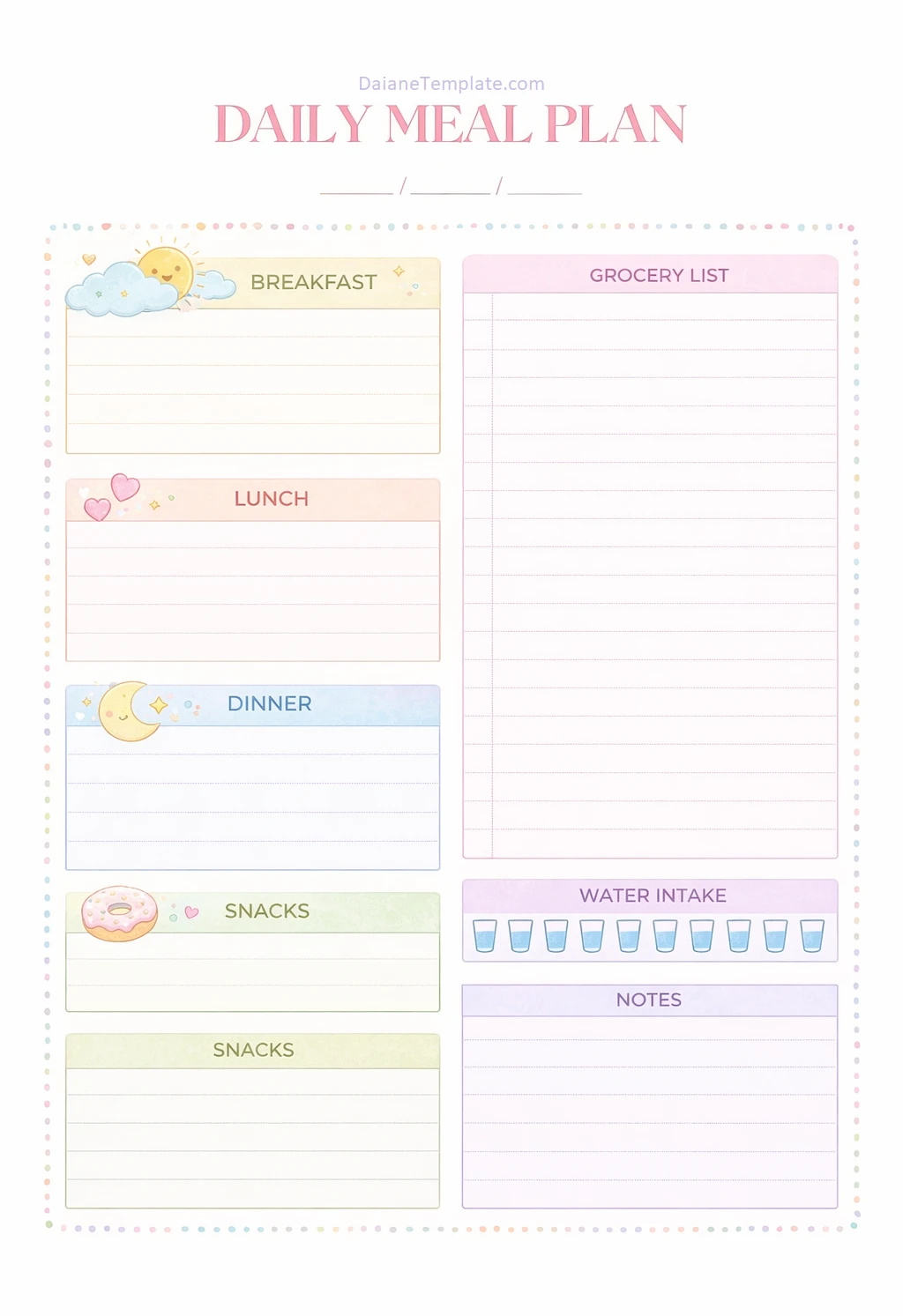
A Daily Meal Plan helps you organize meals and snacks for the day in a clear and structured format. It supports balanced nutrition, saves time, and reduces decision fatigue by outlining meal choices in advance. With a well-designed template, you can maintain healthy eating habits and stay consistent with your dietary goals.
Download our Daily Meal Plan Template today to plan your meals efficiently and enjoy a healthier, more organized day.
Daily Meal Plan Template – DOWNLOAD
