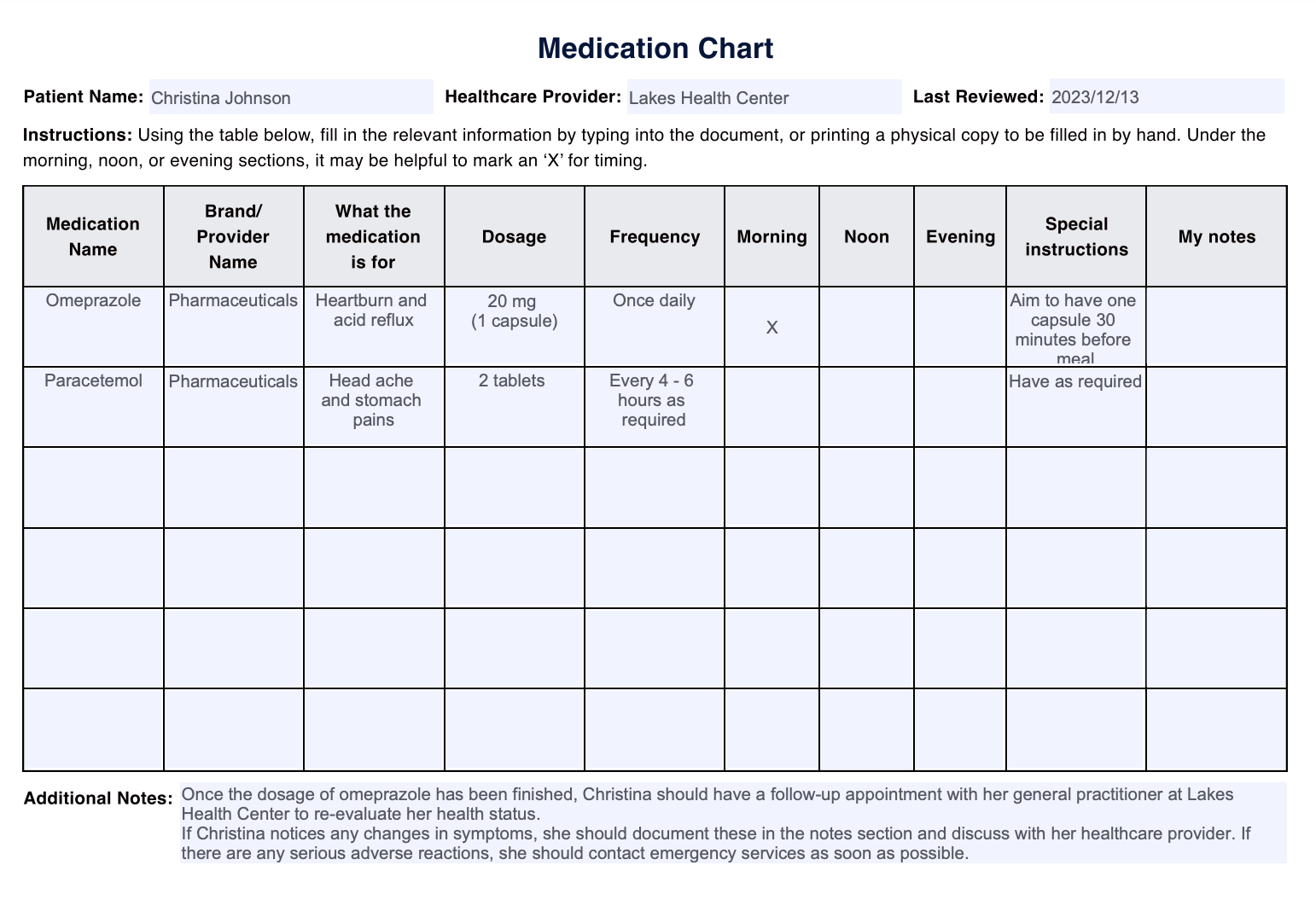
Medication charts are essential tools for managing and tracking your medications. Whether you are taking multiple medications for different health conditions or simply want to stay organized, a medication chart can help you stay on top of your medication regimen. In this comprehensive guide, we will explore everything you need to know about medication charts, including their importance, what to include, how to create one, and tips for successful medication management.
What is a Medication Chart?
A medication chart, also known as a medication log or medication list, is a document that lists all the medications you are currently taking. It typically includes important details about each medication, such as the name of the medication, dosage instructions, frequency of use, and any special instructions from your healthcare provider. Medication charts can be physical paper documents that you carry with you or electronic documents that you store on your phone or computer.
Why Use a Medication Chart?
There are several reasons why using a medication chart is beneficial:
- Organization: A medication chart helps you keep track of all your medications in one place.
- Prevention of Errors: By having all your medications listed, you can avoid taking the wrong medication or missing a dose.
- Communication with Healthcare Providers: A medication chart can help you easily share information about your medications with your healthcare providers.
- Monitoring Changes: Keeping a medication chart allows you to monitor any changes in your medication regimen over time.
- Emergency Preparedness: In case of an emergency, having a medication chart can provide important information to first responders or medical professionals.
What to Include in a Medication Chart
When creating a medication chart, be sure to include the following information for each medication:
- Medication Name: The name of the medication.
- Dosage: The amount of medication to take each time.
- Frequency: How often to take the medication (e.g., daily, twice a day).
- Route of Administration: How to take the medication (e.g., orally, topically).
- Special Instructions: Any specific instructions from your healthcare provider, such as taking with food or at a certain time of day.
How to Create a Medication Chart
Creating a medication chart is simple and can be done in a few easy steps:
- Gather Information: Collect all the information about your medications, including names, dosages, and instructions.
- Choose a Format: Decide whether you want to create a physical or electronic medication chart.
- Organize Information: Input all the details about each medication into the chart in a clear and organized manner.
- Update Regularly: Make sure to update your medication chart whenever there are changes to your medication regimen.
Tips for Successful Medication Management
Here are some tips to help you effectively manage your medications:
1. Use a Pill Organizer
Consider using a pill organizer to help you keep track of your daily medications and ensure you take the right pills at the right time.
2. Set Reminders
Use alarms or reminders on your phone to help you remember to take your medications on time.
3. Keep an Updated Medication Chart
Regularly review and update your medication chart to reflect any changes in your medication regimen.
4. Consult Your Healthcare Provider
If you have any questions or concerns about your medications, don’t hesitate to consult your healthcare provider for guidance.
5. Store Medications Properly
Follow the storage instructions for each medication to ensure they remain effective and safe to use.
6. Dispose of Unused Medications Safely
Properly dispose of any expired or unused medications to prevent misuse or accidental ingestion.
In Conclusion
Medication charts are valuable tools for managing and tracking your medications effectively. By creating and using a medication chart, you can stay organized, prevent errors, and communicate important information with your healthcare providers. Remember to include all relevant details about your medications, update your chart regularly, and follow the tips provided to ensure successful medication management. With a well-maintained medication chart, you can take control of your medication regimen and prioritize your health and well-being.
