A reading log is a simple tool for recording what you read, when you read it, and what you think about the material. Whether used by students, teachers, parents, or independent readers, a reading log can make reading more intentional and easier to track over time. Instead of simply finishing one book and moving on to the next, readers can use their log to monitor progress, set goals, remember important details, and reflect on what they have learned.
A well-designed reading log can also encourage consistent reading habits. Recording book titles, authors, dates, pages, genres, and personal thoughts creates a useful record of reading activity. For students, it can support comprehension and critical thinking. For adults, it can become a personal reading journal or book-tracking system.
What Is a Reading Log?
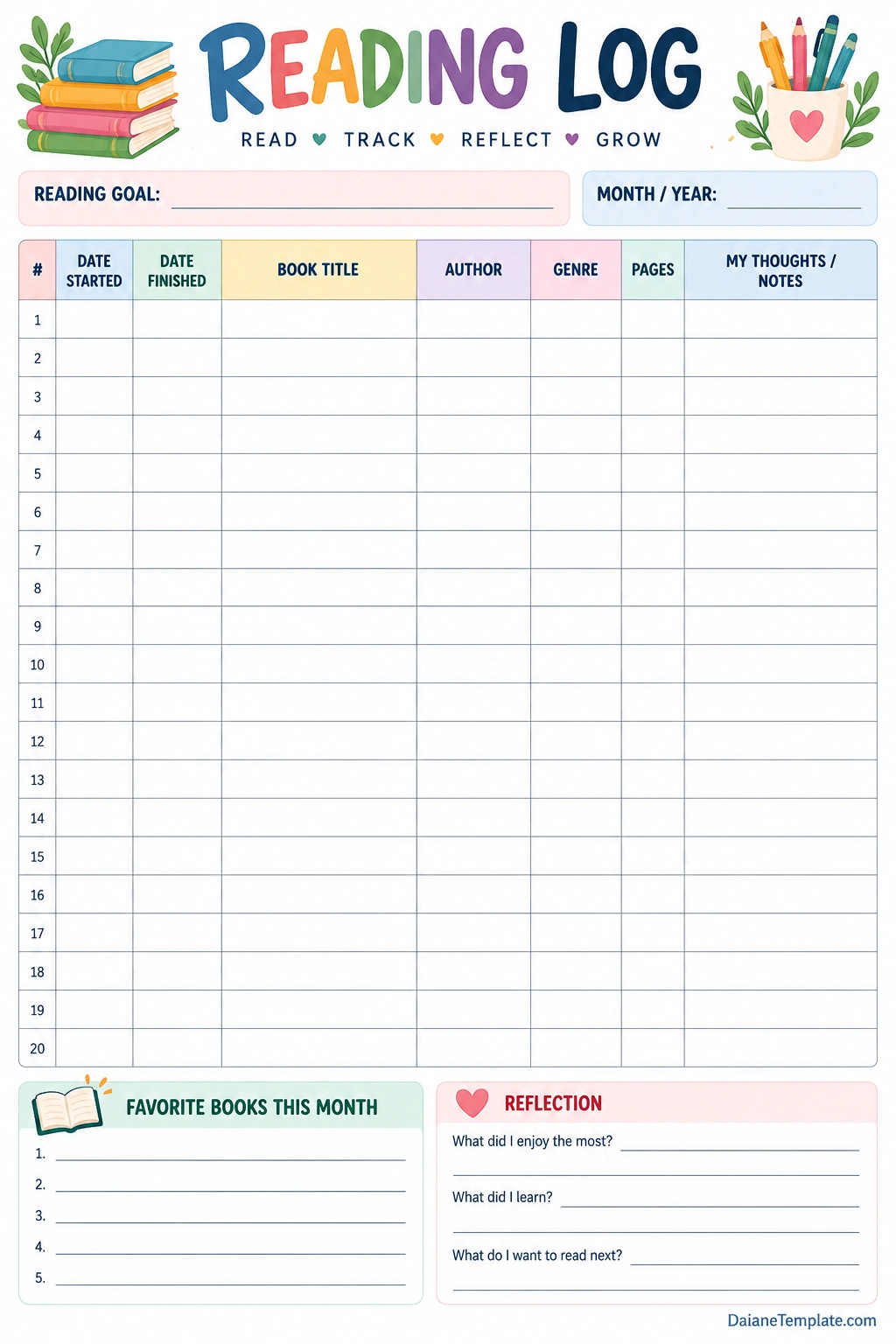
A reading log is a written or digital record used to document reading activity. Depending on the purpose, it may include basic information such as the title and author of a book, the date reading started and finished, the number of pages read, and personal notes or reflections.
A reading log can be as simple as a list of books or as detailed as a structured worksheet with reading goals, daily entries, comprehension questions, ratings, and reflection sections. The format can be adapted to the reader’s age, reading level, and purpose.
For example, a student might use a reading log worksheet to record assigned books, while an adult reader might use a monthly reading tracker to monitor personal reading goals.
Why Use a Reading Log?
Keeping a reading log turns reading into a more organized and reflective activity. It provides a visible record of progress and can help readers recognize patterns in their reading habits.
- Track reading progress: Record books, pages, dates, and completed reading sessions.
- Set reading goals: Establish weekly, monthly, or yearly reading targets.
- Build consistent habits: Recording reading activity can encourage regular reading.
- Improve comprehension: Writing about a text encourages readers to think about what they have read.
- Encourage reflection: Personal notes help readers consider ideas, characters, themes, and lessons.
- Develop critical thinking: Asking questions about a book can encourage deeper analysis.
- Remember books: A reading record provides useful information to revisit later.
What Should Be Included in a Reading Log?
The information included in a reading log depends on how it will be used. A basic reading tracker does not need to contain dozens of fields. The goal is to collect information that is genuinely useful without making the process feel like extra work.
Book Information
Start with basic bibliographic information. Useful fields may include the book title, author, genre, and number of pages. These details make it easier to identify each book later.
Reading Dates
Recording the date a book was started and completed can help readers understand how long they typically spend on a book. Daily reading logs can also include the date of each reading session.
Reading Progress
A progress section can be used to record pages completed, chapters finished, or another measurable milestone. This is particularly useful for longer books and school reading assignments.
Thoughts and Notes
Adding a space for personal thoughts makes a reading log more than a simple checklist. Readers can write down memorable ideas, questions, favorite passages, important characters, or connections to other experiences.
How to Use a Reading Log
Using a reading log does not have to be complicated. A consistent routine is often more useful than an elaborate system.
1. Set a Reading Goal
Begin by deciding what you want to accomplish. Your goal might be to read for 20 minutes each day, finish two books each month, complete a school reading assignment, or explore a certain number of genres during the year.
Make the goal realistic. A reading goal should encourage progress rather than make reading feel like a chore.
2. Record Each Book
When you begin a new book, record its title and author. Depending on the format of your log, you can also add the genre, page count, and date started.
3. Update Your Progress
Record your progress regularly. For a daily reading tracker, note the pages or chapters completed during each session. For a simpler book log, you can update the entry when you finish the book.
4. Add Personal Reflections
After reading, write a few sentences about your experience. Consider what you enjoyed, what surprised you, what you learned, or which ideas you found interesting.
5. Review Your Reading Record
At the end of the week or month, look back at your entries. You may notice that you read more frequently on certain days, prefer particular genres, or make faster progress when you have a specific reading routine.
Reading Log Ideas for Students
A reading log can be especially useful in classrooms because it provides students with a structured way to document independent reading and reflect on texts.
Teachers can adapt the format according to grade level and learning objectives. Younger students may benefit from simple fields for the book title, date, pages, and a short response. Older students can use more detailed prompts that encourage analysis and interpretation.
- Book title and author
- Date read
- Pages or chapters completed
- New vocabulary
- Main characters
- Main idea or theme
- Important events
- Questions about the text
- Personal response
- Favorite part of the book
Teachers can also use a student reading log to help students establish independent reading routines without requiring lengthy written assignments after every book.
Reading Log for Daily Reading
A daily reading log focuses on the habit of reading rather than simply counting completed books. It can be useful for readers who want to establish a consistent schedule.
For example, a daily entry might record the date, start and finish time, number of pages read, and a short reflection. Over several weeks, these entries create a visual record of reading consistency.
A daily reading tracker can also be combined with a reading goal. Instead of focusing only on the number of books completed, readers can measure the number of reading sessions or total minutes spent reading.
Reading Log for Book Clubs and Discussion Groups
Reading logs can also support book clubs and group discussions. Members can record important themes, memorable characters, questions, and discussion points while reading.
Before a meeting, reviewing the log can help readers remember details that might otherwise be forgotten. It can also provide a starting point for meaningful conversations about the book.
Useful Book Club Prompts
- What was the most memorable part of the book?
- Which character changed the most?
- What central problem does the book explore?
- What theme stood out to you?
- What surprised you?
- Did your opinion change while reading?
- What question would you ask the author?
- Would you recommend the book to another reader?
How a Reading Log Supports Comprehension
Reading and remembering information are not always the same thing. Writing brief notes about a text can encourage readers to pause and process what they have read.
Reflection can involve identifying the main idea, summarizing important events, explaining a character’s motivation, recognizing a theme, or connecting the text to previous knowledge.
For nonfiction reading, readers can record important facts, unfamiliar concepts, questions, and key takeaways. For fiction, they can focus on characters, setting, conflict, themes, and major events.
Tips for Keeping a Reading Log Consistently
- Keep it simple: Use only the fields that are useful to you.
- Update it regularly: Record information soon after reading so details are fresh.
- Set realistic goals: Choose targets that fit your schedule.
- Write short reflections: A few meaningful sentences are often enough.
- Use consistent categories: Keeping the same format makes records easier to review.
- Celebrate progress: Look at completed books and reading sessions as evidence of improvement.
- Review your log: Monthly or quarterly reviews can reveal useful reading patterns.
Common Reading Log Mistakes
Making the Log Too Complicated
A reading log with too many questions can discourage regular use. Choose fields that match the reader’s purpose and keep the process manageable.
Focusing Only on Numbers
Tracking the number of books or pages can be useful, but reading is not only about quantity. Include space for thoughts, questions, reactions, and learning.
Waiting Too Long to Record Information
When readers wait several days before updating their log, they may forget important details. A quick entry immediately after reading can produce more accurate notes.
Comparing Reading Progress With Others
Reading speed and preferences vary from person to person. A reading log is most useful when it helps an individual understand and improve their own reading habits rather than creating unnecessary competition.
Reading Log vs. Reading Journal
A reading log and a reading journal are closely related, but they can serve different purposes. A reading log usually focuses on tracking measurable information such as books, dates, pages, and reading goals.
A reading journal tends to provide more room for personal responses, detailed analysis, creative reactions, and extended reflections. Some readers may combine both approaches by using a structured reading tracker with a larger reflection section.
How to Make a Reading Log More Effective
The best reading log is one that fits the reader’s needs. A student may need structured comprehension prompts, while an adult reader may prefer a simple book tracker with space for ratings and personal notes.
Consider the purpose first. If the main goal is habit building, focus on dates, minutes, and consistency. If the goal is comprehension, add questions about main ideas, themes, characters, or important details. If the goal is managing a personal library, emphasize book titles, authors, genres, ratings, and completion dates.
Using a printable reading log template can make the process easier because the structure is already prepared. Readers can simply print the worksheet, set a goal, and begin recording their books and reading progress.
Conclusion
A reading log is a practical way to turn reading into a more organized, consistent, and reflective habit. By recording books, dates, progress, thoughts, and goals, readers can see how their habits develop while creating a useful record of what they have read.
For students, a reading log can support comprehension, vocabulary development, and critical thinking. For independent readers, it can provide motivation, organization, and a convenient way to remember favorite books and important ideas.
The most effective approach is to keep the system simple enough to use consistently while including enough space for meaningful reflection. Whether you are tracking daily reading, completing a school assignment, or building a personal reading list, a well-designed reading log can help you read with greater purpose and engagement.
Download: Reading Log Template
