Grocery shopping is easier when you know exactly what you need before visiting the supermarket. Without a plan, it is easy to forget essential ingredients, buy duplicate products, or spend more than expected. A food shopping list template helps organize your purchases so you can shop efficiently and keep your kitchen stocked with the items you actually use.
A well-organized grocery list also makes meal planning more practical. By grouping food, drinks, and household essentials into categories, you can quickly identify what is missing and avoid unnecessary trips to the store. Whether you shop once a week or make several smaller grocery trips, having a written shopping plan can save time and reduce stress.
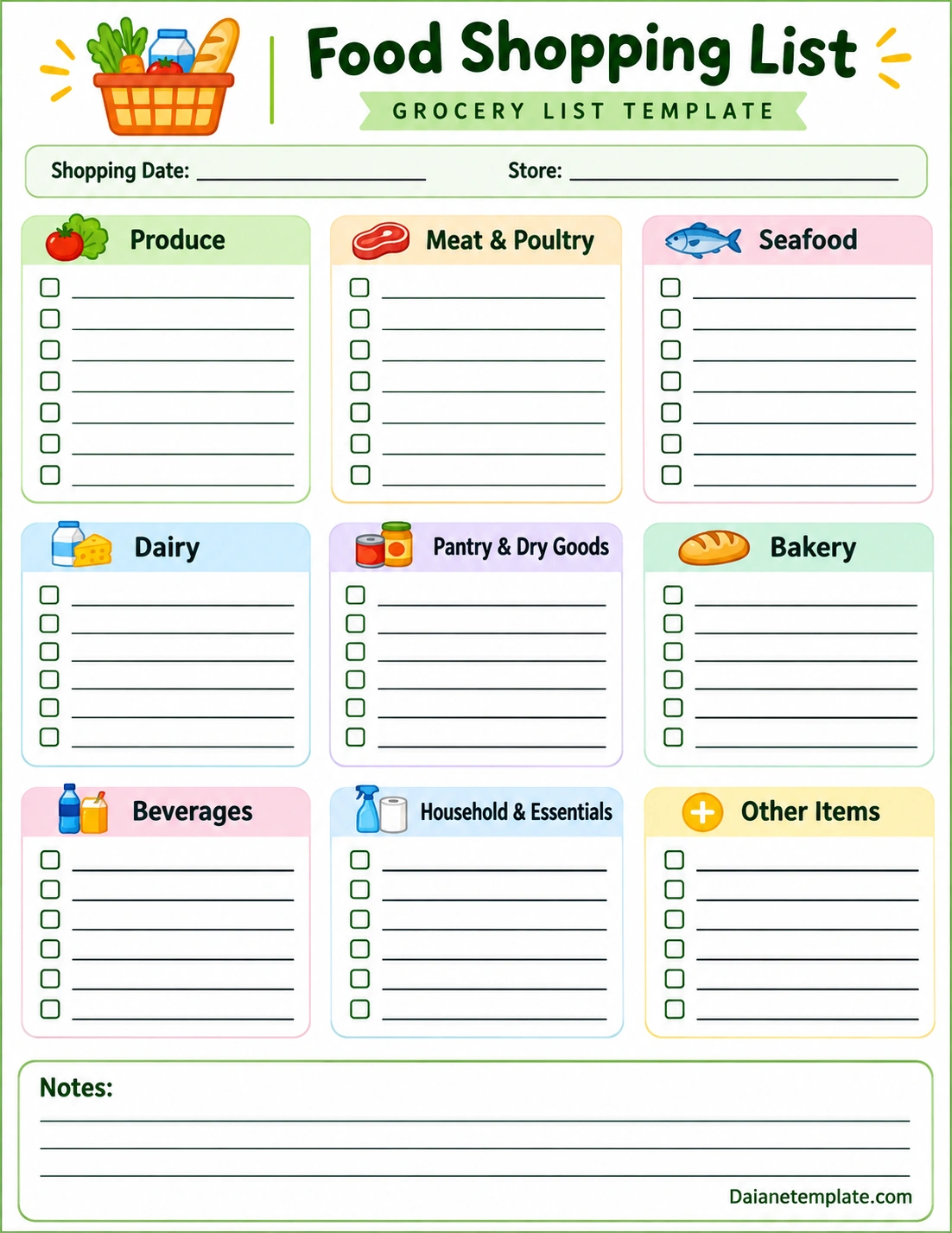
In this guide, you will learn how to create and use a food shopping list, what categories to include, and how to organize groceries for different household needs. You will also find practical shopping tips and ideas for making your weekly grocery routine simpler and more consistent.
What Is a Food Shopping List Template?
A food shopping list template is a printable or digital document used to organize the food, drinks, and other essentials you plan to purchase. It provides a structured place to write down items before going to the supermarket, grocery store, or local market.
Instead of writing everything in one long list, a grocery shopping template can divide purchases into useful categories. These may include fresh produce, meat, seafood, dairy products, pantry staples, bakery items, beverages, and household supplies.
A typical food shopping list includes:
- Food items: Fruits, vegetables, meat, seafood, dairy, and other groceries.
- Pantry staples: Rice, pasta, flour, cooking oil, canned goods, and seasonings.
- Drinks: Water, milk, juice, coffee, tea, and other beverages.
- Household essentials: Cleaning products, paper towels, and everyday supplies.
- Additional items: Snacks, special ingredients, and products for specific recipes.
A template can be used by individuals, couples, families, students, or anyone who wants a more organized approach to grocery shopping.
Why Should You Use a Grocery Shopping List?
Preparing a shopping list before going to the supermarket offers several practical benefits. It helps you focus on what you need, makes shopping more predictable, and supports better household organization.
1. Helps You Avoid Forgetting Essential Items
Remembering every ingredient and household product can be difficult, especially when you are shopping for several meals. A written grocery list gives you a reliable reference while shopping.
You can check off each item as you place it in your cart. This simple habit reduces the chance of forgetting important ingredients or everyday essentials.
2. Saves Time at the Supermarket
Organizing groceries by category makes it easier to navigate the store. Instead of moving randomly between aisles, you can shop through similar sections together.
For example, you can collect fruits and vegetables first, then move to dairy, meat, pantry goods, and household supplies.
3. Helps Control Grocery Spending
A shopping list encourages you to focus on planned purchases instead of adding unnecessary products to your cart. It can also help you compare prices and identify items that fit your available grocery budget.
For better spending control, review your list before leaving home and separate essential purchases from optional treats.
4. Supports Weekly Meal Planning
A grocery list becomes more useful when it is connected to your meal plan. Planning breakfast, lunch, dinner, and snacks in advance helps you identify the ingredients needed for the week.
This approach can also reduce food waste because you are more likely to purchase quantities that match your planned meals.
5. Makes Household Shopping Easier
When several people share shopping responsibilities, a grocery list provides a common reference. Family members can add missing products, check what has already been purchased, and avoid buying duplicate items.
What Categories Should a Food Shopping List Include?
Organizing groceries into categories makes a food shopping list easier to read and use. The categories below cover many common supermarket sections. You can adjust them according to your household’s preferences and shopping habits.
1. Fruits and Vegetables
Fresh produce is an important part of many weekly meal plans. Include the fruits and vegetables you use for meals, snacks, salads, and cooking.
- Apples, bananas, oranges, and grapes.
- Strawberries, blueberries, and seasonal fruit.
- Spinach, lettuce, and other leafy greens.
- Carrots, broccoli, and cauliflower.
- Tomatoes, cucumbers, and bell peppers.
- Potatoes, onions, and garlic.
- Fresh herbs and other recipe ingredients.
2. Meat and Poultry
Use this category for protein products needed for planned meals. Consider the number of servings and available freezer space before purchasing large quantities.
- Chicken breasts or thighs.
- Ground beef or turkey.
- Beef steaks and other cuts.
- Pork chops or tenderloin.
- Sausages and other prepared meats.
3. Seafood
If seafood is part of your regular meal plan, create a separate section for fish and shellfish.
- Salmon or tuna.
- Shrimp or prawns.
- White fish fillets.
- Crab or other shellfish.
- Canned fish.
4. Dairy and Refrigerated Products
This category includes refrigerated products commonly used for breakfast, cooking, baking, and snacks.
- Milk and cream.
- Cheese and yogurt.
- Butter and margarine.
- Eggs.
- Cottage cheese.
- Other refrigerated alternatives.
5. Pantry and Dry Goods
Pantry staples are useful for preparing everyday meals. Check your cupboards before shopping so you do not purchase products you already have in sufficient quantities.
- Rice and pasta.
- Flour and sugar.
- Cooking oil and vinegar.
- Canned vegetables and beans.
- Cereal and oatmeal.
- Salt, pepper, and seasonings.
- Sauces, spices, and condiments.
6. Bakery Products
Include bread and baked goods that your household regularly consumes.
- Sandwich bread.
- Bagels and rolls.
- Tortillas and wraps.
- Buns and burger rolls.
- Muffins and other baked goods.
7. Beverages
Keep drinks in a separate category to make them easier to track.
- Drinking water.
- Fruit juice.
- Coffee and tea.
- Soft drinks.
- Sports or flavored drinks.
8. Household Essentials
Many grocery shopping trips also include basic household supplies. Keeping these products on the same list can help you manage several shopping needs at once.
- Dish soap and laundry detergent.
- All-purpose cleaning products.
- Paper towels and tissues.
- Toilet paper.
- Trash bags.
- Sponges and cleaning cloths.
How to Create a Food Shopping List Step by Step
A useful grocery list starts with a quick review of your household needs. Follow these steps to prepare a list that is practical, organized, and easy to use.
Step 1: Check Your Kitchen Inventory
Before writing your list, check your refrigerator, freezer, and pantry. Identify products that are running low and ingredients that need replacing.
Pay attention to expiration dates and food that should be used soon. This helps prevent duplicate purchases and reduces unnecessary food waste.
Step 2: Plan Your Meals
Decide what you want to prepare during the coming days. Consider breakfast, lunch, dinner, and snacks.
Write down the ingredients required for each meal. Then combine repeated ingredients into one shopping list so you can purchase the correct quantities.
Step 3: Organize Items by Category
Place each product under the appropriate grocery category. Grouping similar items makes your list easier to follow while walking through the supermarket.
Step 4: Check Quantities
Estimate how much of each item your household needs. Consider the number of people, planned meals, storage space, and how quickly products are normally used.
Step 5: Set a Grocery Budget
Decide how much you want to spend before shopping. If necessary, prioritize essential ingredients and compare prices between brands or package sizes.
Step 6: Review Your List Before Leaving
Check the completed list one more time. Remove unnecessary items, confirm quantities, and make sure you have included everything needed for your planned meals.
Example of a Weekly Food Shopping List
The following example shows how a household can organize common grocery purchases for a week. Adjust the products and quantities according to the number of people and your meal plan.
Fresh Produce
- Apples – 6 pieces.
- Bananas – 1 bunch.
- Oranges – 5 pieces.
- Carrots – 1 bag.
- Broccoli – 2 heads.
- Tomatoes – 6 pieces.
- Spinach – 1 bag.
- Onions – 1 bag.
Meat, Seafood, and Protein
- Chicken – 2 pounds.
- Ground turkey – 1 pound.
- Salmon – 2 fillets.
- Eggs – 1 dozen.
- Beans – 2 cans.
Dairy and Bakery
- Milk – 1 gallon.
- Yogurt – 1 pack.
- Cheese – 1 package.
- Butter – 1 package.
- Whole wheat bread – 1 loaf.
Pantry and Other Essentials
- Rice – 1 bag.
- Pasta – 2 packages.
- Oatmeal – 1 container.
- Cooking oil – 1 bottle.
- Tomato sauce – 2 jars.
- Dish soap – 1 bottle.
- Paper towels – 1 pack.
This is only a sample grocery list. Your actual shopping needs will depend on your household size, dietary preferences, available ingredients, and planned meals.
Tips for Making Grocery Shopping More Efficient
A food shopping list is most effective when it becomes part of a consistent shopping routine. These practical tips can help you save time and make better purchasing decisions.
- Choose a regular shopping day: A consistent routine makes it easier to plan meals and check supplies.
- Shop with a meal plan: Buy ingredients based on meals you realistically intend to prepare.
- Group items by store section: Arrange your list according to the supermarket layout.
- Check what you already own: Avoid purchasing duplicate products.
- Compare unit prices: Package size and price per unit can help you evaluate value.
- Buy seasonal produce: Seasonal fruits and vegetables may offer better availability and value.
- Keep a running list: Add products when you notice they are running low instead of waiting until shopping day.
- Use reusable shopping bags: Keep bags ready so you do not forget them.
- Review your purchases: After shopping, note which items were unnecessary or frequently left unused.
Printable Food Shopping List vs. Digital Grocery List
Both printable and digital grocery lists can help organize shopping. The best option depends on your personal preferences and how you manage household tasks.
Printable Grocery List
A printable food shopping list is useful for people who prefer writing items by hand. You can place it on the refrigerator, keep it in a shopping folder, or take it with you to the supermarket.
Its main advantages include:
- Easy to print and reuse.
- Simple to check off items while shopping.
- Can be shared with family members at home.
- Does not require a phone or internet connection.
- Provides a convenient visual overview of shopping categories.
Digital Grocery List
A digital grocery list can be stored on a smartphone, tablet, or computer. It is convenient for people who frequently update their shopping needs or share lists with other household members.
Some digital list applications also support reminders, shared access, and item categorization.
Whichever format you choose, the most important thing is to maintain a list that is easy to update and use.
Frequently Asked Questions About Food Shopping Lists
What should be included in a food shopping list?
A food shopping list should include the groceries and household products you need to purchase. Common categories include fruits, vegetables, meat, seafood, dairy, pantry staples, bakery products, beverages, and household essentials.
How do I make a grocery list for the week?
Start by checking your kitchen inventory and planning meals for the week. Write down the required ingredients, group them by category, estimate quantities, and review your list before shopping.
What is the difference between a food shopping list and a grocery list?
The terms are commonly used interchangeably. Both describe a written or digital record of items you plan to purchase from a supermarket or grocery store. A food shopping list may focus mainly on food and drinks, while a grocery list can also include household supplies.
How can I organize my grocery list?
Group products by supermarket category, such as produce, meat, dairy, pantry goods, bakery, beverages, and household essentials. This makes it easier to find items and move through the store efficiently.
How can a shopping list help save money?
A shopping list helps you focus on planned purchases, avoid unnecessary items, and compare prices before buying. Combining your list with meal planning and an estimated budget can improve grocery spending habits.
Should I make a grocery list before or after meal planning?
It is generally helpful to plan meals first and then create your grocery list. This allows you to identify the ingredients needed for each meal and avoid buying products without a clear purpose.
How often should I make a food shopping list?
Many households prepare a grocery list once a week, but the best frequency depends on shopping habits, storage space, and food consumption. Some people prefer a weekly main list with smaller updates throughout the week.
Is a printable grocery list better than a digital list?
Neither option is automatically better. A printable list is useful for handwriting and checking off items, while a digital list is convenient for frequent updates and sharing. Choose the format that fits your routine.
How can I avoid buying too much food?
Check your refrigerator, freezer, and pantry before shopping. Plan meals, estimate realistic quantities, and avoid buying perishable products that your household may not use before they spoil.
Final Thoughts
A food shopping list template is a simple but useful tool for organizing grocery purchases and managing household needs. By grouping products into categories and planning meals before shopping, you can make supermarket trips more efficient and avoid forgetting essential items.
Whether you prefer a printable grocery checklist or a digital shopping list, a consistent routine can help you save time, reduce unnecessary purchases, and keep your kitchen better organized.
Start with a simple list, adjust the categories to match your household, and update it whenever you notice something running low. With a little preparation, grocery shopping can become a more organized and manageable part of your weekly routine.
Download: Food Shopping List Template
