A receipt book is a practical tool for recording payments and providing customers with written proof that a transaction has taken place. It helps businesses document money received, organize transaction records, and give customers a clear confirmation of payment.
For small businesses, independent contractors, service providers, schools, clubs, and other organizations, a receipt book can provide a simple alternative to creating individual receipts from scratch. Each receipt can record important details such as the customer name, payment amount, payment method, date, purpose of payment, and receipt number.
Keeping consistent payment records is important for financial organization. A well-designed receipt book can make transactions easier to track while providing documentation that may be useful for accounting, tax preparation, customer inquiries, and resolving payment disputes.
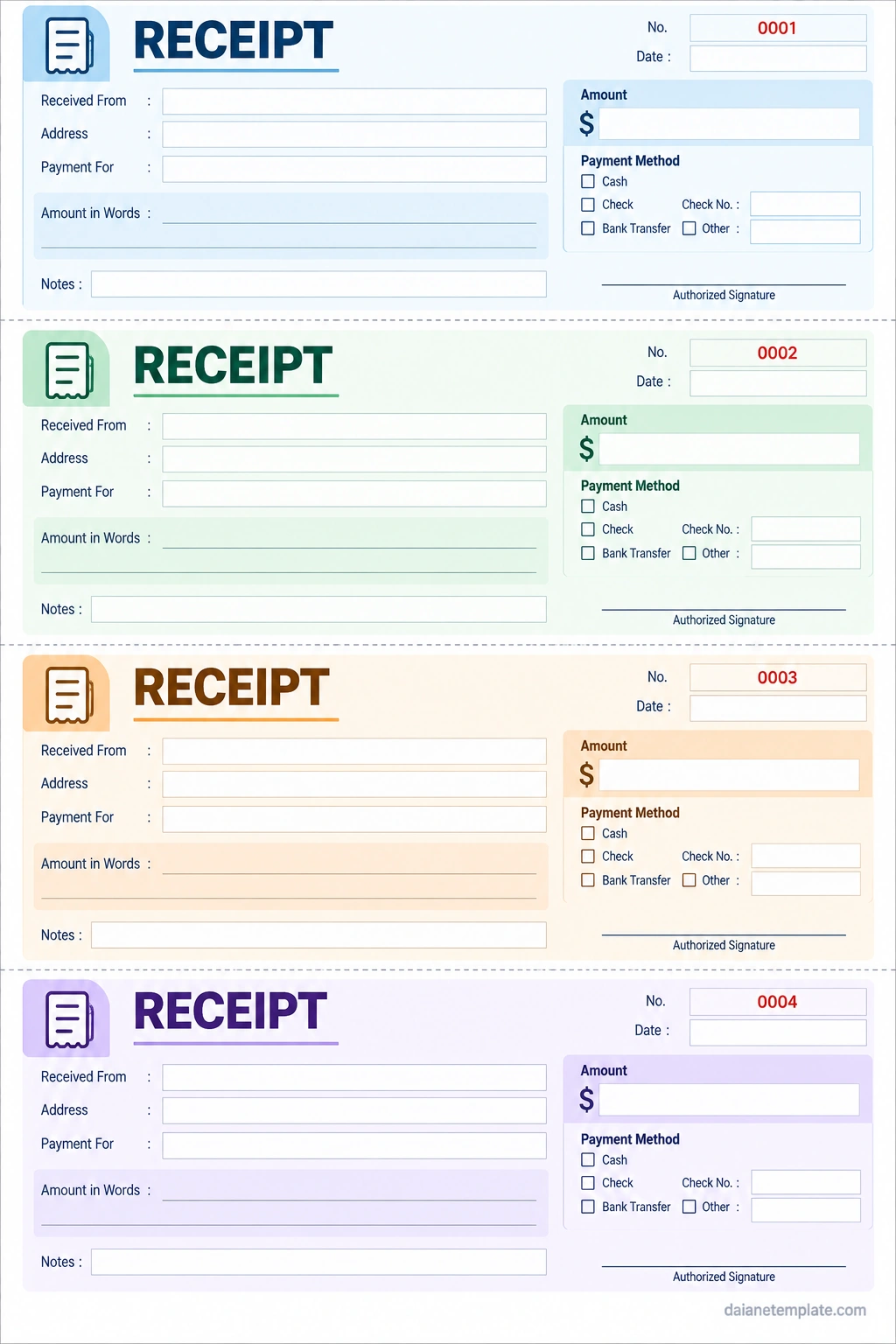
What Is a Receipt Book?
A receipt book is a collection of individual receipt forms used to document payments received from customers or other parties. Traditional receipt books often contain multiple numbered receipts that can be completed manually and separated from the book when provided to the customer.
Each receipt typically includes information about the transaction, such as who made the payment, the amount received, what the payment was for, the date, and the payment method.
A receipt book can be used for cash transactions as well as payments made by check, bank transfer, or other payment methods, depending on how the business records its transactions.
Why Is a Receipt Book Important?
Accurate payment documentation benefits both the business and the customer. A receipt provides a simple written record that can be referenced after a transaction has been completed.
Provides Proof of Payment
A receipt confirms that a payment was received. It gives the customer a document that can be kept with their financial records.
Improves Financial Recordkeeping
Businesses can use receipt records to organize incoming payments and reconcile transactions with their accounting records.
Helps Track Transactions
Sequential receipt numbers make it easier to identify individual transactions and determine whether a receipt has been recorded or accounted for.
Supports Customer Communication
A written receipt gives customers a clear summary of their payment and reduces uncertainty about what was paid and when.
Helps With Accounting
Receipts can provide supporting documentation when organizing income records, preparing financial reports, or reviewing transactions.
Creates a Record for Disputes
If a question arises about whether a payment was made, a properly completed receipt can provide useful transaction information. The value of the document depends on the accuracy and completeness of the underlying records.
What Information Should a Receipt Include?
A good receipt book template should contain the information needed to clearly identify and document each payment.
Receipt Number
Each receipt should have a unique number whenever practical. Sequential numbering makes individual transactions easier to reference and organize.
Date
Record the date the payment was received. Using a consistent date format can make transaction records easier to review.
Customer Information
Include the customer’s name and other relevant information when necessary. Depending on the transaction, this may include an address, phone number, email address, or customer account reference.
Payment Description
Describe what the customer paid for. A specific description is more useful than a vague entry such as “payment” because it provides context for the transaction.
Amount Received
Clearly state the amount received. For additional clarity, some receipt forms include both the numerical amount and the amount written in words.
Payment Method
Identify how the payment was made. Common options include:
- Cash
- Check
- Bank transfer
- Credit or debit card
- Other approved payment methods
Notes
A notes field can be useful for recording additional information about the transaction, such as an invoice reference, installment payment, balance information, or other relevant details.
Authorized Signature
A signature field can identify the person who issued or authorized the receipt. Whether a signature is necessary depends on the business’s recordkeeping process and the nature of the transaction.
How to Use a Receipt Book
Using a receipt book consistently can make payment records easier to manage. Establish a simple process and use it for each applicable transaction.
1. Assign the Receipt Number
Use the next available receipt number. Avoid reusing numbers because unique identifiers make records easier to track.
2. Enter the Date
Write down the date the payment was received. Make sure the date matches the transaction record used by the business.
3. Record the Customer
Enter the customer’s name and any additional identifying information required for the transaction.
4. Describe the Payment
Clearly explain what the customer paid for. If the payment relates to an invoice, order, project, or account, include the relevant reference when appropriate.
5. Record the Amount
Enter the exact amount received and double-check the figure before issuing the receipt.
6. Mark the Payment Method
Identify whether the payment was made by cash, check, bank transfer, card, or another method supported by the business.
7. Add Relevant Notes
Use the notes section for information that helps explain or identify the transaction.
8. Provide the Customer Copy
If the receipt book contains duplicate or carbon-copy forms, provide the customer with the appropriate copy and retain the business copy according to your recordkeeping process.
9. Keep the Records Organized
Store completed receipt records securely and organize them so individual transactions can be located when needed.
Receipt Book for Small Businesses
A receipt book can be particularly useful for small businesses that handle payments directly from customers. It provides a straightforward way to document transactions without requiring a complex accounting system for every payment interaction.
Businesses such as local retailers, service providers, repair professionals, tutors, independent contractors, community organizations, and event vendors may find a simple receipt system useful.
The receipt process should complement, rather than replace, the business’s broader accounting and financial recordkeeping system.
Receipt Book for Cash Payments
Cash transactions can benefit from clear documentation because there may be no electronic transaction record automatically generated by a payment provider.
When accepting cash, record the amount received, date, customer, purpose of payment, and receipt number. The business should also maintain appropriate internal records showing how cash received is handled and recorded.
Receipt Book for Check Payments
When a customer pays by check, the receipt can document the amount and identify the payment method. Depending on the business’s process, the check number may also be recorded.
A receipt confirms that the payment was received, but businesses should maintain appropriate records for processing, depositing, and reconciling checks.
Receipt Book for Service Businesses
Service providers can use receipts to document payments for completed services, deposits, installments, or other agreed charges.
The payment description should identify the service clearly. For project-based work, including an invoice or project reference can make the receipt easier to connect with the underlying transaction.
Receipt Book vs. Invoice
A receipt and an invoice serve different purposes. An invoice is generally a request for payment, while a receipt confirms that payment has been received.
For example, a business may first send an invoice describing the amount a customer owes. After the customer pays, the business can issue a receipt confirming the payment.
Keeping both documents can create a clearer record of the billing and payment process.
Receipt Book vs. Payment Voucher
A receipt is generally provided to the person or organization making a payment as confirmation that the payment was received. A payment voucher, depending on the organization, may instead be used internally to document or authorize a payment.
The terminology and purpose can vary between businesses and accounting systems, so organizations should use documents consistently according to their own procedures.
How to Organize Receipt Book Records
Good organization is important when a business uses a receipt book regularly. A consistent process can make it easier to find transaction information later.
- Use sequential receipt numbers: Maintain a logical numbering system.
- Record transactions promptly: Complete receipts when payments are received.
- Keep duplicate records: Retain the business copy when applicable.
- Reconcile payments: Compare receipt records with accounting and deposit records.
- Store records securely: Protect completed receipts from damage or unauthorized access.
- Track missing numbers: Investigate gaps in receipt sequences rather than ignoring them.
- Keep supporting documents: Connect receipts with invoices, orders, or other transaction records when appropriate.
Tips for Creating a Professional Receipt
A professional receipt should be simple, readable, and complete. Customers should be able to understand the transaction without searching through unnecessary information.
- Use a clear receipt title.
- Give each receipt a unique number.
- Include the business name and contact information.
- Record the customer’s name accurately.
- Describe the reason for payment clearly.
- Show the amount received prominently.
- Identify the payment method.
- Include relevant invoice or order references.
- Provide enough space for notes when needed.
- Review the receipt before giving it to the customer.
Common Receipt Book Mistakes to Avoid
Using Duplicate Receipt Numbers
Duplicate numbers can make transaction records difficult to reconcile. Use a consistent sequence and investigate numbering errors promptly.
Leaving Important Fields Blank
Missing dates, amounts, customer names, or payment descriptions can reduce the usefulness of a receipt. Complete all relevant fields before issuing it.
Writing Unclear Payment Descriptions
A description should provide enough information to identify what the payment was for. Avoid descriptions that are too vague.
Failing to Keep Business Copies
If your receipt system includes a business copy, retain it according to your recordkeeping procedures. The retained copy provides an important reference for transaction tracking.
Not Reconciling Receipts
Receipt records should be compared with other financial records as part of the business’s normal accounting process. Differences should be investigated rather than ignored.
Making Corrections Without Documentation
If an error occurs, follow a consistent correction procedure. Avoid altering records in a way that makes the original transaction difficult to understand.
Using a Receipt Book Template
A receipt book template provides a ready-to-use structure for creating consistent payment receipts. Instead of designing every receipt individually, a template can include standard fields for receipt numbers, dates, customer information, payment descriptions, amounts, payment methods, notes, and signatures.
A printable receipt book can be especially convenient for businesses that want to keep physical transaction records or issue handwritten receipts.
When using a template, customize it with your business name, contact information, preferred fields, and internal recordkeeping requirements. The template should support your existing accounting process rather than replace it.
Digital and Printable Receipt Books
Receipt records can be maintained in either physical or digital formats. A printable receipt book is useful when transactions are handled in person and a handwritten confirmation is convenient.
Digital receipts can provide additional benefits such as easier searching, electronic storage, and integration with accounting or payment systems. Some businesses use both methods depending on the type of transaction.
The most important consideration is maintaining accurate, consistent, and accessible records.
FAQ About Receipt Books
What is a receipt book?
A receipt book is a collection of receipt forms used to document payments received from customers or other parties. Each receipt can record details such as the date, amount, customer, payment purpose, and payment method.
What is a receipt book used for?
A receipt book is used to provide customers with proof of payment and help businesses maintain organized records of transactions.
What should a receipt book include?
A receipt book can include receipt numbers, dates, customer information, payment descriptions, amounts, payment methods, notes, and an authorized signature field.
Can a receipt book be used for cash payments?
Yes. Receipt books are commonly used to document cash payments. The amount, date, customer, purpose of payment, and receipt number should be recorded accurately.
Can a receipt book be used for check payments?
Yes. A receipt can document a payment made by check. Businesses may also record the check number when appropriate for their internal records.
What is the difference between a receipt and an invoice?
An invoice generally requests payment, while a receipt confirms that payment has been received. Businesses may use both documents as part of their billing and payment process.
Should receipt numbers be sequential?
Using sequential receipt numbers can make transaction records easier to organize and reconcile. It also helps businesses identify gaps or duplicate numbers in their records.
Can I use a printable receipt book template?
Yes. A printable receipt book template can provide a convenient structure for recording payments manually. Customize it to suit your business and recordkeeping process.
How long should receipt records be kept?
Recordkeeping requirements vary depending on the type of business, transaction, tax rules, and applicable jurisdiction. Follow the retention requirements that apply to your business and consult a qualified accounting or tax professional when necessary.
Conclusion
A receipt book is a simple but valuable tool for documenting payments and maintaining organized transaction records. By recording receipt numbers, dates, customer information, payment descriptions, amounts, and payment methods, businesses can create clear documentation for both customers and internal records.
A consistent receipt process can also make accounting, payment tracking, and transaction reconciliation easier. Whether you use a physical receipt book, a printable template, digital receipts, or a combination of methods, accuracy and organization should remain the priority.
A well-designed receipt book template provides a practical starting point for creating professional receipts and keeping payment documentation consistent. Customize the format to fit your business needs and use it alongside your broader financial recordkeeping system.
Download: Receipt Book Template
