A reference list is an important part of a job application because it allows potential employers to learn more about your skills, experience, and professional character. By contacting people who have worked with you, employers can verify relevant information and gain a better understanding of how you perform in a workplace.
Although a reference list is not required with every application, preparing one in advance can help you respond quickly when a recruiter requests professional references. A clear, well-organized document also makes it easier for hiring managers to find the contact information they need.
Whether you are applying for your first job, changing careers, or pursuing a senior position, a professional reference list can support your application. This guide explains what to include, whom to choose, how to format the document, and how to prepare a reference list template that is ready to share.
What Is a Reference List?
A reference list is a document containing the names and contact details of people who can provide information about your professional abilities, work history, qualifications, or character. Employers may use it during the hiring process to gain an independent perspective on your suitability for a role.
Professional references commonly include former managers, supervisors, colleagues, clients, or other people who have directly observed your work. Recent graduates and entry-level applicants may also use academic references, such as professors or internship supervisors, when appropriate.
A reference list is different from a resume. Your resume summarizes your experience and achievements, while your reference list identifies people who can discuss those qualifications from their own perspective.
Why Is a Professional Reference List Important?
A well-prepared reference list can make the final stages of a job application more organized. It gives employers a practical way to follow up on your experience and provides an opportunity for others to support your professional credibility.
1. Helps Employers Verify Your Experience
A former supervisor or manager may be able to confirm your responsibilities, employment dates, and contributions to previous projects. This information can help employers compare your application with your actual work history.
References should be people who can speak accurately about your experience rather than simply people with impressive job titles.
2. Demonstrates Professionalism
A clear reference list shows that you are prepared for the hiring process. Correct names, current contact details, and consistent formatting help recruiters find the information they need without unnecessary follow-up.
Preparation also means asking your references for permission before sharing their information.
3. Provides Insight Into Your Work Style
References can describe qualities that are difficult to assess from a resume alone. Depending on their relationship with you, they may discuss communication, teamwork, reliability, problem-solving, leadership, or professional conduct.
Choose people who have direct experience working with you and can provide relevant, specific examples.
4. Supports Career Opportunities
A positive and credible reference may strengthen an application by providing additional context about your qualifications. It can be particularly useful when applying for positions that require collaboration, leadership, client interaction, or specialized skills.
However, references do not guarantee a job offer. Employers consider them alongside interviews, qualifications, experience, and other selection criteria.
What Should a Reference List Include?
A professional reference list should be easy to scan and contain enough information for an employer to contact each person. The exact format can vary, but the following details are useful in most situations.
1. Your Name and Contact Information
Place your name at the top of the document. You may also include your email address and telephone number so the employer can identify the document and contact you if needed.
Use the same professional name and contact details that appear on your resume or job application.
2. Reference’s Full Name
Include the reference’s full name, using the spelling and preferred professional form they have provided. Confirm that the information is current before submitting the list.
3. Job Title and Organization
List the person’s current or relevant job title and organization. If the person worked with you at a previous company, make that relationship clear so the employer understands the context.
4. Professional Relationship
Explain briefly how you know each reference. Examples include former supervisor, project manager, team colleague, academic advisor, internship mentor, or client.
This detail helps recruiters understand the perspective each person can offer. A former manager may be able to discuss performance, while a colleague may provide insight into teamwork and collaboration.
5. Telephone Number and Email Address
Provide the contact details your references have approved for professional use. Check that the telephone number and email address are accurate and that each person is comfortable being contacted.
A work email address may be suitable when the reference prefers professional correspondence, but follow the contact information the person has authorized you to share.
6. Optional Notes About Relevant Experience
You may include a brief description of the projects, responsibilities, or period of employment that connects each reference to your experience. Keep these notes factual and concise.
A reference list should not include private information that is unnecessary for the hiring process.
How to Choose the Best Professional References
The strongest references are people who know your work well and can discuss your qualifications honestly. Their relevance to the position is generally more important than their seniority or reputation.
Former Managers and Supervisors
Former managers are often useful references because they may be able to discuss your responsibilities, performance, reliability, and achievements. Choose a manager who has direct knowledge of your work and can provide balanced, specific feedback.
Colleagues and Project Partners
Colleagues who worked closely with you can describe your collaboration, communication, and approach to shared responsibilities. They may be especially helpful when the position involves teamwork or cross-functional projects.
Clients and Professional Contacts
Clients, vendors, or other professional contacts may be appropriate when they have direct experience with your work. For example, a client may be able to discuss your service quality, responsiveness, or ability to manage expectations.
Academic References
Students, recent graduates, and people with limited work experience can consider professors, academic advisors, internship supervisors, or research mentors. Choose someone who can discuss relevant skills, achievements, or professional potential.
People to Avoid
Unless an employer specifically requests personal references, avoid relying on friends or family members to verify professional qualifications. People who have not worked with you or observed your relevant abilities may be unable to provide useful information.
Also avoid listing someone simply because they hold a senior position. A reference who knows your work firsthand is often more valuable than a high-ranking contact who barely knows you.
How to Create a Reference List Step by Step
Preparing your reference list before an employer requests it can save time and help you respond confidently during the hiring process.
Step 1: Identify Suitable References
Start by identifying three to five potential references, unless the employer specifies a different number. Consider their knowledge of your work, relevance to the position, communication style, and willingness to provide a reference.
You do not need to include everyone you have worked with. Select people who can provide useful and credible information.
Step 2: Ask for Permission
Contact each person before adding them to your list. Explain the type of position you are pursuing, why you selected them, and what aspects of your experience they may be asked about.
Giving references advance notice helps them prepare and ensures that you have permission to share their contact details.
Step 3: Collect and Verify Contact Details
Confirm each person’s full name, title, organization, preferred telephone number, and email address. Ask whether they prefer to be contacted through a particular channel.
Do not assume that information from an old resume or online directory is still accurate.
Step 4: Format the Document
Use a simple heading and list each reference in a consistent format. Include your name at the top and organize the entries so employers can quickly identify each person’s role and contact information.
Use readable fonts, clear spacing, and concise descriptions. A single page is often sufficient for a standard reference list, although the appropriate length depends on the number of references requested.
Step 5: Tailor the List to the Job
Choose references whose experience is relevant to the position. For a management role, a former supervisor who can discuss leadership may be particularly helpful. For a technical position, someone familiar with your technical contributions may provide more relevant feedback.
Only include information that is accurate and that the reference has agreed to share.
Step 6: Review and Save the Final Version
Proofread names, job titles, company names, telephone numbers, and email addresses. Save a clean copy in an easy-to-share format, such as PDF, and keep an editable version for future updates.
Update your list whenever a reference changes jobs, contact information, or availability.
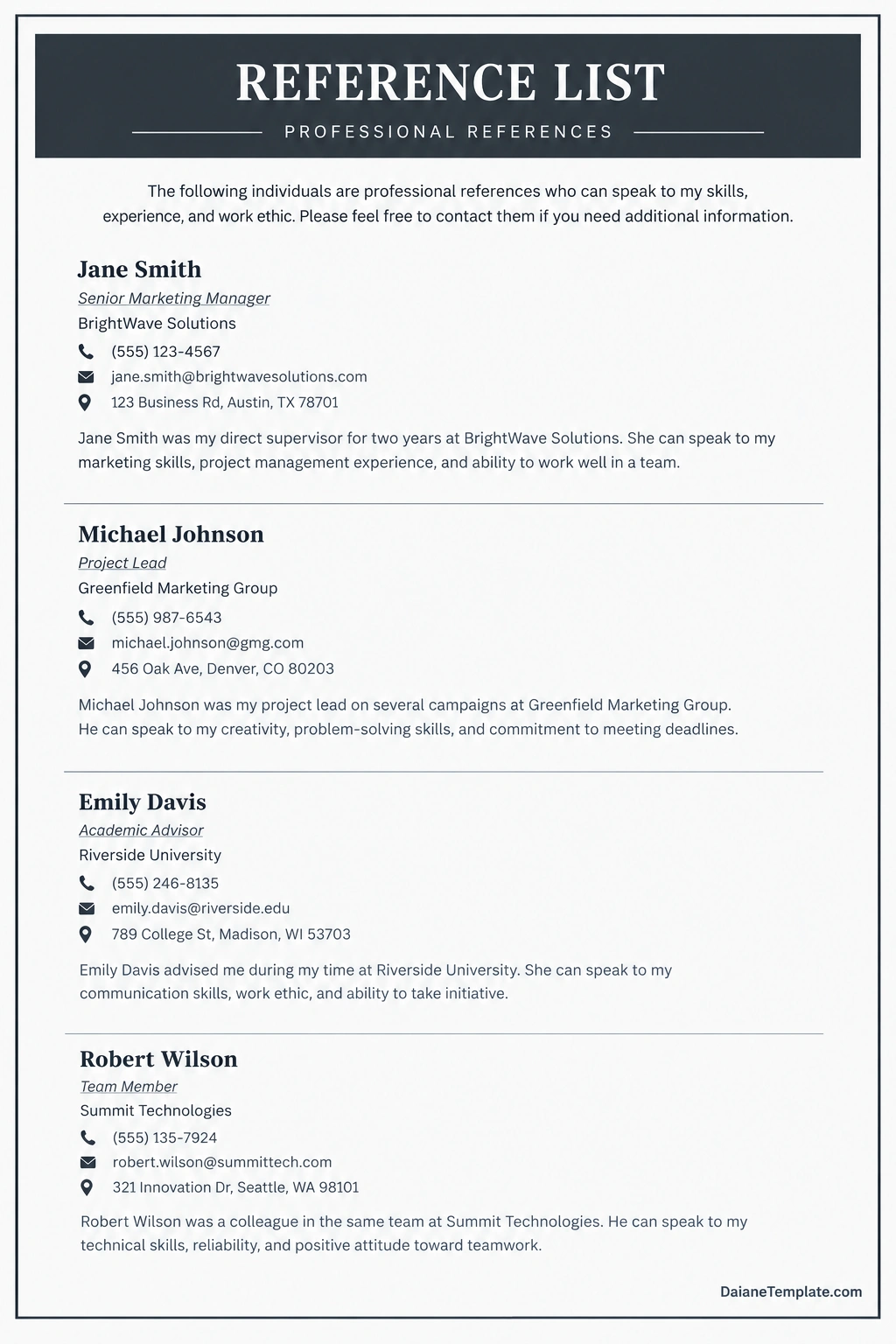
Reference List Example
The following fictional example shows how to organize professional references for a job application.
Applicant: Taylor Morgan
Email: [email protected]
Reference 1: Jordan Lee
Job Title: Marketing Manager
Organization: Northstar Creative
Relationship: Former direct supervisor
Email: [email protected]
Telephone: (555) 010-1234
Reference 2: Casey Brown
Job Title: Project Lead
Organization: Summit Digital
Relationship: Project collaborator
Email: [email protected]
Telephone: (555) 010-5678
This example illustrates a straightforward layout. Replace the fictional details with accurate information from people who have agreed to serve as your references.
Reference List vs. Reference Letter
A reference list and a reference letter serve related but different purposes. Understanding the difference helps you provide the correct document when applying for a job.
- Reference list: Provides names, job titles, organizations, contact information, and relationships for people an employer may contact.
- Reference letter: Is a written recommendation that describes a person’s qualifications, strengths, or character.
- Employment reference: May refer to information an employer provides when contacted by a prospective employer.
- Personal reference: Describes someone who can speak about your character or personal qualities rather than directly verifying your work performance.
Most applicants should prepare a professional reference list separately from their resume. Submit a reference letter only when requested or when it is appropriate for the application.
Common Reference List Mistakes to Avoid
Small mistakes can make your reference list less useful or create unnecessary problems during recruitment. Review these points before sharing the document.
- Listing someone without permission: Always ask before sharing a person’s contact details.
- Using outdated information: Verify current job titles, organizations, telephone numbers, and email addresses.
- Choosing irrelevant references: Prioritize people who can discuss skills related to the position.
- Including too much information: Keep the document focused on professional contact details and relevant relationships.
- Using inconsistent formatting: Present each reference in a clear, uniform structure.
- Submitting references when not requested: Follow the employer’s application instructions and provide the list at the appropriate stage.
- Failing to notify references: Let each person know when an employer may contact them.
- Sharing private information unnecessarily: Protect contact details and disclose only what is needed for recruitment.
Frequently Asked Questions About Reference Lists
What is a reference list for a job application?
A reference list provides contact information for people who can discuss your professional skills, experience, qualifications, or character. Employers may contact these people to obtain additional information during the hiring process.
How many references should I include?
Three professional references are a common starting point, but the correct number depends on the employer’s instructions and the position. Follow any specific requirements in the job application.
Should I include references on my resume?
In most cases, keep your reference list as a separate document and provide it when requested. This keeps your resume focused on your qualifications and helps protect your references’ contact information.
Who can I use as a professional reference?
You can consider former managers, supervisors, colleagues, clients, project leads, or academic mentors who know your work. Select people who can provide relevant, honest feedback about your abilities.
Do I need permission before listing a reference?
Yes. Ask each person for permission before sharing their contact information. This allows them to confirm their availability, choose their preferred contact details, and prepare for a possible call or email.
What is the difference between a reference list and a resume?
A resume summarizes your experience, education, and skills. A reference list provides the contact details of people who can independently discuss your qualifications and work history.
Can I use a printable reference list template?
Yes. A printable reference list template can help you organize names, job titles, organizations, contact information, and professional relationships in a consistent format. Check that all details are accurate before submitting it.
What if I have limited work experience?
Consider academic advisors, professors, internship supervisors, volunteer coordinators, or project mentors who can speak about relevant skills and responsibilities. Explain your situation honestly and choose references who know your work firsthand.
Conclusion
A professional reference list helps employers verify your qualifications and gain additional insight into your work experience, skills, and professional character. By selecting relevant references and organizing their details clearly, you can make the hiring process easier for both recruiters and the people supporting your application.
Start by asking suitable contacts for permission, verifying their information, and preparing a clean, consistent document. Tailor your references to the role when appropriate, keep the list updated, and provide it according to the employer’s instructions.
With a well-prepared reference list template, you can respond professionally when references are requested and help potential employers connect with people who can speak credibly about your experience.
Download: Reference List Template
