A security deposit receipt is a written document that confirms a landlord has received a security deposit from a tenant. It provides both parties with a clear record of the payment, including the amount received, payment date, rental property, and other important transaction details.
Keeping a written record of a security deposit can help prevent confusion later. For landlords, a receipt creates an organized record of money received from a tenant. For tenants, it provides proof that the deposit was paid and received.
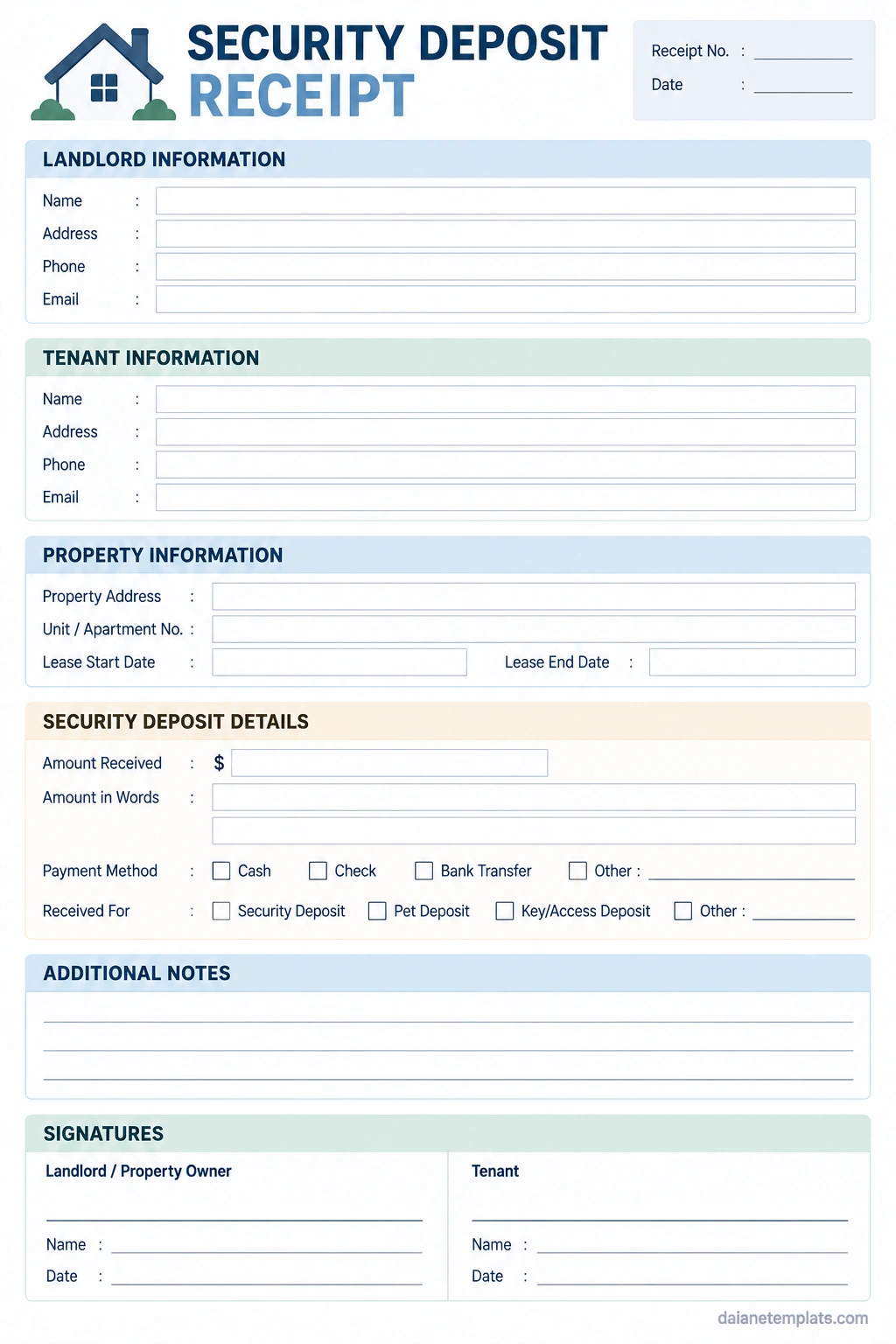
A clear receipt should identify the landlord, tenant, rental property, amount of the deposit, payment method, and date received. Depending on the rental arrangement and applicable requirements, additional information may also be useful.
What Is a Security Deposit Receipt?
A security deposit receipt is a written acknowledgment that a landlord or property manager has received a security deposit from a tenant. The document connects the payment to a specific rental property and tenancy.
The receipt can include the amount received, date of payment, payment method, tenant information, landlord information, and property address. It may also include the lease start date, unit number, notes, and signatures.
The exact information required for a security deposit receipt can vary depending on the location, rental agreement, and applicable landlord-tenant rules. Landlords should use a receipt format that is appropriate for their circumstances.
Why Is a Security Deposit Receipt Important?
A security deposit is an important financial transaction between a tenant and landlord. A written receipt creates a simple record that both parties can reference.
Provides Proof of Payment
The main purpose of a security deposit receipt is to confirm that the deposit was received. This can be particularly useful when a tenant needs to demonstrate that the payment was made.
Creates a Clear Transaction Record
The receipt records important details about the payment, including the amount, date, property, and payment method. This helps keep rental records organized.
Reduces Confusion
A written record can reduce misunderstandings about how much was paid and what the payment was intended to cover.
Supports Landlord Recordkeeping
Landlords can retain a copy of the receipt with the lease and other rental records. This creates a more complete record of the tenancy.
Helps Tenants Maintain Financial Records
Tenants can keep the receipt with their lease documents and other housing records. It can be useful when reviewing payments or discussing the deposit later.
What Should a Security Deposit Receipt Include?
A well-designed security deposit receipt template should make the important payment information easy to identify.
Receipt Number
A unique receipt number can make the transaction easier to reference, especially for landlords who manage multiple properties or tenants.
Date Received
Record the date on which the landlord or property manager received the security deposit.
Landlord Information
The receipt can include the landlord’s or property manager’s name, address, phone number, and email address.
Tenant Information
Include the tenant’s name and relevant contact information. If more than one tenant is responsible for the lease, the receipt can identify the appropriate parties.
Property Information
Clearly identify the rental property associated with the payment. Useful information may include:
- Property address
- Apartment or unit number
- Lease start date
- Lease end date, when applicable
- Property or tenant reference number
Security Deposit Amount
Clearly state the amount received. For additional clarity, some receipts include the amount numerically and in words.
Payment Method
Identify how the deposit was paid. Common options include cash, check, bank transfer, or another accepted payment method.
Purpose of Payment
The receipt should clearly indicate that the payment represents a security deposit. If the payment includes another type of deposit or charge, describe it accurately.
Notes
A notes section can be used for additional information, such as a reference to the lease agreement or details about the transaction.
Signatures
Depending on the landlord’s recordkeeping process and applicable requirements, the receipt may include signature fields for the landlord and tenant. Signatures can provide additional acknowledgment of the documented transaction.
How to Create a Security Deposit Receipt
Creating a security deposit receipt does not have to be complicated. The most important goal is to document the transaction accurately and clearly.
1. Identify the Rental Property
Start by recording the complete property address and unit number, if applicable. This connects the payment to the correct rental property.
2. Enter Landlord and Tenant Information
Add the names and relevant contact details for the landlord and tenant. Review the spelling carefully before completing the receipt.
3. Record the Payment Date
Enter the date the deposit was received. Consistent date records make rental documentation easier to organize.
4. Record the Deposit Amount
Enter the exact amount received. Double-check the figure against the payment record before issuing the receipt.
5. Identify the Payment Method
Mark whether the payment was made by cash, check, bank transfer, or another method. If relevant, record a payment reference or check number.
6. Describe the Payment
Clearly state that the amount received is a security deposit associated with the rental agreement.
7. Add Any Relevant Notes
Use the notes section for information that may help identify the transaction or connect it to the lease documentation.
8. Sign and Provide a Copy
If signatures are part of your documentation process, complete the applicable signature fields. Provide the tenant with a copy and retain a copy with the landlord’s rental records.
Security Deposit Receipt for Landlords
For landlords, issuing a security deposit receipt is a straightforward way to document money received at the beginning of a tenancy.
Keep the receipt with the lease agreement and other relevant rental documents. Organizing these records by property and tenant can make it easier to locate information when needed.
Landlords should also distinguish security deposits from rent payments, application fees, repairs, and other charges. Accurate categorization can make financial and rental recordkeeping much easier.
Security Deposit Receipt for Tenants
Tenants should keep a copy of their security deposit receipt after making the payment. The receipt provides written documentation that can be stored with the lease and other important rental records.
Check that the receipt accurately identifies the property, payment date, deposit amount, and payment method. If any important information is incorrect, contact the landlord or property manager promptly to request clarification or correction.
Security Deposit Receipt vs. Rent Receipt
A security deposit receipt and a rent receipt document different types of payments.
A security deposit receipt confirms payment of a deposit associated with the rental agreement. A rent receipt confirms payment of rent for a specific rental period.
Keeping these records separate can help landlords and tenants maintain clearer financial documentation.
Security Deposit Receipt vs. Lease Agreement
A lease agreement establishes the terms of the rental relationship, while a security deposit receipt documents the receipt of a particular payment.
The lease may contain information about the security deposit, including the agreed amount and applicable terms. The receipt provides a transaction-specific record showing that the payment was received.
For this reason, tenants and landlords should retain both documents rather than relying on one document to replace the other.
How to Keep Security Deposit Records Organized
Good recordkeeping can make rental administration easier for both landlords and property managers.
- Keep a copy of every receipt: Retain the landlord’s copy with the relevant rental records.
- Use consistent receipt numbers: A numbering system can make individual transactions easier to locate.
- Record payments promptly: Complete the receipt when the deposit is received.
- Match receipts with payment records: Compare the receipt with the applicable payment or deposit record.
- Keep lease documents together: Store the receipt with the related lease or property records when practical.
- Protect personal information: Store tenant information securely and limit access to authorized individuals.
- Keep records for the applicable period: Follow the record-retention requirements that apply to your rental situation.
Common Security Deposit Receipt Mistakes to Avoid
Leaving Out the Property Address
A receipt without clear property information may be difficult to connect to the correct tenancy, particularly when a landlord manages multiple units.
Recording the Wrong Amount
Always verify the deposit amount before issuing the receipt. An incorrect amount can create unnecessary confusion between the parties.
Failing to Record the Payment Date
The payment date is an important part of the transaction record. Make sure it reflects when the payment was actually received.
Using an Unclear Payment Description
Clearly identify the payment as a security deposit rather than simply writing “payment” or “deposit.”
Not Keeping a Copy
The landlord should retain a copy of the completed receipt as part of the rental records. The tenant should also keep their copy.
Ignoring Local Requirements
Security deposit rules can vary by jurisdiction. A receipt template should not be assumed to satisfy every legal requirement. Landlords should review the rules applicable to the rental property and seek qualified legal advice when necessary.
Using a Security Deposit Receipt Template
A security deposit receipt template provides a structured format for documenting deposit payments. Instead of creating a new receipt from scratch, landlords can use a standard form containing fields for the landlord, tenant, property, payment, amount, notes, and signatures.
A printable security deposit receipt can be particularly useful for landlords who prefer physical documentation or need to provide a written receipt during an in-person transaction.
Before using a template, customize it to reflect the landlord’s recordkeeping process and any information required by the applicable rental agreement or local rules.
Tips for Creating a Professional Security Deposit Receipt
A good receipt should be simple enough to complete quickly while still containing the information needed to identify the transaction.
- Use a clear title such as “Security Deposit Receipt.”
- Include a unique receipt number.
- Record the date the deposit was received.
- Identify both landlord and tenant.
- Include the complete rental property address.
- State the deposit amount clearly.
- Identify the payment method.
- Reference the applicable lease when useful.
- Provide space for notes or additional information.
- Keep copies of completed receipts.
- Use consistent formatting for every rental transaction.
FAQ About Security Deposit Receipts
What is a security deposit receipt?
A security deposit receipt is a written document confirming that a landlord or property manager received a security deposit from a tenant. It typically identifies the tenant, property, payment date, deposit amount, and payment method.
Why should a landlord provide a security deposit receipt?
A receipt provides a written record of the payment and gives the tenant documentation showing that the deposit was received. It also helps the landlord maintain organized rental records.
What should a security deposit receipt include?
A security deposit receipt can include the receipt number, date, landlord information, tenant information, property address, deposit amount, payment method, notes, and signatures.
Should a tenant keep a security deposit receipt?
Yes. Tenants should keep their security deposit receipt with their lease and other important rental documents. It provides useful documentation of the payment.
Can a security deposit receipt be handwritten?
Yes. A receipt can be completed by hand if the format is clear and the information is recorded accurately. A printable security deposit receipt template can make handwritten documentation easier.
Is a security deposit receipt the same as a rent receipt?
No. A security deposit receipt documents a security deposit payment, while a rent receipt documents payment of rent. They serve different purposes and should be recorded separately.
Can a security deposit receipt replace a lease agreement?
No. A receipt documents a payment, while a lease agreement establishes the terms of the rental relationship. Both documents can serve important recordkeeping purposes.
Does every security deposit receipt have the same legal requirements?
No. Requirements can vary depending on the jurisdiction, type of rental, and applicable landlord-tenant rules. Landlords should verify the requirements that apply to their specific situation.
Can I use a security deposit receipt template?
Yes. A security deposit receipt template can provide a convenient structure for recording deposit payments. Customize the template to fit the rental arrangement and applicable requirements.
Conclusion
A security deposit receipt provides a simple and useful record that confirms a tenant’s deposit payment was received by the landlord. By documenting the tenant, landlord, property, payment date, deposit amount, and payment method, the receipt creates a clear record of the transaction.
Both landlords and tenants should keep copies of important rental payment records. A well-organized security deposit receipt template can make the documentation process faster, more consistent, and easier to manage.
Because security deposit requirements can differ by location, landlords should also make sure their receipt and recordkeeping practices are consistent with the applicable rental agreement and local requirements. A clear receipt is an important part of good rental documentation, but it should be used together with the complete lease and other required records.
Download: Security Deposit Receipt Template
