A rent receipt is an important document that confirms a tenant has paid rent to a landlord or property manager. It provides written proof of payment, helps both parties maintain accurate records, and reduces misunderstandings about rental payments.
Whether you rent an apartment, manage a residential property, or collect rent for a commercial space, keeping clear payment records is a practical part of managing a rental agreement. A properly completed receipt identifies the payment amount, date, rental period, property, and person who received the money.
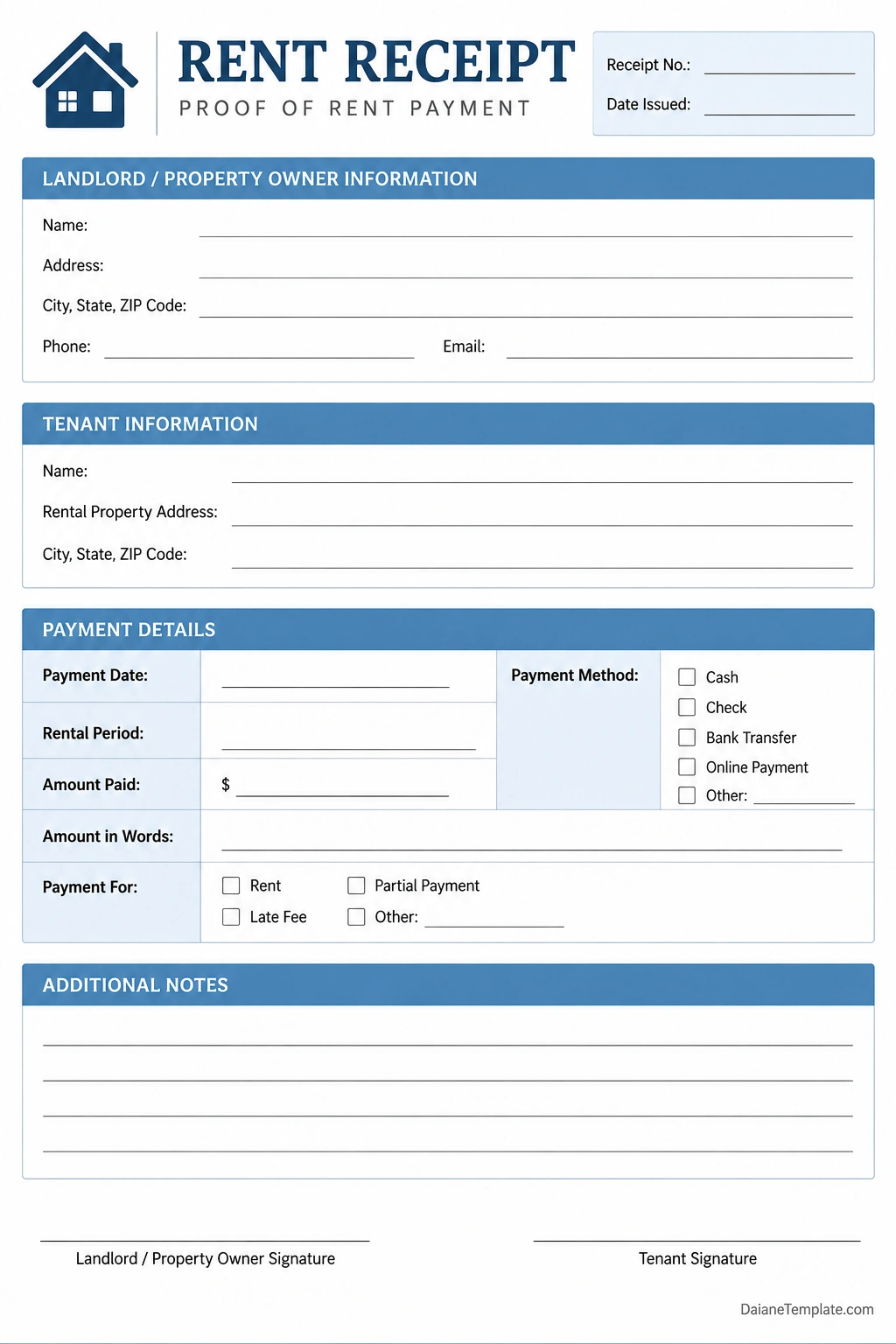
A rent receipt template makes this process easier by providing a consistent format for recording each transaction. In this guide, you will learn what a rent receipt is, why it matters, which details to include, and how to create a clear rental payment record.
What Is a Rent Receipt?
A rent receipt is a written acknowledgment that a landlord, property owner, or authorized property manager has received a rental payment from a tenant. It serves as a record of the transaction and helps establish which payment was made and the period it covers.
Rent receipts are especially useful when tenants pay by cash, although they can also document payments made by check, bank transfer, or an online payment service. Even when an electronic transaction record is available, a separate receipt can make rental records easier to organize.
A rent receipt may be issued as a printed document, a PDF, or an electronic message. The format can vary, but the information should be accurate, readable, and consistent with the rental agreement.
Why Is a Rent Receipt Important?
A rent receipt provides a straightforward way to document rental payments. It supports communication between landlords and tenants and helps both parties maintain an organized payment history.
1. Provides Proof of Rent Payment
A receipt gives the tenant written confirmation that the landlord or authorized representative received a specified payment. This record can be useful if a disagreement arises about whether rent was paid or which period the payment covered.
For cash payments, obtaining a receipt is particularly important because there may be no automatic bank or payment-platform record.
2. Helps Prevent Payment Disputes
Rental disagreements can occur when payment dates, amounts, or outstanding balances are unclear. A detailed receipt helps reduce confusion by documenting the transaction at the time payment is received.
Both parties should check the information carefully and keep a copy for their records.
3. Supports Financial Recordkeeping
Landlords can use rent receipts to reconcile rental income, track payments by property, and maintain records for bookkeeping or tax preparation. Tenants can organize receipts to monitor housing expenses and confirm their payment history.
Receipts are most useful when they are stored consistently and can be retrieved when needed.
4. Helps Document Partial Payments
If a tenant pays only part of the amount due, the receipt can specify the amount received and identify it as a partial payment. This helps prevent the receipt from being mistaken for confirmation that the entire balance has been paid.
Any remaining balance and the treatment of the payment should be recorded clearly, subject to the rental agreement and applicable law.
5. Supports Compliance with Local Requirements
Some jurisdictions require landlords to provide rent receipts in particular circumstances, such as when rent is paid in cash. Requirements may differ based on location, property type, and rental arrangement.
Landlords should check the applicable rules, including any requirements concerning receipt format, delivery, record retention, or mandatory information.
What Should a Rent Receipt Include?
A useful rent receipt identifies the parties, confirms the payment details, and explains what the money covers. Include the following information whenever it is relevant to the transaction.
1. Receipt Number and Issue Date
Assigning a unique receipt number helps landlords organize records and locate individual transactions. The issue date shows when the receipt was prepared.
Keep the numbering system consistent to reduce the risk of duplicate or missing records.
2. Landlord or Property Manager Information
Include the name of the person or business receiving the payment. Depending on the arrangement, you may also include a mailing address, telephone number, or email address.
If a property manager collects rent on behalf of an owner, identify the authorized recipient accurately.
3. Tenant Information
Record the tenant’s name as stated in the rental agreement. If multiple tenants share responsibility for the rent, follow a consistent approach that clearly identifies the payment and relevant tenancy.
4. Rental Property Address
Include the complete address of the property associated with the payment. This is particularly important for landlords who manage multiple units or buildings.
5. Payment Date and Rental Period
The payment date identifies when the money was received. The rental period specifies the month or dates covered by the payment.
For example, a receipt might state that payment was received on October 3 for rent covering October 1 through October 31. Recording both dates makes the transaction easier to understand.
6. Amount Paid and Outstanding Balance
Write the amount received clearly and identify the currency. You may also write the amount in words to reduce ambiguity.
If the payment is partial, record that fact and identify any remaining balance when known. Do not describe a partial payment as full payment unless the entire amount due has actually been settled.
7. Payment Method
Indicate whether the tenant paid by cash, check, bank transfer, or an electronic payment service. For a check or electronic transaction, a reference number may help with reconciliation.
A receipt should not display unnecessary sensitive financial information, such as a full bank account number or payment card details.
8. Payment Purpose and Signature
Specify whether the payment covers regular rent, a partial rent payment, a late fee, or another permitted charge. If several items are included, list them separately when practical.
A signature or electronic acknowledgment from the authorized recipient can provide additional confirmation. Whether a signature is legally required depends on the circumstances and applicable rules.
How to Write a Rent Receipt Step by Step
Creating a rent receipt is straightforward when you follow a consistent process. Use these steps to make the document clear and useful.
Step 1: Confirm the Payment
Verify that the payment has actually been received and identify the amount. For electronic transfers, check the transaction status rather than relying only on a tenant’s payment instruction or screenshot.
Step 2: Enter the Parties and Property Details
Record the landlord or authorized recipient, tenant, and rental property address. Check spelling and confirm that the receipt relates to the correct tenancy.
Step 3: Specify the Payment Period
Enter the date the payment was received and the rental period it covers. If the payment relates to an older balance or several periods, explain that clearly.
Step 4: Record the Amount and Method
Enter the exact amount received and identify the payment method. If the tenant paid only part of the rent, label it as a partial payment and document the remaining balance where appropriate.
Step 5: Add Notes and Acknowledgment
Include relevant notes, such as a transaction reference or the allocation of a payment among different charges. The authorized recipient should review the details before signing or issuing the receipt.
Step 6: Deliver and Store Copies
Provide the tenant with a copy and retain another for the landlord’s records. A printed copy, PDF, or securely stored electronic document can work well, provided both parties can access the record when needed.
Rent Receipt Example
The following example illustrates how a completed receipt might be organized. The details are fictional and are provided for demonstration purposes only.
Receipt Number: RR-2026-014
Date Issued: October 3, 2026
Landlord: Jordan Taylor
Tenant: Alex Morgan
Rental Property: 125 Example Street, Unit 4
Payment Date: October 3, 2026
Rental Period: October 1–31, 2026
Amount Received: $1,200
Payment Method: Bank transfer
Payment For: Monthly rent
Balance: No balance remains for the stated rent period, assuming the payment satisfies the full amount due.
Authorized Recipient: Jordan Taylor
This example shows why a receipt should identify the parties, property, dates, and amount. In an actual transaction, use the correct details and do not state that a balance is settled unless the payment records confirm it.
How to Use a Printable Rent Receipt Template
A printable rent receipt template provides a ready-made structure for documenting payments. It can save time for landlords who collect rent regularly and help tenants receive consistent records.
Choose a Suitable Template
Select a template that includes the essential payment fields and enough space for property information, notes, and acknowledgment. Make sure the layout remains readable when printed.
Complete Every Relevant Field
Enter the information for the specific transaction. If a field does not apply, leave it blank or mark it appropriately rather than entering information that could cause confusion.
Check the Details Before Issuing
Verify the amount, payment date, rental period, and payment status. Correcting mistakes before issuing the receipt helps avoid discrepancies between the tenant’s records and the landlord’s bookkeeping.
Save a Digital Copy
Consider scanning the completed receipt or saving it as a PDF. Use a consistent file-naming system based on the property, tenant, and payment date, while protecting personal information from unauthorized access.
Common Rent Receipt Mistakes to Avoid
Small errors can make rental records harder to understand. Avoid these common mistakes when preparing or reviewing a receipt.
- Recording the wrong amount: Confirm the amount actually received before issuing the receipt.
- Omitting the rental period: Identify the dates or month covered by the payment.
- Confusing partial and full payments: State clearly whether the payment settles the amount due.
- Using unclear descriptions: Identify whether the payment covers rent, a fee, or another charge.
- Issuing duplicate receipt numbers: Maintain a consistent numbering system.
- Failing to keep copies: Store receipts securely for future reference.
- Sharing unnecessary personal information: Include only details needed to document the transaction.
- Ignoring local requirements: Check whether local law specifies how and when receipts must be provided.
Frequently Asked Questions About Rent Receipts
What is the purpose of a rent receipt?
A rent receipt confirms that a landlord or authorized recipient has received a rental payment. It helps both parties document the amount, payment date, rental period, and other relevant transaction details.
Is a landlord required to provide a rent receipt?
The requirement depends on local law and the circumstances of the payment. Some jurisdictions require receipts for cash rent or in other specified situations. Check the rules that apply to the property and tenancy.
Should I get a rent receipt when paying by bank transfer?
A bank statement or transaction confirmation can provide evidence of an electronic payment. A separate rent receipt may still be useful because it can identify the rental period and clarify how the payment was allocated.
What information should a rent receipt contain?
A rent receipt generally includes the receipt number, issue date, landlord and tenant names, rental property address, payment date, rental period, amount received, payment method, and payment purpose. Additional information may be useful depending on the transaction.
Can I use a printable rent receipt template?
Yes. A printable rent receipt template provides a convenient structure for recording rental payments. Complete the relevant fields accurately and check that the format meets any applicable local requirements.
Can a rent receipt be used as proof of payment?
A properly completed receipt can serve as evidence that a specified payment was acknowledged by the recipient. Its evidentiary value depends on the circumstances, accuracy, authenticity, and applicable law. Keep related bank records or other supporting documents when available.
What should I do if I lose my rent receipt?
Contact the landlord or authorized property manager and ask whether a copy or duplicate acknowledgment can be provided. You can also retain relevant bank statements, transaction confirmations, or other records that help establish payment.
How long should rent receipts be kept?
The appropriate retention period depends on local requirements, tax rules, the rental agreement, and the possibility of future disputes. Both landlords and tenants should keep records for the period required by applicable rules and any longer period that is reasonably necessary.
Conclusion
A rent receipt is a simple but valuable document for confirming rental payments and maintaining clear financial records. It helps landlords track income and gives tenants written evidence of the payments they have made.
To create a useful receipt, identify the parties and property, record the payment date and rental period, state the amount received, and specify the payment method and purpose. Check the information carefully, provide a copy to the tenant, and store the record securely.
Whether you manage one rental unit or several properties, a printable rent receipt template can make payment documentation more consistent and efficient. Use accurate records and follow the rules that apply to your rental arrangement to help prevent misunderstandings and support responsible property management.
Download: Rent Receipt Template
