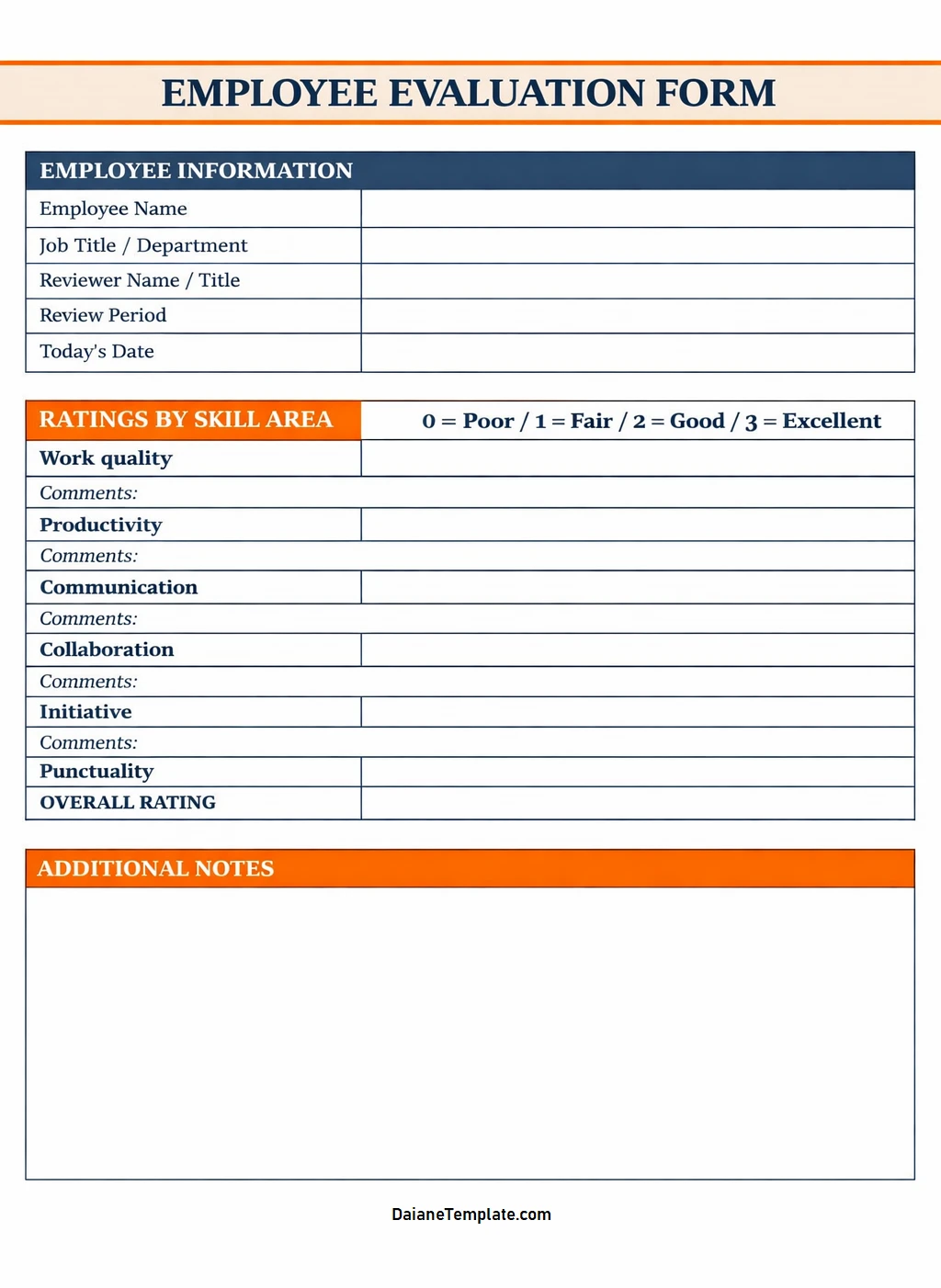
Employee evaluation forms play a crucial role in documenting and assessing an employee’s job performance over a specific period. These forms provide structured feedback on strengths and weaknesses, align individual work with company objectives, and inform decisions regarding compensation, promotions, and professional development.
Additionally, they create a performance record to support HR decisions, foster accountability, and promote open dialogue and career growth discussions between managers and employees.
What are Employee Evaluation Forms?
Employee evaluation forms, also known as performance appraisal forms, are tools used by organizations to assess an employee’s performance in their role. These forms typically include a set of criteria that are relevant to the employee’s job responsibilities and the overall goals of the company.
Managers use these forms to provide feedback to employees, set goals for improvement, and make decisions about compensation and career advancement.
Why are Employee Evaluation Forms Important?
Employee evaluation forms are important for several reasons. They provide a structured way to assess an employee’s performance and give them feedback on their work. These forms also help align individual goals with the company’s objectives, ensuring that employees are working towards the same outcomes. By documenting performance over time, these forms create a record that can be used to inform decisions about promotions, raises, and development opportunities.
Key Elements of Employee Evaluation Forms
Employee evaluation forms typically include the following key elements:
- Employee Information: Basic details about the employee, such as their name, job title, and department.
- Evaluation Criteria: Specific criteria used to assess the employee’s performance, often based on their job responsibilities and company goals.
- Feedback and Ratings: Space for managers to provide feedback on the employee’s performance and assign ratings or scores.
- Goals and Development Opportunities: Areas for setting goals for improvement and identifying opportunities for professional growth.
- Signatures and Approval: Signatures from both the manager and the employee to acknowledge the evaluation and any action plans.
How to Use Employee Evaluation Forms Effectively
Using employee evaluation forms effectively involves several key steps:
1. Set Clear Expectations
Before conducting an evaluation, ensure that both the manager and the employee are clear on expectations and goals for the evaluation period. This will help guide the assessment process and provide a basis for feedback.
2. Provide Regular Feedback
Feedback should not be limited to just the evaluation period. Managers should provide regular feedback to employees throughout the year to address any performance issues and recognize achievements.
3. Use Specific Examples
When assessing an employee’s performance, use specific examples of their work to illustrate strengths and areas for improvement. This helps make feedback more actionable and meaningful.
4. Collaborate on Action Plans
After completing the evaluation, work with the employee to develop action plans for improvement. This collaborative approach can help employees feel more engaged in the process and committed to their development goals.
5. Monitor Progress
Continuously monitor the employee’s progress towards their goals and provide ongoing support and feedback. Regular check-ins can help keep employees on track and motivated to improve.
6. Conduct Follow-Up Evaluations
Follow-up evaluations are essential to track the employee’s progress and make adjustments to their goals or development plans as needed. This helps ensure that employees are continuing to grow and develop in their roles.
7. Address Performance Issues Promptly
If performance issues arise during the evaluation period, address them promptly and work with the employee to find solutions. Delaying action can lead to further problems and impact overall team performance.
8. Celebrate Achievements
Acknowledge and celebrate the employee’s achievements and milestones throughout the evaluation period. Recognizing their hard work can boost morale and motivation for future performance.
Tips for Effective Employee Evaluation Forms
Here are some tips for creating and using effective employee evaluation forms:
- Customize Forms to Fit Your Organization: Tailor evaluation forms to reflect the specific needs and goals of your organization.
- Train Managers on Evaluation Process: Provide training to managers on how to conduct fair and effective evaluations.
- Encourage Two-Way Communication: Create a culture of open communication where employees feel comfortable providing feedback on the evaluation process.
- Use Technology to Streamline Process: Consider using online tools or software to automate the evaluation process and make it more efficient.
- Seek Feedback on Forms: Regularly review and update evaluation forms based on feedback from managers and employees to ensure they remain relevant and effective.
- Focus on Development, Not Just Performance Ratings: Use evaluations as a tool for development and growth, not just as a way to assign ratings or rankings.
- Provide Resources for Improvement: Offer resources and support to help employees achieve their development goals outlined in the evaluation.
In Conclusion
Employee evaluation forms are a valuable tool for assessing job performance, providing feedback, and fostering career growth within an organization. By using these forms effectively and consistently, managers can help employees reach their full potential, align individual work with company objectives, and create a culture of accountability and continuous improvement.
Employee Evaluation Form Template – DOWNLOAD
