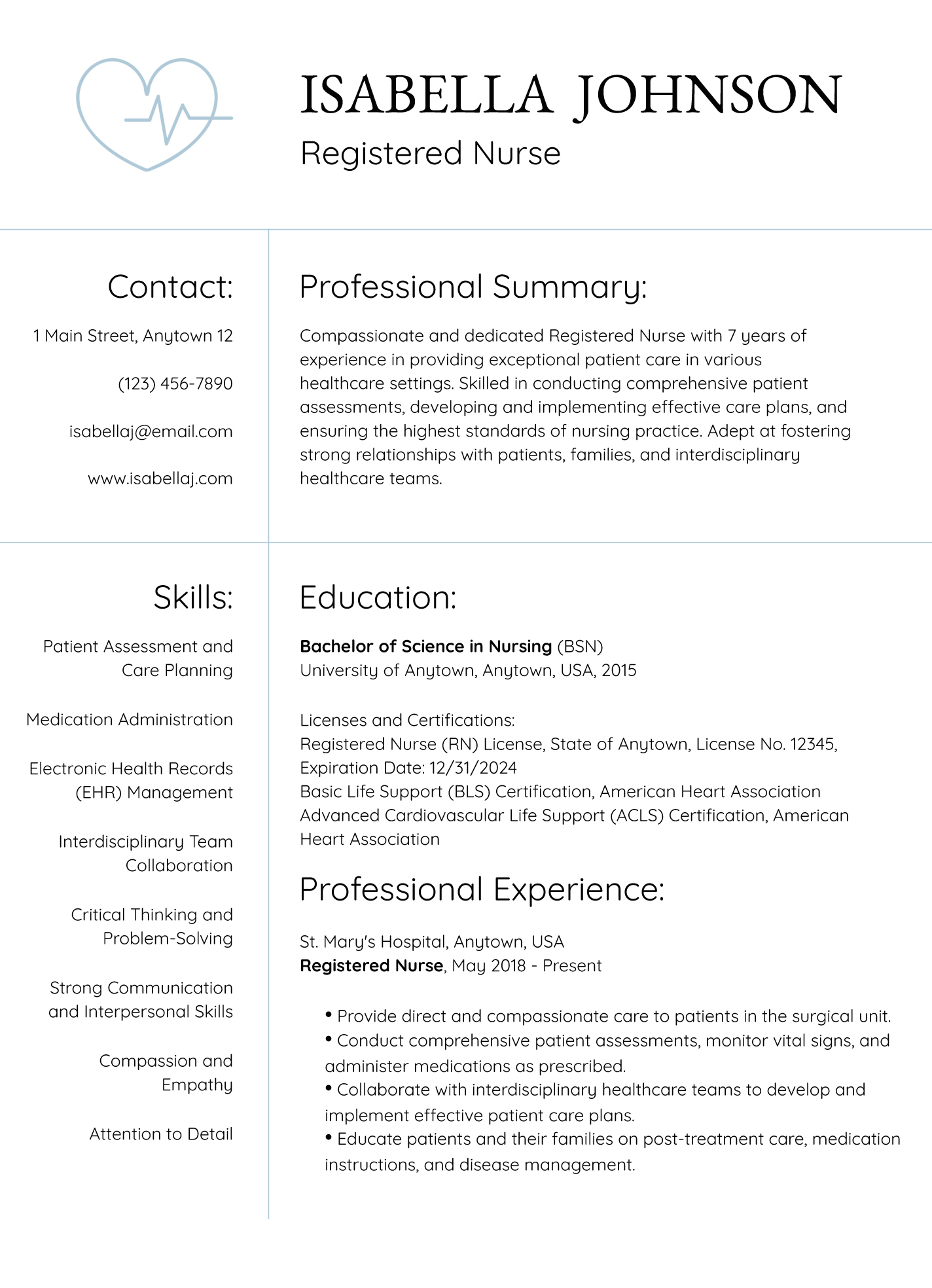
As a nurse, creating a well-crafted resume is essential to stand out in the competitive job market. Your resume is often the first impression that potential employers have of you, so it’s crucial to make it informative, engaging, and tailored to the specific position you are applying for. In this comprehensive guide, we will cover everything you need to know about creating a successful nursing resume.
What is a Nursing Resume?
A nursing resume is a document that highlights your education, work experience, skills, and accomplishments in the field of nursing. It provides a summary of your professional background and qualifications, allowing employers to quickly assess your suitability for a particular job. A well-written nursing resume can help you secure interviews and ultimately land your dream job in the healthcare industry.
Why is a Nursing Resume Important?
Your nursing resume serves as a marketing tool that showcases your abilities and expertise to potential employers. It is your chance to make a strong first impression and demonstrate why you are the best candidate for the job. A well-crafted resume can help you stand out from other applicants and increase your chances of getting noticed by hiring managers.
What to Include in Your Nursing Resume
When creating your nursing resume, be sure to include the following essential elements:
- Contact Information. Include your full name, phone number, email address, and professional social media profiles.
- Professional Summary. Write a brief overview of your experience, skills, and career goals.
- Educational Background. List your degrees, certifications, and any relevant coursework or training.
- Work Experience. Detail your previous nursing positions, including job titles, employers, dates of employment, and key responsibilities.
- Skills and Abilities. Highlight your clinical skills, technical proficiencies, and any specialized training you have received.
- Achievements and Awards. Mention any honors, awards, or recognitions you have received in your nursing career.
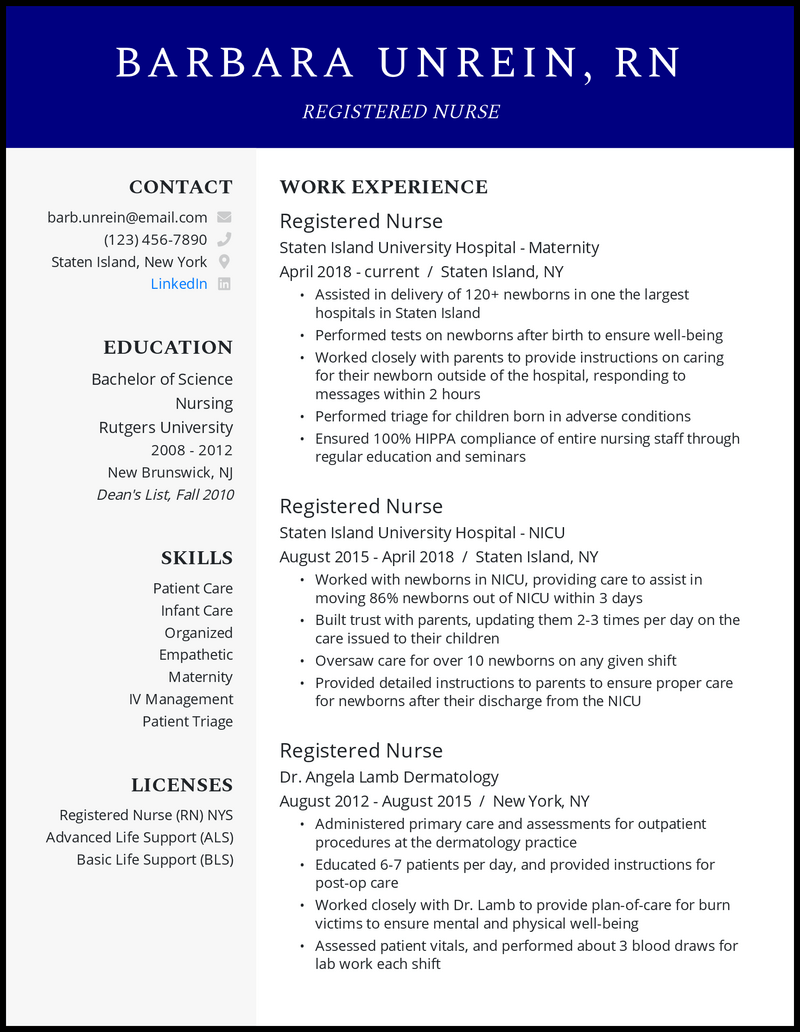
How to Format Your Nursing Resume
When formatting your nursing resume, keep the following tips in mind:
- Use a Clean and Professional Layout. Choose a simple, easy-to-read font and organize your information in a clear and structured manner.
- Focus on Relevance. Tailor your resume to the specific job you are applying for and highlight the skills and experiences that are most relevant to the position.
- Use Bulleted Lists. Use bullet points to convey information quickly and efficiently, making it easier for recruiters to scan your resume.
- Quantify Your Achievements. Whenever possible, use numbers and metrics to quantify your accomplishments and demonstrate the impact of your work.
- Proofread Carefully. Check for spelling and grammar errors, and ask a friend or colleague to review your resume before submitting it.
Tips for Successful Nursing Resumes
Here are some additional tips to help you create a successful nursing resume:
- Customize Your Resume for Each Job Application. Tailor your resume to match the job requirements and emphasize the skills and experiences that align with the position.
- Showcase Your Soft Skills. In addition to clinical skills, highlight your communication, teamwork, and problem-solving abilities.
- Include Keywords. Use industry-specific keywords and phrases to ensure your resume passes through applicant tracking systems (ATS).
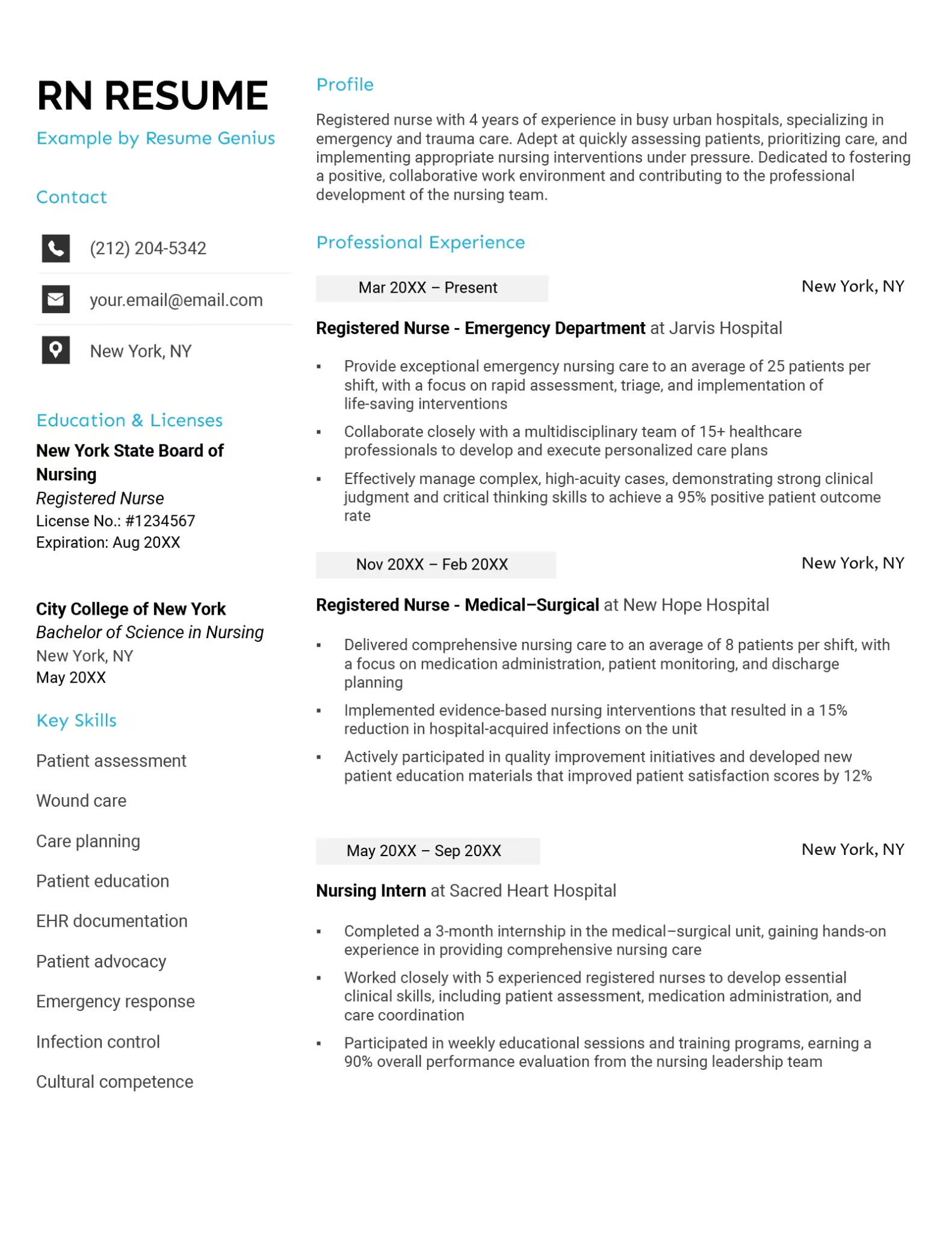
- Provide Relevant Certifications. List any relevant certifications, licenses, or specialized training that demonstrate your expertise in specific areas of nursing.
- Keep it Concise. Aim for a one-page resume if possible, focusing on the most relevant and impactful information.
Conclusion
Creating an effective nursing resume is crucial for advancing your career in the healthcare industry. By following the tips outlined in this guide and tailoring your resume to each job application, you can increase your chances of landing interviews and securing your desired nursing position. Remember to highlight your unique skills and experiences, showcase your achievements, and present yourself as a strong candidate for the job.
