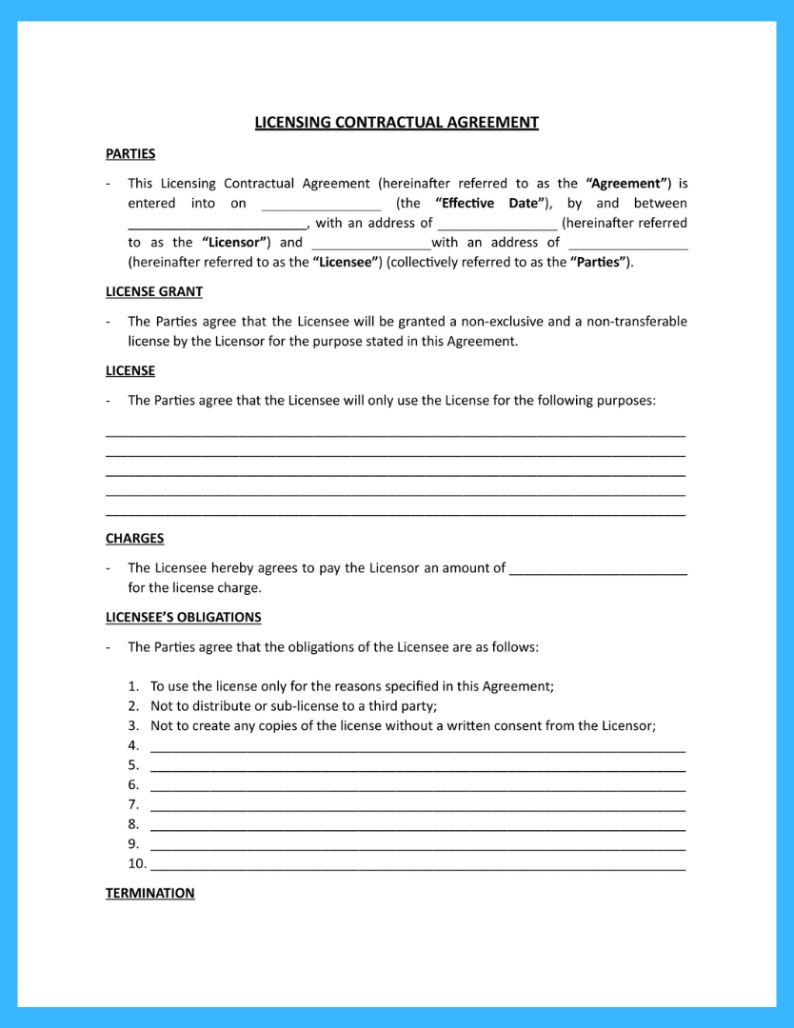
When it comes to protecting your intellectual property or expanding your business reach, licensing agreements play a crucial role. However, navigating the world of licensing agreements can be complex and overwhelming. In this article, we will delve into the what, why, and how of licensing agreements to provide you with a comprehensive understanding of this essential business practice.
What is a Licensing Agreement?
A licensing agreement is a legal contract between two parties that allows one party (the licensee) to use the intellectual property of the other party (the licensor) for a specified period of time and under certain conditions. Intellectual property can include trademarks, patents, copyrights, or trade secrets. The agreement outlines the terms and conditions under which the licensee can use the intellectual property, including any restrictions or limitations.
Why Enter into a Licensing Agreement?
Licensing agreements offer several benefits for both parties involved. For the licensor, it provides a way to generate additional revenue streams by allowing others to use their intellectual property. This can be especially beneficial for companies looking to expand their market reach without investing in new infrastructure or resources. On the other hand, for the licensee, a licensing agreement provides access to valuable intellectual property that can enhance their products or services, giving them a competitive edge in the market.
What to Include in a Licensing Agreement
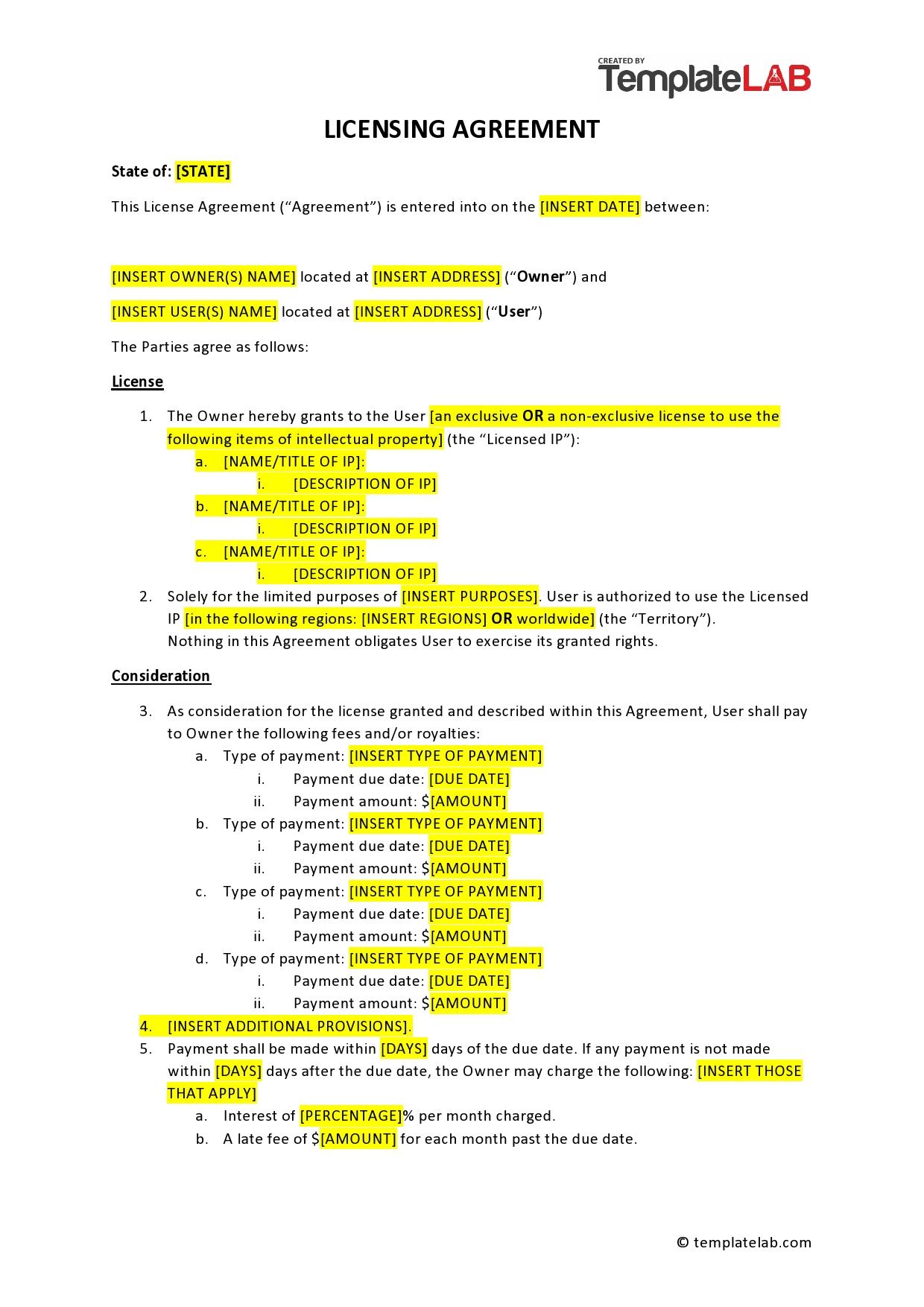
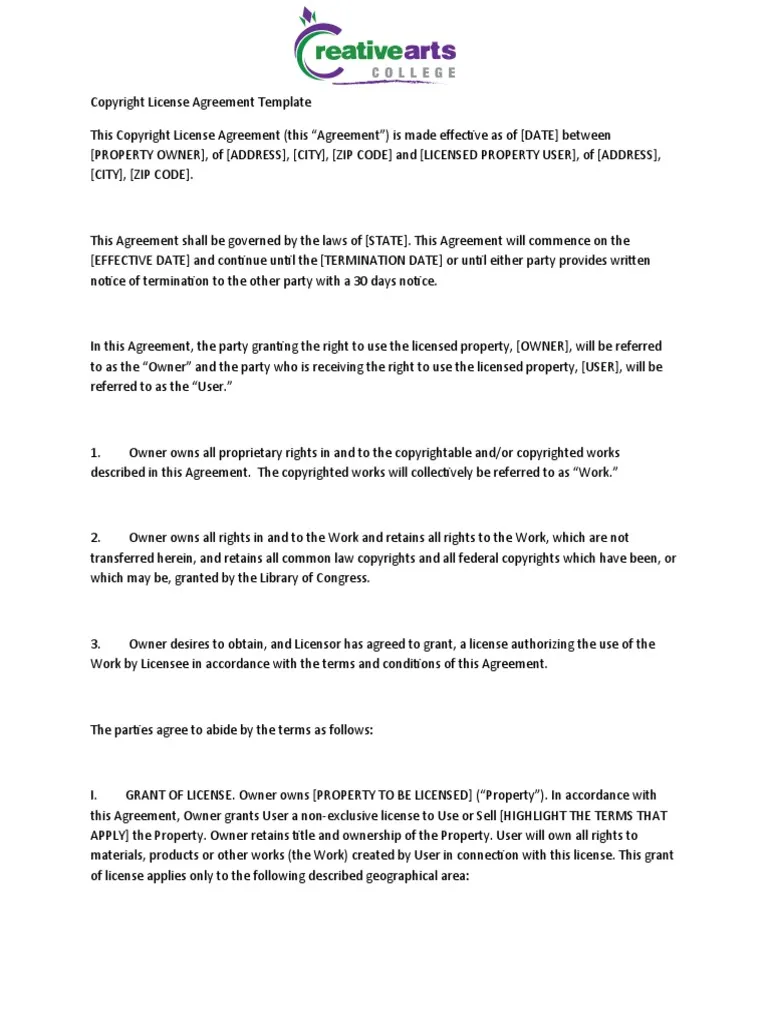
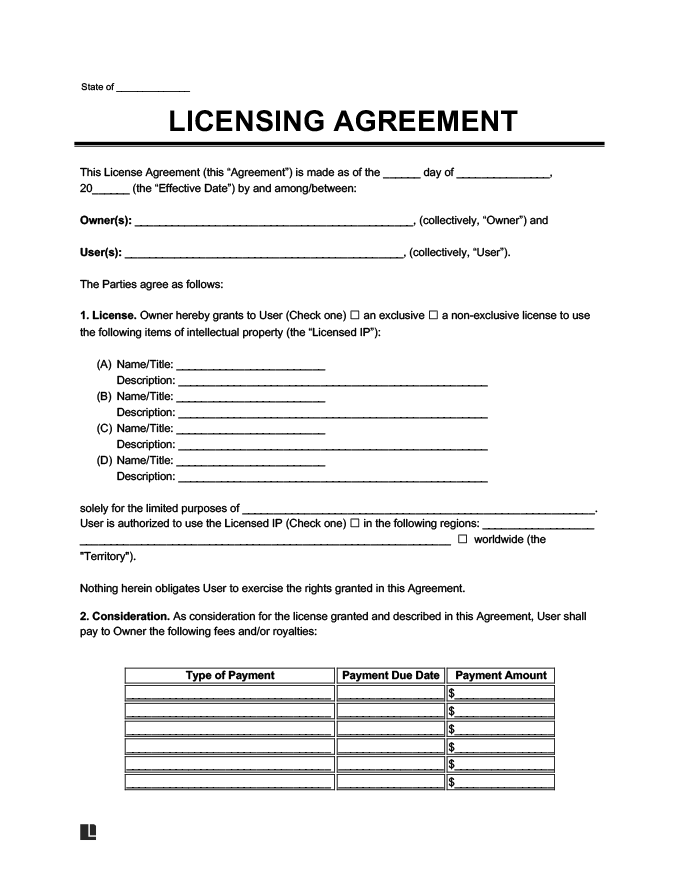
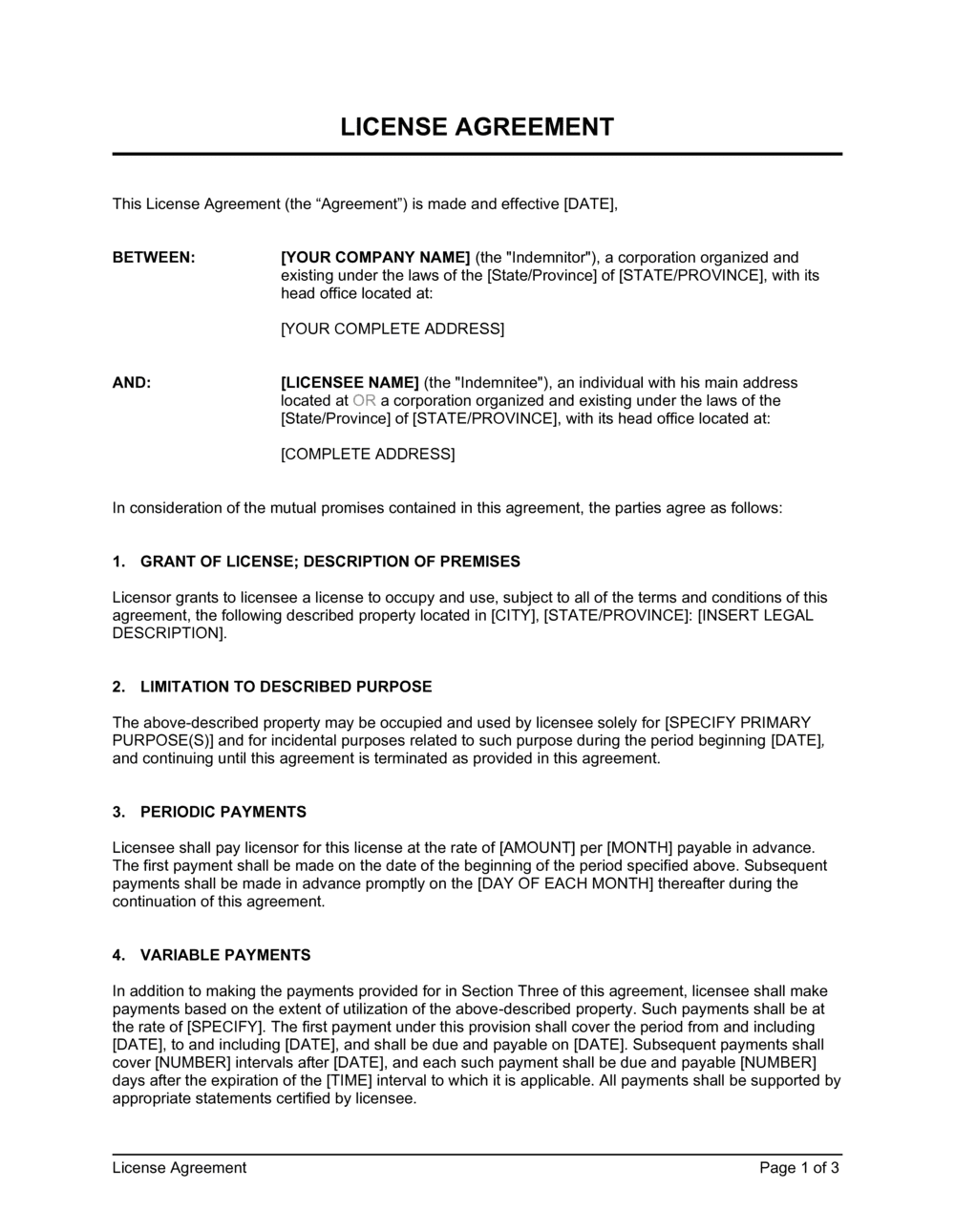
When drafting a licensing agreement, there are several key components that should be included to ensure clarity and protection for both parties. These components may vary depending on the type of intellectual property being licensed, but some common elements to include are:
- Identification of the Parties: Clearly identify the licensor and licensee, including contact information and legal entity details.
- Description of the Intellectual Property: Provide a detailed description of the intellectual property being licensed, including any relevant trademarks, patents, or copyrights.
- Scope of License: Define the scope of the license, including the rights granted to the licensee and any restrictions on use.
- Duration of the Agreement: Specify the duration of the agreement, including any renewal options or termination clauses.
- Payment Terms: Outline the payment terms, including any royalties or licensing fees that the licensee must pay to the licensor.
- Confidentiality and Non-Disclosure: Include provisions for protecting confidential information and preventing the disclosure of trade secrets.
How to Negotiate a Licensing Agreement
Negotiating a licensing agreement can be a complex process that requires careful attention to detail and a thorough understanding of the terms involved. Here are some tips to help you navigate the negotiation process successfully:
1. Do Your Research
Before entering into negotiations, research the market value of the intellectual property being licensed to ensure that you are getting a fair deal.
2. Seek Legal Advice
It is essential to seek legal advice from a qualified attorney who specializes in intellectual property law to ensure that the agreement is legally sound and protects your interests.
3. Define Clear Terms
Clearly define the terms of the agreement, including the scope of the license, payment terms, and any restrictions on use to avoid misunderstandings in the future.
4. Consider Future Growth
When negotiating the agreement, consider the potential for future growth and expansion of the licensed intellectual property to ensure that the terms are flexible enough to accommodate changes.
5. Review Carefully
Before finalizing the agreement, carefully review all terms and conditions to ensure that they align with your business goals and objectives.
6. Communicate Effectively
Effective communication is key to successful negotiations. Clearly communicate your expectations and requirements to the other party to ensure a mutually beneficial agreement.
Tips for Successful Licensing Agreements
To ensure a successful licensing agreement, it is essential to follow these tips:
- Understand Your Rights: Understand your rights and obligations under the agreement to avoid any legal disputes in the future.
- Protect Your Intellectual Property: Implement measures to protect your intellectual property from infringement or misuse by the licensee.
- Regularly Monitor Compliance: Regularly monitor the licensee’s compliance with the agreement to ensure that they are adhering to the terms and conditions.
- Seek Professional Assistance: If you are unsure about any aspect of the agreement, seek professional assistance from a legal expert or intellectual property consultant.
- Maintain Good Relationships: Foster a positive and collaborative relationship with the licensee to ensure smooth communication and cooperation throughout the agreement.
By understanding the what, why, and how of licensing agreements, you can navigate this complex legal landscape with confidence and ensure a mutually beneficial arrangement for all parties involved.
