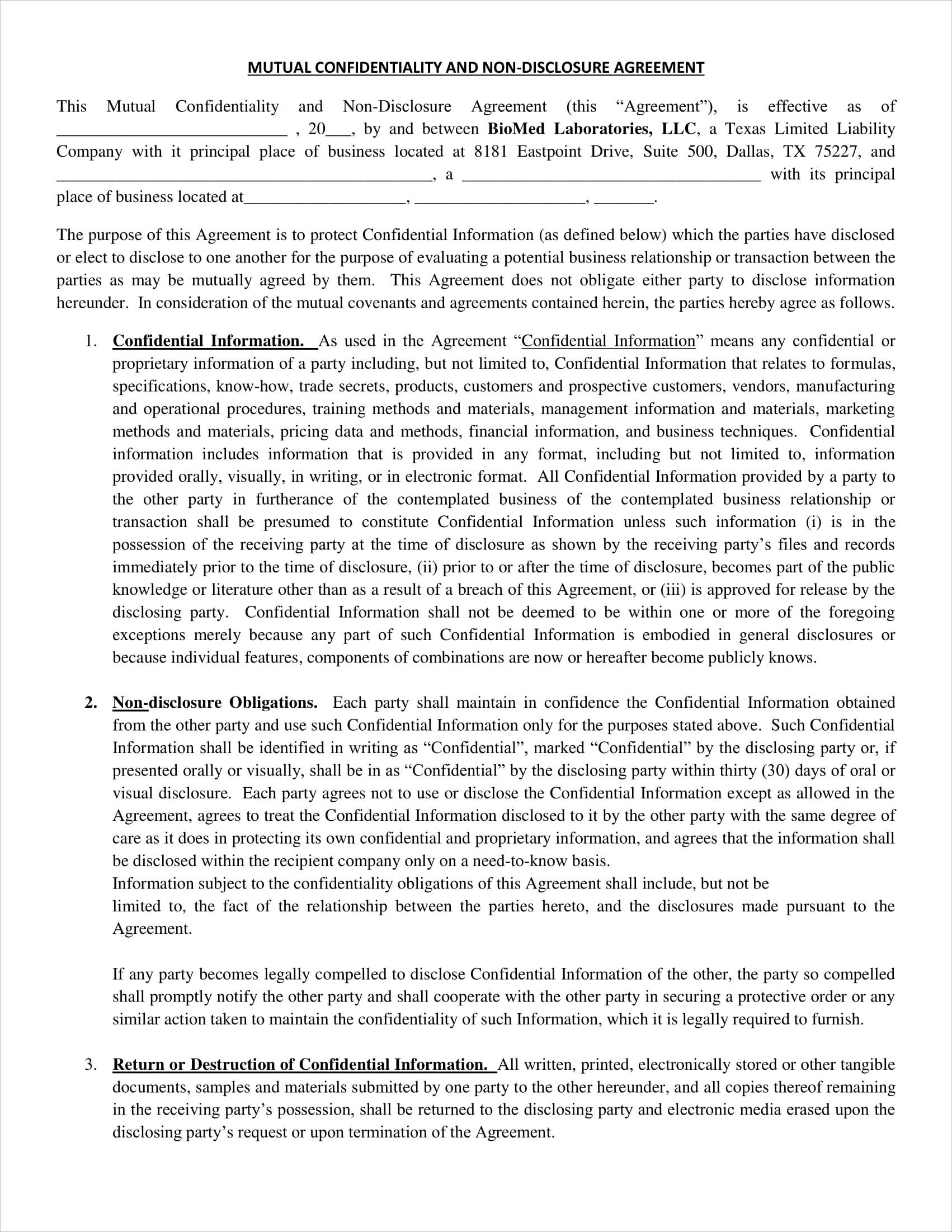
In the business world, protecting sensitive information is crucial. One way to ensure the confidentiality of important data is through a mutual confidentiality agreement. Also known as a non-disclosure agreement (NDA), this legal contract outlines the terms and conditions under which two or more parties agree to share confidential information while preventing its disclosure to third parties. By establishing clear guidelines for the protection of sensitive data, mutual confidentiality agreements help build trust between parties involved in business dealings.
What is a Mutual Confidentiality Agreement?
A mutual confidentiality agreement is a legal contract between two or more parties that outlines the terms and conditions under which confidential information will be shared. This agreement is commonly used when two parties are considering entering into a business relationship or partnership and need to share sensitive information with each other. By signing the agreement, all parties involved agree to keep the information confidential and not disclose it to third parties without consent.
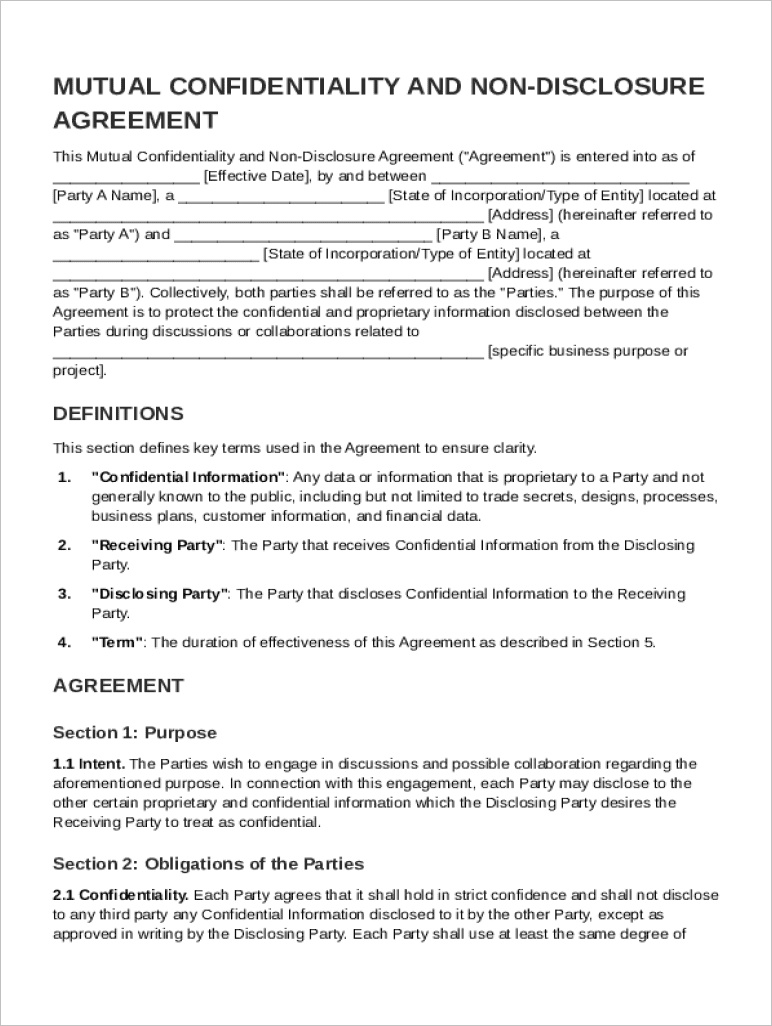
Mutual confidentiality agreements typically include definitions of what constitutes confidential information, the obligations of the parties to protect the information, the duration of the agreement, and any exceptions to confidentiality. These agreements are legally binding and can be enforced in court if one party breaches the terms of the agreement.
Why are Mutual Confidentiality Agreements Important?
Mutual confidentiality agreements play a crucial role in protecting sensitive information in business dealings. By establishing clear guidelines for the sharing and protection of confidential information, these agreements help build trust between parties and safeguard valuable assets such as trade secrets, intellectual property, and proprietary information.
Without a mutual confidentiality agreement in place, there is a risk that sensitive information could be misused or disclosed to unauthorized parties, leading to potential financial losses and damage to the reputation of the parties involved. By outlining the rights and responsibilities of each party regarding confidential information, these agreements provide a legal framework for protecting valuable assets and preventing unauthorized disclosure.
What to Include in a Mutual Confidentiality Agreement
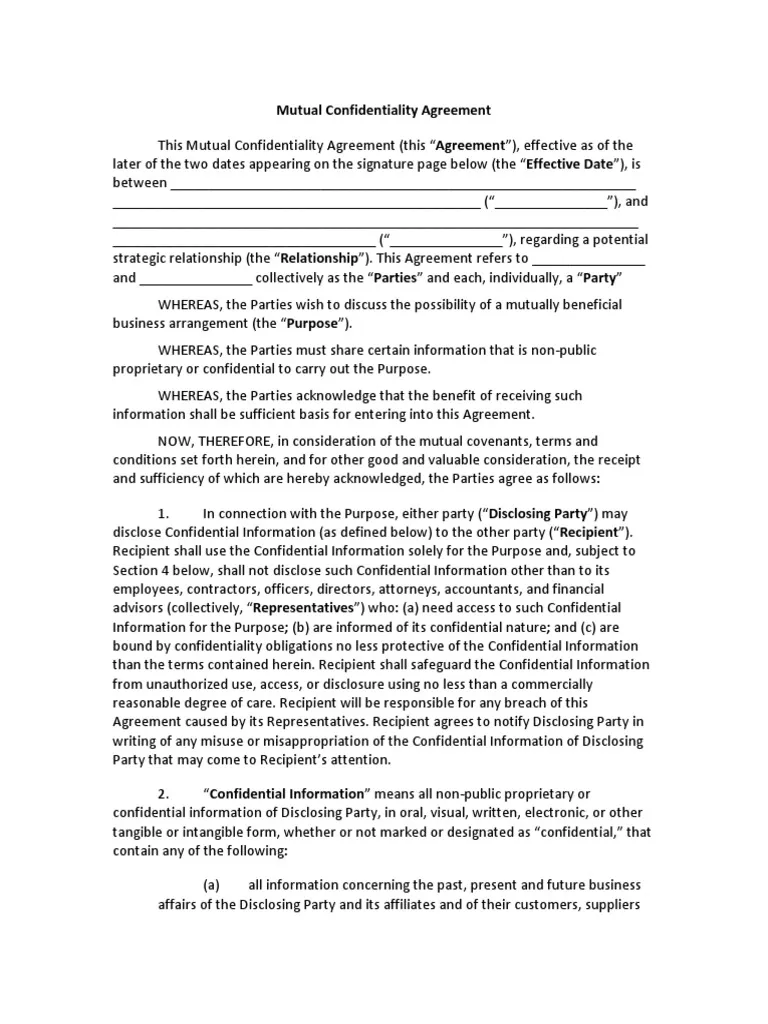
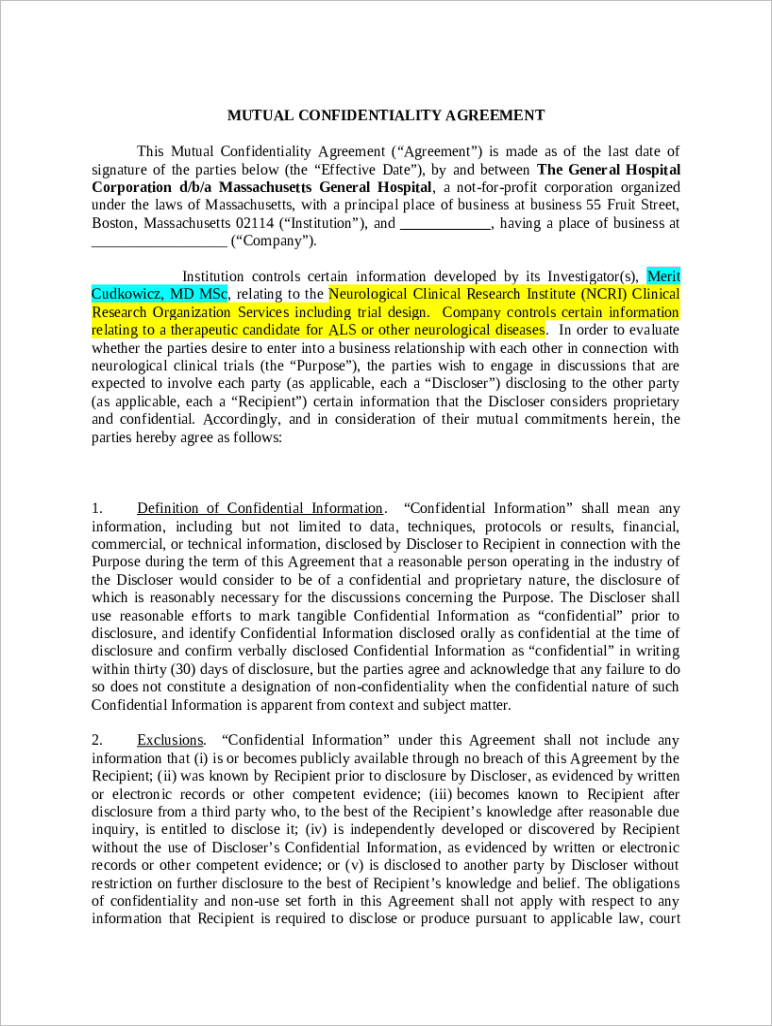
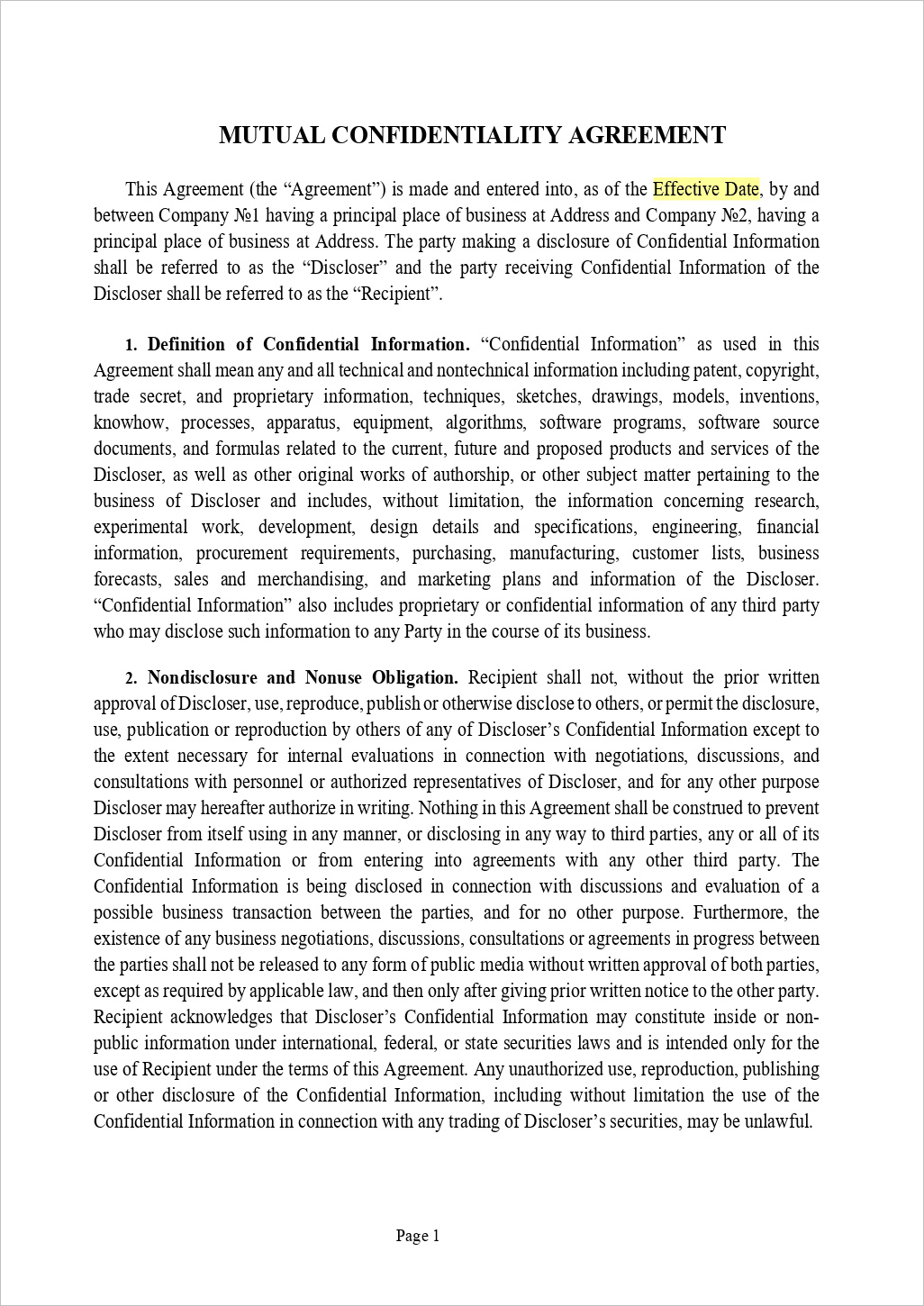
When drafting a mutual confidentiality agreement, it is important to include specific provisions that address the unique needs and concerns of the parties involved. Some key elements to include in a mutual confidentiality agreement are:
- Definition of Confidential Information. Clearly define what constitutes confidential information and specify what is excluded from the agreement.
- Obligations of the Parties. Outline the responsibilities of each party to protect the confidential information and specify how it should be handled.
- Duration of the Agreement. Specify the period for which the agreement will be in effect and outline the conditions under which it can be terminated.
- Exceptions to Confidentiality. Identify any exceptions to confidentiality, such as information that is already in the public domain or disclosed by a third party without restrictions.
- Remedies for Breach. Specify the consequences of breaching the agreement, including potential legal action and monetary damages.
- Governing Law. Identify the jurisdiction and laws that will govern the agreement in case of disputes between the parties.
How to Draft a Mutual Confidentiality Agreement
Drafting a mutual confidentiality agreement requires careful consideration of the specific needs and concerns of the parties involved. It is advisable to seek legal advice when drafting the agreement to ensure that it is legally enforceable and provides adequate protection for confidential information. When drafting a mutual confidentiality agreement, follow these steps:
1. Identify the parties involved and clearly define their roles and responsibilities in the agreement.
2. Define the confidential information that will be shared between the parties and specify the purpose for which it will be used.
3. Outline the obligations of each party to protect the confidential information and specify how it should be handled.
4. Include provisions for the duration of the agreement, any exceptions to confidentiality, and remedies for breach.
5. Specify the governing law and jurisdiction that will apply to the agreement in case of disputes.
6. Review the agreement carefully with all parties involved and seek legal advice to ensure that it meets the specific needs and concerns of the parties.
Tips for Successful Mutual Confidentiality Agreements
To ensure the success of a mutual confidentiality agreement, consider the following tips:
- Clearly Define Confidential Information. Make sure that all parties have a clear understanding of what constitutes confidential information and what is excluded from the agreement.
- Specify Obligations and Responsibilities. Clearly outline the obligations of each party to protect the confidential information and specify how it should be handled.
- Include Remedies for Breach. Specify the consequences of breaching the agreement, including potential legal action and monetary damages.
- Review the Agreement Carefully. Before signing the agreement, review it carefully with all parties involved and seek legal advice to ensure that it meets the specific needs and concerns of the parties.
- Update the Agreement as Needed. As business circumstances change, review and update the mutual confidentiality agreement to ensure that it continues to provide adequate protection for sensitive information.
- Seek Legal Advice. When in doubt, seek legal advice from a qualified attorney to ensure that the mutual confidentiality agreement is legally enforceable and provides sufficient protection for confidential information.
By following these tips and guidelines, parties can create successful mutual confidentiality agreements that protect sensitive information and promote trust in business relationships.
Mutual Confidentiality Agreement Template
