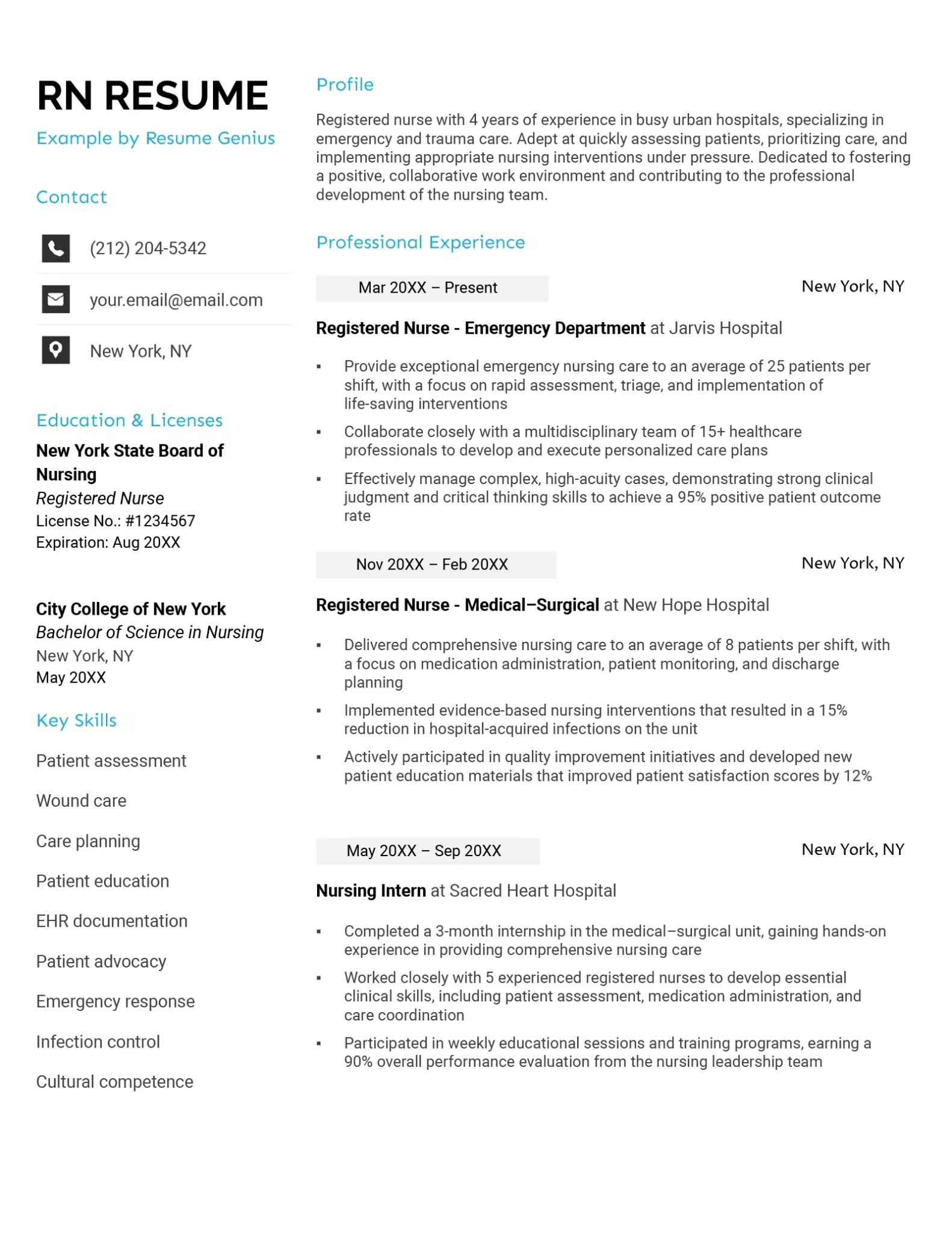
As a registered nurse, your resume is often the first point of contact with potential employers. It serves as a snapshot of your skills, experience, and qualifications, showcasing why you are the perfect candidate for the job. In a competitive job market, having a well-crafted resume can make all the difference in securing your dream position. Whether you are a seasoned nurse looking to advance your career or a recent graduate eager to kickstart your professional journey, a standout resume is essential. Let’s dive into the key elements of a registered nurse resume and explore how you can create a document that will catch the eye of hiring managers.
What is a Registered Nurse Resume?
A registered nurse resume is a document that highlights your education, work experience, skills, and achievements in the field of nursing. It serves as a marketing tool to showcase your qualifications and demonstrate why you are a strong candidate for a nursing position. A well-written resume can help you stand out from other applicants and increase your chances of landing an interview.
Why is a Strong Resume Important for Registered Nurses?
Having a strong resume is crucial for registered nurses for several reasons. Firstly, it is often the first impression that potential employers will have of you. A well-crafted resume can grab the attention of hiring managers and make them eager to learn more about you. Additionally, a strong resume can help you highlight your skills and experiences that make you a valuable asset to the healthcare team. In a competitive job market, a standout resume can give you the edge over other applicants and increase your chances of securing your desired position.
Key Elements of a Registered Nurse Resume
When creating your registered nurse resume, there are several key elements that you should include to ensure it effectively showcases your qualifications and experiences. These key elements include:
- Contact Information. Include your full name, phone number, email address, and professional social media profiles.
- Summary or Objective Statement. Provide a brief overview of your skills, experiences, and career goals.
- Educational Background. List your degrees, certifications, and any specialized training related to nursing.
- Work Experience. Detail your previous nursing roles, highlighting your responsibilities and accomplishments.
- Skills. Include both hard skills (such as proficiency in electronic health records) and soft skills (such as communication and teamwork).
- Certifications and Licenses. Mention any relevant certifications and licenses that you hold, such as CPR certification or RN license.
- Achievements. Showcase any awards, recognitions, or achievements that demonstrate your excellence in nursing.
- Professional Affiliations. Include any memberships in nursing organizations or associations.
Examples
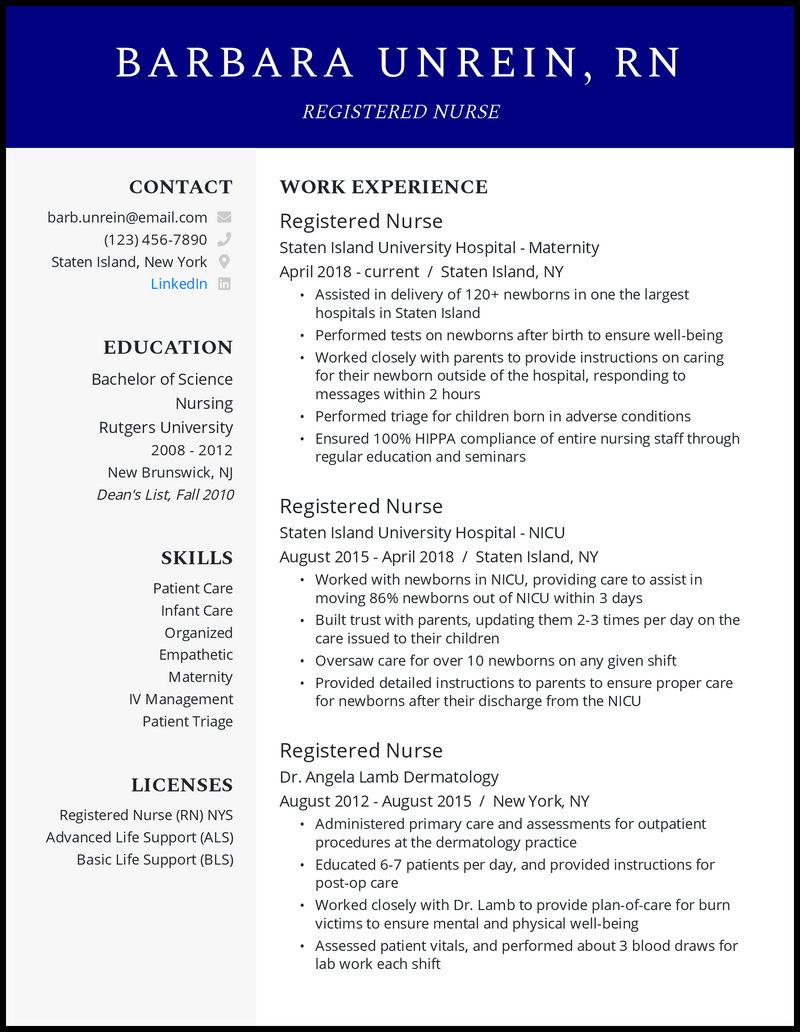
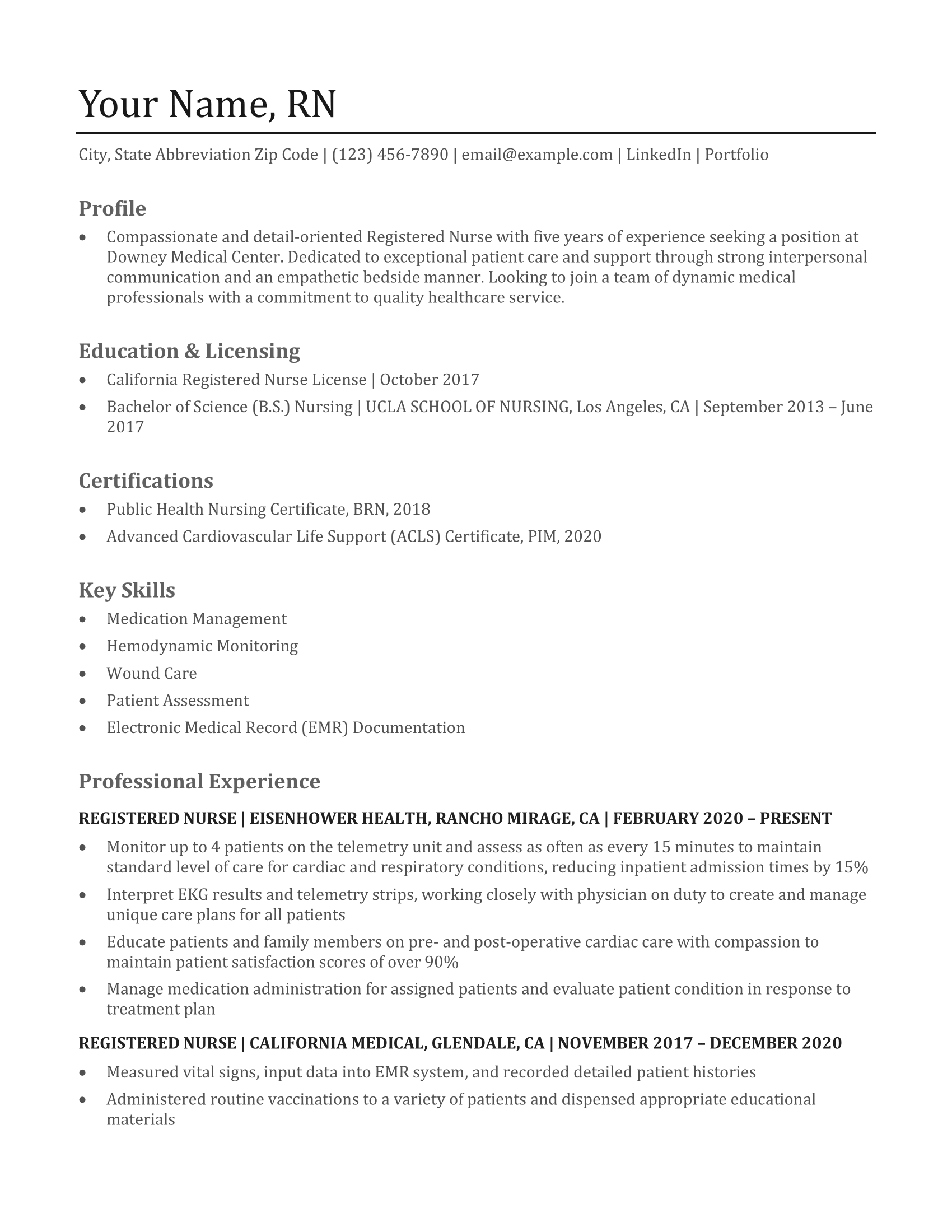
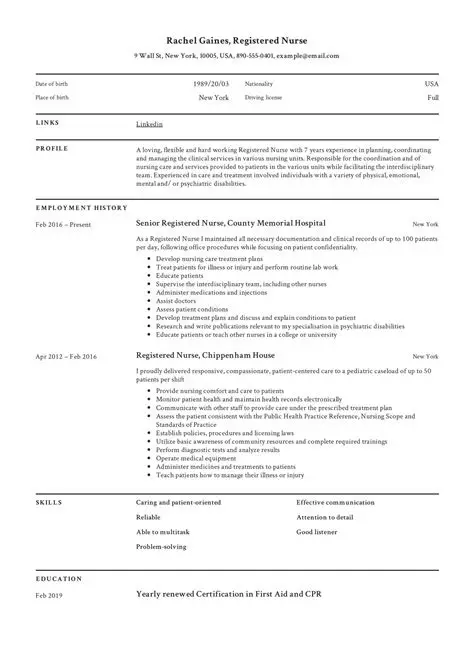
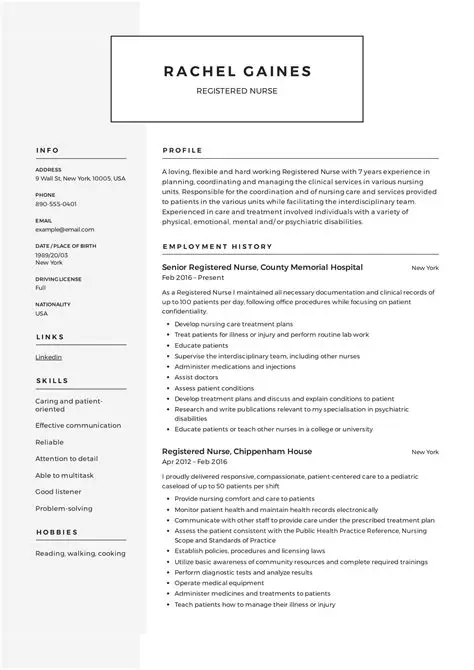
How to Create a Standout Registered Nurse Resume
Now that you understand the key elements of a registered nurse resume, let’s explore how you can create a standout document that will impress hiring managers:
1. Tailor Your Resume to the Job Posting
Customize your resume for each job application by highlighting the skills and experiences that are most relevant to the position. Use keywords from the job posting to ensure your resume gets noticed by applicant tracking systems.
2. Quantify Your Achievements
Whenever possible, include metrics and numbers to quantify your achievements. For example, instead of saying “provided patient care,” you could say “administered medications to 30+ patients daily with zero errors.”
3. Use a Clean and Professional Format
Opt for a clean and easy-to-read format for your resume. Use bullet points to list your accomplishments and keep your layout organized. Choose a professional font and make sure your contact information is easy to find.
4. Highlight Your Soft Skills
While technical skills are important for a nurse, soft skills such as empathy, communication, and problem-solving are equally crucial. Make sure to highlight these skills in your resume to showcase your ability to provide quality patient care.
5. Proofread and Edit Carefully
Before submitting your resume, be sure to proofread it carefully for any typos or errors. Ask a friend or colleague to review your resume as well to catch any mistakes you may have missed.
6. Include a Professional Summary
A professional summary at the top of your resume can provide a snapshot of your qualifications and career goals. Use this section to grab the attention of hiring managers and entice them to read further.
7. Update Your Resume Regularly
Keep your resume up to date with your most recent experiences and accomplishments. Regularly review and revise your resume to ensure it reflects your current skills and qualifications.
Tips for Successful Registered Nurse Resumes
Creating a successful registered nurse resume can be a challenging task, but with the right approach, you can craft a standout document that will impress potential employers. Here are some additional tips to help you create a successful registered nurse resume:
- Highlight your clinical skills and experiences. Showcase your hands-on experience in patient care, medication administration, and treatment planning.
- Showcase your commitment to continuing education. Mention any additional certifications, trainings, or workshops you have completed to further your nursing knowledge.
- Emphasize your ability to work in a fast-paced environment. Demonstrate your adaptability and ability to thrive in high-pressure situations.
- Include keywords from the job posting. Tailoring your resume to the specific job requirements can help you stand out to hiring managers.
- Seek feedback from peers or mentors. Getting a second opinion on your resume can help you identify areas for improvement and make necessary adjustments.
- Be concise and to the point. Keep your resume focused on the most relevant information and avoid including unnecessary details.
- Use action verbs to describe your experiences. Start each bullet point with a strong action verb to demonstrate your impact and contributions in previous roles.
By following these tips and incorporating the key elements outlined above, you can create a standout registered nurse resume that will catch the eye of hiring managers and help you land your dream job in the nursing field.
Registered Nurse Resume Template – Download
