A roommate agreement is a written document that outlines the responsibilities, expectations, and shared-living rules between people who live together. It can cover practical matters such as rent, utilities, chores, guests, quiet hours, shared spaces, pets, and how disagreements will be handled.
Living with roommates can be convenient and enjoyable, but differences in schedules, habits, cleanliness standards, and personal preferences can sometimes create misunderstandings. A written agreement gives everyone an opportunity to discuss these issues before they become larger problems.
The purpose of a roommate agreement is not necessarily to create a complicated set of rules. Instead, it provides a clear reference that helps roommates understand what they have agreed to and how shared responsibilities will be managed.
What Is a Roommate Agreement?
A roommate agreement is a written understanding between people who share a home, apartment, dormitory, or other living arrangement. It establishes expectations for how the household will operate and how shared responsibilities will be divided.
The agreement can be as simple or detailed as the roommates need. Some agreements may fit on one page, while others may include several sections covering financial responsibilities, household routines, privacy, guests, and dispute resolution.
A roommate agreement is generally different from a lease. A lease is typically a formal agreement involving the landlord or property owner and establishes the legal terms of renting the property. A roommate agreement generally focuses on the arrangements between people sharing the living space.
Because housing laws and lease requirements vary by location, roommates should make sure their agreement does not conflict with the applicable lease or local requirements.
Why Is a Roommate Agreement Important?
Many household disagreements begin with assumptions. One roommate may assume that everyone will share cleaning duties equally, while another may have a completely different understanding of what “clean” means.
Putting expectations in writing can make these differences easier to discuss before they turn into recurring conflicts.
A roommate agreement can help:
- Clarify financial responsibilities.
- Divide household chores.
- Establish expectations for shared spaces.
- Set guidelines for guests and visitors.
- Define quiet hours.
- Address food and shared household items.
- Document expectations about pets.
- Create a process for resolving disagreements.
- Reduce misunderstandings between roommates.
- Provide a shared reference when questions arise.
The agreement works best when all roommates participate in creating it and understand the terms before signing.
What Should a Roommate Agreement Include?
A useful roommate agreement should address the areas most likely to affect daily life. The exact contents can vary depending on the household.
Roommate Information
Start with basic information for everyone covered by the agreement. This may include names and contact information.
Including this information makes it clear who is participating in the shared-living arrangement.
Housing Information
Record basic information about the residence, such as the property address, lease term, and move-in date. If appropriate, the agreement can also reference the primary lease or other housing documents.
Rent and Utilities
Financial responsibilities are one of the most important areas to clarify. The agreement can explain how rent and shared utilities will be divided and when payments are due.
Depending on the arrangement, roommates may also want to discuss responsibilities for:
- Electricity.
- Water.
- Gas.
- Internet.
- Trash services.
- Shared subscriptions.
- Household supplies.
Any late-payment expectations should be discussed clearly rather than assumed.
Chores and Cleaning
Household cleaning is a common source of roommate disagreements. A written cleaning arrangement can clarify who is responsible for particular tasks and how frequently they should be completed.
Responsibilities might include cleaning the kitchen, bathroom, floors, common areas, appliances, or taking out the trash.
The agreement does not need to assign every task permanently. Roommates can also create a rotating chore schedule if that better suits the household.
Guests and Visitors
Different people have different expectations about guests. Some roommates may enjoy having visitors regularly, while others may prefer a quieter home.
A roommate agreement can establish reasonable expectations regarding overnight guests, advance notice, maximum stays, and responsibility for visitor behavior.
Noise and Quiet Hours
Quiet hours can be especially important when roommates have different work or school schedules. The agreement can identify periods when everyone should keep noise at a reasonable level.
It may also address music, television, phone calls, parties, or other activities that could affect other people in the household.
Pets
If pets are allowed, roommates can clarify expectations regarding pet ownership, cleaning, shared areas, and responsibility for pet-related expenses or damage.
Any pet arrangement should also comply with the applicable lease and property rules.
Shared Food and Household Items
Food and household supplies can become another source of confusion. Roommates should decide which items are shared and which belong exclusively to individual roommates.
The agreement can address groceries, kitchen supplies, cleaning products, appliances, and labeling of personal food.
Conflict Resolution
A useful roommate agreement should explain what roommates will do when a disagreement occurs. The goal is to create a process for addressing problems before frustration builds.
For example, roommates might agree to discuss problems directly, schedule a household meeting, identify a practical solution, and document any agreed changes.
How to Create a Roommate Agreement
Creating an agreement works best when everyone participates in the discussion rather than having one person establish all the rules.
1. Discuss Expectations Openly
Before writing the agreement, talk about daily routines and household expectations. Discuss issues such as cleanliness, noise, guests, food, privacy, and shared expenses.
It is often easier to discuss potentially sensitive subjects before moving in than after a disagreement occurs.
2. Identify Shared Responsibilities
Make a list of responsibilities that affect everyone. Separate personal responsibilities from tasks that need to be handled collectively.
3. Decide How Expenses Will Be Divided
Determine how rent, utilities, supplies, and other shared costs will be handled. Write down the agreed arrangement clearly.
4. Establish Household Rules
Create practical rules for common areas, guests, quiet hours, cleaning, and other recurring issues. Avoid rules that are unnecessarily complicated or difficult to follow.
5. Agree on Conflict Resolution
Decide how roommates will address disagreements. A simple process can encourage people to raise concerns early rather than allowing frustration to build.
6. Review the Agreement Together
Everyone should read the completed agreement before signing it. This provides an opportunity to clarify ambiguous wording or discuss provisions that may need adjustment.
7. Keep a Copy
Each roommate should have access to the final version. A printed copy can be kept with other household documents, while a digital copy can provide convenient access when needed.
Roommate Agreement for Rent and Utilities
Money-related expectations should be especially clear because missed payments can affect the entire household.
A roommate agreement can specify:
- Each roommate’s rent contribution.
- How utility bills are divided.
- Payment due dates.
- How shared household purchases are handled.
- How unexpected shared expenses are discussed.
- How receipts or payment records are maintained when necessary.
Clear documentation can reduce confusion about who paid what and when.
Roommate Agreement for Chores
A chore arrangement should be practical rather than overly complicated. Consider the size of the household, the available time of each roommate, and the areas that require regular cleaning.
A chore schedule might assign responsibility for:
- Kitchen cleaning.
- Bathroom cleaning.
- Vacuuming or sweeping.
- Taking out trash.
- Cleaning shared appliances.
- Restocking common supplies.
- General common-area maintenance.
Roommates can rotate responsibilities weekly or monthly if they prefer to distribute less desirable chores over time.
Roommate Agreement for Guests
Guests can affect privacy, noise, security, and the use of shared spaces. For this reason, guest expectations are worth discussing in advance.
Roommates may want to establish guidelines for overnight visitors, advance notice, parties, and extended stays. The rules should be reasonable and consistent with the lease or housing policies.
Roommate Agreement and Privacy
Everyone has different expectations about privacy. Discuss which areas are private, whether roommates should ask before borrowing personal belongings, and how bedrooms or personal storage areas should be treated.
Clear boundaries can help roommates share a home while still maintaining personal space.
How to Handle Changes to a Roommate Agreement
Household circumstances can change. A roommate may change work hours, a new pet may be introduced, expenses may change, or the household may discover that an existing rule is impractical.
When circumstances change, roommates can review the agreement together and document any mutually accepted revisions.
Keeping the document current is generally more useful than continuing to follow rules that no longer reflect the household’s actual circumstances.
Tips for Writing an Effective Roommate Agreement
- Be specific: Clearly explain responsibilities and expectations.
- Use simple language: Avoid unnecessarily complicated wording.
- Discuss sensitive topics: Talk about money, guests, cleaning, and privacy openly.
- Be realistic: Create rules that everyone can reasonably follow.
- Share responsibilities: Avoid placing all household duties on one person.
- Plan for disagreements: Establish a process for resolving problems.
- Respect the lease: Make sure the agreement does not conflict with applicable housing terms.
- Review it periodically: Update the agreement when household circumstances change.
Printable Roommate Agreement Template
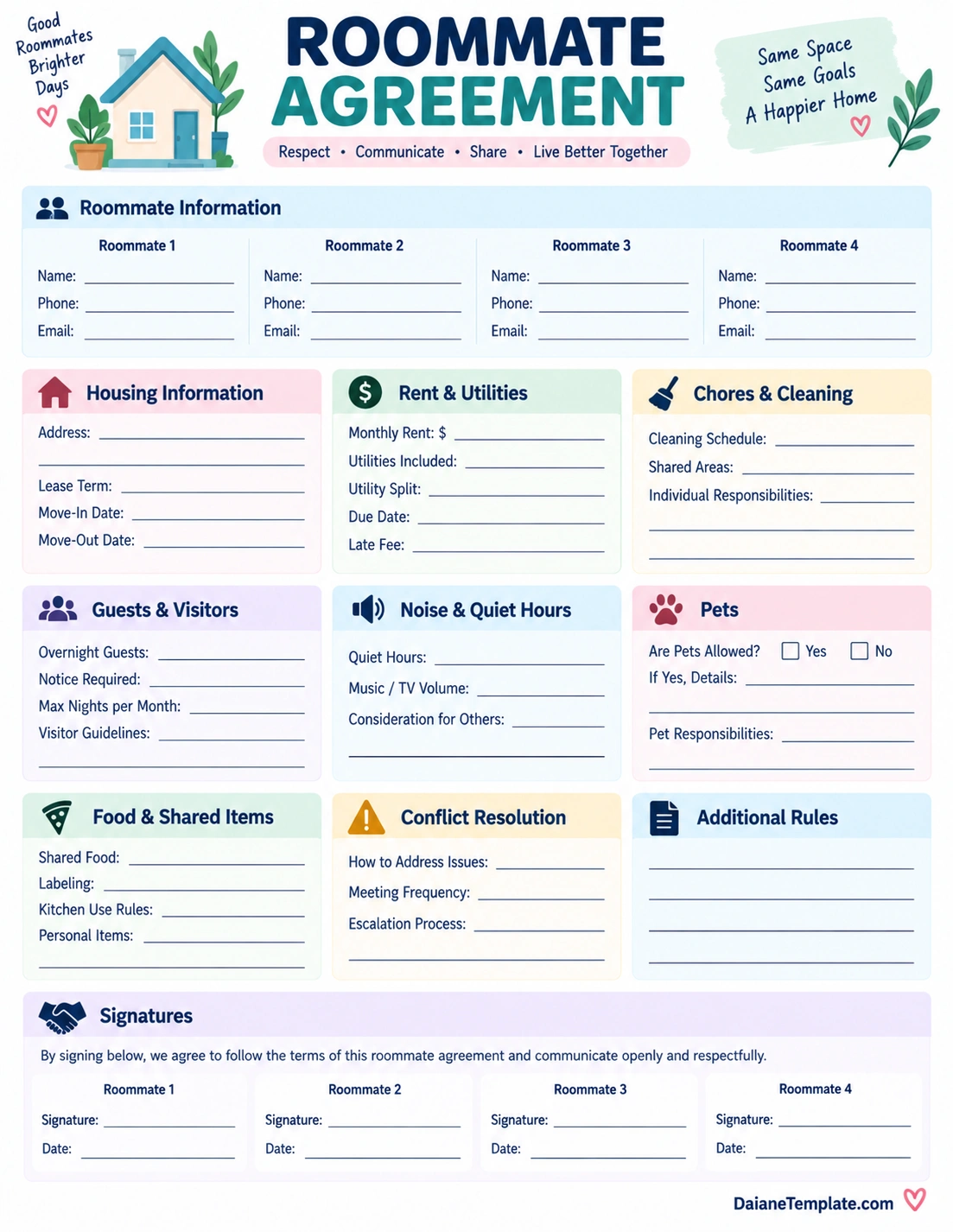
A printable roommate agreement template can make the process of creating a shared-living agreement easier. Instead of starting with a blank page, roommates can work through predefined sections covering the most common household topics.
A useful template may include sections for roommate information, housing details, rent and utilities, chores, guests, quiet hours, pets, shared food, conflict resolution, additional rules, and signatures.
Using a template can also make the discussion more organized. Roommates can review each section together, write down their decisions, and make sure important topics are not overlooked.
Roommate Agreement vs. Lease Agreement
A roommate agreement and a lease agreement serve different purposes. A lease generally establishes the contractual relationship between the property owner or landlord and the tenant or tenants.
A roommate agreement generally focuses on how people sharing the residence will manage their responsibilities and expectations with one another.
A roommate agreement should not be treated as a substitute for a lease or as a way to override the rights and obligations established by applicable law or the rental contract.
When there is uncertainty about housing rights, lease requirements, deposits, eviction procedures, or other legal matters, obtaining advice from an appropriate local professional may be useful.
Common Roommate Agreement Mistakes
A roommate agreement is most useful when it reflects realistic household expectations. Several common mistakes can make the document less effective.
- Making assumptions: Do not assume everyone has the same expectations about cleanliness, guests, or noise.
- Leaving financial responsibilities unclear: Specify how shared expenses will be divided.
- Creating too many rules: An overly complicated agreement may be difficult to follow.
- Ignoring privacy: Personal space and belongings should be discussed.
- Skipping conflict resolution: Decide how problems will be addressed before they occur.
- Failing to update the agreement: Household arrangements may change over time.
Final Thoughts
A roommate agreement provides a practical way to clarify responsibilities, expectations, and household rules before misunderstandings become disputes. By discussing rent, utilities, chores, guests, noise, pets, shared items, privacy, and conflict resolution, roommates can create a clearer framework for living together.
The most useful agreement is one that is specific, realistic, and created collaboratively. It should reflect the actual needs of the household while remaining consistent with the applicable lease and housing requirements.
Whether you create an agreement from scratch or use a printable roommate agreement template, taking the time to discuss expectations can make shared living arrangements easier to understand and manage.
Download: Roommate Agreement Template
