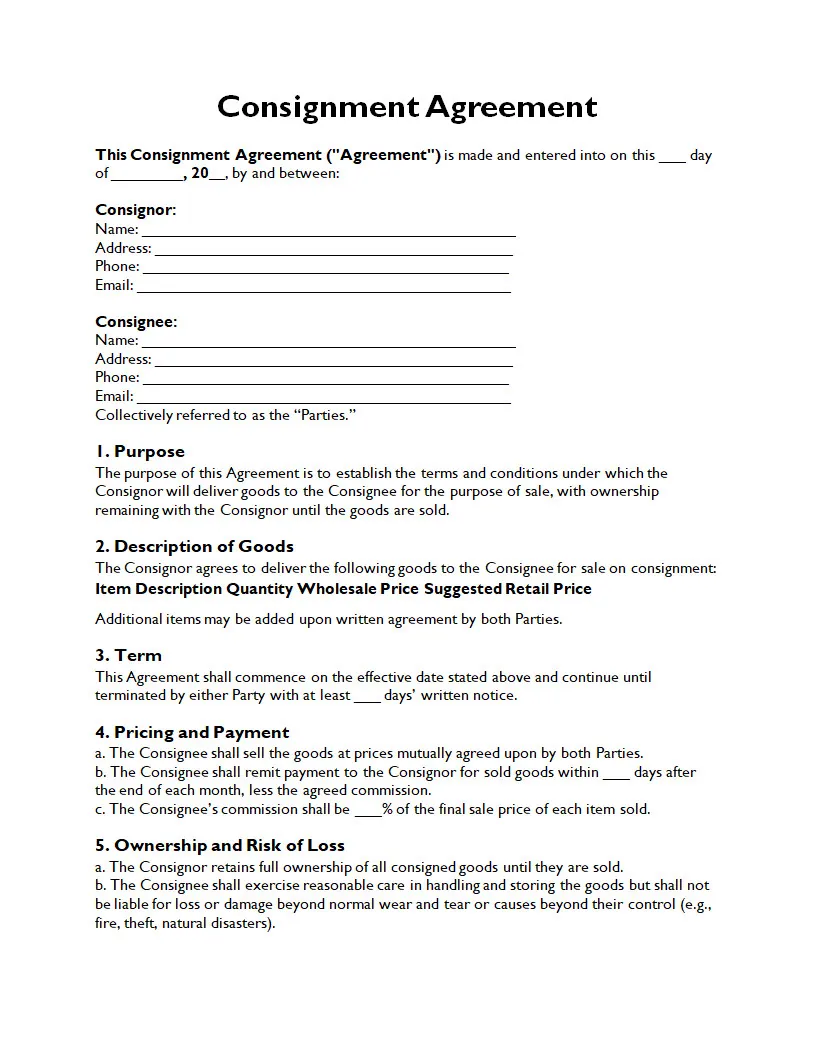
What is a Consignment Agreement?
A consignment agreement is a legal contract between two parties – the consignor and the consignee. The consignor is the entity that owns the goods being sold, while the consignee is the party responsible for selling the consignor’s goods on the consignor’s behalf.
This agreement outlines the terms and conditions under which the consigned goods will be sold, including pricing, payment terms, and responsibilities of each party.
Key Components of a Consignment Agreement
One of the key components of a consignment agreement is the identification of the parties involved. This includes providing detailed information about the consignor, such as their legal name, address, and contact information. It also involves identifying the consignee and providing details about their business, including their sales channels, market reach, and experience in selling similar goods.
Another important element of a consignment agreement is the description of the consigned goods. This section should outline the specific goods being consigned, including details about the quantity, quality, condition, and any special features or attributes. It is essential to provide a clear and accurate description of the goods to avoid any misunderstandings between the consignor and consignee.
The terms of sale are also a critical component of a consignment agreement. This section should specify the pricing of the goods, including the selling price, any applicable taxes or fees, and the payment terms. It should also outline the commission structure, detailing how the consignee will be compensated for selling the consignor’s goods and any additional fees or expenses that may be incurred during the sales process.
Delivery and return of goods is another important aspect of a consignment agreement. This section should define how the consigned goods will be delivered to the consignee, including the shipping method, packaging requirements, and delivery schedule. It should also outline the process for returning unsold goods to the consignor, including who is responsible for covering return shipping costs and any restocking fees that may apply.
The duration of the agreement is a crucial element that should be clearly defined in the consignment agreement. This section should specify the length of time the agreement will be in effect, including any renewal options or termination clauses. Both parties need to have a clear understanding of how long the consignment agreement will last and what steps need to be taken to extend or end the agreement.
Insurance and liability are also important considerations in a consignment agreement. This section should address issues related to insurance coverage for the consigned goods, including who is responsible for insuring the goods while they are in transit or in the possession of the consignee. It should also outline the liability of each party in case of loss, damage, or theft of the consigned goods and specify how any disputes related to insurance or liability will be resolved.
A termination clause is a critical component of a consignment agreement that outlines the circumstances under which the agreement can be terminated by either party. This section should detail the steps that need to be taken to terminate the agreement, including providing written notice to the other party, returning any unsold goods, and resolving any outstanding financial obligations. Both parties need to understand their rights and responsibilities if the consignment agreement needs to be terminated prematurely.
The Benefits of Using a Consignment Agreement
Consignment agreements offer several benefits to businesses looking to expand their market reach and increase sales. One of the primary advantages of using a consignment agreement is that it allows businesses to reach a wider audience by leveraging the sales channels of the consignee. This can result in increased exposure for the consignor’s goods and access to new customers who may not have been reached through traditional marketing efforts.
Another benefit of consignment agreements is that they help reduce the financial risk for both parties involved. Because the consignee does not have to pay for the goods upfront, they are not taking on the full financial burden of purchasing inventory that may or may not sell. This allows the consignee to focus on selling the goods and generating revenue without the added pressure of making a significant upfront investment.
Consignment agreements also benefit businesses by reducing the risk of unsold inventory. By only paying the consignor once the goods are sold, the consignee can avoid being stuck with excess inventory that may be difficult to sell. This can help businesses free up valuable storage space, reduce carrying costs, and avoid the need for costly liquidation sales or markdowns to clear out unsold merchandise.
Furthermore, consignment agreements can help businesses cut costs associated with retail space and storage. Because the consignee is responsible for selling the goods on behalf of the consignor, the consignor does not have to invest in additional retail locations or storage facilities to display and store their inventory. This can result in significant cost savings for businesses looking to expand their market reach without incurring additional overhead expenses.
Overall, consignment agreements provide a mutually beneficial arrangement for both parties involved. The consignor benefits from increased market reach, reduced risk of unsold inventory, and cost savings associated with retail space and storage. At the same time, the consignee benefits from the opportunity to profit from the sale of goods they haven’t paid for upfront and access to a wider range of products to offer their customers.
How to Create a Successful Consignment Agreement
Creating a successful consignment agreement requires careful planning, communication, and attention to detail. By following these tips, businesses can increase the likelihood of creating a mutually beneficial arrangement that meets the needs of both the consignor and consignee.
Set Clear Expectations
One of the most important steps in creating a successful consignment agreement is setting clear expectations for both parties involved. This involves clearly defining the responsibilities of each party, including who is responsible for pricing, marketing, selling, and shipping the consigned goods. By outlining these expectations upfront, businesses can avoid misunderstandings and conflicts down the road.
Establish a Fair Commission Structure
Agreeing on a fair commission structure is essential for creating a successful consignment agreement. Both parties should be clear about how the consignee will be compensated for selling the consignor’s goods, including the percentage of the sale price that will be paid as commission. It is important for the commission structure to be fair and competitive to incentivize the consignee to promote and sell the consigned goods actively.
Monitor Sales Performance
Regularly monitoring sales performance is crucial for ensuring the success of a consignment agreement. Consignors should track sales data, inventory levels, and customer feedback to assess the effectiveness of the agreement and identify areas for improvement. By staying informed about sales performance, both parties can make informed decisions about pricing, marketing strategies, and inventory management to maximize sales and profits.
Update the Agreement as Needed
Business needs and market conditions can change over time, so it is important to be open to revisiting and updating the consignment agreement as needed. This may involve renegotiating pricing, commission structures, or terms of sale to better align with current market trends and business objectives. By regularly reviewing and updating the agreement, both parties can ensure that it continues to meet their needs and remains a beneficial arrangement for all involved.
Protect Your Interests
Including provisions in the consignment agreement to protect the interests of both parties is essential for creating a successful arrangement. This may involve including confidentiality clauses to protect sensitive business information, insurance requirements to cover loss or damage to consigned goods, and dispute resolution mechanisms to address any conflicts that may arise. By protecting their interests, both parties can minimize risks and ensure that the consignment agreement is a positive and mutually beneficial relationship.
Consignment Agreement Template – DOWNLOAD
