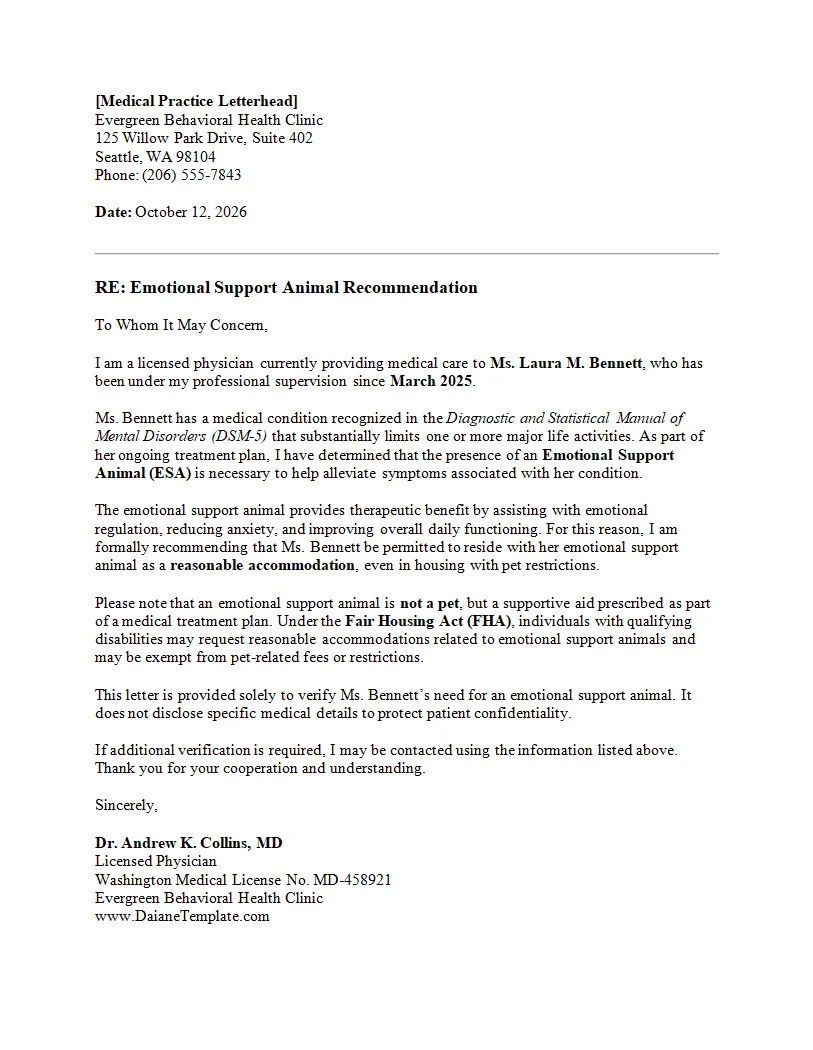
An emotional support animal (ESA) letter from a doctor or licensed mental health professional is a crucial document that serves as proof of an individual’s qualifying mental health condition and the necessity of an ESA to alleviate its symptoms.
This letter is essential for requesting reasonable accommodations for the animal, such as allowing it in a “no-pet” residence under the Fair Housing Act (FHA). By verifying the need for the animal as part of a treatment plan, the letter enables access to housing where pets are normally prohibited and exempts the owner from certain pet fees.
What is an Emotional Support Letter from a Doctor?
An emotional support letter from a doctor is a document that validates an individual’s need for an emotional support animal (ESA) to help manage their mental health condition. This letter is typically issued by a licensed mental health professional, such as a therapist, psychiatrist, or psychologist, who has evaluated the individual and determined that an ESA would be beneficial as part of their treatment plan.
Having an emotional support letter from a doctor is essential for individuals seeking to live with their ESA in housing that has a “no-pet” policy. This letter serves as legal documentation under the Fair Housing Act (FHA) that allows individuals with mental health conditions to have reasonable accommodations for their ESA, even in places where pets are otherwise not allowed.
Why is an Emotional Support Letter from a Doctor Necessary?
An emotional support letter from a doctor is necessary to provide legal documentation of an individual’s need for an emotional support animal (ESA). This letter is required to request reasonable accommodations for the ESA, such as allowing it in housing with a “no-pet” policy, under the Fair Housing Act (FHA). Without this letter, individuals may face difficulties in securing housing for themselves and their ESA.
Moreover, an emotional support letter from a doctor helps establish the legitimacy of the individual’s mental health condition and the therapeutic benefits of having an ESA as part of their treatment plan. This letter is crucial in ensuring that individuals with mental health conditions receive the support and accommodations they need to live comfortably with their ESA.
What to Include in an Emotional Support Letter from a Doctor
When obtaining an emotional support letter from a doctor, there are several key components that should be included to ensure its validity and effectiveness. These elements typically consist of:
- Diagnosis: The letter should clearly state the individual’s mental health diagnosis and the need for an emotional support animal as part of their treatment plan.
- Doctor’s Information: The letter should include the doctor’s name, credentials, and contact information to verify their professional status.
- ESA Recommendation: The letter should recommend the need for an emotional support animal to help alleviate the individual’s symptoms and improve their mental well-being.
- Signature and Date: The letter should be signed and dated by the doctor to confirm its authenticity and relevance to the individual’s current condition.
- Specific Accommodations: The letter should specify the reasonable accommodations needed for the ESA, such as allowing it in housing with a “no-pet” policy.
How to Obtain an Emotional Support Letter from a Doctor
To obtain an emotional support letter from a doctor, individuals should follow these steps:
1. Schedule an appointment with a licensed mental health professional, such as a therapist, psychiatrist, or psychologist.
2. Discuss your mental health condition and the potential benefits of having an emotional support animal as part of your treatment plan.
3. Request an emotional support letter from the doctor, outlining your diagnosis, the need for an ESA, and any specific accommodations required.
4. Ensure that the letter is signed and dated by the doctor and includes their contact information for verification purposes.
Tips for Using an Emotional Support Letter from a Doctor
When using an emotional support letter from a doctor, consider the following tips to maximize its effectiveness:
- Keep the letter updated: Make sure that the letter is current and reflects your current mental health condition and treatment plan.
- Provide the letter when requesting accommodations: Present the letter to landlords or housing providers when requesting reasonable accommodations for your emotional support animal.
- Understand your rights: Familiarize yourself with the Fair Housing Act (FHA) and other relevant laws to ensure you are aware of your rights as an individual with a mental health condition and an emotional support animal.
- Keep a copy of the letter: Maintain a copy of the emotional support letter for your records in case it needs to be provided to other entities, such as airlines or educational institutions.
In Conclusion
In conclusion, an emotional support letter from a doctor is a vital document that validates an individual’s need for an emotional support animal (ESA) to help manage their mental health condition. This letter serves as legal documentation under the Fair Housing Act (FHA) to request reasonable accommodations for the ESA, such as allowing it in housing with a “no-pet” policy. By following the necessary steps to obtain and use this letter effectively, individuals can ensure that they receive the support and accommodations they need to live comfortably with their ESA. Remember, taking care of your mental health is essential, and having an emotional support animal can be a valuable part of your treatment plan.
Emotional Support Letter from Doctor – DOWNLOAD
