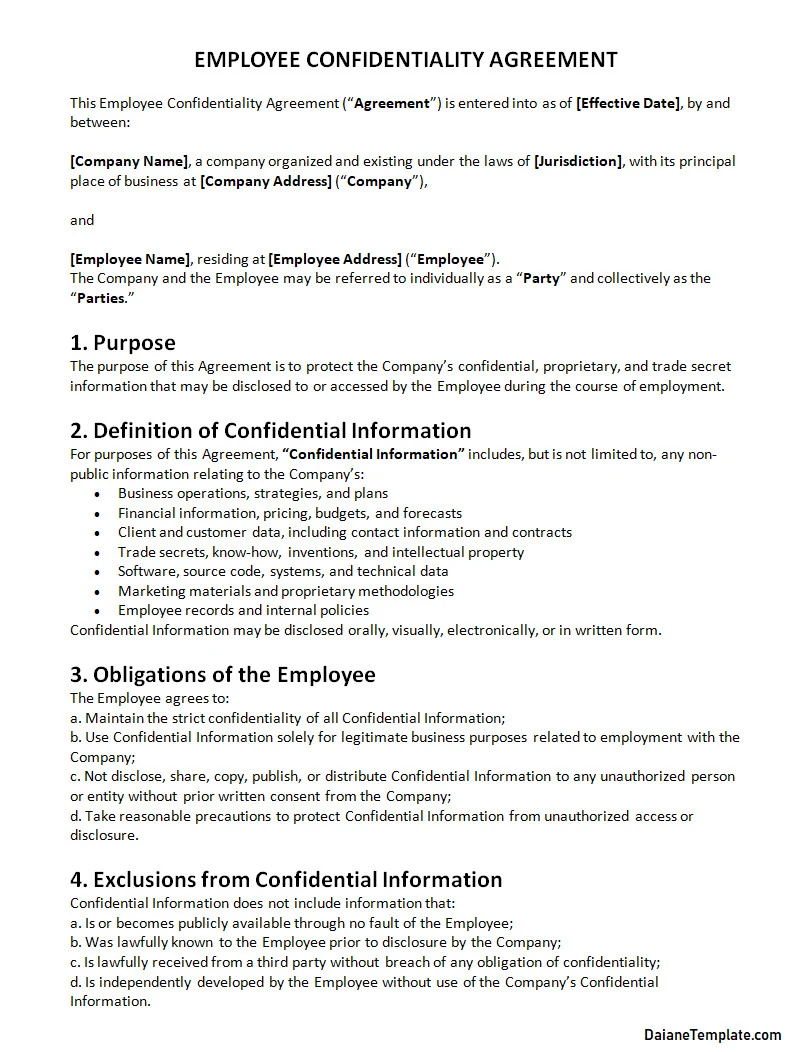
Employee confidentiality agreements are a crucial aspect of protecting a company’s sensitive information. These legally binding contracts are designed to safeguard trade secrets, intellectual property, client data, and business strategies from being shared with unauthorized parties.
By requiring employees to sign confidentiality agreements, organizations can maintain a competitive advantage and prevent valuable information from falling into the wrong hands.
What Is an Employee Confidentiality Agreement?
An employee confidentiality agreement, also known as a non-disclosure agreement (NDA), is a contract that outlines the terms and conditions under which an employee agrees to keep confidential information private.
This agreement is typically signed at the beginning of employment or when an employee is granted access to sensitive information.
Why Are Employee Confidentiality Agreements Important?
Employee confidentiality agreements play a vital role in protecting a company’s most valuable assets. Here are some key reasons why these agreements are crucial:
- Protecting Trade Secrets. Trade secrets are proprietary information that gives a company a competitive edge. By requiring employees to keep trade secrets confidential, businesses can prevent competitors from gaining access to valuable information.
- Safeguarding Intellectual Property. Intellectual property, such as patents, trademarks, and copyrights, is essential for many companies. Employee confidentiality agreements help protect this valuable intellectual property from being misused or stolen.
- Preserving Client Data. Clients trust businesses to keep their information secure. By requiring employees to maintain confidentiality, companies can build and maintain trust with their clients.
- Securing Business Strategies. Confidential business strategies, such as marketing plans and product development initiatives, are critical to a company’s success. Employee confidentiality agreements help ensure that these strategies remain confidential.
What to Include in an Employee Confidentiality Agreement
When drafting an employee confidentiality agreement, it’s essential to include specific provisions to protect the company’s sensitive information. Here are some key elements to include in this type of agreement:
- Definition of Confidential Information. Clearly define what information is considered confidential and should be protected by the agreement.
- Obligations of the Employee. Outline the employee’s responsibilities regarding the protection of confidential information, including how they should handle and store it.
- Exceptions to Confidentiality. Specify any situations in which the employee is allowed to disclose confidential information, such as with written permission from the company.
- Duration of Confidentiality. Clearly state how long the employee is required to keep the information confidential, even after their employment ends.
- Consequences of Breach. Clearly outline the consequences of breaching the confidentiality agreement, such as termination of employment or legal action.
How to Implement Employee Confidentiality Agreements
Implementing employee confidentiality agreements in your organization is a straightforward process. Here are some steps to follow:
1. Identify Key Information
Determine what information in your organization needs protection and should be covered by the confidentiality agreement.
2. Draft the Agreement
Create a clear and comprehensive confidentiality agreement that outlines the terms and conditions of confidentiality for your employees to sign.
3. Educate Employees
Provide training to employees on the importance of confidentiality and the specific requirements outlined in the agreement.
4. Obtain Signatures
Have employees sign the confidentiality agreement to acknowledge their understanding and agreement to comply with the terms.
5. Enforce Compliance
Regularly monitor and enforce compliance with the confidentiality agreement to ensure that sensitive information is adequately protected.
Tips for Successful Employee Confidentiality Agreements
Here are some tips to help ensure that your employee confidentiality agreements are effective:
- Be Clear and Specific. Clearly define what information is confidential and the obligations of the employee to maintain confidentiality.
- Update Regularly. Review and update confidentiality agreements as needed to account for changes in the business or new types of sensitive information.
- Provide Training. Educate employees on the importance of confidentiality and the specific requirements of the agreement.
- Monitor Compliance. Regularly check for compliance with the confidentiality agreement and address any breaches promptly.
- Seek Legal Advice. Consult with legal counsel when drafting confidentiality agreements to ensure they are legally sound and enforceable.
By implementing employee confidentiality agreements, organizations can protect their sensitive information and maintain a competitive edge in today’s fast-paced business world. These agreements are an essential tool for safeguarding trade secrets, intellectual property, client data, and business strategies from unauthorized disclosure.
Employee Confidentiality Agreement Template – DOWNLOAD
