When hiring a nanny to care for your children, it is essential to establish clear expectations and boundaries from the start. One of the best ways to do this is by creating a nanny agreement. A nanny agreement is a written document that outlines the terms of employment between you and your nanny. It covers everything from job responsibilities to compensation to house rules.
In this article, we will dive into the what, why, what to include, how to, and tips for a successful nanny agreement.
What is a Nanny Agreement?
A nanny agreement is a contract between you and your nanny that sets out the terms of their employment. It is a crucial document that helps ensure that both parties are on the same page about expectations, responsibilities, and compensation. By clearly outlining these details in writing, you can avoid misunderstandings and potential conflicts down the line.
Why Create a Nanny Agreement?
There are several reasons why it is important to have a nanny agreement in place. Firstly, it helps protect both you and your nanny by clearly stating expectations and responsibilities. It also provides a reference point in case any issues arise in the future. Additionally, a nanny agreement can help build trust and strengthen your relationship with your nanny by promoting open communication and transparency.
What to Include in a Nanny Agreement
When creating a nanny agreement, there are several key components that you should include to ensure that all bases are covered. Some of the essential elements to consider are:
- Job Responsibilities. Outline the specific duties and tasks that the nanny is expected to perform.
- Compensation. Clearly state the nanny’s rate of pay, payment schedule, and any additional benefits or perks.
- Working Hours. Define the nanny’s regular working hours, as well as any overtime or on-call requirements.
- House Rules. Establish guidelines for the nanny’s behavior in your home, including rules for safety, discipline, and privacy.
- Termination Clause. Detail the process for ending the agreement, including notice periods and severance pay, if applicable.
- Confidentiality Agreement. Include a clause to protect your family’s privacy and sensitive information.
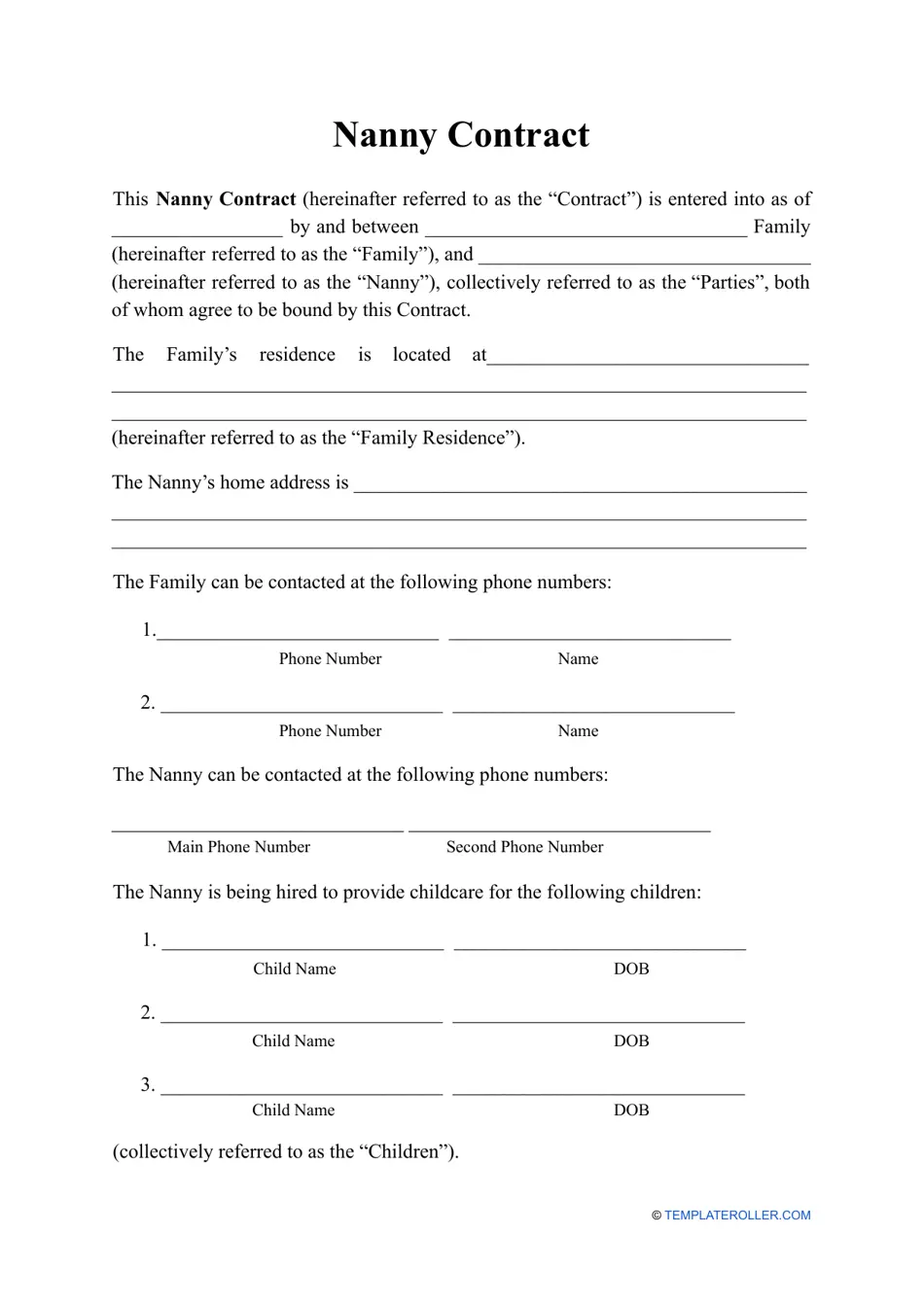
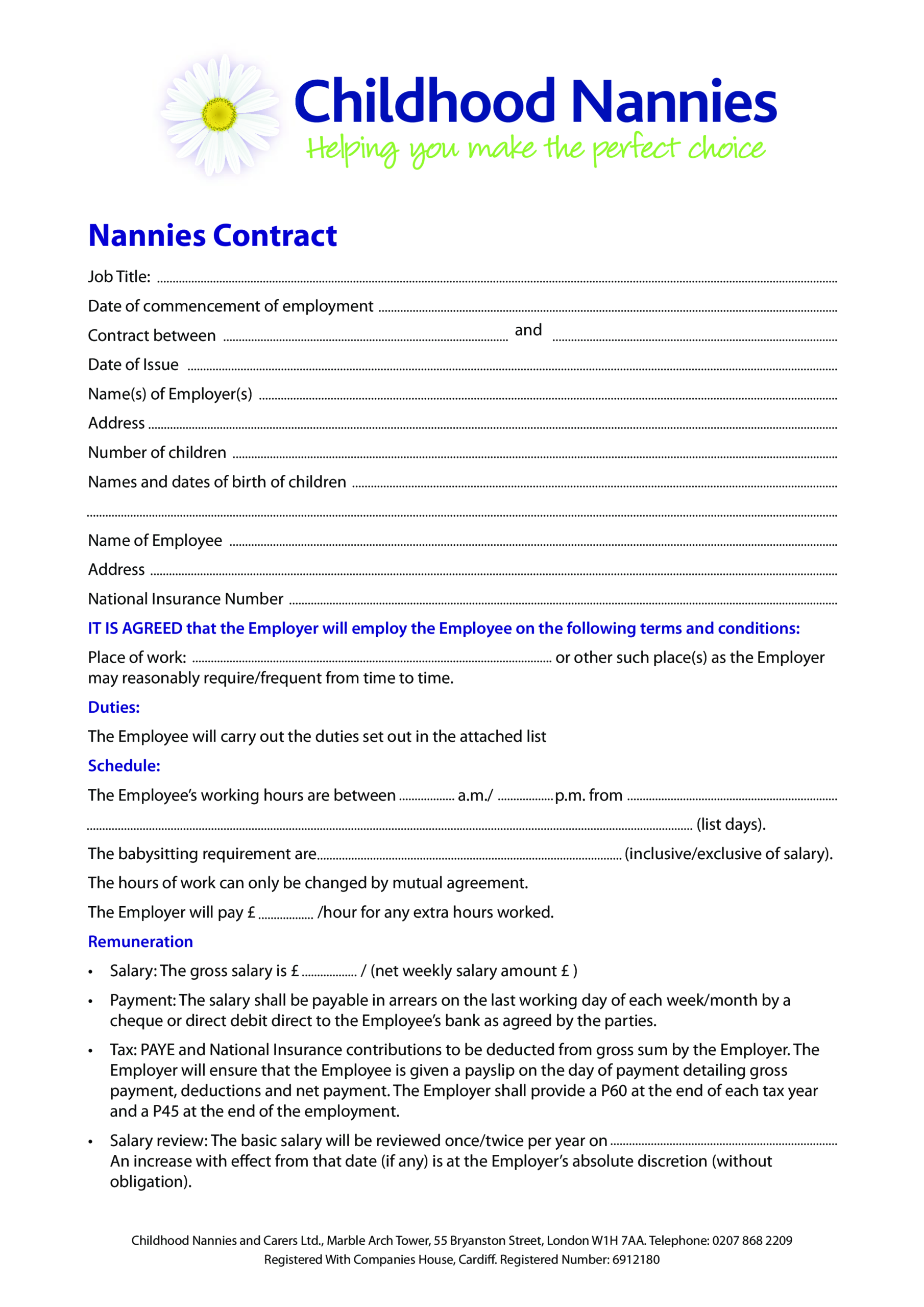
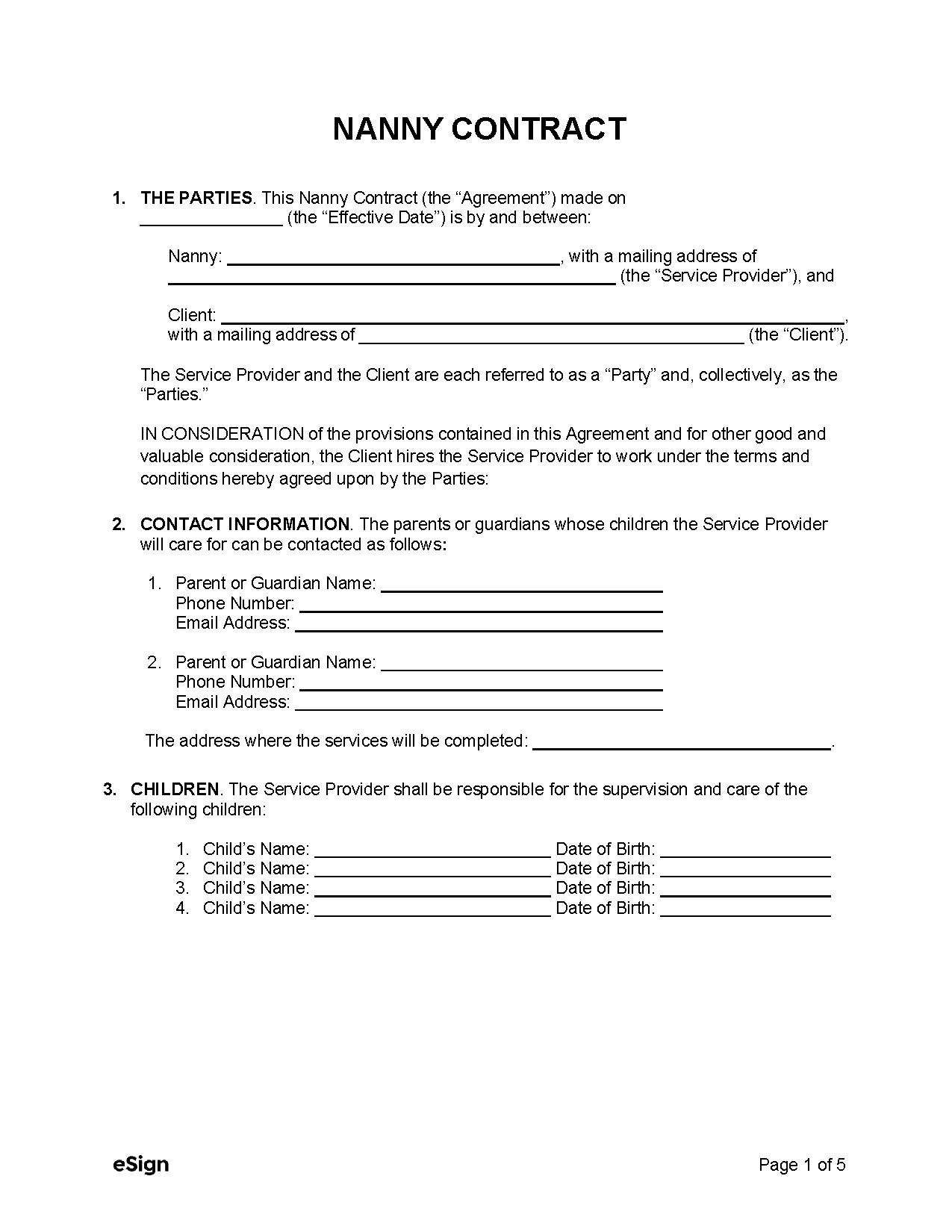
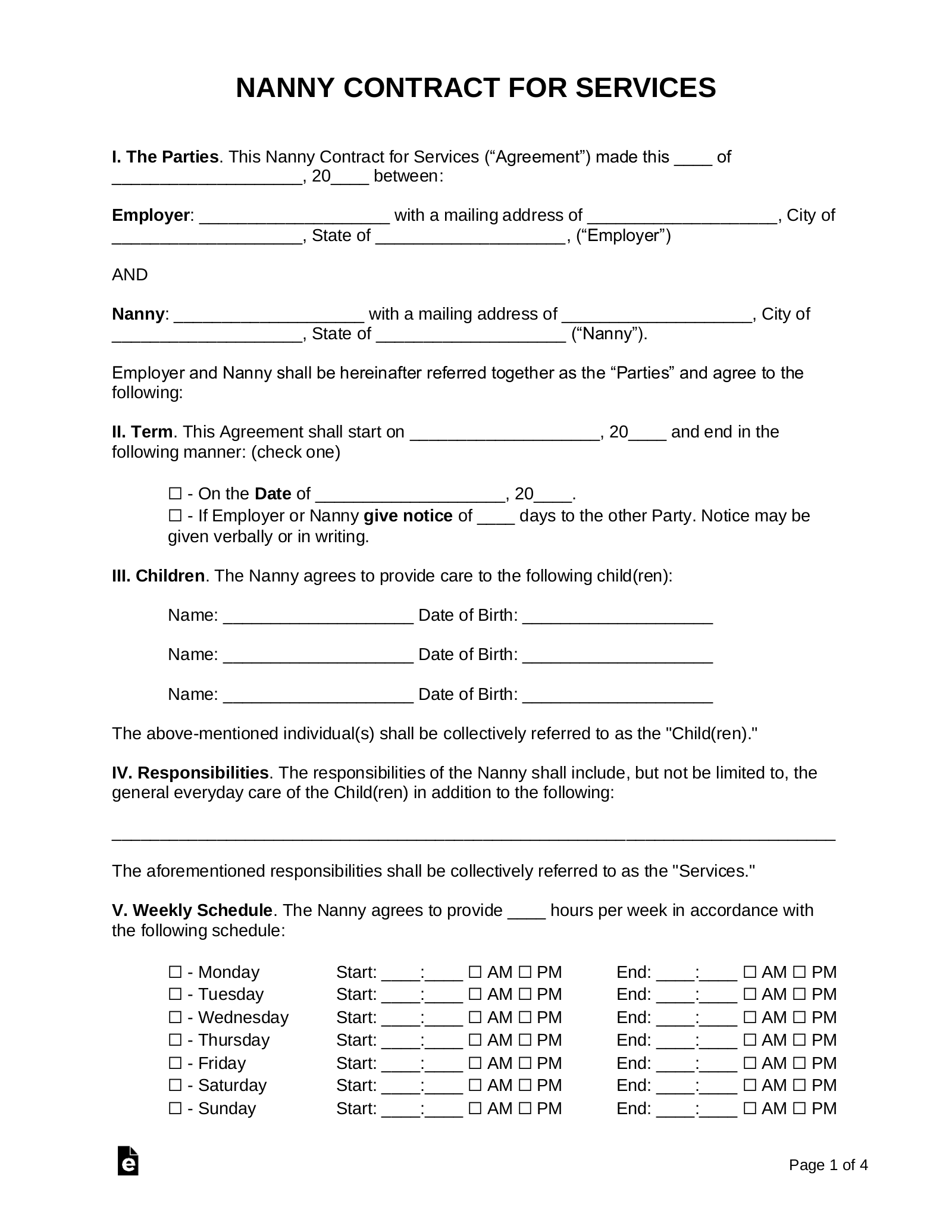
Examples
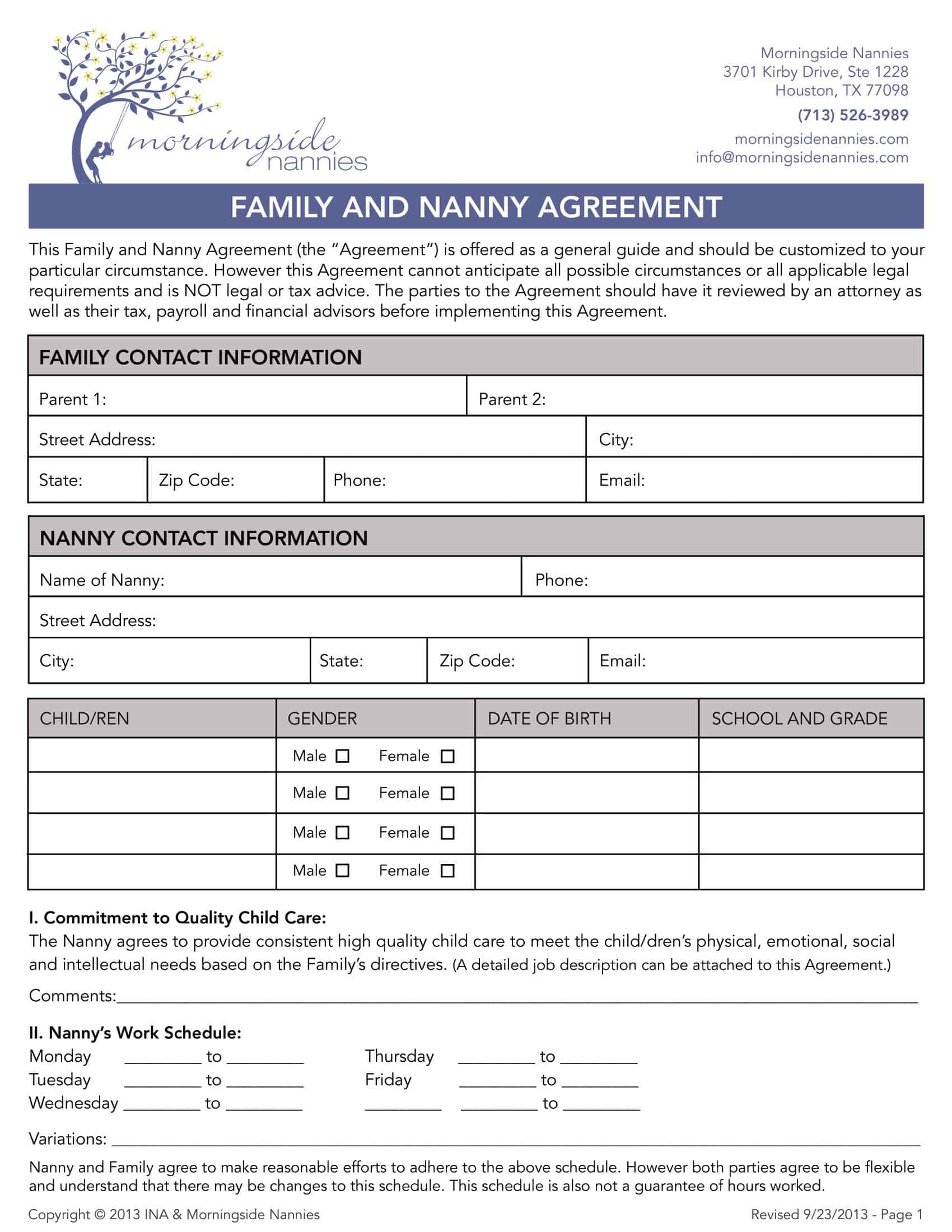
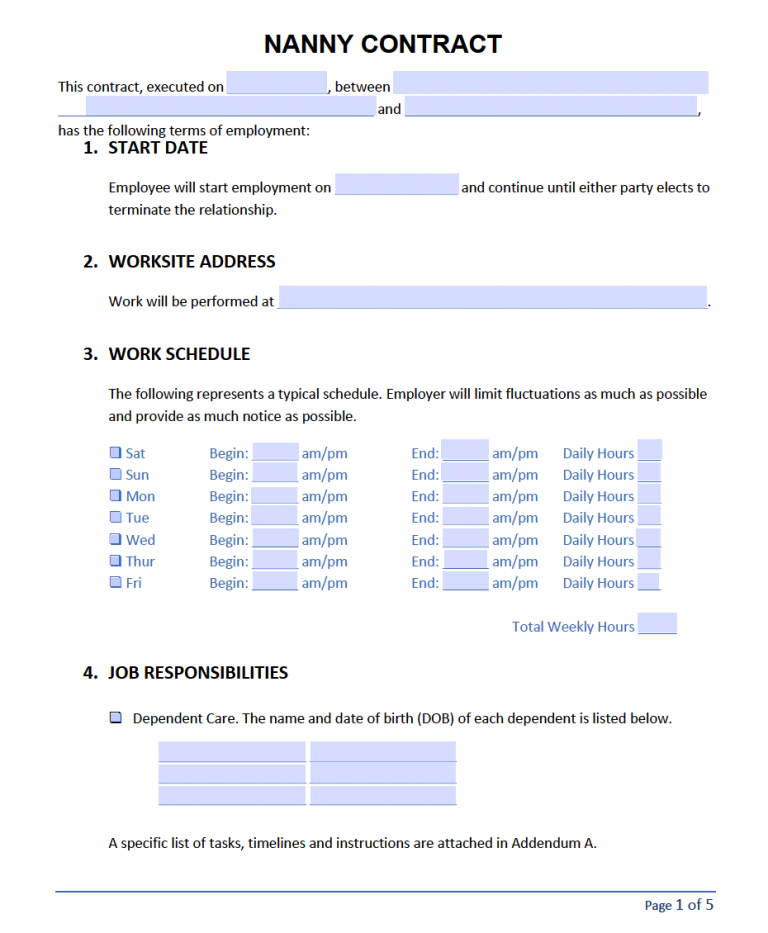
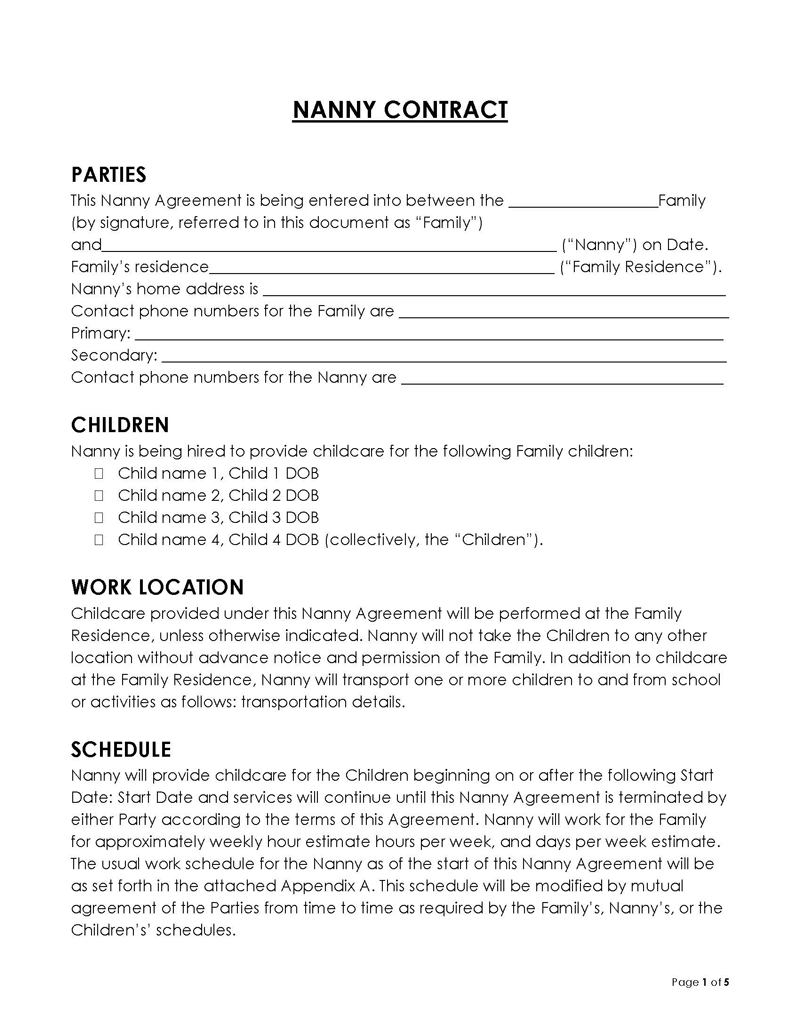
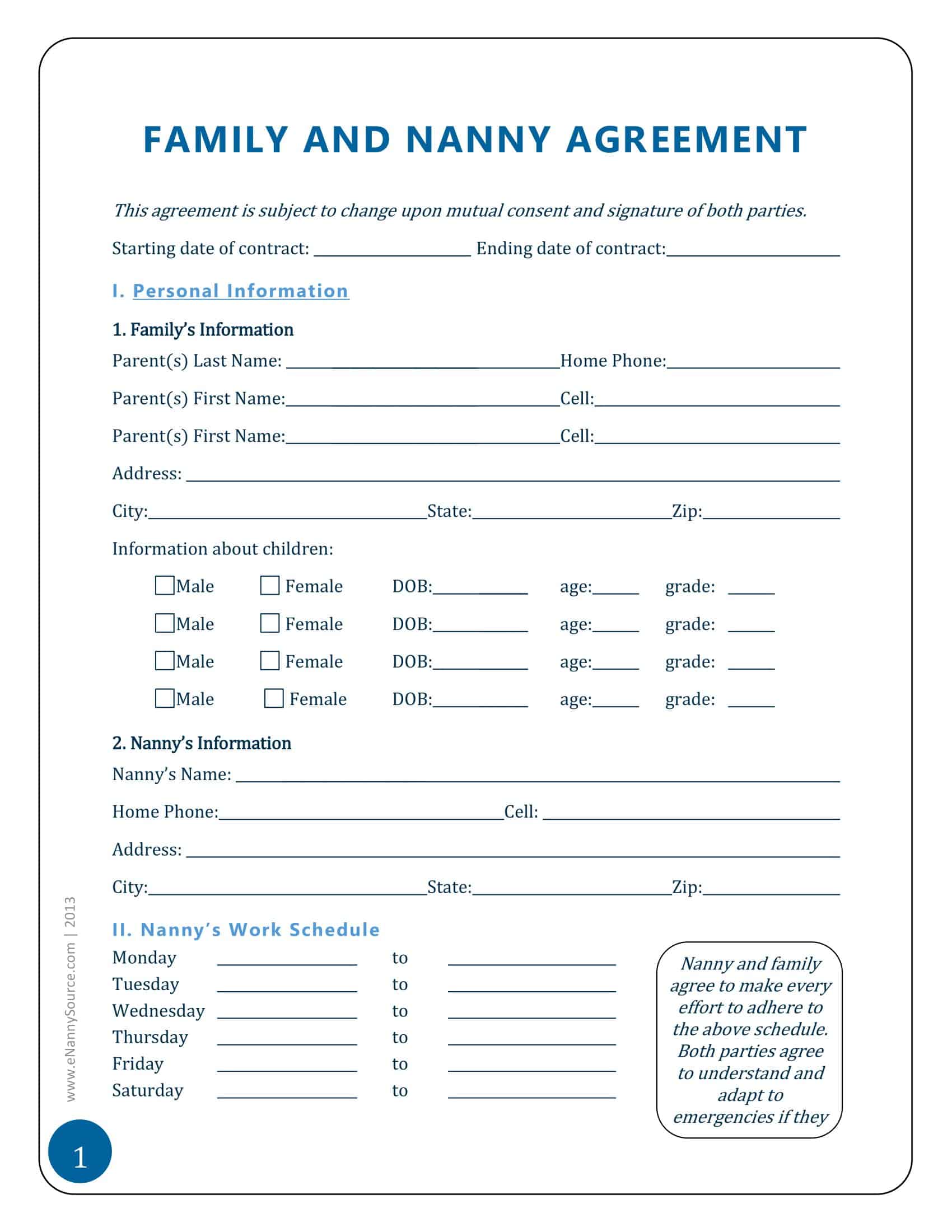
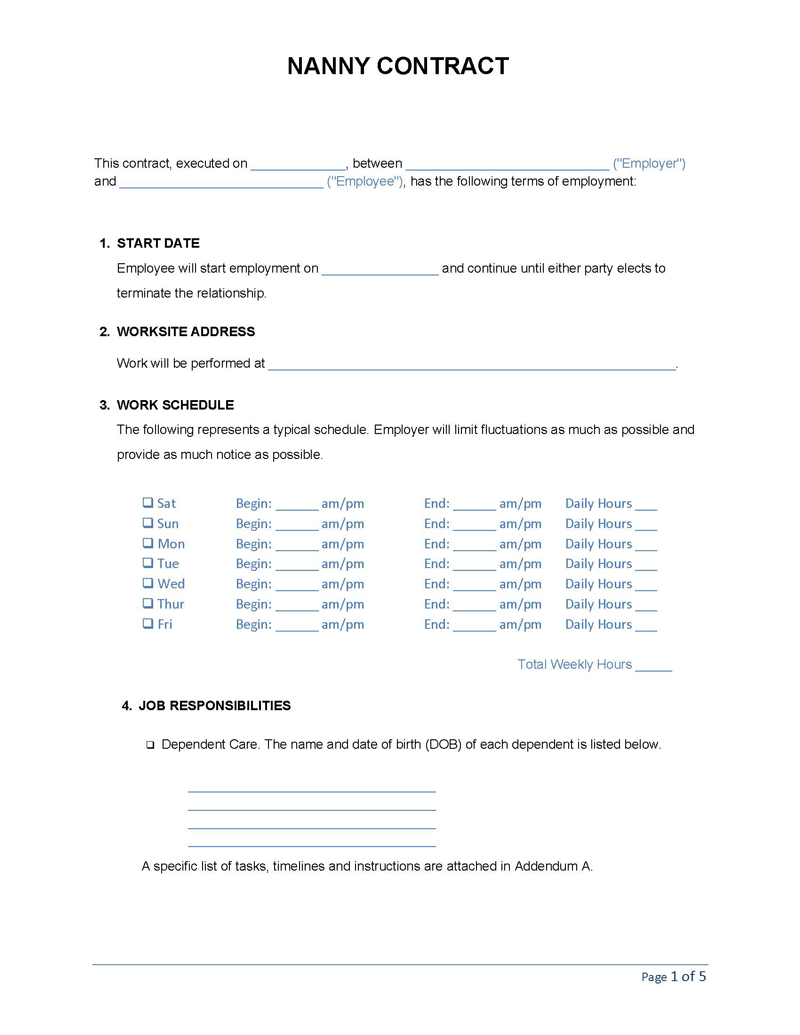
How to Create a Nanny Agreement
Creating a nanny agreement doesn’t have to be a daunting task. Start by outlining the key details that you want to include in the agreement, such as job responsibilities, compensation, and house rules. Once you have a rough draft, sit down with your nanny to discuss and negotiate any terms. Be open to feedback and be willing to compromise to reach a mutually beneficial agreement. Once both parties are satisfied, finalize the document and have both parties sign and date it.
Tips for a Successful Nanny Agreement
Here are some tips to help ensure that your nanny agreement is successful:
- Communicate Clearly. Be upfront and transparent about your expectations and requirements.
- Be Flexible. Allow room for adjustments and revisions as needed to accommodate changing circumstances.
- Regularly Review and Update. Periodically review the agreement with your nanny to ensure that it still reflects your current needs and expectations.
- Seek Legal Advice. Consider consulting with a legal professional to ensure that your agreement complies with relevant laws and regulations.
- Maintain Open Communication. Encourage ongoing dialogue with your nanny to address any issues or concerns that may arise.
- Show Appreciation. Acknowledge and appreciate your nanny’s hard work and dedication to building a positive working relationship.
In Conclusion
A well-crafted nanny agreement is a valuable tool for setting expectations, promoting transparency, and fostering a positive working relationship with your nanny. By taking the time to create a thorough and detailed agreement, you can help ensure a smooth and successful partnership that benefits both you and your nanny.
Nanny Agreement Template – Download
