An old newspaper has a distinctive look that brings history, nostalgia, and timeless storytelling into a single page. With classic headlines, narrow text columns, serif typography, and vintage illustrations, an old newspaper design can transform an ordinary document into something that looks like it came from another era.
Today, old newspaper layouts are useful for more than historical collections. Teachers use vintage newspaper designs for school projects, writers use them to present fictional stories, and event planners use them for themed parties, weddings, and celebrations. Businesses and designers can also use a vintage newspaper template to create promotional materials with a traditional editorial style.
Whether you need an old newspaper template for a classroom assignment, a creative project, or a printable newspaper-style design, understanding the basic layout will help you create a more convincing result. This guide explores the features of vintage newspapers, popular uses, design tips, and practical ways to customize an old newspaper sample.
What Is an Old Newspaper?
An old newspaper is a newspaper from an earlier period or a modern design that recreates the appearance of historical newspapers. Traditional newspapers often feature bold headlines, tightly arranged columns, small serif text, monochrome photographs, and clearly separated news sections.
Older newspaper designs may also include aged paper textures, decorative borders, vintage advertisements, issue dates, and traditional mastheads. These details create a nostalgic appearance that works well for educational materials, storytelling, and themed printables.
A modern old newspaper template does not have to reproduce a particular historical publication. You can create an original design using vintage-inspired typography, balanced columns, and fictional or contemporary content while maintaining a classic newspaper aesthetic.
Old Newspaper Template: Vintage Sample Preview
This old newspaper sample demonstrates a classic front-page layout with a prominent newspaper name, issue details, a large headline, multiple article columns, supporting illustrations, and an index of additional stories. Its warm, aged-paper appearance gives the page a nostalgic editorial style.
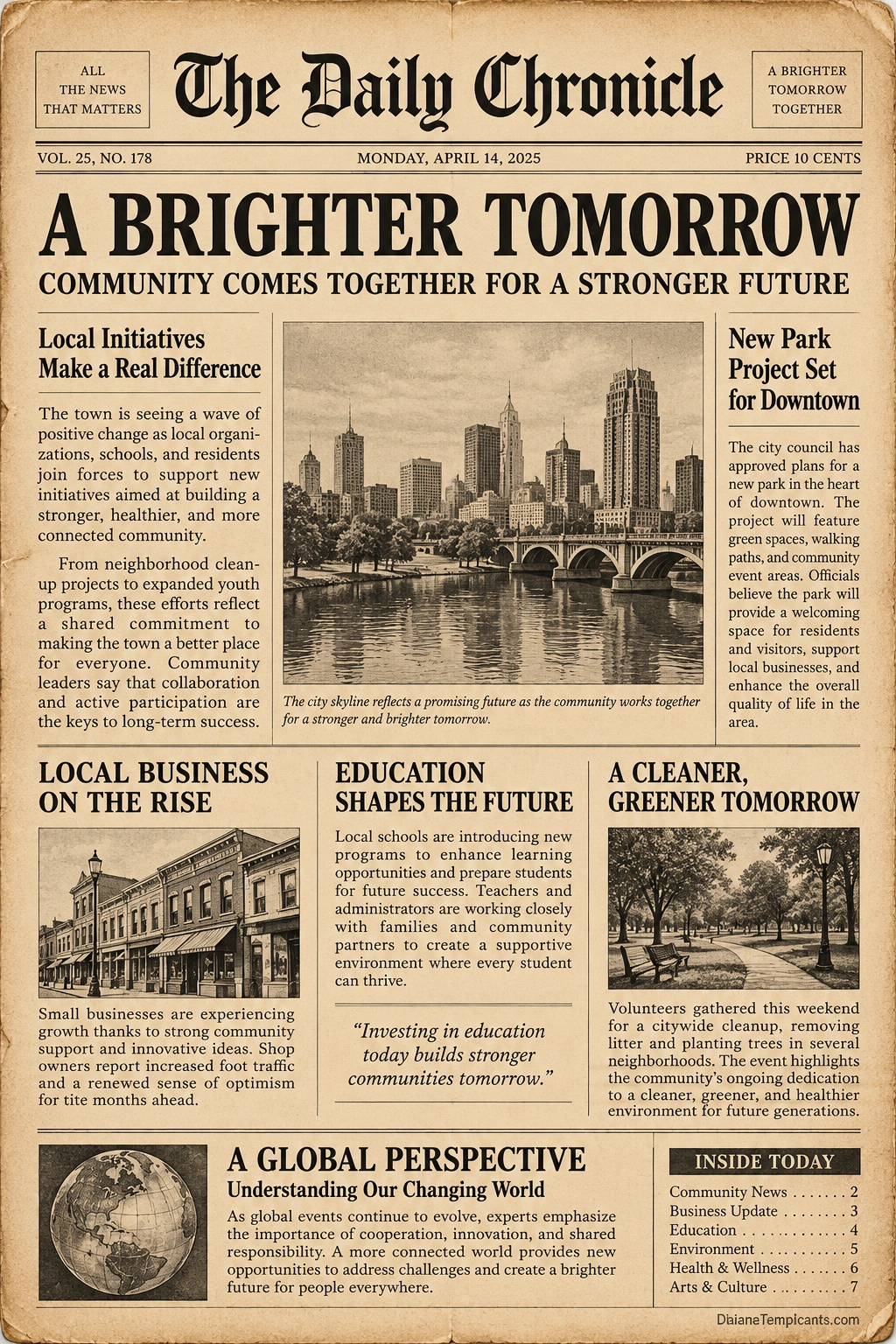
You can use the sample as visual inspiration for your own newspaper-style design. Replace the sample publication name, headlines, articles, images, and issue details with original content that matches your project. If you plan to print the finished design, choose a readable font size and maintain sufficient contrast between the text and background.
Key Features of an Old Newspaper Layout
A convincing vintage newspaper design relies on a few recognizable editorial elements. Combining these details carefully can make your printable or digital project look more authentic.
1. Traditional Newspaper Masthead
The masthead is the publication name displayed prominently at the top of the front page. Classic newspaper designs often use bold serif or blackletter typography to establish a recognizable identity.
For an original project, choose a fictional newspaper name that suits your theme. You can add a short tagline, issue number, publication date, or edition information beneath it.
2. Large, Attention-Grabbing Headlines
Headlines help readers identify the main story quickly. Old newspaper layouts often feature a large primary headline followed by smaller secondary headlines that introduce other articles.
Use concise wording and a clear hierarchy. The main headline should receive the greatest visual emphasis, while supporting headlines should remain easy to distinguish from body text.
3. Multiple Text Columns
Traditional newspapers use columns to organize information into manageable sections. A multi-column layout also creates the familiar appearance associated with vintage newspaper pages.
Keep column widths consistent where possible, use clear spacing, and avoid placing too much text in a small area. Readability should remain a priority even when recreating an older design.
4. Black-and-White Images and Illustrations
Vintage newspaper designs often use monochrome photographs, engraved-style illustrations, maps, or small editorial graphics. These visual elements break up large blocks of text and help communicate the subject of each story.
Choose images that support the article content. For a historical school project, illustrations of architecture, transportation, or period objects may be appropriate. For a fictional newspaper, original artwork can reinforce the story’s setting.
5. Aged Paper and Vintage Textures
A cream, beige, or light sepia background can give a modern newspaper design an aged appearance. Subtle paper grain, lightly worn edges, and restrained ink effects can enhance the vintage style.
Keep these effects moderate. Heavy stains, dark backgrounds, or excessive texture can reduce readability and make a printable less practical.
6. Supporting Details and Small Sections
Issue dates, page numbers, short announcements, weather notes, advertisements, and an index of stories can make an old newspaper sample feel more complete. Use these elements selectively so they support the main content instead of cluttering the page.
Popular Uses for Old Newspaper Templates
An old newspaper template can serve many purposes because its recognizable layout combines information, visual structure, and a nostalgic style.
School Projects and Educational Activities
Students can use a vintage newspaper layout to present historical events, book reports, classroom research, or fictional accounts of a particular period. Teachers can also use newspaper-style worksheets to encourage students to organize information into headlines, articles, captions, and short editorial pieces.
When creating a historical assignment, verify the facts and distinguish genuine historical information from fictional content. A vintage appearance alone does not make a document an authentic historical source.
Creative Writing and Storytelling
Writers can create fictional newspapers to introduce a story setting, describe an imaginary event, or add background information to a novel or role-playing activity. Headlines, advertisements, and short local reports can help make a fictional world feel more developed.
Use fictional publication names and clearly label invented content when there is a possibility that readers could mistake it for real reporting.
Vintage-Themed Parties and Events
An old newspaper design can become a creative invitation, welcome sign, event program, or party decoration. Headlines can announce a birthday celebration, anniversary, family reunion, or other special occasion.
Include the practical details guests need, such as the event date, time, venue, dress code, and RSVP instructions. A decorative layout should still communicate essential information clearly.
Business Promotion and Branding
Businesses can use vintage newspaper-inspired graphics for product launches, themed campaigns, special announcements, or promotional brochures. This style may suit brands that want a heritage-inspired or editorial identity.
Make sure promotional claims are accurate and that the design remains consistent with your brand. Original copy and properly licensed images are important when publishing commercial materials.
Home Decor and Personal Crafts
Newspaper-style prints can be incorporated into scrapbooks, handmade cards, framed artwork, gift wrapping, and other paper crafts. You can create a custom page featuring family milestones, personal achievements, or fictional headlines for a memorable keepsake.
How to Create an Old Newspaper Template
You do not need advanced graphic design skills to build a vintage newspaper layout. Start with a simple page structure and add visual details gradually.
Step 1: Choose Your Page Size
Select a page size that matches your intended use. US Letter paper is a practical choice for common home and office printers, while a larger format may be useful for posters or display pieces.
For print projects, allow suitable margins and check that important text and graphics remain inside the printable area.
Step 2: Design the Masthead
Place the newspaper name at the top of the page using a traditional serif or blackletter-inspired font. Add the publication date and other small details beneath the name to establish the newspaper’s identity.
Step 3: Plan the Headline Hierarchy
Write one main headline and several supporting headlines. Use different font sizes and weights to establish a clear visual order, ensuring the most important story attracts attention first.
Step 4: Arrange the Columns
Divide the page into columns with consistent spacing. Add section headings, article text, and thin divider lines to organize the content. Use short paragraphs to make the articles easier to read.
Step 5: Add Relevant Images
Choose original illustrations, photographs you own, or images you have permission to use. Position each image near its related article and add a short caption where helpful.
Step 6: Apply Vintage Styling
Use a restrained palette of black, white, cream, and sepia. If desired, add subtle paper texture and slightly worn edges. Avoid effects that obscure the headlines or body text.
Step 7: Review and Export
Proofread all text, check the publication details, and confirm that the columns align correctly. Export a high-quality PDF for printing or use an appropriate image format for digital publishing. Print a test page to check contrast, spacing, and legibility before producing multiple copies.
Tips for Making an Old Newspaper Look Authentic
Small design decisions can make a significant difference when creating a vintage newspaper printable.
- Use a limited font selection: Combine one distinctive display font with a readable serif font for article text.
- Create clear visual hierarchy: Make the masthead and main headline more prominent than secondary content.
- Keep columns aligned: Consistent spacing gives the page a professional editorial appearance.
- Use subtle aging effects: Light paper texture and restrained sepia tones usually look more convincing than excessive distressing.
- Write realistic article copy: Include concise headlines, short paragraphs, captions, and supporting details relevant to the theme.
- Check spelling and dates: Errors can distract from an otherwise polished design.
- Prioritize readability: Make sure the text is large enough for the intended viewing or printing size.
- Use original or authorized assets: Avoid copying an existing newspaper page or using photographs without permission.
Old Newspaper vs. Vintage Newspaper Template
The phrases old newspaper and vintage newspaper template are closely related, but they can reflect different search intentions.
An old newspaper may refer to a genuine historical publication, a scanned archival page, or a modern design that imitates an older newspaper. A vintage newspaper template usually refers to a reusable layout that someone can customize for a school project, event, craft, or creative publication.
If you are looking for a historical newspaper, pay attention to the publication date, original source, and archival information. If you want to create a new design, a customizable vintage newspaper template is generally a more practical starting point.
Common Mistakes to Avoid When Designing an Old Newspaper
A vintage design can lose its impact when the layout becomes too crowded or difficult to read. Keep these common problems in mind:
- Too many fonts: Limit font combinations to maintain a consistent editorial style.
- Overcrowded columns: Use suitable spacing and concise text instead of filling every available area.
- Excessive paper effects: Keep textures light enough to preserve readable text.
- Unclear headlines: Establish a visible distinction between the main story and secondary articles.
- Low-quality images: Use clear images with enough resolution for the final print size.
- Unverified historical claims: Check facts and dates when presenting real events or historical information.
- Missing publication context: Label fictional or illustrative newspaper designs appropriately when confusion is possible.
Frequently Asked Questions About Old Newspapers
What is an old newspaper template?
An old newspaper template is a reusable page layout designed to resemble a historical newspaper. It may include a masthead, large headlines, multiple columns, vintage typography, illustrations, and aged-paper styling.
What can I use an old newspaper template for?
You can use an old newspaper template for school projects, creative writing, themed invitations, party decorations, promotional materials, scrapbooks, and printable artwork. The content and design can be customized to suit your purpose.
How do I make a newspaper look old?
Use traditional serif typography, monochrome images, narrow columns, thin divider lines, and a cream or sepia background. Subtle paper grain and lightly worn edges can add an aged appearance without reducing readability.
Can I print an old newspaper template at home?
Yes. Choose a template designed for your paper size, such as US Letter, and check the printer margins before printing. A test print can help you adjust text size, contrast, and spacing.
What fonts work best for an old newspaper design?
Traditional serif fonts are suitable for headlines and article text. A restrained blackletter-inspired font can work well for the masthead, while a readable serif font keeps longer articles comfortable to read.
Can I use an old newspaper template for a school project?
Yes. A newspaper-style layout can present historical research, book summaries, classroom news, or fictional stories. Verify factual information and follow your teacher’s instructions for sources and citations.
What is the difference between an old newspaper and a vintage newspaper template?
An old newspaper can be an authentic historical publication or a design inspired by the past. A vintage newspaper template is generally a reusable layout intended for customization.
Can I use a vintage newspaper design for commercial purposes?
That depends on the template license, fonts, illustrations, photographs, and other assets used. Check the applicable usage rights and use original or properly licensed materials before publishing or selling a design.
Conclusion
An old newspaper design combines classic typography, structured columns, prominent headlines, and vintage visual details to create a distinctive editorial style. It can be adapted for educational projects, storytelling, invitations, promotional materials, and personal crafts.
Start with a clear newspaper layout, choose readable fonts, organize the content into columns, and add relevant images and subtle vintage effects. Customize the headlines and articles to match your purpose while keeping the design easy to read and print.
With a thoughtful layout and original content, an old newspaper template can turn a simple page into an engaging vintage-inspired project. Use the sample as inspiration, adapt the details to your needs, and review the final design before printing or publishing.
Download: Old Newspaper Template
