A panel schedule is an essential document for identifying the circuits, breakers, and electrical loads associated with an electrical panelboard. It helps electricians, electrical contractors, building managers, and property owners understand how circuits are organized throughout a building.
Without an accurate panel schedule, identifying the correct circuit for a lighting system, receptacle, appliance, or piece of equipment can take additional time. A clearly organized electrical panel schedule makes circuit identification easier and provides useful information for troubleshooting, maintenance, inspections, and future electrical modifications.
Whether you are documenting a residential electrical panel or organizing circuit information for a commercial building, a panel schedule template provides a practical starting point. This guide explains what a panel schedule is, what information it contains, how to organize circuit records, and how to maintain accurate documentation.
What Is a Panel Schedule?
A panel schedule is a table or directory that lists the circuits served by an electrical panelboard and provides relevant information about their associated breakers and loads. Depending on the installation, it may include circuit numbers, circuit descriptions, breaker ratings, pole counts, connected loads, phases, wire sizes, and location notes.
Electrical professionals use panel schedules to understand the distribution of electrical power within a building. The schedule can identify which circuits serve particular rooms, lighting systems, receptacles, HVAC equipment, appliances, and other electrical loads.
A panel schedule may be prepared during the design or construction phase and updated after approved electrical changes. The exact information required depends on the installation, project specifications, applicable electrical codes, and the needs of the people maintaining the system.
Panel Schedule Template: Free Printable Sample
A printable panel schedule template provides a structured layout for recording panel information and circuit details. The sample below uses a clean black, dark blue, blue, and white design to separate the main information fields, circuit table, load summary, and notes.
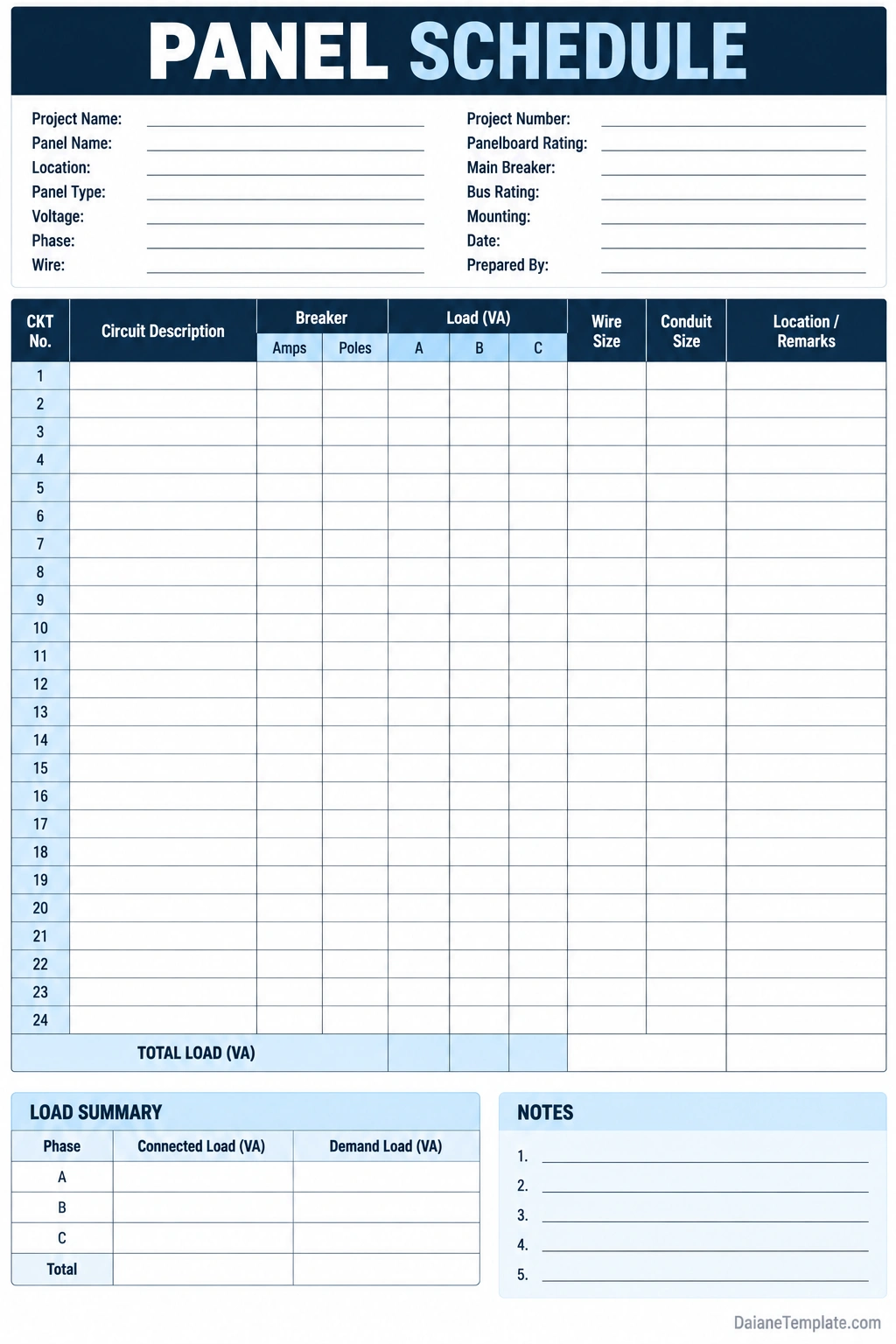
The sample includes spaces for project and panel details, a 24-circuit table, breaker information, phase load entries, wire and conduit sizes, remarks, and a load summary. Customize the layout to match the actual panelboard and the documentation requirements of your project.
Use the template as a recordkeeping aid rather than as a substitute for an electrical design, load calculation, inspection, or code-compliant panel schedule. Circuit information and ratings must be verified against the actual installation by a qualified electrical professional.
Why Is a Panel Schedule Important?
An accurate panel schedule supports safe, organized electrical system management. Its value extends beyond simply labeling circuit breakers.
1. Simplifies Circuit Identification
A clear circuit directory helps identify the areas or equipment associated with individual circuits. Instead of relying on vague labels, an electrician can refer to descriptions such as kitchen receptacles, office lighting, or air-conditioning equipment, provided those descriptions have been verified.
2. Supports Troubleshooting and Maintenance
When an electrical problem occurs, accurate circuit documentation provides a useful starting point for investigation. It can help maintenance personnel understand the intended circuit arrangement and identify the relevant records before beginning authorized work.
3. Improves Project Documentation
During construction, renovation, or electrical upgrades, a panel schedule helps organize information about the electrical distribution system. Keeping records current can make handovers and future maintenance more efficient.
4. Helps Track Electrical Loads
Where appropriate data is available, a panel schedule can document connected loads and their distribution across phases. This information can support electrical design reviews and load assessments performed by qualified professionals.
5. Supports Clear Communication
Electricians, contractors, facility managers, and building owners may all need to refer to panel information. A standardized schedule gives them a shared reference and reduces confusion caused by incomplete or inconsistent circuit labels.
What Information Should a Panel Schedule Include?
The required fields vary by panelboard type, building, and project. The following information is commonly useful when creating an electrical panel schedule.
Panel Identification
Start with information that identifies the equipment and its location. Typical fields include:
- Project name: The building, renovation, or installation associated with the panel.
- Panel designation: The panel name or identifier used in the electrical drawings.
- Location: The room or area where the panelboard is installed.
- Voltage and phase: The verified electrical system configuration.
- Panel rating: The applicable panelboard rating as shown on its equipment label and project documentation.
- Main breaker: Relevant main overcurrent protection information, where applicable.
- Date and preparer: The date the schedule was prepared or last verified and the responsible person or organization.
Circuit Numbers and Descriptions
List each circuit according to the actual panelboard arrangement and identify the connected area or equipment. Use concise descriptions that are easy to understand and consistent with the building’s plans and field-verified labels.
Examples include:
- Ground-floor lighting.
- Office receptacles.
- Kitchen equipment.
- Exterior lighting.
- Dedicated HVAC equipment.
- Water heater or other designated appliances.
These are illustrative descriptions only. Never assume a circuit serves a particular location or device without verification.
Breaker Information
Depending on the application, the schedule may record the breaker amperage, number of poles, and other relevant protective-device details. These values must reflect the installed equipment and approved design.
Do not select or change breaker ratings based solely on the capacity of an appliance or a blank template. Circuit protection must be appropriate for the conductors, equipment, load, and applicable electrical requirements.
Load Information
A more detailed panel schedule may include connected load, calculated demand load, or load distribution by phase. These fields are especially useful in electrical design documentation and load assessments.
Connected load and demand load are not necessarily the same. Demand calculations must follow the applicable standards and project requirements rather than relying on an informal estimate.
Wire, Conduit, and Remarks
Some schedules include conductor sizes, conduit information, equipment locations, or remarks. These fields can provide additional context for maintenance and future modifications when they are part of the project’s documentation requirements.
How to Fill Out a Panel Schedule Template
Preparing a useful panel schedule requires accurate information about the actual electrical installation. The following process can help organize the documentation.
Step 1: Identify the Panelboard
Record the panel designation, location, and equipment information from verified labels and project records. Confirm that the schedule corresponds to the correct panel rather than a similarly named panel elsewhere in the building.
Step 2: Review Existing Electrical Documents
Consult the available electrical drawings, approved panel schedules, equipment documentation, and previous maintenance records. These documents can provide a starting point, but older records may not reflect subsequent modifications.
Step 3: Verify Circuit Descriptions
Have a qualified electrical professional verify circuit assignments using appropriate procedures and equipment. Do not assume that existing handwritten labels are accurate, and do not open energized equipment or perform live electrical testing unless properly qualified and authorized.
Step 4: Record Verified Breaker Details
Document the installed breaker information and other required circuit characteristics. Use the manufacturer’s markings and approved records as appropriate, and refer any discrepancies to the responsible electrical professional.
Step 5: Add Load Data When Required
Enter connected load, phase distribution, or demand information only when supported by the appropriate design calculations, measurements, or verified project documentation. Leave fields blank or mark them for professional verification rather than inventing values.
Step 6: Review and Date the Schedule
Check that circuit descriptions, panel identification, and supporting details are consistent. Record the verification date and retain the schedule with the appropriate building or electrical documentation.
Step 7: Update the Record After Approved Changes
When electrical work changes the circuit arrangement, the panel schedule should be reviewed and updated as required. Keep older records according to the project’s documentation practices so that the history of significant changes remains available.
Panel Schedule Example: Understanding the Layout
A panel schedule can be organized into several sections, each serving a different purpose.
- Panel information: Identifies the project, panel designation, location, voltage, phase, and applicable equipment ratings.
- Circuit directory: Lists circuit numbers and verified descriptions of the connected areas or equipment.
- Breaker details: Records relevant breaker ratings and pole information.
- Load columns: Provide spaces for the applicable load values and phase allocation.
- Additional technical details: Record wire sizes, conduit information, locations, or remarks where required.
- Load summary: Presents the relevant connected or calculated demand loads when those values have been properly established.
- Notes: Capture useful documentation details, verification information, or references to approved drawings.
The exact arrangement differs between residential, commercial, and industrial installations. Some panel schedules contain fewer fields, while engineered schedules may include additional technical information to meet project-specific requirements.
Residential vs. Commercial Panel Schedules
Residential and commercial panel schedules share the same basic purpose: documenting the circuits associated with an electrical panelboard. However, the level of detail and complexity can differ considerably.
Residential Panel Schedule
A residential circuit directory often focuses on identifying lighting, receptacle circuits, kitchen appliances, laundry equipment, HVAC systems, and other household loads. The layout should be clear enough to help authorized users identify circuits without confusing descriptions.
Commercial Panel Schedule
Commercial installations may require more detailed circuit descriptions, equipment references, phase-load information, demand calculations, and coordination with electrical drawings. Larger buildings may also contain multiple panelboards serving different floors, departments, or equipment systems.
For either type, the schedule must reflect the actual installation and applicable project requirements. A generic template should always be adapted to the equipment and documentation standards involved.
Common Panel Schedule Mistakes to Avoid
Incomplete or inaccurate panel documentation can create confusion during maintenance and future electrical work. Avoid these common mistakes:
- Using vague circuit labels: Prefer verified descriptions over labels such as “miscellaneous” or “general.”
- Copying outdated information: Check whether renovations or equipment changes have affected the original schedule.
- Guessing circuit assignments: Mark uncertain information for verification instead of presenting assumptions as facts.
- Entering unverified ratings: Use the actual equipment information and approved documentation.
- Confusing connected and demand loads: Record each value according to its correct definition and calculation method.
- Ignoring documentation updates: Review the schedule after applicable electrical modifications.
- Using an unsuitable template: Ensure that the layout contains the fields needed for the particular panelboard and project.
Best Practices for Maintaining an Electrical Panel Schedule
Maintaining an accurate schedule is an ongoing documentation task rather than a one-time activity. These practices can help keep the information useful.
- Use consistent naming: Match circuit descriptions to the terminology used in approved drawings and other building records.
- Keep a clear revision history: Record applicable dates and changes according to the project’s document-control process.
- Store records securely: Keep the current schedule accessible to authorized maintenance personnel.
- Verify changes professionally: Have qualified personnel update information following relevant electrical work.
- Coordinate related documents: Keep the panel schedule consistent with relevant drawings, equipment records, and circuit directories.
- Use a readable format: Make sure printed labels and tables remain legible at the intended size.
Frequently Asked Questions About Panel Schedules
What is the purpose of a panel schedule?
A panel schedule identifies the circuits associated with an electrical panelboard and records relevant breaker, load, and circuit information. It supports circuit identification, maintenance, troubleshooting, and electrical documentation.
What information is included in a panel schedule?
Common fields include panel identification, circuit numbers, circuit descriptions, breaker ratings, pole counts, connected loads, phase allocation, wire sizes, and notes. The exact fields depend on the installation and project requirements.
What is the difference between a panel schedule and a circuit directory?
A circuit directory typically focuses on identifying the circuits and the areas or equipment they serve. A panel schedule may contain this information along with additional technical details, such as breaker characteristics and load calculations.
Can I use a panel schedule template for a residential building?
Yes. A suitable template can help organize residential circuit information. Customize it to match the actual panelboard and have circuit assignments and technical details verified by a qualified electrical professional.
How many circuits should a panel schedule include?
The number of circuit entries should match the actual panelboard configuration. Templates may support different numbers of circuits, so choose a layout that corresponds to the equipment rather than assuming every panel has the same capacity.
What is the difference between connected load and demand load?
Connected load represents the load associated with connected equipment under the applicable calculation method. Demand load accounts for applicable demand factors and calculation rules. The correct values depend on the installation and relevant electrical standards.
Who should prepare or verify a panel schedule?
An electrical designer, qualified electrician, or other appropriately qualified professional should prepare or verify technical information according to the project’s requirements and local rules. Building owners can maintain records but should not guess at circuit assignments or technical ratings.
When should a panel schedule be updated?
Review and update the schedule when approved electrical work changes circuit assignments, equipment, or other documented details. The updated record should reflect the verified installation and follow the project’s documentation procedures.
Conclusion
A panel schedule is an important reference for documenting electrical circuits, breaker information, and relevant loads within a panelboard. An accurate schedule makes circuit identification easier and supports maintenance, troubleshooting, electrical design coordination, and future modifications.
Use a printable panel schedule template to organize panel details, circuit descriptions, breaker information, load data, and notes in a consistent format. Customize the document for the specific installation and verify technical information against the actual equipment and approved records.
For reliable electrical documentation, keep the schedule readable, review it after relevant changes, and have technical details verified by qualified professionals. A well-maintained panel schedule provides a clearer record of the electrical system and helps support informed maintenance decisions.
Download: Panel Schedule Template
