A packing list is one of the simplest tools for preparing for a trip. It helps you remember essential items, organize what you need, reduce last-minute stress, and avoid bringing things you will never use. Whether you are planning a weekend getaway, family vacation, business trip, road trip, or international journey, a well-organized list can make packing much easier.
The best packing list is not necessarily the longest one. It should reflect your destination, trip length, activities, weather, transportation, and personal needs. By organizing items into practical categories, you can quickly see what you need to pack and check items off as they go into your luggage.
This guide explains what to include, how to create a personalized travel packing checklist, and how to avoid both underpacking and overpacking.
What Is a Packing List?
A packing list is a checklist of items you plan to bring on a trip. It provides a structured way to organize clothing, toiletries, travel documents, electronics, health items, footwear, and other essentials before departure.
A basic travel packing list may include:
- Clothing and underwear
- Shoes and other footwear
- Toiletries
- Travel documents
- Electronics and chargers
- Medications and health supplies
- Personal accessories
- Travel essentials
- Special items for planned activities
- Miscellaneous items
The contents should always be adjusted to match the specific trip. A beach vacation, business trip, camping adventure, and winter holiday will each require different items.
Why Use a Packing List?
Packing without a plan can make it easy to forget important items or fill your luggage with unnecessary things. A checklist gives you a simple system for deciding what you actually need.
Prevents Forgotten Items
A written list helps you remember important items that are easy to overlook, such as chargers, travel documents, medications, toiletries, or specific equipment.
Saves Time
Instead of repeatedly deciding what to pack, you can work through predefined categories. This can make the packing process faster and more organized.
Reduces Travel Stress
Checking items off a list can provide reassurance that important preparations have been completed before leaving home.
Helps Prevent Overpacking
A thoughtful checklist can help you distinguish between essentials and items that are merely convenient. This can reduce unnecessary clothing, duplicate toiletries, and other items that add weight without providing much value.
Makes Packing Repeatable
Once you create a useful travel checklist, you can reuse it for future trips. You can simply adjust it according to the destination, season, and length of the journey.
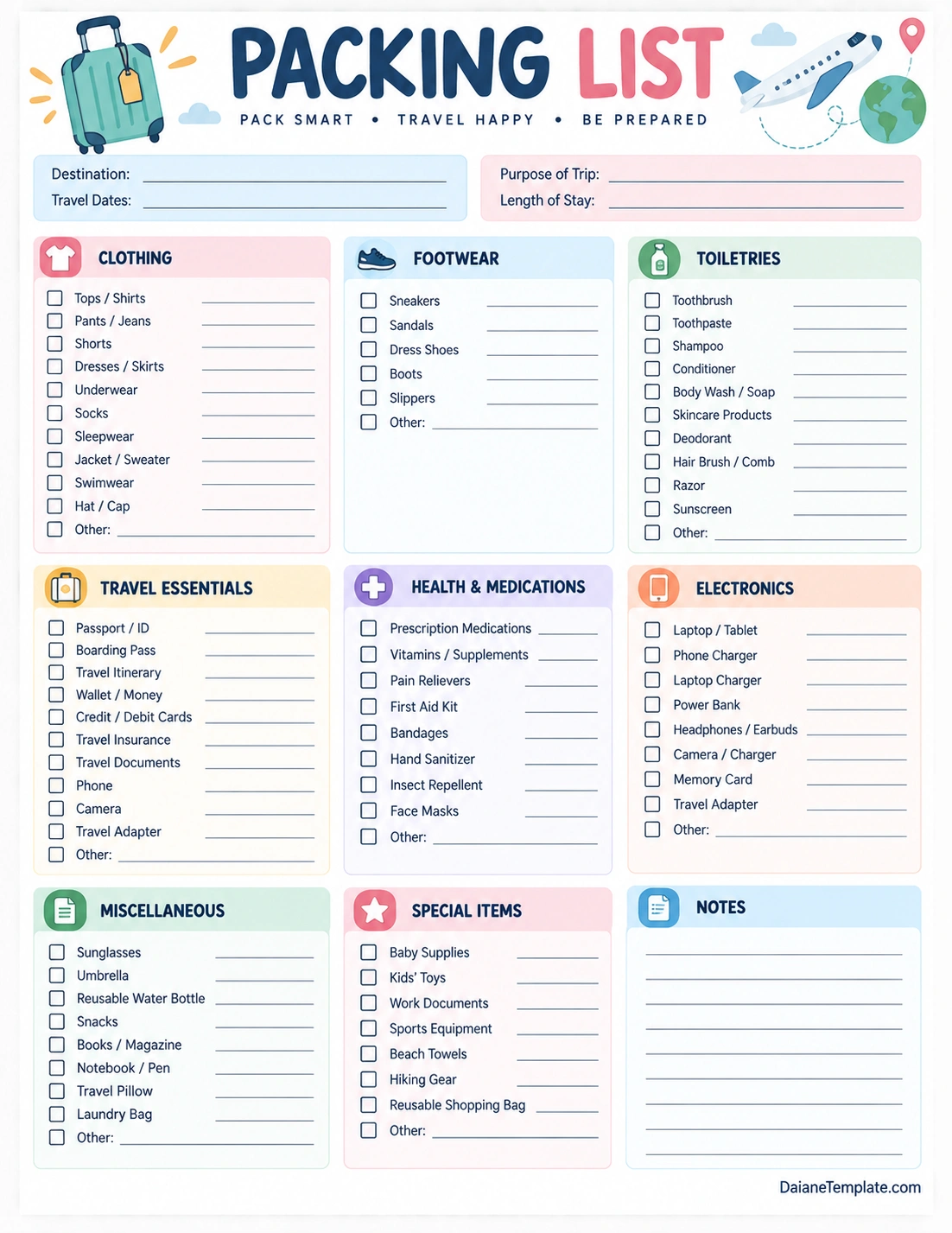
Packing List Template
A packing list template makes it easier to organize travel items into categories and check them off as you prepare. A printable version is especially useful if you prefer to pack with a physical checklist rather than a phone or computer.
What to Include on a Packing List
The most useful approach is to divide your travel checklist into categories. This makes it easier to review everything without repeatedly going through the same items.
Clothing
Choose clothing based on the number of days, weather conditions, planned activities, and access to laundry. Common clothing items include:
- Tops and shirts
- Pants or jeans
- Shorts
- Dresses or skirts
- Underwear
- Socks
- Sleepwear
- Jacket or sweater
- Swimwear
- Hat or cap
Consider choosing clothing that can be combined into several outfits. This can reduce the total number of pieces you need to bring.
Footwear
Shoes can take up considerable luggage space, so choose them carefully. Depending on your trip, you may need sneakers, sandals, dress shoes, boots, slippers, or specialized footwear.
Try to bring footwear that serves more than one purpose when practical. For example, comfortable walking shoes may work for sightseeing and casual meals.
Toiletries
Toiletries are easy to forget because many are used every day at home. Consider adding the following to your checklist:
- Toothbrush and toothpaste
- Shampoo and conditioner
- Body wash or soap
- Skincare products
- Deodorant
- Hairbrush or comb
- Razor
- Sunscreen
- Personal hygiene items
For air travel, remember to check current airline and security requirements for liquids and other restricted items before packing.
Travel Documents and Essentials
Some of the most important travel items are not clothing at all. Depending on your destination and transportation method, your checklist may include:
- Passport or identification
- Boarding pass or travel confirmation
- Travel itinerary
- Accommodation information
- Travel insurance documents
- Required visas or permits
- Emergency contact information
- Wallet and payment methods
- Important reservations
Keep essential documents accessible rather than buried at the bottom of your luggage.
Health and Medications
Include medications and health supplies that you may need during the trip. Depending on your personal needs and destination, this may include prescription medications, basic first-aid supplies, bandages, sunscreen, or insect repellent.
If you take prescription medication, keep it properly labeled and follow applicable travel rules. For international travel, check the requirements of your destination before departure.
Electronics
Electronic devices can be useful for communication, navigation, work, entertainment, and photography. Consider whether you actually need each device before adding it to your luggage.
- Phone
- Phone charger
- Laptop or tablet
- Laptop charger
- Power bank
- Headphones or earbuds
- Camera and charger
- Memory cards
- Travel adapter when required
How to Create a Personalized Packing List
A generic checklist is a good starting point, but the best packing list is customized to your trip.
1. Consider Your Destination
Think about the climate, local conditions, available services, and activities at your destination. A tropical destination may require lightweight clothing and swimwear, while a cold-weather trip may require layers and warmer outerwear.
2. Check the Weather
Review the expected weather before packing. Consider temperature changes between daytime and nighttime as well as the possibility of rain, snow, wind, or unusually warm conditions.
3. Consider the Length of Your Trip
A two-day trip generally requires fewer clothing items than a two-week journey. However, the number of items needed does not always have to increase in direct proportion to the number of days if laundry facilities are available.
4. Plan Your Activities
Think about what you will actually do during the trip. Hiking, swimming, business meetings, formal dinners, outdoor activities, and sightseeing may require different clothing and equipment.
5. Check Your Accommodation
Find out what your hotel, rental, or other accommodation already provides. You may not need to bring items such as towels, a hair dryer, or certain toiletries if they are already available.
6. Check Transportation Rules
If you are flying, review current baggage allowances and restrictions. Different airlines may have different requirements for carry-on bags, checked luggage, liquids, batteries, and other items.
Travel Packing List by Trip Type
The contents of your checklist can change significantly depending on the type of travel you are planning.
Weekend Trip
A short trip usually requires only a few outfits, essential toiletries, footwear, travel documents, electronics, and any personal items needed for the activities you have planned.
Business Trip
A business travel checklist may include professional clothing, appropriate footwear, work devices, chargers, business documents, presentation materials, and personal toiletries.
Family Vacation
A family vacation checklist should account for the needs of each traveler. Depending on the ages of family members, you may also need child-specific clothing, entertainment items, snacks, or other supplies.
Beach Vacation
A beach trip may require swimwear, sunscreen, sandals, lightweight clothing, sunglasses, beach accessories, and appropriate personal-care items.
Outdoor or Hiking Trip
Outdoor travel may require specialized clothing, sturdy footwear, weather protection, navigation tools, appropriate safety equipment, and other gear suited to the planned activity.
How to Avoid Overpacking
Overpacking can make travel less convenient by adding weight, taking up luggage space, and creating more items to manage.
- Plan outfits: Choose clothing combinations before packing.
- Pack versatile pieces: Select items that work for multiple occasions.
- Limit duplicate items: Avoid bringing several products that serve the same purpose.
- Check laundry options: Laundry access can reduce the amount of clothing needed.
- Use travel-size toiletries: Bring practical quantities rather than full-size products when appropriate.
- Review before closing your luggage: Remove items that you probably will not use.
How to Avoid Underpacking
While reducing unnecessary items is helpful, packing too little can create its own problems. Review your list carefully before departure.
Pay particular attention to items that are difficult or expensive to replace at your destination, such as essential documents, required medications, specialized equipment, or chargers for important devices.
It can also be useful to consider unexpected situations. A spare layer, extra pair of socks, or weather-appropriate backup may be worthwhile when conditions are uncertain.
Tips for Using a Printable Packing Checklist
A printable travel packing checklist works best when you use it throughout the preparation process rather than only at the last minute.
- Start your list several days before departure.
- Add items as you think of them.
- Group items by category.
- Check each item as it goes into your luggage.
- Keep important documents on a separate section of the list.
- Review weather and transportation requirements before finalizing the list.
- Keep a small notes section for last-minute items.
- Review the checklist again before leaving home.
Packing List for Carry-On Bags
If you are traveling with a carry-on bag, prioritize items that are essential, difficult to replace, or useful during transit. Keep important travel documents, required medications, valuable items, and essential electronics accessible according to applicable travel rules.
Because carry-on space is limited, every item should have a clear purpose. Use your checklist to identify essentials before adding optional items.
Packing List for Checked Luggage
Checked luggage can provide additional space for clothing, footwear, toiletries, and other permitted items. Even with more room, it is still helpful to avoid packing unnecessarily.
Keep items that you may need immediately after arrival accessible when possible. Also review the baggage rules of your airline before placing restricted or valuable items in checked luggage.
Common Packing Mistakes
Packing at the Last Minute
Waiting until the final hours before departure makes it easier to forget essential items. Starting early gives you time to review your list and make adjustments.
Ignoring the Weather
Packing only based on the destination’s general climate can be misleading. Seasonal conditions and short-term forecasts may require different clothing or equipment.
Packing for Every Possible Situation
Trying to prepare for every imaginable situation can result in an unnecessarily large suitcase. Focus on realistic needs and items that are difficult to replace.
Forgetting Important Documents
Clothing can often be replaced, but missing travel documents can cause much greater problems. Check documents separately before leaving home.
Not Leaving Room for the Return Trip
If you expect to purchase souvenirs or other items during your journey, leave some space in your luggage rather than packing it completely full.
Benefits of a Printable Packing List
A printable packing checklist is especially useful for travelers who prefer a physical planning tool.
- Easy to print and reuse
- Provides a visual overview of packing tasks
- Allows items to be checked off by hand
- Keeps categories organized
- Can be customized for different trips
- Helps reduce last-minute packing stress
- Works without an app or internet connection
Frequently Asked Questions About Packing Lists
What is a packing list?
A packing list is a checklist of items to bring on a trip. It can include clothing, toiletries, travel documents, electronics, health items, footwear, and other essentials.
What should I include on a packing list?
Start with essential categories such as clothing, footwear, toiletries, travel documents, medications or health supplies, electronics, and personal items. Then customize the list based on your destination, weather, activities, and trip length.
How do I make a good packing list?
Start by considering your destination, travel dates, weather, activities, accommodation, transportation, and length of stay. Organize the items into categories and remove anything you are unlikely to use.
How can a packing list help prevent overpacking?
A packing list helps you evaluate what you actually need before placing items in your luggage. Categorizing items and planning outfits can also reduce duplicates and unnecessary purchases.
Should I make a separate packing list for each trip?
You can reuse a general travel packing checklist and modify it for each trip. Adding destination-specific and activity-specific items makes the checklist more useful.
What should I pack for a short trip?
For a short trip, focus on essential clothing, toiletries, travel documents, electronics, medications if needed, and items required for planned activities. The exact list depends on the destination and type of trip.
What should I pack in my carry-on?
Prioritize essential travel documents, required medications, valuable items, important electronics, and other necessities that you may need during transit. Always follow current airline and security requirements.
When should I start packing for a trip?
Creating your packing list several days before departure can give you time to identify missing items, check the weather, do laundry, and purchase anything necessary. Actual packing can then be completed closer to the departure date.
Can I use a printable packing list more than once?
Yes. A reusable packing list can serve as a base for future trips. You can add or remove items depending on the destination, season, length of stay, and activities.
Conclusion
A packing list is a simple but effective way to prepare for travel. By organizing clothing, toiletries, travel documents, electronics, health supplies, footwear, and other essentials into clear categories, you can reduce the chance of forgetting important items while avoiding unnecessary luggage.
The most useful checklist is one that reflects your actual trip. Consider the destination, weather, length of stay, planned activities, accommodation, and transportation requirements before deciding what to bring.
Whether you use a printable packing list, digital checklist, or personal travel planner, taking a few minutes to organize your items can make the packing process faster, calmer, and more manageable. A reusable packing list template can also become a valuable travel-planning tool for future journeys.
Download: Packing List Template
