Meetings are an essential part of any organization, serving as a platform for communication, collaboration, and decision-making. However, without a well-structured meeting schedule, these gatherings can quickly become unproductive and chaotic.
In this guide, we will delve into the intricacies of creating and managing an effective meeting schedule that maximizes efficiency and fosters productivity.
What is a Meeting Schedule?
A meeting schedule is a predetermined plan that outlines the timing, duration, and agenda of upcoming meetings. It serves as a roadmap for ensuring that all necessary topics are addressed and that participants are prepared and engaged. A well-designed meeting schedule is crucial for maintaining focus, driving progress, and achieving desired outcomes.
Why is a Meeting Schedule Important?
Having a structured meeting schedule offers numerous benefits for both the organizers and participants. Some of the key reasons why a meeting schedule is important include:
- Efficiency: A clear schedule helps optimize time and resources, ensuring that meetings are productive and goal-oriented.
- Clarity: Participants know what to expect and can come prepared, reducing confusion and promoting effective communication.
- Accountability: A schedule holds everyone accountable for their roles and responsibilities, fostering a sense of ownership and commitment.
- Focus: By following a structured agenda, meetings stay on track and avoid unnecessary tangents, leading to more meaningful discussions.
- Productivity: Well-managed meetings result in actionable outcomes and decisions, driving progress and achieving objectives.
What to Include in a Meeting Schedule
When creating a meeting schedule, it is essential to include the following key elements:
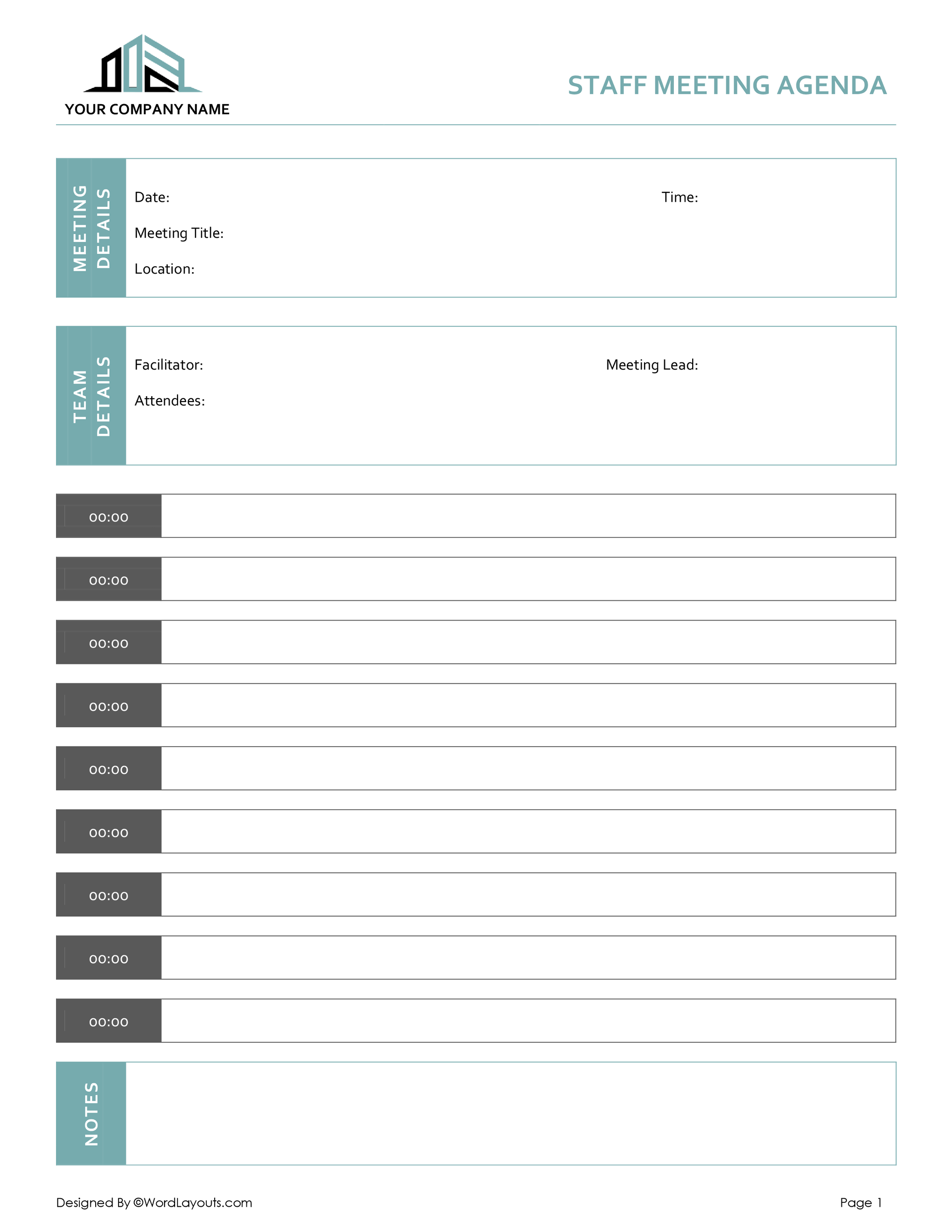
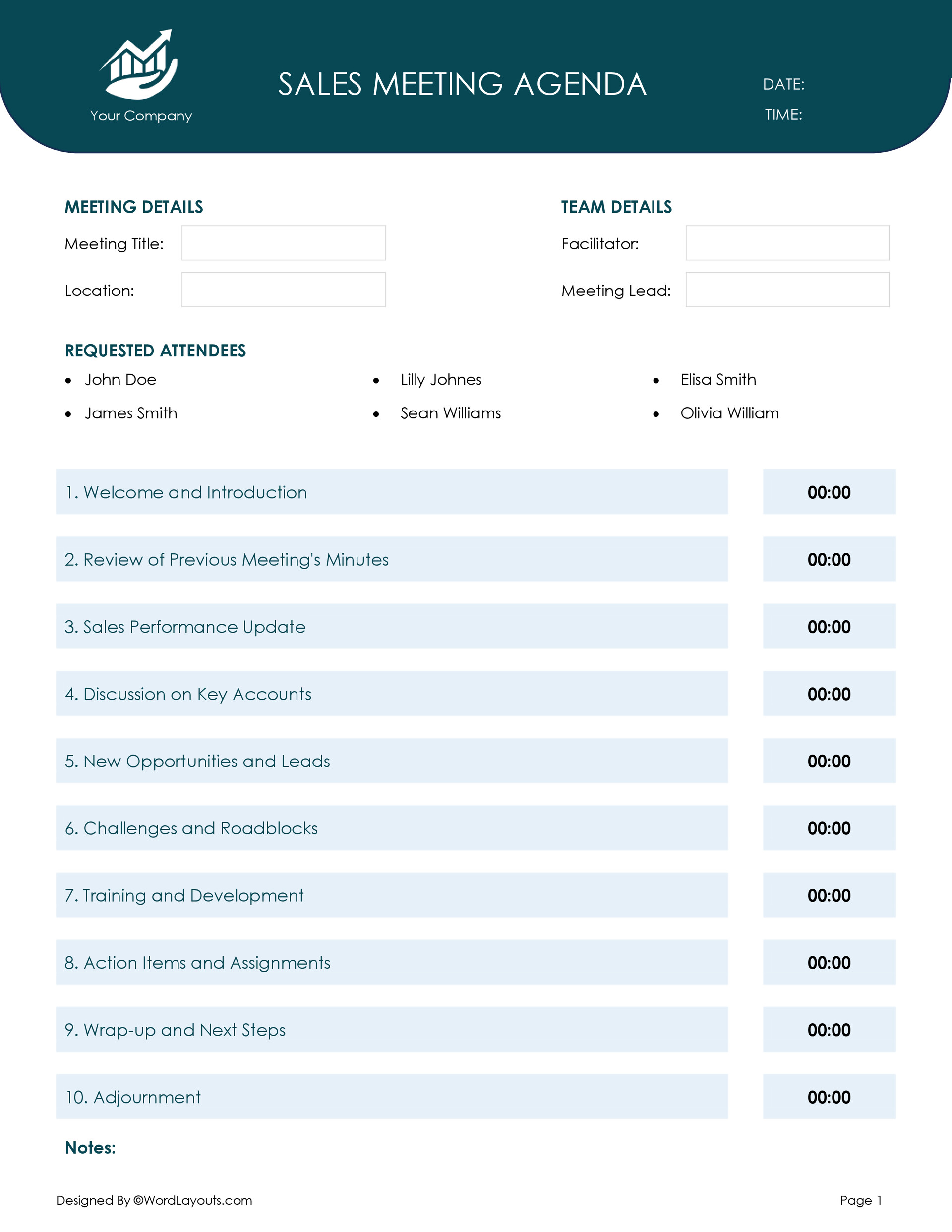
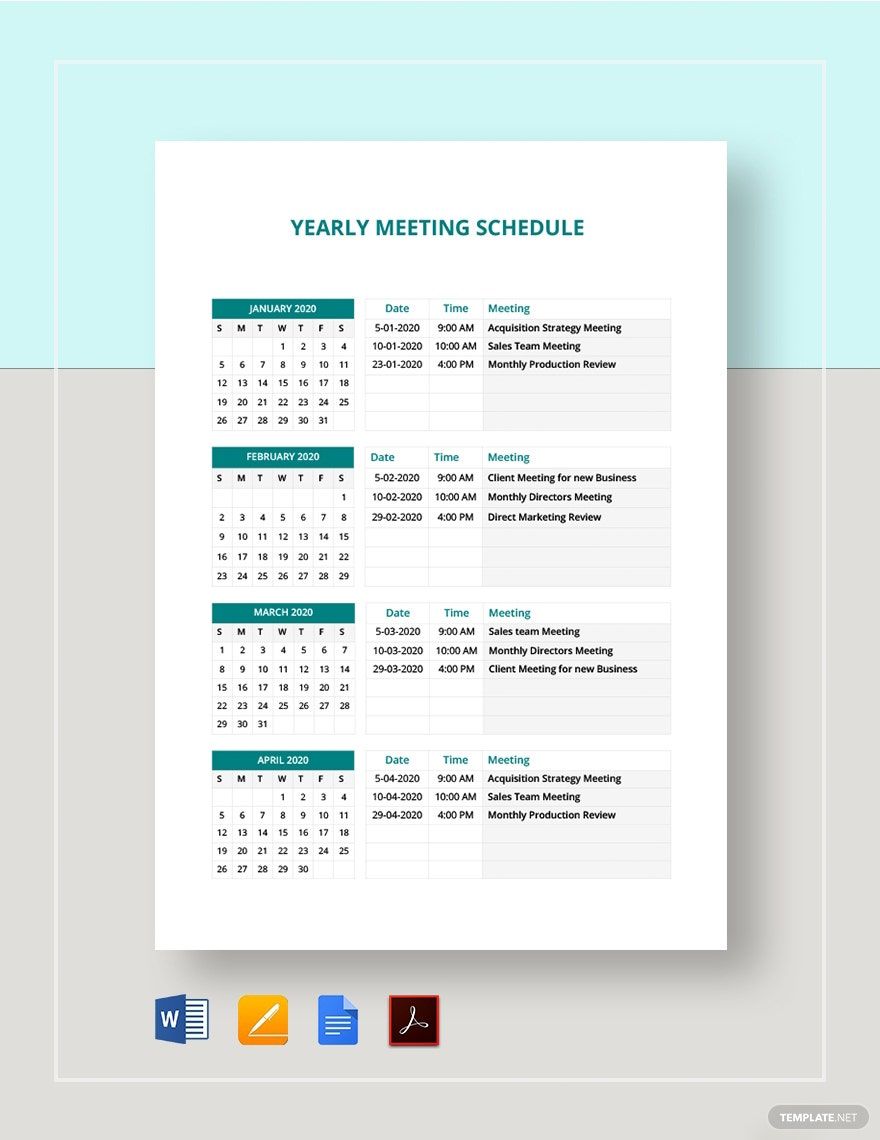
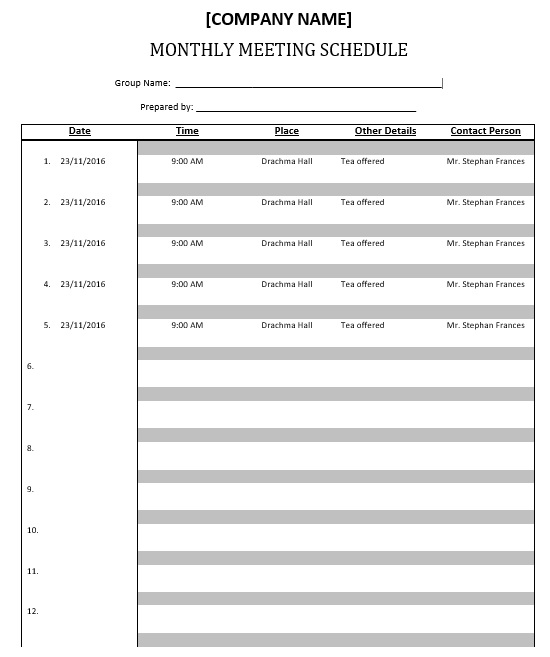
- Date and Time: Clearly specify the date, start time, and end time of the meeting to ensure that all participants are available and can plan accordingly.
- Agenda: Outline the topics to be discussed, along with the allocated time for each item, to guide the flow of the meeting and keep it on track.
- Attendees: List the names and roles of all participants who are expected to attend the meeting to ensure that the right stakeholders are present.
- Location/Venue: Provide details about the physical or virtual location of the meeting, including any necessary instructions or links for remote participants.
- Preparation: Communicate any pre-meeting materials or tasks that participants need to complete beforehand to ensure a productive discussion.
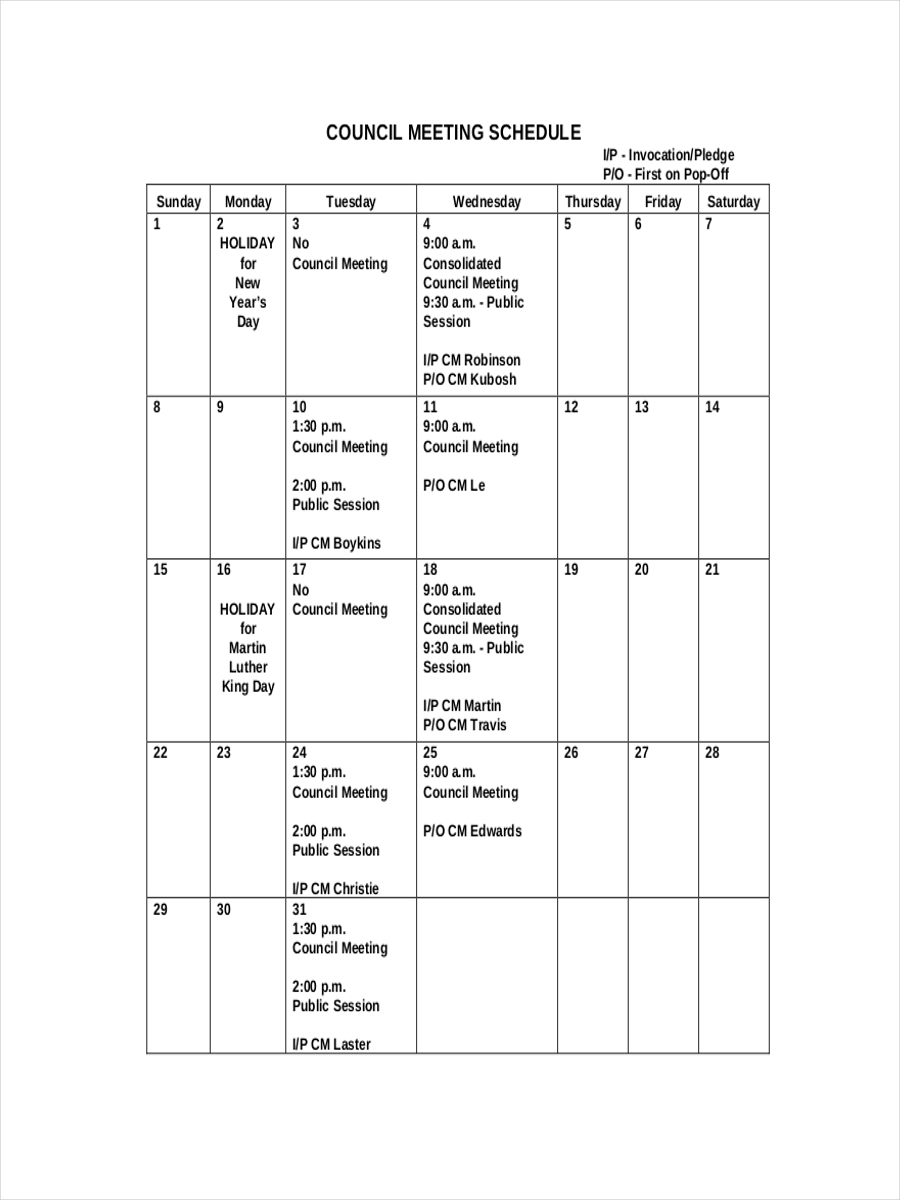
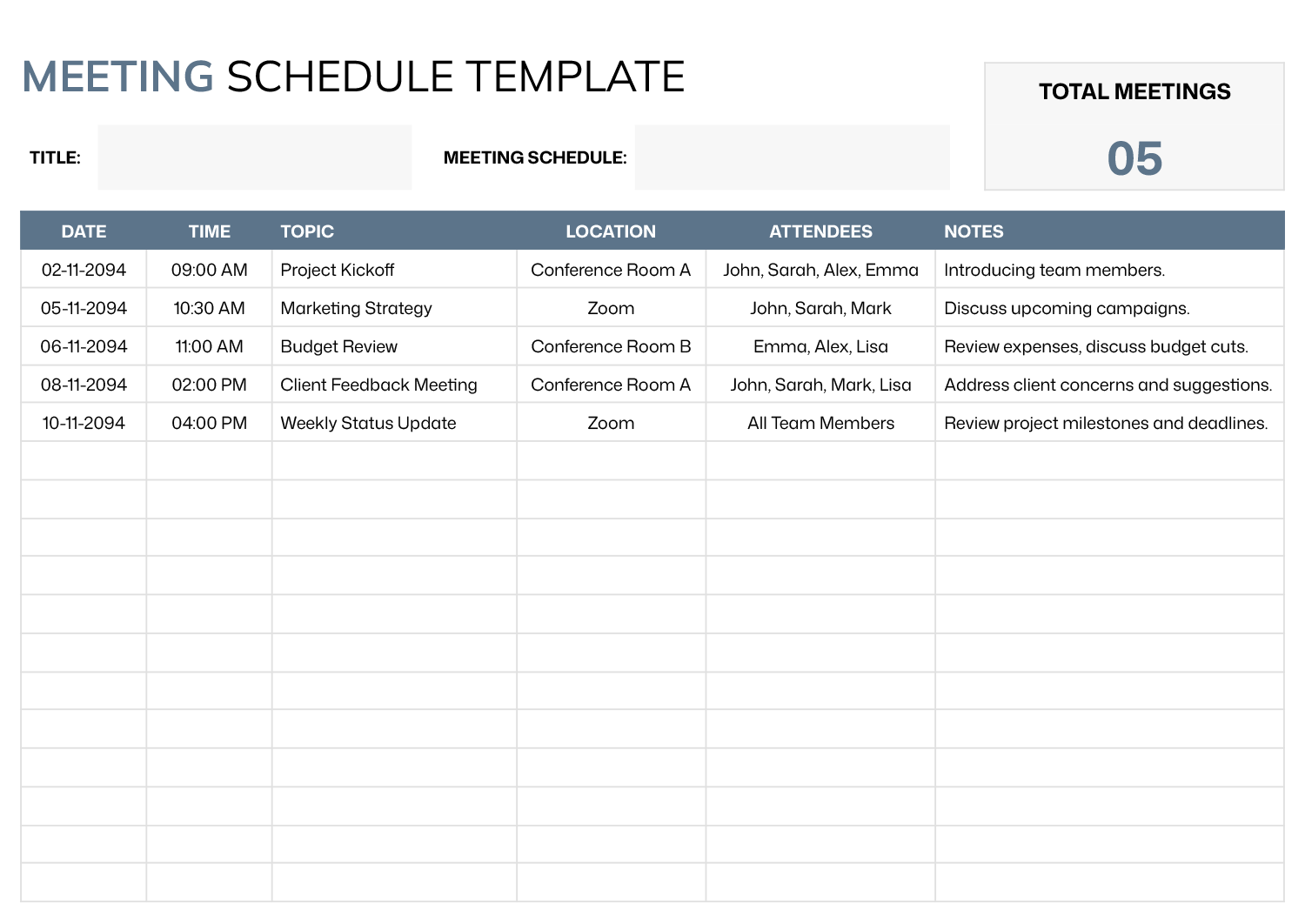
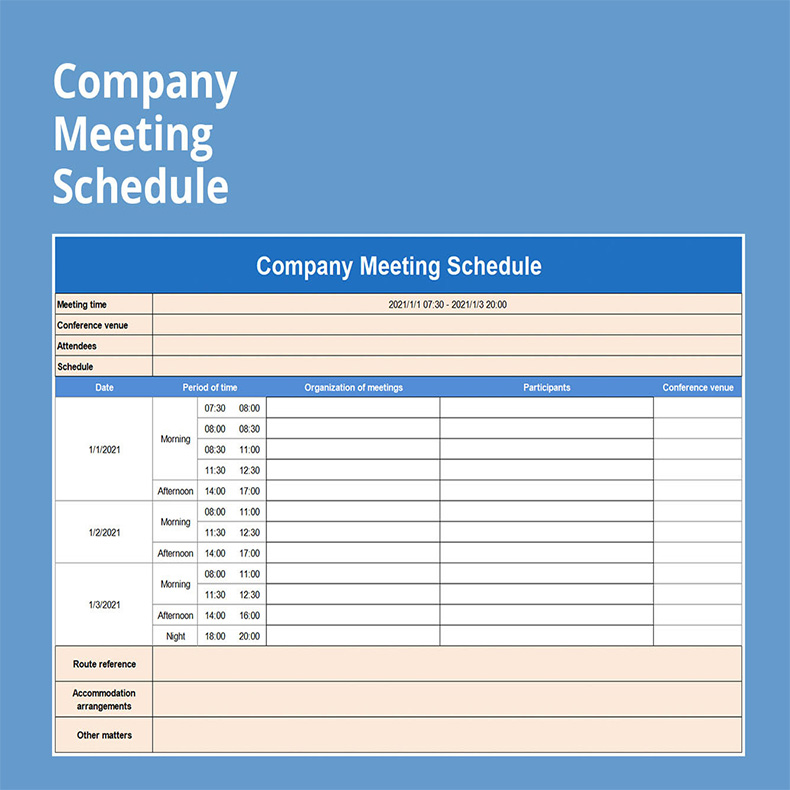
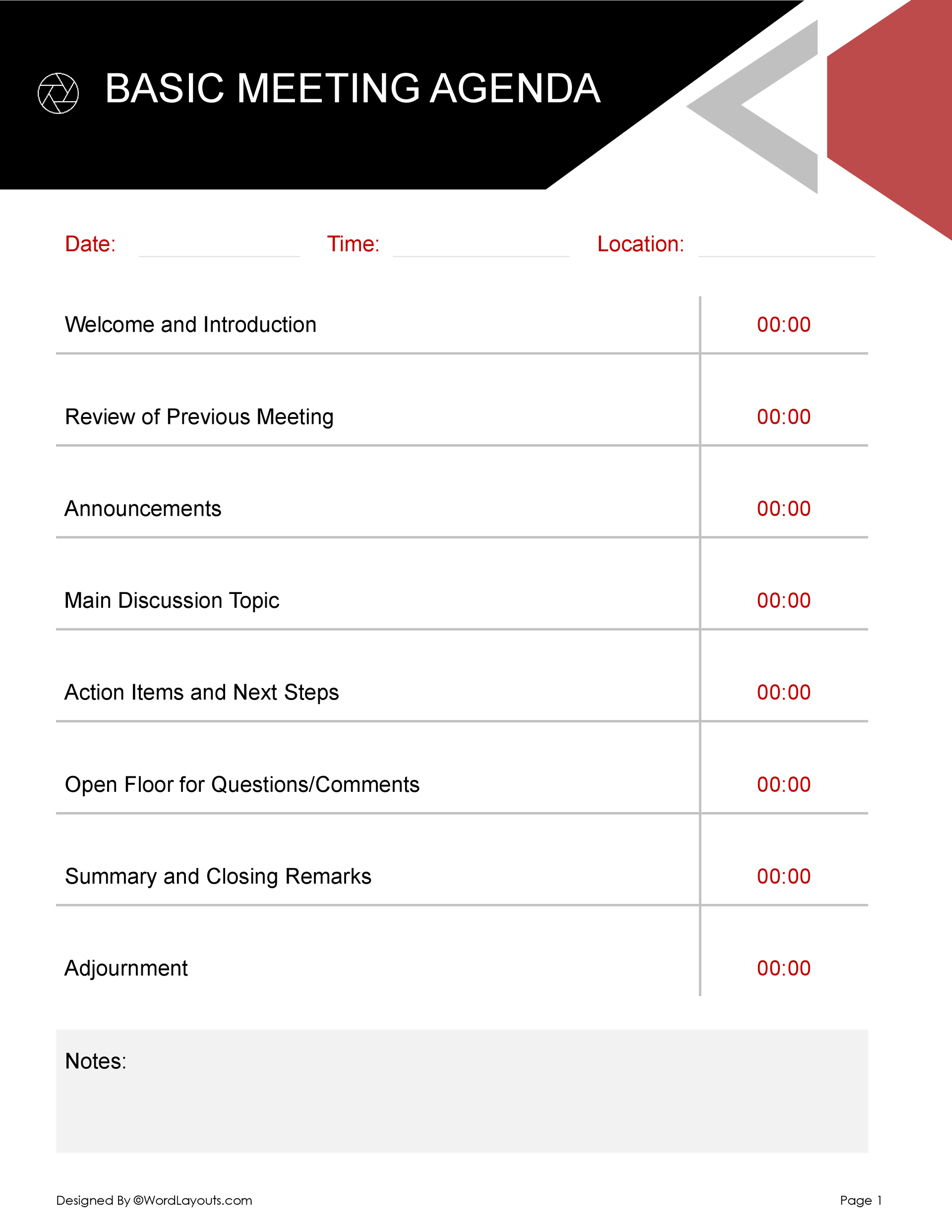
Examples
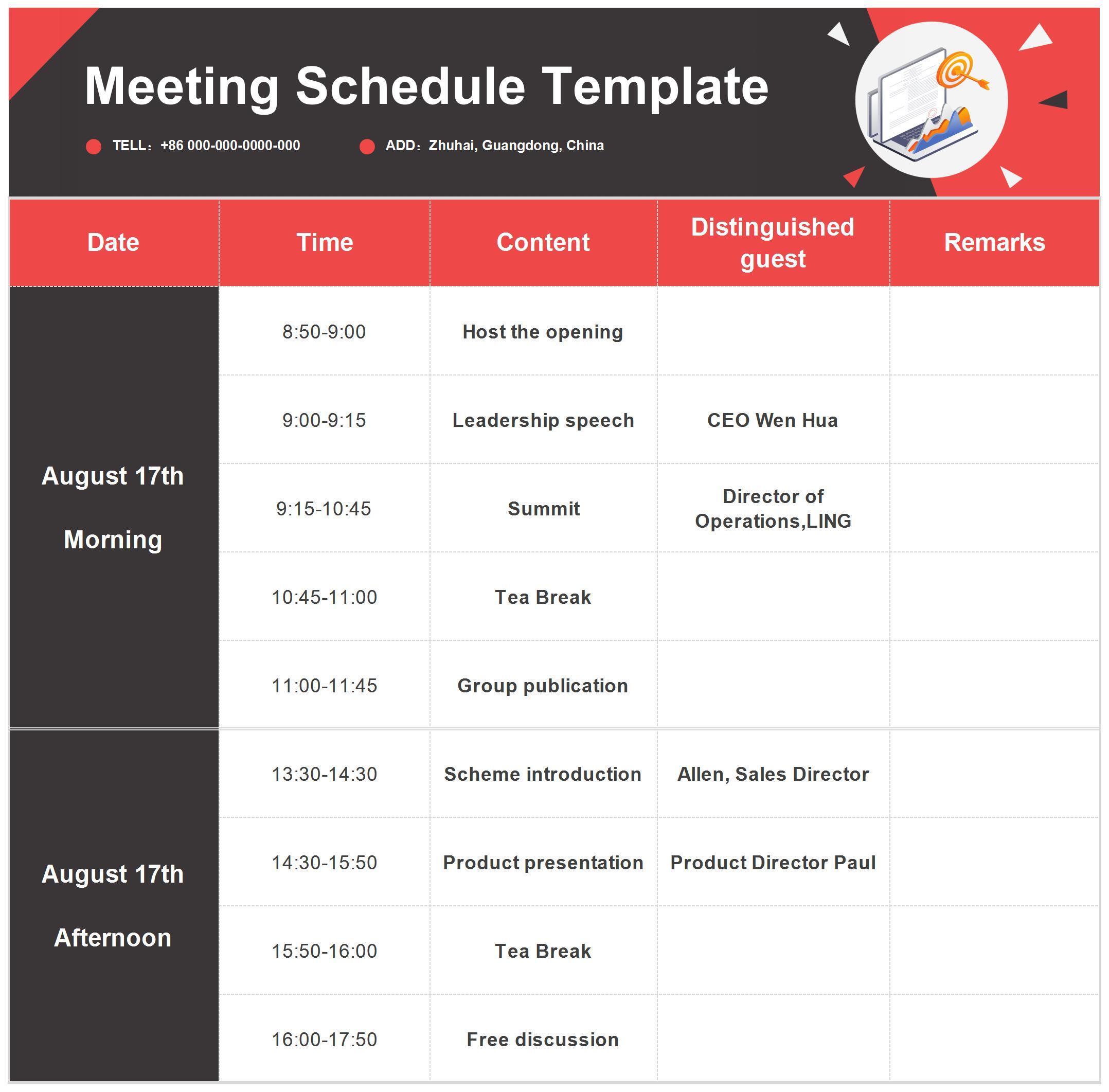
How to Create an Effective Meeting Schedule
Follow these steps to create an effective meeting schedule that maximizes productivity and engagement:
- Set Objectives: Clearly define the purpose and goals of the meeting to guide the agenda and ensure that discussions are focused and outcome-driven.
- Allocate Time Wisely: Break down the agenda into manageable time slots, allowing sufficient time for each topic while avoiding unnecessary delays.
- Prioritize Topics: Arrange agenda items in order of importance, addressing critical issues first to ensure that key decisions are made efficiently.
- Include Breaks: Schedule short breaks between agenda items to allow participants to refresh and maintain focus throughout the meeting.
- Follow-up: Assign action items and deadlines at the end of the meeting to track progress and ensure accountability for outcomes.
Tips for Successful Meeting Scheduling
Consider the following tips to enhance the success of your meeting scheduling efforts:
- Use Technology: Utilize scheduling tools and software to streamline the process and send automated reminders to participants.
- Request Feedback: Seek input from participants on the effectiveness of past meeting schedules to make improvements and adjustments for future meetings.
- Be Flexible: Allow for some flexibility in the schedule to accommodate unexpected changes or additional discussion points that may arise during the meeting.
- Communicate Clearly: Provide detailed instructions and expectations to participants well in advance to ensure that everyone is prepared and informed.
- Evaluate Regularly: Review and assess the effectiveness of your meeting schedules periodically to identify areas for improvement and optimize future meetings.
Conclusion
Mastering your meeting schedule is a critical skill for effective communication and collaboration within any organization. By creating a structured and well-planned schedule, you can ensure that meetings are productive, engaging, and purposeful. Incorporating the key elements outlined in this guide, along with the tips for successful scheduling, will help you optimize your meetings and drive meaningful outcomes. Remember, a well-managed meeting schedule is the foundation for successful meetings and productive teamwork.
Meeting Schedule Template – Download
