A rental verification form is a document used by landlords and property managers to verify a prospective tenant’s previous rental history. It typically gathers information from a former landlord or property manager about the applicant’s tenancy, including rent payment history, lease compliance, property care, communication, and other relevant rental information.
Checking rental history can help landlords make more informed leasing decisions. A structured verification form provides a consistent way to collect information rather than relying on informal conversations or incomplete records.
A well-designed rental verification form can also help identify potential concerns, such as repeated late payments, documented lease violations, significant property damage, or unresolved tenancy issues. However, rental screening should be conducted consistently and in accordance with applicable housing, privacy, and consumer protection requirements.
What Is a Rental Verification Form?
A rental verification form is a standardized questionnaire sent to a previous landlord, property manager, or other authorized rental reference. Its purpose is to confirm information about an applicant’s previous tenancy.
The form may ask for the previous rental property’s address, lease dates, monthly rent, payment history, property condition, compliance with lease terms, and the landlord’s overall experience with the tenant.
Depending on the screening process, the form may also include space for additional comments and a recommendation about whether the previous landlord would rent to the applicant again.
Using a standardized rental history verification form can make the screening process more organized and easier to document.
Why Is Rental Verification Important?
Rental verification gives a landlord an opportunity to confirm relevant information provided during the tenant application process. It can provide additional context that may not be available from an application alone.
Some common benefits include:
- Confirms rental history: Previous addresses, lease dates, and landlord information can be verified.
- Checks payment history: A previous landlord may confirm whether rent was generally paid according to the lease.
- Reviews lease compliance: The verification can identify documented issues involving lease terms.
- Provides property condition information: A previous landlord can comment on documented damage or maintenance concerns attributable to the tenant.
- Evaluates communication: The form can provide information about the tenant’s communication and cooperation during the tenancy.
- Supports consistent screening: Using the same relevant questions for applicants can create a more organized process.
- Documents the verification process: Completed forms can provide a record of information obtained from a rental reference.
What Information Should a Rental Verification Form Include?
A useful rental verification form should collect relevant information without asking for unnecessary personal details. The questions should be directly related to the applicant’s rental history and the landlord’s legitimate screening process.
Applicant Information
Begin with basic information that allows the previous landlord to identify the correct tenant. This may include the applicant’s name, previous rental address, and other information necessary to locate the tenancy record.
Only request personal information that is appropriate and necessary for the verification process.
Previous Rental Information
The form should provide space for details about the previous tenancy, such as:
- Property address
- Unit type
- Lease start date
- Lease end date
- Monthly rent amount
- Landlord or property manager name
- Property management company, if applicable
- Contact information
These details help establish the basic context for the rental reference.
Rent Payment History
Payment history can be an important part of rental verification. Questions may ask whether rent was generally paid on time, whether there were repeated late payments, or whether payments were returned or otherwise unresolved.
Questions should be factual and focused on documented rental history rather than assumptions about the applicant’s financial circumstances.
Lease Compliance
A rental verification form can ask whether the tenant followed the material terms of the lease. Depending on the property and lease, relevant topics may include unauthorized occupants, unauthorized pets, excessive noise, property-use restrictions, or other documented lease violations.
Questions should be applied consistently to all applicants and should focus on legitimate tenancy-related information.
Property Condition
The previous landlord may be asked whether the tenant maintained the rental property appropriately and whether there was documented damage beyond ordinary wear and tear.
It is useful to distinguish normal wear from significant damage because ordinary aging and reasonable use of a property are different from documented damage caused by a tenant.
Overall Rental Experience
The form may include an overall question such as whether the previous landlord would consider renting to the applicant again. This can provide useful context, but it should be considered together with factual information rather than treated as the sole basis for a rental decision.
Common Questions on a Rental Verification Form
A landlord reference form can include a combination of yes-or-no questions, rating fields, and space for explanations.
Common questions include:
- Did the applicant rent the property during the stated period?
- What were the lease start and end dates?
- What was the monthly rent?
- Was rent generally paid on time?
- Were there repeated late payments?
- Were there any unresolved payment issues?
- Did the applicant follow the lease terms?
- Were there documented lease violations?
- Was there significant property damage beyond ordinary wear and tear?
- Were there documented complaints related to the tenancy?
- Did the applicant provide appropriate notice before moving out?
- Were there unresolved issues at the end of the tenancy?
- Would the landlord consider renting to the applicant again?
Questions should be limited to information that is relevant to evaluating the applicant’s rental history and should comply with applicable laws and company policies.
How to Use a Rental Verification Form
A consistent process can make rental history verification more efficient and easier to document.
1. Obtain Appropriate Authorization
Before contacting a previous landlord, make sure the tenant screening process has the appropriate authorization or consent when required. Follow applicable privacy, consumer reporting, and housing requirements.
2. Confirm the Reference Information
Use the contact information provided through the appropriate application or screening process. If there is uncertainty about whether a contact is actually associated with the previous property, use reasonable verification procedures rather than relying on unconfirmed information.
3. Send the Verification Form
Provide the previous landlord or property manager with clear instructions about how to complete and return the form. Explain what information is being requested and how the completed verification should be submitted.
4. Review the Responses
Compare the information received with the applicant’s stated rental history. Look for material discrepancies that may require clarification.
5. Document Relevant Findings
Keep a clear record of the verification information according to the organization’s document retention and privacy procedures. Record factual information rather than subjective assumptions.
6. Apply Consistent Screening Standards
Use consistent, lawful criteria when evaluating rental applicants. Similar applicants should be assessed using the same relevant standards rather than changing requirements from one applicant to another.
Rental Verification Form Example
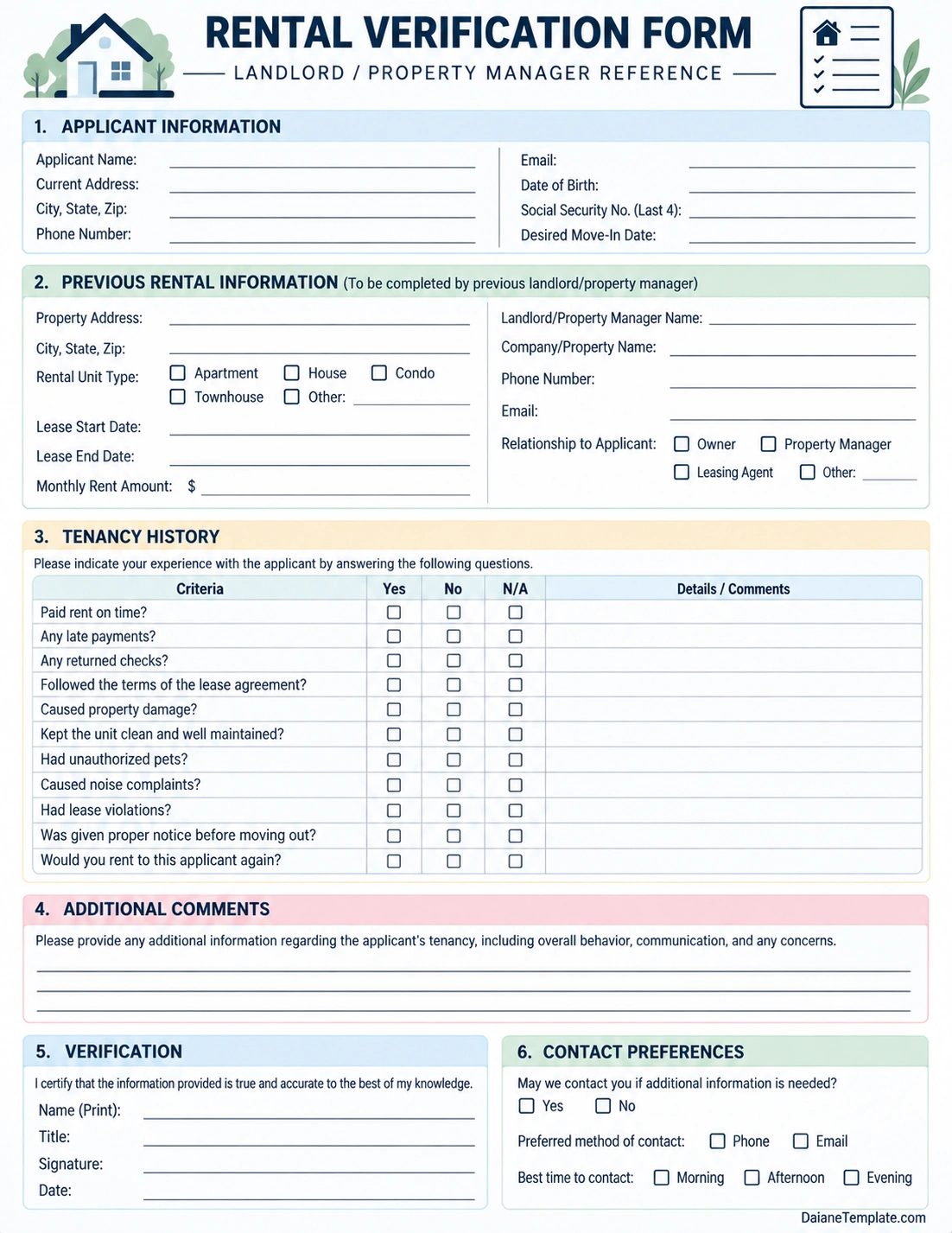
A simple rental verification form can combine applicant information, previous rental details, tenancy history questions, comments, and landlord verification. This structure allows a previous landlord to provide information in a consistent format.
A printable form is particularly useful when landlords or property managers need a straightforward document that can be completed manually or used as a reference during a telephone verification.
Red Flags a Rental Verification May Reveal
Rental verification may identify information that requires further review before a leasing decision is made. A potential concern should be evaluated based on reliable, relevant information and the same standards used for other applicants.
Examples may include:
- Repeated late rent payments: A pattern of late payments may warrant additional review.
- Unresolved payment issues: Outstanding rental obligations may be relevant to the screening process.
- Significant property damage: Documented damage beyond ordinary wear and tear may require consideration.
- Lease violations: Repeated or material violations may provide information about prior tenancy behavior.
- Unauthorized occupants or pets: Documented violations of applicable lease terms may be relevant.
- Repeated noise complaints: Verified and documented complaints may provide context about prior tenancy.
- Unresolved tenancy disputes: Relevant unresolved issues may require clarification before making a decision.
- Inconsistent information: Significant differences between the application and verified rental history may warrant further review.
A single negative statement should not automatically determine the outcome of an application. Landlords should consider the reliability and relevance of the information and apply their established screening criteria consistently.
How to Make Rental Verification More Reliable
The quality of the information collected depends partly on how the verification process is designed. A few practical steps can improve consistency.
Use the Same Core Questions
Develop a standard set of relevant questions for rental references. This makes it easier to compare information across applicants and reduces the risk of an inconsistent screening process.
Ask Factual Questions
Questions that can be answered using rental records are generally more useful than broad questions based on personal opinions. For example, asking whether rent was paid on time is more specific than simply asking whether the tenant was “good.”
Allow Space for Comments
Yes-or-no answers may not provide enough context. Include a comments section where the previous landlord can explain a significant response or provide relevant information.
Verify Important Information
If a response contains an important discrepancy or unusual claim, follow the organization’s established verification procedures. Avoid making a decision based solely on information that cannot be reasonably confirmed.
Rental Verification Form vs. Rental Application
A rental application and a rental verification form serve different purposes.
A rental application is completed by the prospective tenant and typically collects information needed to evaluate the application. A rental verification form is generally completed by a previous landlord or property manager to confirm information about the applicant’s rental history.
The two documents can complement each other. The application provides information from the prospective tenant, while rental verification can provide relevant information from a previous rental reference.
Rental Verification Form vs. Tenant Screening Report
A rental verification form is also different from a tenant screening report. A verification form generally collects information directly from a rental reference, while a screening report may contain information obtained from other authorized sources.
Depending on the screening process and applicable law, landlords may use multiple sources of information. Each source should be handled carefully and used only for legitimate screening purposes.
Tips for Landlords and Property Managers
Use these practical tips to create a more organized rental verification process:
- Use a standardized rental verification form.
- Ask only relevant rental-history questions.
- Apply the same core screening standards consistently.
- Keep records of completed verifications according to your retention policy.
- Separate factual information from subjective opinions.
- Document material discrepancies that require clarification.
- Protect applicant and landlord information from unauthorized access.
- Review the form periodically and update outdated questions.
- Train staff on consistent and lawful tenant screening procedures.
Legal and Fair Housing Considerations
Tenant screening should be handled carefully because rental decisions can be subject to federal, state, and local housing and consumer protection laws. Requirements can vary by jurisdiction and may also depend on how screening information is obtained and used.
Landlords and property managers should use relevant, consistent, and lawful screening criteria. A rental verification form should not be used to collect or evaluate information in a discriminatory manner.
Privacy and record-handling practices should also be appropriate for the information being collected. If you are unsure about the requirements that apply to your rental business, consider obtaining advice from a qualified legal professional or an appropriate housing authority.
Frequently Asked Questions About Rental Verification Forms
What is the purpose of a rental verification form?
The purpose of a rental verification form is to confirm relevant information about a prospective tenant’s previous rental history. It can help landlords review payment history, lease compliance, property care, and other documented tenancy information.
Who completes a rental verification form?
A previous landlord, property manager, or another authorized rental reference typically completes the form. The exact process depends on the landlord’s tenant screening procedures.
What does a landlord verify when checking rental history?
A landlord may verify information such as previous rental dates, monthly rent, payment history, lease compliance, property condition, documented complaints, and whether there were unresolved tenancy issues.
Can a rental verification form ask about late rent payments?
Yes, payment history can be a relevant part of rental verification. Questions should focus on factual rental records and should be used consistently with the landlord’s established screening criteria and applicable law.
Can a previous landlord disclose information about a former tenant?
The information a previous landlord may disclose can depend on applicable law, privacy requirements, the nature of the information, and the circumstances of the request. Landlords should follow appropriate procedures and avoid requesting or disclosing information that is not relevant or lawful to use.
Should a rental verification form include an eviction question?
An eviction-related question may be relevant to some lawful tenant screening processes, but requirements concerning eviction records and their use vary by jurisdiction. Landlords should understand the applicable rules before collecting or relying on this information.
How long should a landlord keep a rental verification form?
Retention requirements vary depending on applicable laws, company policies, and the type of screening process. Landlords and property managers should establish an appropriate record-retention policy and protect completed forms from unauthorized access.
Conclusion
A rental verification form provides landlords and property managers with a structured way to confirm a prospective tenant’s previous rental history. By collecting information about payment history, lease compliance, property care, and other relevant tenancy details, the form can support a more informed and organized screening process.
The best rental verification forms are clear, factual, consistent, and focused on information that is genuinely relevant to the rental decision. Using a standardized template can also make the process easier to manage across multiple applicants and properties.
When combined with appropriate authorization, consistent screening criteria, careful record handling, and compliance with applicable housing and privacy requirements, a rental verification form can be a useful part of a professional tenant screening process.
Download: Rental Verification Form
