A separation agreement is a written document that helps spouses or separating partners establish clear arrangements while living apart. Depending on the circumstances and local law, it can address important matters such as property division, debts, spousal support, child custody, parenting time, and child support.
When both parties can reach mutually acceptable terms, a separation agreement may help reduce uncertainty and avoid some of the expense and stress associated with disputes in court. It provides a written record of the decisions the parties have made and helps clarify their responsibilities during separation.
In this guide, you will learn what a separation agreement is, which terms it may include, how to prepare one, and what to consider before signing. You will also find a printable separation agreement template preview and practical tips for organizing the information you may need.
What Is a Separation Agreement?
A separation agreement is a written arrangement between spouses or partners who are separating. It documents how they intend to handle financial, property, parenting, and other responsibilities while living separately.
The exact purpose and legal effect of the agreement depend on the relationship, the terms included, and the laws of the relevant jurisdiction. In some places, a separation agreement can be legally enforceable when specific requirements are met. Other arrangements may require additional steps or court approval.
A separation agreement is not necessarily the same as a divorce decree. A divorce legally ends a marriage, while a separation agreement generally records arrangements made during separation. It does not automatically dissolve a marriage or replace every legal procedure required for divorce.
Why Is a Separation Agreement Important?
Separation can involve difficult decisions about finances, housing, children, and shared responsibilities. A written agreement can help both parties understand what has been decided and what remains unresolved.
1. Clarifies Each Party’s Responsibilities
The agreement can identify who will pay specific bills, manage shared obligations, remain in the family home, or take responsibility for certain expenses. Clear terms can reduce confusion during a period of change.
2. Helps Organize Property and Debt Division
Spouses may need to decide how to handle bank accounts, vehicles, household belongings, real estate, loans, and credit obligations. A written agreement can record their proposed arrangement, subject to applicable property and creditor laws.
3. Establishes Parenting Arrangements
When children are involved, the agreement may outline parenting time, daily care responsibilities, holidays, transportation, and communication. These arrangements should prioritize the children’s best interests and comply with local law.
4. Documents Financial Support
The parties may address spousal support, child support, shared expenses, and payment schedules. Any arrangement should reflect the parties’ circumstances and applicable legal requirements.
5. May Reduce Conflict and Expense
When both parties can negotiate in good faith, documenting agreed terms may reduce the number of unresolved issues. It can also provide a starting point for mediation or legal review if certain matters remain disputed.
What Should a Separation Agreement Include?
The contents of a separation agreement depend on the parties’ needs and local law. A carefully prepared document should address the relevant issues clearly rather than rely on broad or ambiguous statements.
1. Names and Basic Information
Identify both parties by their full legal names and include the information required to distinguish them. The agreement may also identify the date of marriage, where applicable, and the date the parties began living separately.
2. Date of Separation
Record the agreed separation date if it is relevant to the arrangement. In some jurisdictions, the date of separation can affect legal or financial matters. If the date is disputed or has legal significance, obtain qualified legal advice.
3. Division of Property
Describe how the parties intend to handle relevant assets and belongings. Depending on the circumstances, these may include:
- The family home and other real estate
- Bank accounts and savings
- Vehicles and household possessions
- Investments and retirement accounts
- Business interests and other valuable assets
Identify the assets covered by the agreement and explain who will receive or retain each item. Property division rules vary by jurisdiction, and some transfers may require separate documents or formal registration.
4. Division of Debts and Financial Obligations
The agreement may describe how the parties intend to allocate mortgages, personal loans, credit card balances, and other shared debts. It should identify who is responsible for making payments and how the parties will handle joint financial obligations.
An agreement between separating partners does not automatically remove either person’s liability to a lender or creditor. Contact the relevant financial institution when a loan, account, or mortgage needs to be changed.
5. Spousal Support
Spousal support, sometimes called alimony or maintenance, may be addressed where applicable. The agreement can specify the amount, payment frequency, start date, duration, and circumstances that may affect payments.
The availability and treatment of spousal support depend on local law and the parties’ circumstances. Any waiver or limitation should be reviewed carefully before signing.
6. Child Custody and Parenting Time
If the parties have children, the agreement may address decision-making responsibilities, parenting schedules, holidays, school arrangements, transportation, and communication between parents.
Parenting provisions should be practical, clear, and focused on the children’s needs. Depending on the jurisdiction, a court may need to review or approve arrangements involving parental responsibility or custody.
7. Child Support and Children’s Expenses
The agreement may address child support, healthcare costs, childcare, education, extracurricular activities, and other child-related expenses. The parties should understand that child support is subject to applicable legal standards and may not be waived or set solely by private agreement in every jurisdiction.
8. Housing and Living Arrangements
Specify who will live in the shared home during separation, how housing expenses will be paid, and whether either party intends to move. If the property is jointly owned or rented, additional legal or contractual obligations may apply.
9. Taxes and Insurance
The agreement may identify how the parties intend to handle certain tax-related responsibilities, insurance premiums, and shared expenses. Tax treatment depends on individual circumstances and applicable tax rules, so professional advice may be appropriate.
10. Dispute Resolution and Modifications
Consider including a process for resolving disagreements about the agreement. The parties may agree to communicate, seek mediation, or obtain professional advice before pursuing other remedies, where appropriate.
The document should also explain how changes will be recorded. A written amendment signed by both parties may be required, but certain parenting or support provisions can be subject to court orders or legal modification rules.
Free Printable Separation Agreement Template
A printable separation agreement template can help organize the topics the parties need to discuss. A structured document may include sections for party information, the separation date, property and debts, spousal support, parenting arrangements, taxes, additional terms, and signatures.
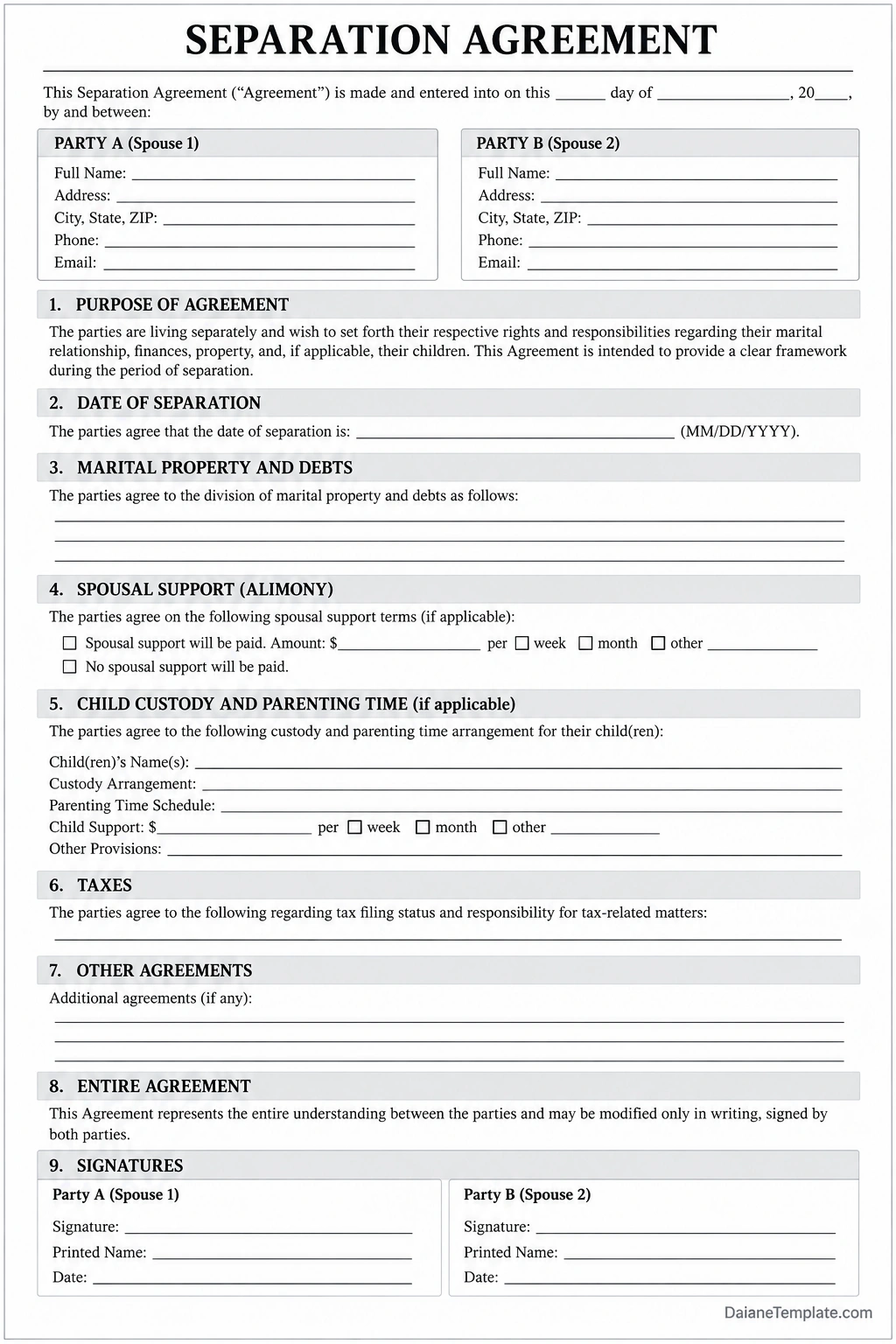
Use the template as a planning and recordkeeping aid rather than assuming it is suitable for every legal situation. Adapt the terms to the parties’ circumstances and confirm whether local law requires particular wording, financial disclosures, witnesses, notarization, independent legal advice, or court approval.
How to Prepare a Separation Agreement
Preparing an agreement requires careful discussion and accurate information. The following steps can help the parties organize the process.
Step 1: Gather Financial Information
Collect relevant information about income, property, bank accounts, loans, regular expenses, insurance, and other financial obligations. Accurate information helps both parties understand the issues that need to be resolved.
Step 2: List the Issues to Resolve
Make a list of the topics that apply to your circumstances. These may include housing, property division, debt payments, support, parenting schedules, and shared expenses.
Step 3: Discuss Proposed Terms
Where it is safe and appropriate to do so, discuss each issue and identify areas of agreement or disagreement. Mediation or professional assistance may help when negotiations become difficult.
Step 4: Put the Agreement in Writing
Use clear language and specific terms. Avoid statements that leave important questions unanswered, such as who pays a particular bill, when a payment is due, or how a parenting schedule operates during holidays.
Step 5: Review the Legal Requirements
Requirements for enforceability vary by location. Some jurisdictions may require financial disclosure, independent legal advice, signatures witnessed in a particular way, or other formalities. Verify the rules before relying on the agreement.
Step 6: Sign and Keep Copies
Once the terms have been reviewed, follow the applicable signing requirements and ensure both parties receive complete copies. Store the agreement and related financial records securely.
Common Mistakes to Avoid
A separation agreement can create problems when its terms are unclear, incomplete, or inconsistent with the law. Avoid these common mistakes.
- Using vague language: Specify responsibilities, amounts, dates, and procedures wherever possible.
- Overlooking assets or debts: Prepare a complete financial picture before deciding how to divide property and obligations.
- Ignoring legal requirements: Confirm whether disclosures, legal advice, witnessing, notarization, or court approval are necessary.
- Assuming creditors are bound by the agreement: A private agreement may allocate responsibility between the parties without changing the creditor’s rights.
- Making unrealistic parenting arrangements: Consider the children’s schedules, needs, safety, and best interests.
- Signing under pressure: Each party should have an opportunity to understand the terms and seek independent advice.
- Failing to plan for changes: Address how future disagreements or requests to modify the arrangement will be handled.
Frequently Asked Questions
Is a separation agreement legally binding?
A separation agreement may be legally binding if it meets the applicable requirements. Enforceability can depend on the jurisdiction, the terms, financial disclosure, the parties’ consent, and required signing procedures. Obtain local legal advice before relying on a template.
Can a separation agreement be used without going to court?
In some circumstances, separating spouses can negotiate and sign an agreement without litigating every issue. However, certain matters may require court approval, formal orders, or additional legal procedures. A private agreement does not automatically replace all court processes.
What is the difference between a separation agreement and a divorce?
A separation agreement records arrangements between separating parties. A divorce is a legal process that ends a marriage. The agreement may be relevant to a later divorce, but it does not itself necessarily terminate the marriage.
Can a separation agreement include child custody?
It can set out proposed parenting responsibilities and schedules where permitted by law. Arrangements involving children must comply with the applicable legal standards, which commonly prioritize the child’s best interests. Court approval may be required in some situations.
Can we change a separation agreement later?
Some terms can be changed by mutual written agreement, while others may require a formal amendment or court order. Child support and parenting arrangements may be subject to special modification rules. Check the applicable law before making changes.
Does a separation agreement need to be notarized?
Not every agreement requires notarization. Requirements vary by jurisdiction and document type. Some places may require witnesses, independent legal advice, or other formalities instead.
Can I write my own separation agreement?
A self-prepared document may help organize proposed terms, but legal requirements and financial consequences can be complex. Consider consulting a qualified family-law attorney, especially when children, real estate, substantial assets, or significant debts are involved.
Should each party get independent legal advice?
Independent legal advice can help each person understand their rights, obligations, and the consequences of signing. It may also be relevant to enforceability in some jurisdictions. It is particularly worth considering when the agreement involves substantial property, support, or parenting issues.
Conclusion
A separation agreement can help separating spouses or partners document important decisions about property, debts, support, parenting, and other responsibilities. Clear terms can reduce uncertainty and provide a practical reference while the parties live apart.
Start by gathering accurate information, identifying the issues that need to be resolved, and documenting the agreed terms carefully. Before signing, confirm the legal requirements that apply to your circumstances and consider independent legal advice. A printable template can help organize the process, but a properly reviewed agreement should reflect both the parties’ needs and the law.
Download: Separation Agreement Template
