A Contract of Service Agreement is a written agreement between a client and a service provider that explains the services to be performed, payment terms, responsibilities, and conditions of the working relationship. It helps both parties understand their obligations before the work begins and provides a written reference if questions arise later.
Whether you are hiring a consultant, freelancer, maintenance professional, marketing specialist, or another service provider, a clear service agreement can help establish expectations. It can also reduce misunderstandings about deadlines, fees, confidentiality, and how either party may end the arrangement.
In this guide, you will learn what a contract of service agreement is, which clauses to include, how to prepare one, and what to review before signing. You will also find a sample agreement preview and practical tips for creating a clear, organized contract.
What Is a Contract of Service Agreement?
A contract of service agreement is a written document that sets out the terms under which one party provides services to another. It typically identifies the client and service provider, describes the work, establishes compensation, and explains the conditions that govern the arrangement.
The exact meaning of the term can vary by jurisdiction. In some places, a “contract of service” refers specifically to an employment relationship, while a “service agreement” may describe an arrangement with an independent contractor or business. The title of a document alone does not determine the legal status of the relationship.
Before using a template, identify the actual working arrangement and check the applicable local laws. Employment status, tax responsibilities, benefits, and legal protections may depend on the substance of the relationship rather than the wording used in the contract.
Why Is a Contract of Service Agreement Important?
A written service agreement provides a shared understanding of what the parties expect from each other. It can be useful for individuals, small businesses, companies, consultants, and professional service providers.
1. Defines the Services
The agreement describes the work the service provider is expected to perform. A clear scope helps prevent disagreements about which tasks are included and which require additional approval or compensation.
2. Establishes Payment Terms
The contract records the agreed fee, payment schedule, invoicing requirements, and any approved expenses. Clear terms help both parties plan financially and understand when payment is due.
3. Sets Expectations and Deadlines
Project milestones, delivery dates, working arrangements, and communication expectations can be documented in advance. This makes it easier to monitor progress and address delays.
4. Protects Confidential Information
When a service provider has access to private business information, the agreement may include confidentiality obligations. These terms should explain what information is protected, how it may be used, and whether any exceptions apply.
5. Explains How the Agreement Can End
A termination clause can explain when either party may end the relationship, how much notice is required, and how outstanding work or payments will be handled.
What Should a Contract of Service Agreement Include?
The contents of a service agreement depend on the type of work, the parties’ needs, and the applicable law. The following sections are commonly useful when preparing a written contract.
1. Names and Contact Information
Identify the parties using their appropriate legal names. Include business names, mailing addresses, and relevant contact details where necessary. If a company is involved, confirm that the person signing has authority to enter into the agreement.
2. Scope of Services
Describe the services the provider will perform. Avoid broad statements that leave important responsibilities unclear.
Depending on the arrangement, this section may specify:
- The services and tasks to be completed
- Expected deliverables or outcomes
- Project milestones and deadlines
- Required materials, information, or access
- Tasks that are excluded from the agreed fee
- The process for approving additional work
For example, a website design agreement might specify the number of pages, design revisions, delivery format, and responsibilities for supplying text and images.
3. Term and Duration
State when the agreement begins and whether it ends on a particular date or continues until terminated. For project-based services, identify the expected completion date and any conditions that may affect the schedule.
If the agreement renews automatically, explain the renewal period and the procedure for preventing renewal.
4. Compensation and Payment Terms
Clearly explain how the service provider will be paid. Common arrangements include fixed project fees, hourly rates, daily rates, retainers, or recurring payments.
The payment section may specify:
- The total fee or applicable rate
- Invoice submission requirements
- Payment due dates
- Deposits or milestone payments, where permitted
- Approved reimbursable expenses
- Procedures for disputed invoices
- Any legally permitted late-payment charges
Make sure the payment terms are consistent with applicable law. If the price may change, explain how changes will be calculated and approved.
5. Responsibilities of the Service Provider
Describe the provider’s main responsibilities, including the standard of performance, deadlines, communication requirements, and any professional qualifications needed for the work.
If the service requires licenses, permits, insurance, or compliance with industry rules, identify the relevant obligations and verify that they are appropriate for the arrangement.
6. Responsibilities of the Client
The client may need to provide information, approvals, access, materials, or feedback for the work to proceed. State these responsibilities clearly, including any deadlines for providing the required items.
Clarifying the client’s role can help prevent delays caused by missing information or late approvals.
7. Confidentiality and Data Protection
A confidentiality clause can explain how the parties must handle non-public information obtained through the relationship. It may address permitted use, disclosure restrictions, information security, and the return or deletion of confidential materials when the agreement ends.
Where personal data is involved, additional privacy obligations may apply. Review the relevant laws and any separate data-processing terms that may be required.
8. Ownership of Work and Intellectual Property
If the provider creates designs, reports, software, photographs, written content, or other deliverables, specify who will own the work and when any rights transfer.
Clarify whether the client receives full ownership, a license to use the work, or another form of permission. Consider addressing pre-existing materials, third-party assets, and any limits on future use.
9. Independent Contractor or Employment Status
Where relevant, the agreement should accurately describe the intended relationship. However, simply labeling someone an independent contractor does not necessarily make that classification legally valid.
Authorities may consider factors such as control over the work, independence, financial arrangements, and the actual working conditions. If the arrangement resembles employment, obtain advice about employment law, payroll, benefits, and tax obligations.
10. Termination and Dispute Resolution
Explain how the agreement may be terminated, including any required notice period and the circumstances that permit immediate termination where lawful.
The agreement may also describe how the parties will address disputes, such as through direct discussion, mediation, arbitration where appropriate, or court proceedings. Ensure these provisions are consistent with applicable law.
11. Signatures and Dates
Include signature blocks for the parties and space for the date of signing. Depending on the jurisdiction and document type, electronic signatures, witnesses, notarization, or other formalities may be relevant.
Each party should receive a complete copy of the signed agreement, including any schedules or attachments incorporated into it.
Contract of Service Agreement Template
A contract of service agreement template can provide a useful starting point for organizing the main terms of a service relationship. A well-structured sample typically includes client information, service provider information, scope of services, duration, payment terms, responsibilities, confidentiality, termination, and signatures.
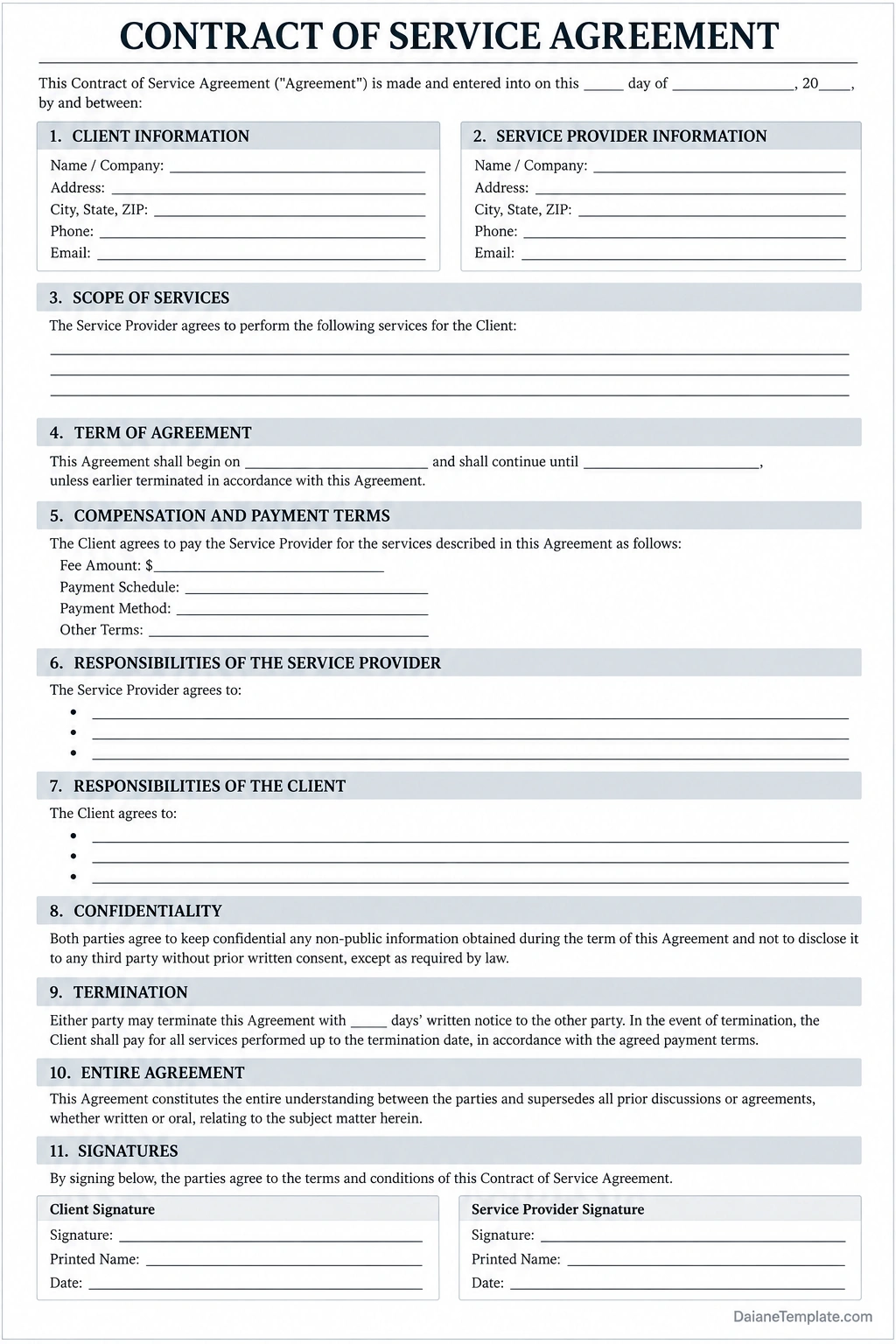
Use the sample as a reference when planning your agreement. Replace the blank fields with accurate information and adapt the clauses to the specific services and working relationship.
A generic template may not address every legal requirement. Before signing, confirm whether the agreement needs additional clauses, disclosures, licensing details, employment provisions, or other formalities in your jurisdiction.
How to Prepare a Contract of Service Agreement
Preparing the agreement carefully can help both parties understand the arrangement before work begins.
Step 1: Identify the Parties
Confirm the legal names and contact details of the client and service provider. If a business is signing, identify the correct legal entity rather than relying only on a trading name.
Step 2: Define the Work
Write a clear description of the services, deliverables, deadlines, and exclusions. Attach a separate statement of work if the project requires detailed technical specifications or multiple milestones.
Step 3: Agree on Fees and Timing
Document the payment amount or rate, invoice schedule, due dates, and treatment of additional expenses. Set realistic deadlines and explain how delays or changes will be handled.
Step 4: Review Risks and Responsibilities
Consider confidentiality, data protection, intellectual property, insurance, liability, and termination. Include provisions that are relevant to the work instead of adding unnecessary or contradictory clauses.
Step 5: Check Applicable Laws
Confirm whether the arrangement is employment, independent contracting, or another type of service relationship under local law. Check requirements for licensing, taxes, consumer protection, and any mandatory contract terms.
Step 6: Review, Sign, and Store the Agreement
Give both parties time to read the final document and ask questions. Make sure all referenced attachments are included, then follow the applicable signing requirements and store the signed copies securely.
Common Mistakes to Avoid
A service agreement is most useful when its terms are clear, consistent, and realistic. Avoid these common mistakes:
- Using a vague service description: Identify specific tasks, deliverables, and exclusions.
- Leaving payment terms incomplete: Specify rates, invoice requirements, due dates, and expense approvals.
- Ignoring ownership rights: Clarify who owns or may use the work produced under the agreement.
- Overlooking confidentiality: Protect sensitive information when the work requires access to it.
- Misclassifying the relationship: Check the actual working arrangement instead of relying solely on the contract’s title.
- Using unclear termination terms: Explain notice requirements and the treatment of outstanding payments.
- Signing without reviewing attachments: Check all schedules, specifications, and referenced documents.
- Assuming one template works everywhere: Adapt the agreement to the work and local legal requirements.
Frequently Asked Questions
What is a Contract of Service Agreement?
A Contract of Service Agreement is a written document that describes the services to be provided and the terms governing the relationship. It commonly addresses the scope of work, payment, duration, responsibilities, confidentiality, and termination.
Is a Contract of Service Agreement legally binding?
It may be legally binding if it meets the applicable legal requirements. Enforceability can depend on the parties’ capacity, the terms, consent, required formalities, and local law. A qualified legal professional can review a contract before it is signed.
What is the difference between a contract of service and a contract for services?
In some jurisdictions, a contract of service refers to an employment relationship, while a contract for services commonly describes an independent contractor providing services. The terminology and legal tests vary, so the actual working arrangement should be assessed under the applicable law.
Can I use a free Contract of Service Agreement template?
Yes, a free template can help organize the main terms. However, it should be adapted to the specific services, payment arrangement, and jurisdiction. Do not assume a generic template covers every legal obligation.
Does a service agreement need to be notarized?
Many ordinary service agreements do not require notarization, but requirements vary according to the document and jurisdiction. Check whether witnesses, notarization, or other signing formalities are necessary.
Can a service agreement be changed after signing?
Changes can often be documented through a written amendment signed by the parties, subject to the original agreement and applicable law. The amendment should identify the changes and state when they take effect.
Should a service agreement include a termination clause?
Yes, a termination clause is generally useful. It can explain notice periods, termination conditions, payment for completed work, and responsibilities when the relationship ends.
Do I need a lawyer to prepare a service agreement?
Not every routine agreement requires a lawyer, but professional review can be valuable for high-value projects, sensitive information, intellectual property, employment classification, significant liability, or complex payment terms.
Conclusion
A Contract of Service Agreement helps a client and service provider document their expectations, responsibilities, payment terms, and working arrangements. By clearly defining the scope of work, deadlines, confidentiality, ownership rights, and termination procedures, the parties can reduce misunderstandings and create a more organized professional relationship.
Use a template as a starting point, adapt it to the actual services, and review the terms carefully before signing. Most importantly, confirm that the agreement reflects the true nature of the relationship and complies with the laws that apply to your situation.
Download: Contract of Service Agreement Template
