A simple budget is one of the easiest ways to take control of your finances and manage your money more effectively. It helps you understand how much money you earn, where your money goes, and how much you can save each month. With a clear spending plan, you can make better financial decisions without using complicated tools or financial calculations.
Whether you are managing household expenses, planning your monthly spending, paying off debt, or saving for a future goal, a simple budget can help you stay organized. It provides a practical overview of your income and expenses, making it easier to identify unnecessary spending and avoid living beyond your means.
You do not need advanced financial knowledge to create a budget. A basic worksheet, a pen, and a few minutes of planning can be enough to get started. In this guide, you will learn what a simple budget is, how to create one, which expenses to include, and how to use a printable budget template to manage your money.
What Is a Simple Budget?
A simple budget is a basic financial plan that organizes your income, expenses, and savings over a specific period. It helps you decide how much money to allocate to different spending categories while making sure your essential financial needs are covered.
Most monthly budgets include three main components: income, expenses, and savings. By comparing these amounts, you can see whether your spending is within your available income and how much money remains after paying your bills.
A simple budget typically helps you:
- Track monthly income from different sources.
- Organize fixed and variable expenses.
- Set realistic savings goals.
- Monitor debt payments.
- Identify unnecessary spending.
- Prepare for unexpected expenses.
- Build better financial habits.
The main purpose is to give every dollar a clear purpose. Instead of spending without a plan, you can make informed decisions about how to use your available money.
Free Printable Simple Budget Templates
A printable simple budget template makes financial planning easier by providing dedicated spaces for income, expenses, savings, and monthly totals. You can use it to plan your spending at the beginning of the month and review your actual expenses later.
Here are three simple budget worksheet designs with slightly different layouts and styles.
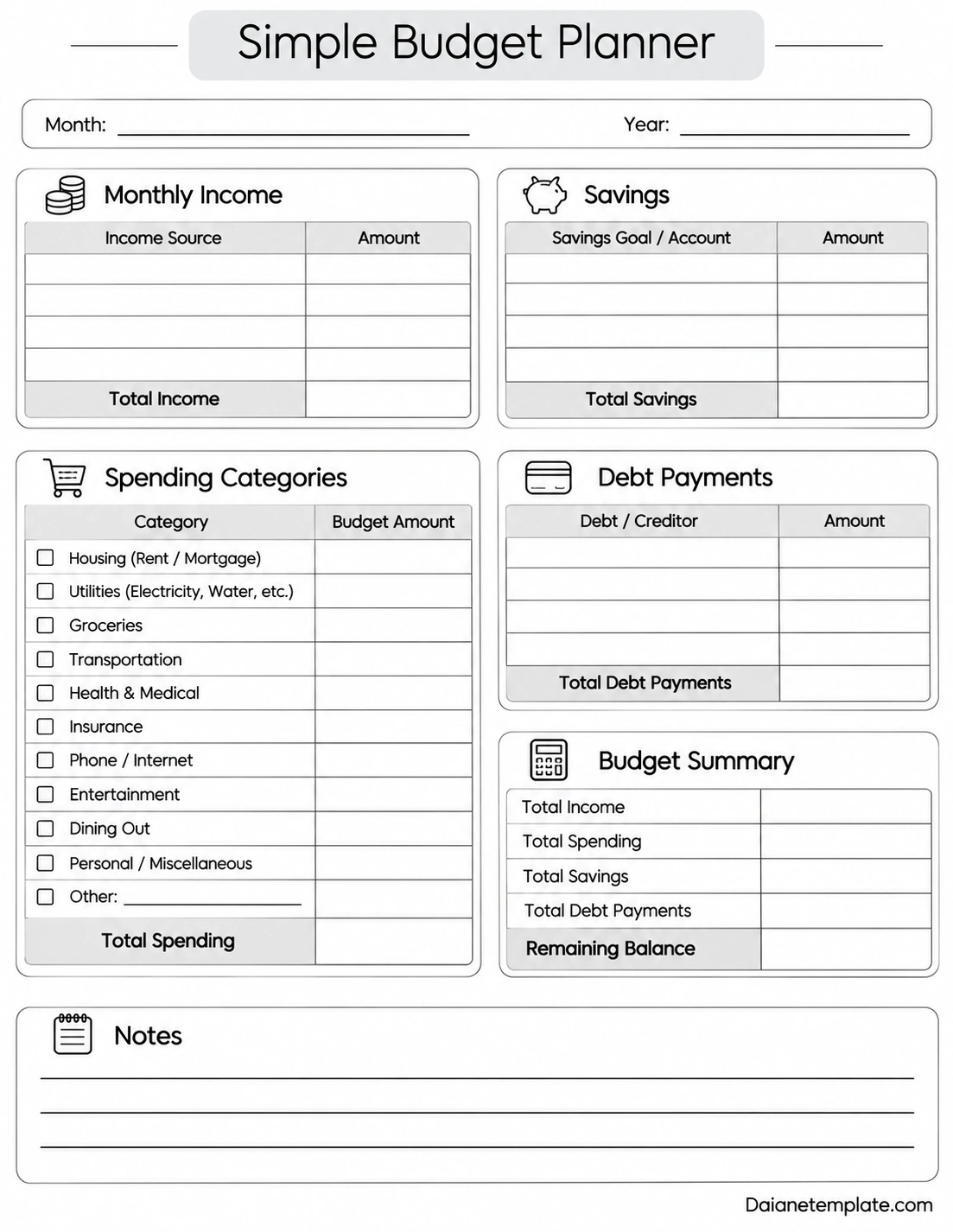
1. Simple Budget Planner Template
This design features separate sections for monthly income, savings, spending categories, debt payments, and a budget summary. It is suitable for individuals who want to organize different financial responsibilities in one worksheet.
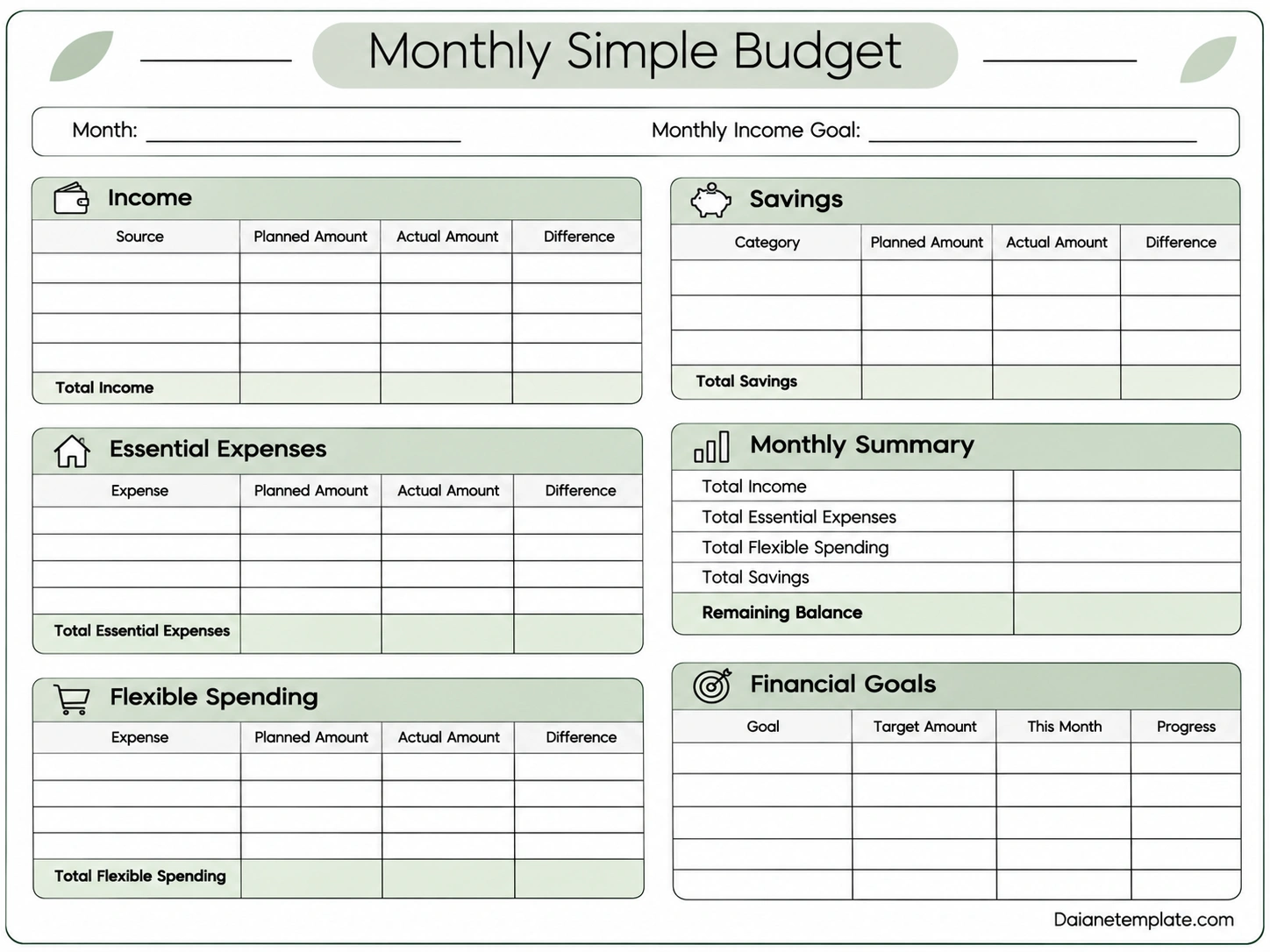
2. Monthly Simple Budget Template
This modern design uses soft green accents to organize income, essential expenses, flexible spending, savings, and financial goals. It is a useful option for people who want to compare planned amounts with actual spending.
3. Minimalist Simple Budget Worksheet
This black-and-white layout provides a clean and straightforward way to manage personal finances. It includes monthly income, fixed expenses, variable expenses, savings goals, and a remaining balance summary.

Choose the layout that matches your financial planning preferences. Print a new copy each month to maintain consistent records and compare your progress over time.
Why Is Having a Simple Budget Important?
Creating a budget is important because it gives you a clearer picture of your financial situation. Without a spending plan, it can be difficult to understand why money runs out before the end of the month.
A basic monthly budget helps you make decisions based on your actual income and expenses rather than guesswork.
1. Helps Control Spending
A budget allows you to set spending limits for different categories. When you know how much you can spend on groceries, transportation, entertainment, and other expenses, you are less likely to make unnecessary purchases.
2. Makes Saving Money Easier
Setting aside money becomes easier when savings are included in your monthly financial plan. You can establish specific targets for an emergency fund, vacation, home purchase, or other financial goals.
3. Reduces Financial Stress
Understanding your income, bills, and remaining balance can make financial responsibilities feel more manageable. A clear plan also helps you prepare for upcoming payments and unexpected expenses.
4. Helps Manage Debt
A budget makes it easier to identify how much money is available for loan payments and outstanding balances. You can prioritize debt repayment while continuing to cover essential living expenses.
5. Supports Long-Term Financial Goals
Whether you want to build an emergency fund, purchase a home, or save for retirement, budgeting helps turn larger financial goals into manageable monthly steps.
What Should Be Included in a Simple Budget?
A useful budget does not need dozens of categories. Start with the financial information that has the greatest impact on your monthly spending.
Monthly Income
Begin by recording all sources of income. Use your take-home income when planning your personal spending because it represents the money available after applicable deductions.
Common income sources include:
- Monthly salary or wages.
- Freelance or contract income.
- Business income.
- Rental income.
- Side jobs and additional earnings.
- Other regular income sources.
Fixed Expenses
Fixed expenses are payments that generally remain the same or change very little each month. They are usually easier to predict and include in a monthly spending plan.
- Rent or mortgage payments.
- Insurance premiums.
- Loan payments.
- Internet subscriptions.
- Phone plans.
- Membership fees.
Variable Expenses
Variable expenses change depending on your needs and spending habits. Tracking these categories can help you identify areas where you may be able to reduce costs.
- Groceries.
- Electricity and water bills.
- Transportation and fuel.
- Dining out.
- Entertainment.
- Shopping and personal care.
- Household supplies.
Savings and Financial Goals
Savings should be included in your budget rather than treated as whatever money happens to remain at the end of the month.
Consider creating separate savings categories for:
- Emergency savings.
- Vacation funds.
- Home down payments.
- Education expenses.
- Retirement contributions.
- Major purchases.
How to Create a Simple Budget in 6 Steps
Creating a budget does not have to be complicated. Follow these six steps to build a practical monthly spending plan that fits your financial situation.
Step 1: Calculate Your Total Monthly Income
Start by identifying how much money you receive each month. Include your regular salary and other reliable sources of income.
If your income changes from month to month, consider using a conservative estimate based on your recent earnings. This helps prevent you from planning expenses around money you may not receive.
Step 2: List Your Monthly Expenses
Write down your regular bills and everyday spending categories. Review bank statements, receipts, and previous transactions to estimate your actual expenses.
Separate fixed expenses from variable expenses so you can understand which costs are predictable and which ones require closer monitoring.
Step 3: Set a Savings Target
Decide how much money you want to save each month. Your target should be realistic and based on your income, essential expenses, and financial priorities.
Even a small, consistent contribution can help build an emergency fund or support a long-term savings goal.
Step 4: Set Spending Limits
Allocate your available income across essential expenses, flexible spending, debt payments, and savings. Make sure your planned spending does not exceed your available income.
If your expenses are higher than your income, identify categories where you can reduce spending or adjust your financial plan.
Step 5: Track Your Actual Spending
Throughout the month, record what you actually spend. Compare these amounts with your original budget to see whether you are staying within your planned limits.
A printable budget worksheet makes this process easier because you can record planned amounts, actual amounts, and differences in one place.
Step 6: Review and Adjust Your Budget
At the end of each month, review your results. Identify categories where you spent more or less than expected and adjust your next month’s budget accordingly.
Your budget should change when your income, expenses, or financial goals change. Regular reviews help keep your spending plan realistic.
Simple Budgeting Tips to Manage Your Money Better
Once you have created a spending plan, developing consistent habits can help you maintain it. These practical tips can make budgeting easier and more effective.
- Keep your budget simple: Start with a few important categories instead of tracking every small detail.
- Prioritize essential expenses: Cover housing, food, utilities, transportation, and other necessary costs first.
- Save regularly: Treat savings as an important part of your monthly financial plan.
- Review spending weekly: Checking your expenses regularly helps you notice problems before they become difficult to manage.
- Limit unnecessary purchases: Consider whether an item is genuinely needed before spending money.
- Prepare for unexpected costs: Include a reasonable allowance for irregular expenses whenever possible.
- Use a printable budget tracker: Writing down financial information can make your progress easier to understand.
- Celebrate small improvements: Recognize progress toward your savings and debt repayment goals.
Common Budgeting Mistakes to Avoid
Even a simple budget can become difficult to maintain if it is based on unrealistic expectations. Understanding common mistakes can help you create a more sustainable financial plan.
Underestimating Expenses
Forgetting small purchases, subscriptions, or occasional bills can make your budget inaccurate. Review your previous transactions to create more realistic spending estimates.
Setting Unrealistic Savings Goals
Trying to save too much too quickly can make it difficult to cover essential expenses. Start with an achievable target and increase it as your financial situation improves.
Ignoring Irregular Expenses
Some expenses occur only a few times each year, such as vehicle maintenance, annual insurance payments, or holiday spending. Set aside money regularly for these predictable costs.
Not Tracking Actual Spending
A budget is only useful when you compare your plan with your real spending. Record transactions consistently and review your progress throughout the month.
Frequently Asked Questions About Simple Budgets
What is the easiest way to create a simple budget?
The easiest approach is to calculate your monthly take-home income, list your expenses, set a savings target, and allocate money to each category. A printable budget worksheet can help organize everything in one place.
What are the 50/30/20 budgeting rules?
The 50/30/20 budgeting rule is a popular guideline that divides after-tax income into three categories: 50% for needs, 30% for wants, and 20% for savings and debt repayment. You can adjust these percentages based on your income, living costs, and financial priorities.
Can I create a budget with a low income?
Yes. Budgeting is useful regardless of income level. Start by prioritizing essential expenses, tracking spending, and identifying even small opportunities to save. The most important thing is to create a realistic plan based on the money available.
How often should I update my budget?
Review your spending at least once a week and update your budget monthly. You should also make adjustments whenever your income, expenses, or financial circumstances change significantly.
What is the difference between fixed and variable expenses?
Fixed expenses generally remain consistent each month, such as rent and loan payments. Variable expenses change depending on usage or personal choices, such as groceries, transportation, and entertainment.
Should savings be included in a monthly budget?
Yes. Including savings as a planned budget category encourages consistent contributions toward financial goals. It also helps prevent unnecessary spending of money that you intended to save.
What happens if my expenses are higher than my income?
If expenses exceed income, review your spending categories and identify costs that can be reduced. Prioritize essential payments, consider adjusting flexible spending, and look for realistic ways to increase income when possible.
Is a printable budget template useful?
Yes. A printable budget template provides a simple way to organize income, expenses, savings, and financial goals. It is especially useful for people who prefer writing down their financial information instead of using budgeting applications.
Conclusion
A simple budget is a practical starting point for anyone who wants to manage money more effectively. By organizing income, tracking expenses, and setting realistic savings goals, you can gain better control over your financial decisions.
You do not need complicated spreadsheets or advanced financial tools to get started. A straightforward monthly budget worksheet can provide everything you need to understand your spending and monitor your progress.
Choose a printable simple budget template, enter your monthly income and expenses, and review your results regularly. With consistent planning and small improvements, you can build healthier financial habits, reduce unnecessary spending, and work toward your long-term financial goals.
Download: Simple Budget Template Excel
