A paycheck budget is a budgeting method that organizes income and expenses around each paycheck instead of following a traditional monthly budget. This approach helps you decide where each paycheck will go before you spend it, making it easier to pay bills on time, control everyday spending, and work toward financial goals.
For people who receive income weekly, biweekly, or on another regular schedule, budgeting by paycheck can provide a clearer picture of available cash. Rather than treating an entire month’s income as immediately available, you assign specific expenses, savings contributions, and debt payments to the paychecks that arrive before those expenses are due.
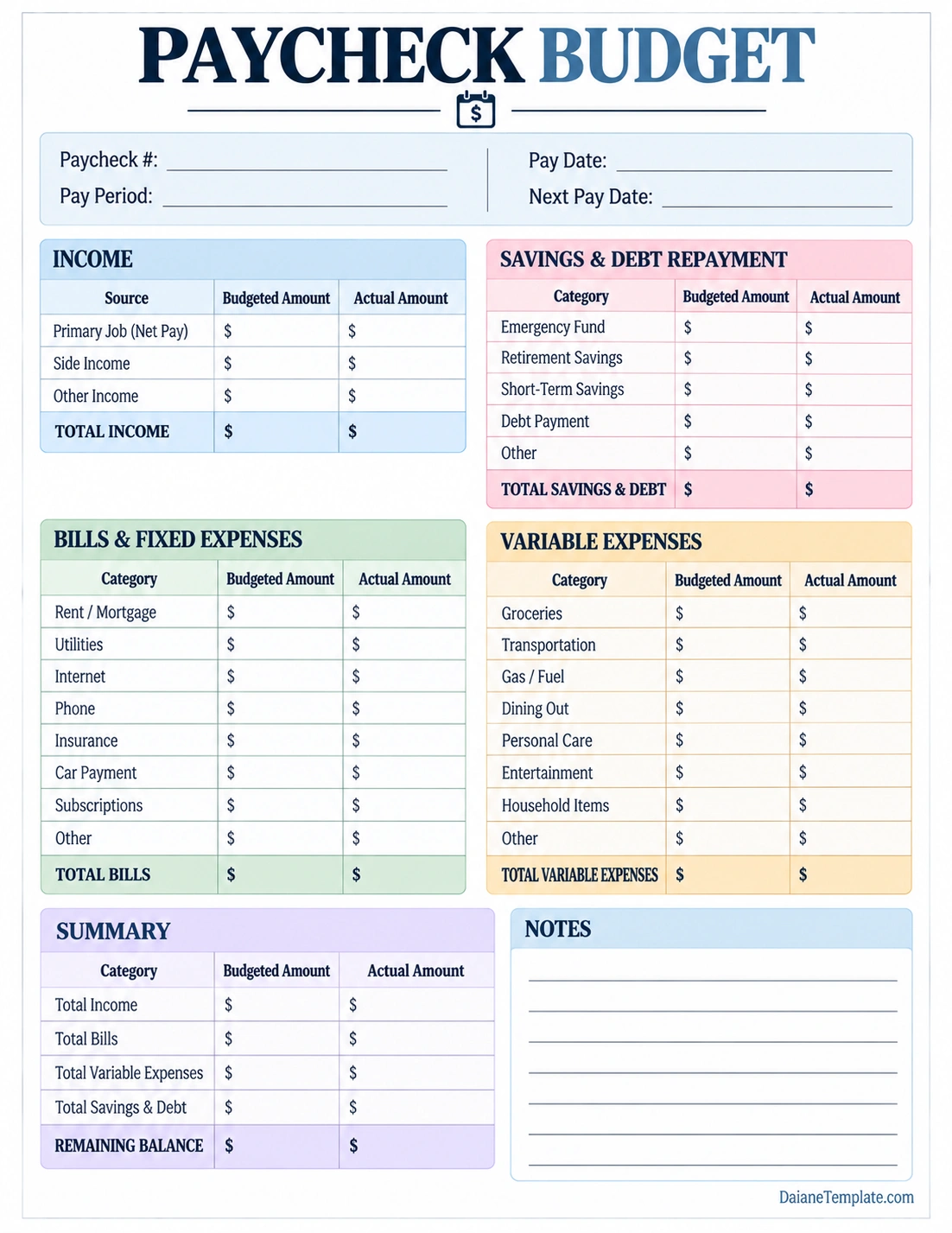
What Is a Paycheck Budget?
A paycheck budget is a cash flow budgeting system that assigns income to specific expenses based on when each paycheck is received. Instead of asking how much money you have for the entire month, you focus on how much money is available from each paycheck and what that money needs to cover.
For example, if you receive two paychecks each month, the first paycheck might cover rent, utilities, groceries, and savings. The second paycheck might be assigned to transportation, subscriptions, debt payments, and other upcoming expenses.
The goal is to give every dollar a purpose while keeping your spending aligned with your actual cash flow.
Why Use a Paycheck Budget?
A paycheck-based budget can be particularly useful when the timing of income and expenses does not line up neatly. It helps you plan for upcoming bills instead of reacting to them when they become due.
- Improves cash flow awareness: You can see how much money is available after each paycheck.
- Helps prevent overspending: Money is assigned to specific purposes before discretionary spending begins.
- Supports timely bill payments: Upcoming bills can be matched with the paycheck that will cover them.
- Encourages intentional saving: Savings can be treated as a planned expense rather than whatever money happens to remain.
- Supports debt repayment: Specific amounts can be assigned to debt payments with each paycheck.
- Reduces financial uncertainty: A clear plan can make it easier to understand what your available cash needs to cover.
- Works with different pay schedules: The method can be adapted to weekly, biweekly, semimonthly, or irregular income.
How Does a Paycheck Budget Work?
The basic idea is simple: when a paycheck arrives, assign that income to upcoming expenses and financial goals before spending it.
Start by identifying your expected take-home pay. Then list bills and expenses that need to be paid before your next paycheck arrives. Assign amounts to savings and debt repayment as needed, and determine how much remains for flexible spending.
A simple paycheck budget may follow this structure:
- Paycheck income: Record the amount you expect to receive.
- Fixed bills: Assign money to rent, mortgage, utilities, insurance, and other recurring obligations.
- Variable expenses: Plan amounts for groceries, transportation, dining, and personal spending.
- Savings: Set aside money for emergency savings, short-term goals, or other priorities.
- Debt repayment: Allocate planned amounts toward credit cards, loans, or other debts.
- Remaining balance: Identify what remains after planned allocations.
How to Create a Paycheck Budget
Creating a paycheck budget does not require a complicated financial system. The most important part is knowing when money comes in, when expenses are due, and how much each expense requires.
1. Determine Your Pay Schedule
Start by identifying how often you receive income. You may be paid weekly, every two weeks, twice per month, or according to another schedule.
Write down your expected pay dates. If your income changes from paycheck to paycheck, use a conservative estimate when planning essential expenses.
2. Calculate Your Available Income
Use your take-home pay rather than gross income when creating a spending plan. If you have multiple sources of income, include only income that you reasonably expect to receive during the budgeting period.
3. List Your Upcoming Bills
Write down bills and their due dates. Common examples include housing, utilities, insurance, phone service, subscriptions, and loan payments.
Next, determine which paycheck should be used to cover each expense. This helps prevent a situation where a bill is due before the paycheck intended to pay it arrives.
4. Add Variable Expenses
Estimate flexible expenses such as groceries, fuel, transportation, dining out, household items, and personal care. Reviewing previous spending can help you create realistic amounts.
5. Assign Money to Savings
Include savings in the budget instead of waiting to see what remains at the end of the pay period. Depending on your priorities, savings categories may include an emergency fund, short-term goals, annual expenses, or retirement savings.
6. Plan Debt Payments
If you have debt, include planned payments in the paycheck budget. Make sure required minimum payments are accounted for first, then consider additional payments based on your financial priorities.
7. Calculate the Remaining Balance
Subtract your planned allocations from your paycheck income. The remaining amount represents money that has not yet been assigned and should be reviewed before you spend it.
Paycheck Budget Example
Imagine someone receives $2,000 from a paycheck and needs to cover expenses before the next payday. Their plan might allocate the money as follows:
- Housing contribution: $800
- Utilities: $150
- Groceries: $250
- Transportation: $150
- Debt payment: $200
- Emergency savings: $200
- Personal and household spending: $150
- Remaining amount: $100
The exact amounts will vary according to individual circumstances. The important principle is that the paycheck is assigned to specific priorities before discretionary spending takes place.
Paycheck Budget Categories to Consider
A useful budget should reflect your actual financial obligations and goals. You do not need to use every possible category, but organizing expenses into groups can make planning easier.
Fixed Expenses
Fixed expenses are generally predictable and may remain similar from one payment period to another. Examples include rent, mortgage payments, insurance, subscriptions, and some loan payments.
Variable Expenses
Variable expenses can change from one period to another. Groceries, fuel, dining out, entertainment, and household purchases are common examples.
Savings
Savings can include emergency funds, vacation funds, annual expenses, home projects, education goals, or other planned objectives.
Debt Repayment
Debt payments can include credit cards, personal loans, student loans, auto loans, or other obligations. A paycheck budget can help ensure that required payments are planned before discretionary spending.
How to Budget When You Are Paid Biweekly
Biweekly pay can work particularly well with a paycheck budget because you can assign expenses to each two-week income period. Start by listing the bills that fall between each payday.
Most months contain two regular paychecks for someone paid every two weeks, while some calendar months contain a third paycheck. Rather than automatically treating an occasional third paycheck as normal monthly income, you can give it a specific purpose such as building savings, paying down debt, or preparing for future expenses.
How to Budget When You Are Paid Weekly
Weekly income allows you to make smaller and more frequent budget adjustments. Divide expenses according to when they are due and determine how much each weekly paycheck needs to contribute.
For example, instead of trying to find a large amount for a monthly expense from one paycheck, you can set aside a smaller amount from several weekly paychecks. This approach can make larger recurring expenses easier to manage.
How to Handle Irregular Income
People with variable or irregular income may need to make their paycheck budget more flexible. Instead of assuming every paycheck will be the same, create a baseline plan using a conservative income estimate.
When income is higher than expected, the additional money can be directed toward savings, debt repayment, upcoming expenses, or other financial priorities. This creates flexibility without depending on an unusually large paycheck to cover essential bills.
How to Avoid Overspending With a Paycheck Budget
A paycheck budget works best when planned amounts are treated as spending limits. Once money has been assigned to rent, groceries, savings, debt, or another category, avoid using that money for unrelated purchases.
- Check your budget before making large purchases.
- Keep essential bill money separate from discretionary spending when possible.
- Track actual spending throughout the pay period.
- Adjust variable categories when expenses change.
- Avoid treating unassigned money as automatically available for spending.
- Review your remaining balance before the next paycheck arrives.
Paycheck Budget vs. Monthly Budget
A monthly budget organizes income and expenses around a calendar month, while a paycheck budget organizes spending around the dates when income is received.
A monthly budget can provide an excellent overview of overall finances. However, it may not show exactly how cash will flow between individual paydays. A paycheck budget adds that additional layer of detail.
These methods can also be combined. You can use a monthly budget for long-term planning while using a paycheck budget to decide exactly when money will be allocated during the month.
Common Paycheck Budget Mistakes
Budgeting by paycheck can be effective, but certain mistakes can make the system difficult to maintain.
- Ignoring bill due dates: A bill should be assigned to money that will be available before its due date.
- Forgetting irregular expenses: Annual or occasional expenses should be planned rather than treated as surprises.
- Underestimating variable costs: Unrealistically low spending limits can make a budget difficult to follow.
- Leaving savings until the end: Saving only what remains may result in inconsistent progress toward financial goals.
- Ignoring small expenses: Frequent small purchases can add up over a pay period.
- Failing to update the budget: Changes in income or expenses should be reflected in the plan.
- Giving every paycheck the same plan: Different pay periods may have different bills and priorities.
Tips for Making a Paycheck Budget Work
A budgeting system is more useful when it is realistic enough to maintain. Focus on consistency rather than creating a complicated plan that becomes difficult to update.
- Review your budget every payday.
- Keep a calendar of important bill due dates.
- Use realistic spending estimates based on actual habits.
- Plan for irregular and annual expenses.
- Give savings and debt repayment specific amounts.
- Track actual spending against your planned amounts.
- Adjust the next paycheck budget when circumstances change.
- Keep a small buffer when your financial situation allows it.
- Review your progress toward larger financial goals regularly.
Benefits of Using a Paycheck Budget Template
A paycheck budget template provides a structured way to organize income and expenses for each pay period. Instead of creating categories from scratch, you can record income, fixed bills, variable expenses, savings, debt payments, and the remaining balance in one place.
A printable paycheck budget template can also make budgeting more tangible. You can fill it out each payday, compare budgeted amounts with actual spending, and keep previous worksheets as a record of your financial planning.
The goal of a template is not to make budgeting complicated. It simply provides a consistent framework that can help you make decisions before spending begins.
Frequently Asked Questions About Paycheck Budgets
What is a paycheck budget?
A paycheck budget is a budgeting method that assigns income from each paycheck to specific expenses, savings goals, and debt payments based on when the money is received and when expenses are due.
How does a paycheck budget work?
You start by recording the amount and date of each paycheck. Then you assign that income to upcoming bills, variable expenses, savings, debt payments, and other financial priorities until the available money has been planned.
Is a paycheck budget better than a monthly budget?
Neither method is automatically better. A monthly budget provides a broader view of income and expenses, while a paycheck budget provides more detailed cash flow planning between paydays. Many people can use both methods together.
Can I use a paycheck budget if I am paid biweekly?
Yes. A biweekly paycheck budget can assign upcoming bills and expenses to each paycheck. It can also help you plan how to use occasional third paychecks that occur in some months.
Can a paycheck budget work with irregular income?
Yes. When income varies, use conservative estimates for essential expenses and adjust allocations when actual income becomes known. Higher-than-expected income can be assigned to savings, debt, or future expenses.
What expenses should be included in a paycheck budget?
A paycheck budget can include fixed bills, variable expenses, savings, debt payments, household expenses, transportation, food, personal spending, and other financial obligations or goals.
Should savings be included in a paycheck budget?
Yes. Including savings as a planned allocation can make it easier to consistently work toward financial goals rather than saving only when money remains at the end of a pay period.
Can a paycheck budget help prevent overspending?
Yes. Assigning money to specific categories before spending can make your available spending limits clearer and reduce the risk of using money intended for bills, savings, or debt payments.
How often should I update a paycheck budget?
Reviewing the budget each payday is a practical approach. You should also update it when income, bills, due dates, or financial priorities change.
Conclusion
A paycheck budget provides a practical way to manage money according to your actual cash flow. By assigning each paycheck to upcoming bills, everyday expenses, savings, and debt repayment, you can create a clearer plan for how your income will be used.
The method can be adapted to weekly, biweekly, semimonthly, or irregular income. The key is to understand when money arrives, know when expenses are due, and give your available income a clear purpose before spending it.
Whether you use a spreadsheet, budgeting app, or printable paycheck budget template, consistent planning can make it easier to stay organized, avoid unnecessary overspending, and make steady progress toward your financial goals.
Download: Paycheck Budget Template
