A Rental Reference Letter is a professional document that provides information about a prospective tenant’s previous rental history, reliability, financial responsibility, and conduct as a renter. It is commonly written by a previous landlord, property manager, or another person who has firsthand knowledge of the tenant’s rental behavior. For a prospective landlord, this type of reference can provide useful context beyond information such as a credit report or proof of income.
A well-written rental reference letter can help a tenant demonstrate that they paid rent as agreed, followed property rules, communicated appropriately, and took reasonable care of the rental property. For landlords and property managers, the letter can provide additional information when evaluating a rental application. The most useful references are factual, specific, and based on the writer’s actual experience with the tenant.
What Is a Rental Reference Letter?
A rental reference letter is a written statement about a tenant’s previous rental history and conduct. It is typically provided to a prospective landlord as part of the tenant screening or rental application process.
The person writing the letter may describe the tenant’s payment history, care of the property, communication, compliance with lease terms, and overall rental experience. Depending on the circumstances, the reference may also confirm the tenant’s rental dates, property address, and whether the tenant fulfilled the terms of the lease.
A rental reference should focus on information the writer can reasonably verify. It should not contain exaggerated claims or information that is unrelated to the tenant’s ability to meet legitimate rental requirements.
Why Is a Rental Reference Letter Important?
Choosing a tenant involves evaluating several types of information. A rental reference letter can provide another perspective by describing the applicant’s behavior during a previous tenancy.
It Provides Rental History
A previous landlord can confirm basic information about the applicant’s tenancy, such as how long the tenant lived at the property and whether the lease relationship ended normally.
It Documents Payment Reliability
When accurate and appropriate, a landlord reference can explain whether the tenant consistently paid rent according to the lease terms. This can provide useful context for a prospective landlord reviewing an application.
It Describes Property Care
A previous landlord may comment on whether the tenant maintained the rental unit in reasonable condition and followed applicable property rules. Specific observations are more useful than vague statements about the tenant’s character.
It Shows Communication and Conduct
A reference letter can describe how the tenant communicated about maintenance issues, lease matters, or other routine rental concerns. This can help a prospective landlord understand what it was like to manage the tenancy.
It Adds Context to a Rental Application
Documents such as income verification and credit information provide important financial information, but they do not necessarily describe how someone behaved as a tenant. A rental reference can provide additional context about the previous landlord-tenant relationship.
Who Can Write a Rental Reference Letter?
The strongest rental reference generally comes from someone who has firsthand knowledge of the applicant’s rental history. A previous landlord or property manager is often the most relevant person to provide this type of reference.
- Previous landlord: Can discuss rent payments, property care, lease compliance, and the overall tenancy.
- Property manager: May provide a professional reference based on records and direct interactions with the tenant.
- Current landlord: May provide a reference when the tenant is moving to another property.
- Housing provider: May provide relevant information when appropriate and permitted.
- Professional or personal reference: May sometimes be requested when a formal rental history is limited, although this does not replace a landlord reference.
A person should only provide information they genuinely know and can reasonably verify. A reference that contains fabricated rental history or unsupported claims can create problems for both the writer and applicant.
What Should a Rental Reference Letter Include?
A professional rental reference letter does not need to be complicated. The goal is to provide relevant, factual information that helps the prospective landlord understand the applicant’s previous tenancy.
- Date: Include the date the letter was written.
- Recipient information: Add the prospective landlord or property manager’s name and contact information when available.
- Tenant’s full name: Clearly identify the person being referenced.
- Rental property: State the property address or unit number when appropriate.
- Tenancy dates: Include the approximate or exact move-in and move-out dates.
- Payment history: Describe relevant payment behavior accurately.
- Property care: Mention the condition in which the tenant maintained the property.
- Lease compliance: Note whether the tenant followed applicable lease terms and property rules.
- Communication: Describe relevant communication and responsiveness.
- Overall recommendation: If appropriate, state whether the writer would be comfortable renting to the tenant again.
- Contact information: Provide a phone number or email address for legitimate follow-up questions.
- Signature: End with the writer’s name and relationship to the property.
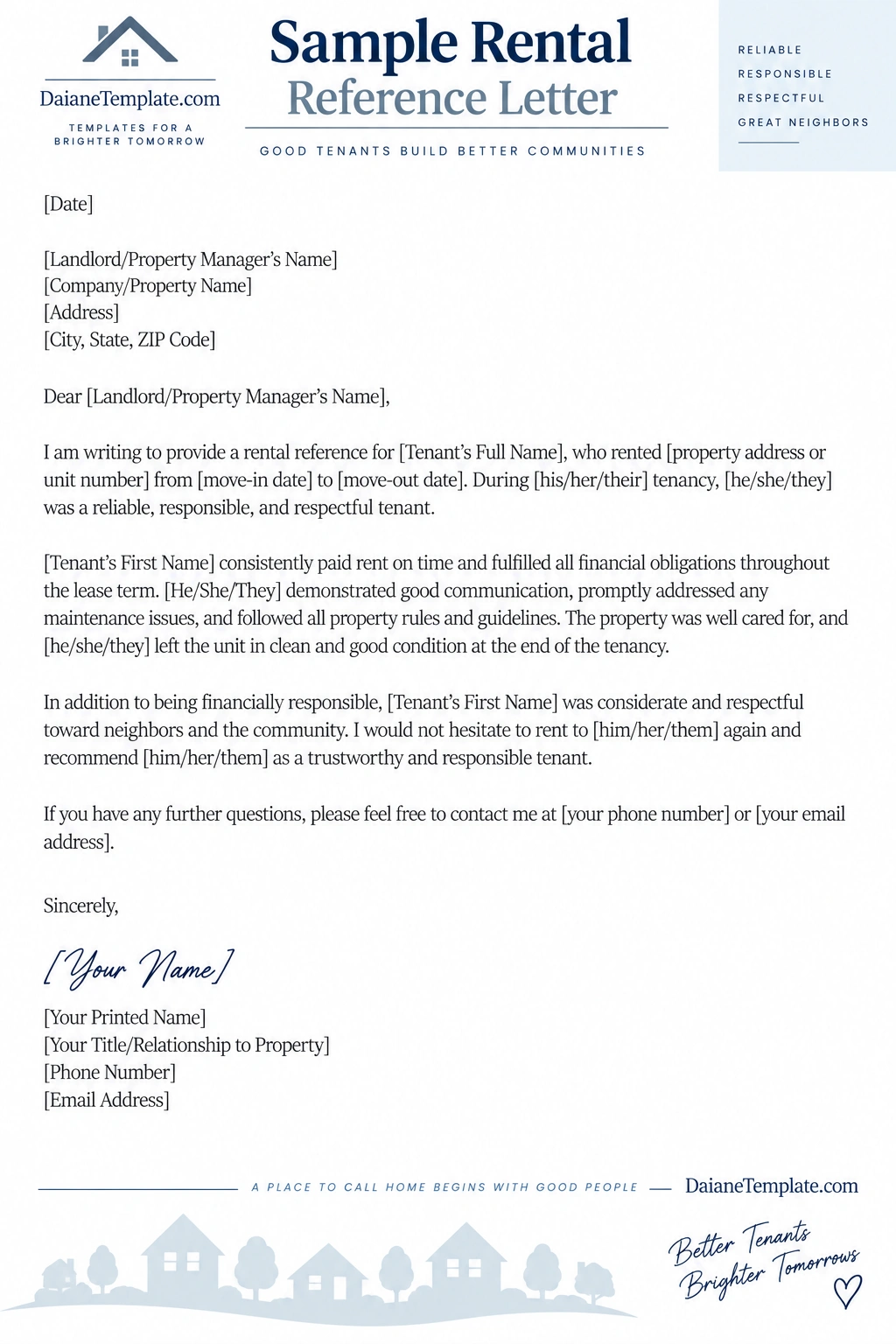
Sample Rental Reference Letter Template
A Sample Rental Reference Letter can make it easier for a previous landlord or property manager to organize the information a prospective landlord may need. A structured format helps ensure that important details such as the tenant’s name, rental dates, payment history, property condition, and contact information are not overlooked.
The template should be customized with accurate information before it is provided to a prospective landlord. Avoid leaving generic placeholders in the final letter, and make sure all statements accurately reflect the previous tenancy.
How to Write a Rental Reference Letter
Step 1: Identify the Tenant
Begin by clearly identifying the person who is being referenced. Use the tenant’s full name to avoid confusion, especially when the reference is being provided to a property management company.
Step 2: Confirm the Rental History
State the property where the tenant lived and the period of the tenancy. You can include the property address or unit number when appropriate and permitted.
Step 3: Describe Payment History
If you maintained appropriate records, describe the tenant’s payment history accurately. You might state whether rent was generally paid on time or according to the agreed lease terms.
Avoid making unsupported claims about a tenant’s finances. The reference should describe your direct experience rather than speculate about the applicant’s current financial situation.
Step 4: Discuss Property Care
Explain how the tenant maintained the rental property based on your actual observations. For example, you might mention that the property was maintained in reasonable condition and that ordinary maintenance issues were communicated appropriately.
Step 5: Mention Lease Compliance
If relevant, state whether the tenant followed the lease terms and property rules during the tenancy. Keep the language factual and avoid including unnecessary personal information.
Step 6: Describe Communication
Communication can be an important part of a landlord-tenant relationship. If appropriate, describe whether the tenant responded to communications, reported maintenance issues, and handled routine rental matters professionally.
Step 7: Provide Contact Information
Include reliable contact information so the prospective landlord can verify the reference or ask reasonable follow-up questions. Only provide contact information that you are comfortable sharing for this purpose.
What Makes a Rental Reference Letter Effective?
The most useful reference letters are specific without becoming unnecessarily long. A prospective landlord generally needs relevant information about the applicant’s previous tenancy rather than a lengthy personal biography.
- Be factual: Base statements on your actual experience.
- Be specific: Include relevant details such as rental dates and property information.
- Be concise: Focus on information that relates directly to the tenancy.
- Be professional: Use clear and respectful language.
- Be honest: Do not exaggerate positive or negative information.
- Be current: Use accurate contact information and dates.
- Be relevant: Avoid unrelated personal information.
Rental Reference Letter for a Good Tenant
When a previous landlord is comfortable providing a positive reference, the letter can describe the tenant’s reliable rental behavior using specific examples. For instance, the writer might confirm that rent was paid according to the lease terms, the tenant communicated about maintenance matters, and the property was returned in reasonable condition.
Instead of relying entirely on adjectives such as “excellent” or “wonderful,” use factual statements that demonstrate the tenant’s behavior. Specific information gives the prospective landlord a clearer basis for understanding the previous tenancy.
Rental Reference Letter for a Tenant With Limited Rental History
Some applicants may have little or no previous rental history. This can include first-time renters, recent graduates, people who previously lived with family, or individuals who have recently relocated.
In these situations, the applicant may be able to provide another type of reference if the prospective landlord permits it. A professional, academic, or personal reference may help demonstrate responsibility and reliability, although the value of the reference depends on the landlord’s application requirements.
Applicants should be transparent about their rental history rather than attempting to create a rental reference that does not reflect their actual experience.
Rental Reference Letter vs. Proof of Income
A rental reference letter and proof of income serve different purposes. Proof of income can help establish that an applicant has a source of income or meets a specified financial requirement. A rental reference, by contrast, focuses on previous rental behavior and the landlord’s experience with the tenant.
A landlord may consider multiple forms of information when evaluating a rental application. Depending on applicable laws and the property’s screening policies, this can include rental history, income documentation, credit information, references, and other legitimate application materials.
Rental Reference Letter vs. Character Reference
A rental reference is specifically connected to a person’s behavior as a tenant. A character reference is broader and may describe qualities such as responsibility, honesty, reliability, or professionalism based on the writer’s relationship with the applicant.
When a landlord requests a rental reference, a previous landlord or property manager is generally better positioned to provide relevant information because they have direct experience with the applicant’s tenancy.
Common Mistakes to Avoid
Including Unverified Information
A reference writer should only include information they know to be accurate. Guessing about a tenant’s finances, future behavior, or personal circumstances can reduce the usefulness of the letter.
Making the Letter Too Generic
A letter that only says the tenant was “great” provides little useful information. Include relevant facts about payment behavior, property care, communication, and lease compliance when appropriate.
Including Unnecessary Personal Details
A rental reference should focus on the tenancy. Avoid unnecessary information about the tenant’s private life, personal characteristics, or circumstances that are unrelated to the legitimate rental decision.
Using Incorrect Dates or Names
Double-check the tenant’s full name, property address, tenancy dates, and contact information. Small factual errors can make the reference appear unreliable.
Forgetting to Sign the Letter
A signature and the writer’s contact information can help establish who provided the reference and allow the recipient to verify the information when appropriate.
Tips for Tenants Requesting a Rental Reference
If you are a tenant asking a previous landlord for a reference, make the process easy for the writer. Provide the correct recipient information, application deadline, property details, and any specific requirements from the prospective landlord.
- Ask in advance: Give the previous landlord reasonable time to prepare the letter.
- Provide the details: Confirm your previous rental address and tenancy dates.
- Explain the purpose: Let the writer know that the reference is for a new rental application.
- Share submission instructions: Explain whether the letter should be emailed, uploaded, or provided directly to the prospective landlord.
- Say thank you: Acknowledge the time the reference writer spends helping with your application.
Tips for Landlords Reviewing a Rental Reference
A rental reference can be useful as one part of a broader tenant screening process. Review the information provided and verify the reference when appropriate and legally permitted.
Landlords should apply their rental screening criteria consistently and comply with applicable housing and tenant-screening laws. A reference letter should supplement appropriate screening procedures rather than serve as the sole basis for a rental decision.
Final Thoughts
A Rental Reference Letter can provide valuable information about a prospective tenant’s previous rental experience. By documenting relevant facts about rent payments, property care, communication, lease compliance, and tenancy dates, a previous landlord or property manager can give a prospective landlord useful context during the application process.
For tenants, obtaining a clear and accurate reference can help document a positive rental history. For landlords, reviewing a reference alongside other appropriate application information can provide a broader understanding of an applicant’s previous tenancy. Whether you are writing or requesting a rental reference letter, keep the document factual, professional, relevant, and based on information that can be reasonably verified.
