A proof of funds letter helps demonstrate that a buyer has sufficient available money to complete a purchase. Sellers, real estate agents, and other transaction participants may request this document to verify that a buyer can cover the required costs without relying entirely on future financing.
Whether you are purchasing a home, making a significant business investment, or completing another high-value transaction, providing clear evidence of available funds can help establish financial readiness. A well-prepared letter identifies the account holder, confirms the available balance, and explains the purpose of the verification.
Understanding how a proof of funds letter works can help you request the right document and avoid unnecessary delays. This guide explains its purpose, common requirements, the steps involved in obtaining one, and how to prepare a professional example for reference.
What Is a Proof of Funds Letter?
A proof of funds letter is a document that confirms a person or business has a specified amount of money available for a particular transaction. It is commonly issued by a bank, credit union, brokerage firm, or another financial institution that can verify the relevant assets.
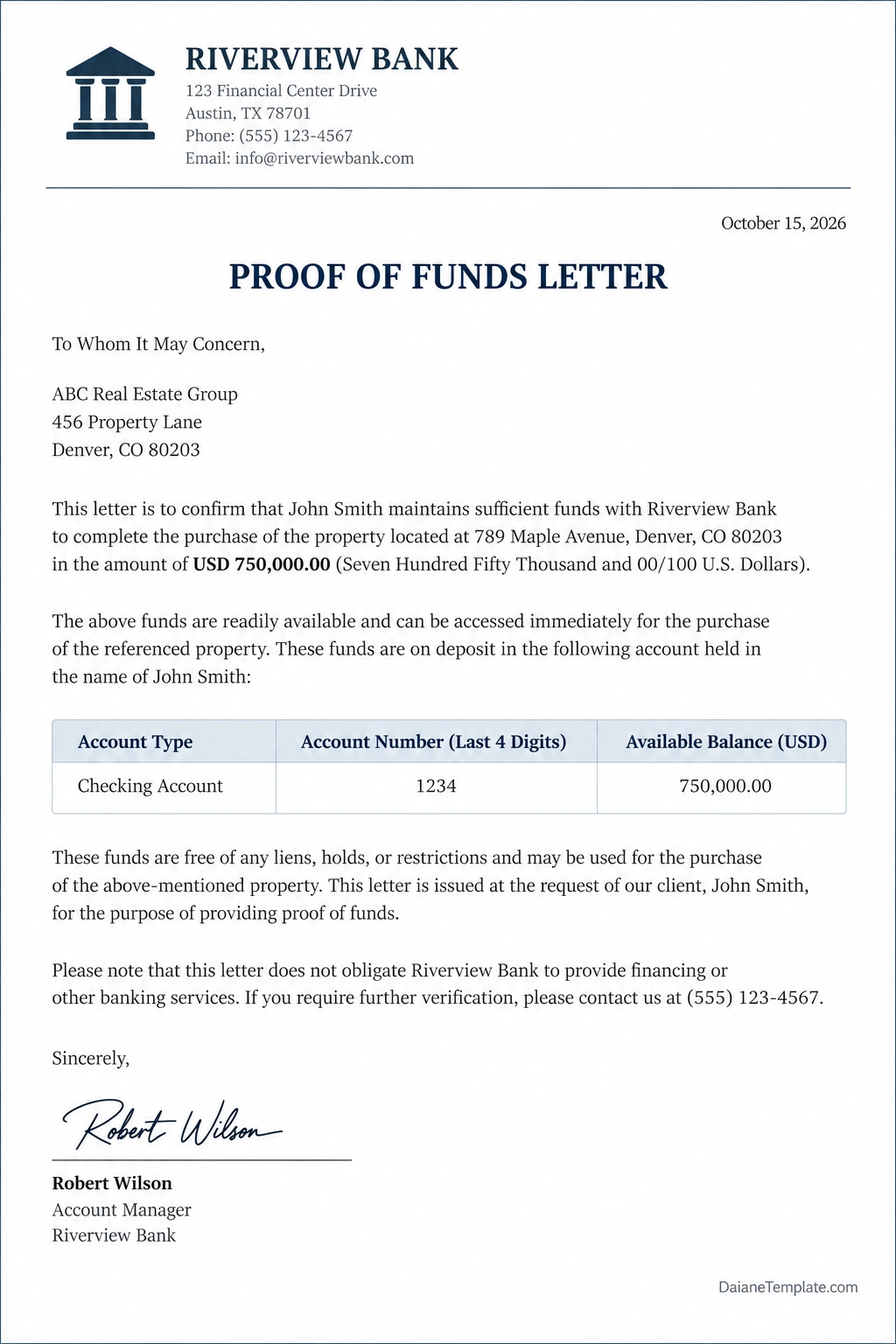
The letter typically identifies the account holder, states the verified available balance, includes an issue date, and provides the institution’s contact information. Depending on the recipient’s requirements, it may also describe the type of account or the purpose of the verification.
A proof of funds letter is commonly used in real estate transactions, business acquisitions, investment opportunities, and other purchases where a seller wants evidence that the buyer can meet the financial commitment.
Why Is a Proof of Funds Letter Important?
A proof of funds letter helps recipients assess whether a buyer appears financially prepared to complete a transaction. Although it does not guarantee that a purchase will proceed, it can provide useful evidence during the early stages of negotiations.
1. Demonstrates Financial Readiness
When a seller receives a credible proof of funds letter, they can review evidence that the buyer has access to the stated amount. This may be particularly useful when several buyers are interested in the same property or asset.
2. Supports Real Estate Transactions
Real estate sellers and agents may request proof of funds when evaluating cash offers or confirming that a buyer has enough money for a down payment and closing costs. The exact documentation required depends on the transaction and the recipient’s procedures.
3. Helps Build Transaction Confidence
Providing appropriate financial documentation can make discussions more transparent. A seller may feel more comfortable considering an offer when the buyer supplies credible evidence of available funds.
However, a letter is only one part of the process. Buyers should also be prepared to meet contractual deadlines and satisfy other transaction requirements.
4. Reduces Unnecessary Delays
Obtaining the required documentation early can help avoid last-minute requests. Buyers should confirm the recipient’s preferred format, acceptable issuing institutions, and any requirements concerning the letter’s date or balance.
What Should a Proof of Funds Letter Include?
The required details can vary depending on the institution, recipient, and transaction. A useful letter generally includes the following information.
1. Financial Institution Letterhead
The document should identify the institution providing the verification. Official letterhead, contact information, and other appropriate identifying details can help the recipient confirm the source.
Only the institution itself or an authorized representative should issue a letter that claims to verify an account balance.
2. Issue Date
The issue date indicates when the information was verified. Some recipients require a recent letter because available balances can change over time.
Ask the recipient how recent the document must be before requesting it.
3. Account Holder’s Name
The letter should identify the person or business whose funds are being verified. The name should be consistent with the relevant financial account and, where appropriate, the purchase documentation.
4. Available Balance
The document should state the amount of funds verified as available. The balance should reflect the institution’s records at the time of verification and should not be represented as guaranteed to remain unchanged.
Where necessary, the letter can clarify the currency and distinguish readily available funds from assets that may require time to sell or transfer.
5. Account Information
Some letters include the type of account or a limited account identifier. Full account numbers and other sensitive financial details should generally be omitted unless specifically required through a secure and appropriate process.
6. Purpose of Verification
The letter may identify the intended transaction, such as a property purchase or business acquisition. This can help the recipient understand why the financial confirmation was requested.
7. Authorized Signature and Contact Details
A bank-issued letter may include the name, title, signature, or other authentication details of an authorized representative. Contact information allows the recipient to verify the document through legitimate channels.
Requirements differ, so confirm whether a signed letter, a secure electronic document, or another form of verification is acceptable.
How to Get a Proof of Funds Letter
Obtaining a proof of funds letter is usually straightforward when you prepare the necessary information and confirm the recipient’s requirements in advance.
Step 1: Ask the Recipient What Is Required
Contact the seller, agent, lender, or other requesting party to determine what evidence they accept. Ask about the required balance, acceptable account types, document date, and any specific wording or verification requirements.
Step 2: Contact Your Financial Institution
Request a proof of funds letter from your bank, credit union, or another institution that can verify your eligible assets. You may be able to make the request through a branch, a secure online banking service, or a designated account representative.
Step 3: Provide the Necessary Information
Explain the purpose of the letter and identify the account or assets to be verified. The institution may require identity verification, account information, or additional documentation before issuing the letter.
Step 4: Confirm the Verified Balance
Review the amount shown in the document and ensure it meets the recipient’s stated requirements. If the transaction involves multiple accounts, ask whether the institution can verify the combined eligible funds or whether separate documents are needed.
Step 5: Review the Final Letter
Check the account holder’s name, issue date, available balance, currency, and institution details. Ask the issuing institution to correct any errors before sharing the document.
Step 6: Submit It Securely
Send the letter through the method requested by the recipient. Because financial documents contain sensitive information, avoid sending them through unverified email addresses or unsecured channels.
Proof of Funds Letter Example
The following fictional example demonstrates the general structure of a proof of funds letter. It is for educational purposes only and is not an authentic bank document or evidence of actual funds.
Sample Financial Institution: Example Community Bank
Date: October 15, 2026
Subject: Proof of Funds Confirmation
To Whom It May Concern,
This letter confirms that, according to our records as of the date stated above, the account maintained by Jordan Taylor has an available balance of USD 250,000.00.
This letter has been issued at the account holder’s request for the purpose of documenting available funds in connection with a proposed property purchase.
The balance stated above reflects the information available to the institution at the time of verification. It does not constitute a guarantee that the funds will remain available at a future date or an obligation by the institution to provide financing.
Please contact the institution through its verified official contact channels if additional confirmation is required and appropriate authorization has been provided.
Sincerely,
Authorized Representative
Example Community Bank
This example illustrates common letter sections. Actual wording, available-balance confirmation, authorization procedures, and signature requirements should be determined by the issuing institution.
Proof of Funds Letter vs. Bank Statement
A proof of funds letter and a bank statement can both provide information about financial assets, but they serve different purposes.
- Proof of funds letter: A targeted confirmation of an available balance or eligible funds, usually prepared for a particular recipient or transaction.
- Bank statement: A record of account activity and balances over a specified period.
- Account balance screenshot: An image of account information that may not satisfy a recipient’s verification requirements.
- Preapproval letter: A lender’s preliminary assessment of a borrower’s potential eligibility for financing, rather than proof that the buyer already holds the stated cash balance.
The appropriate document depends on what the recipient needs to establish. A bank statement may provide more transaction history, while a proof of funds letter can offer a more focused confirmation.
Common Mistakes to Avoid
Before submitting a proof of funds letter, review the document carefully and make sure it meets the recipient’s requirements.
- Using an outdated letter: Obtain a recent document if the recipient requires current verification.
- Showing an insufficient balance: Confirm that the verified funds meet the stated financial requirement.
- Using inconsistent names: Check that the account holder’s name matches the relevant records.
- Assuming every asset qualifies: Ask whether investments, restricted funds, or assets requiring liquidation are acceptable.
- Submitting an altered document: Never change a bank-issued balance, signature, or other verification detail.
- Sharing excessive sensitive information: Disclose only what is necessary and use secure delivery methods.
- Assuming the letter guarantees a purchase: Remember that the letter does not replace a contract, financing approval, or other closing requirements.
Frequently Asked Questions About Proof of Funds Letters
What is a proof of funds letter used for?
A proof of funds letter is used to demonstrate that a person or business has a specified amount of available money. It may be requested for real estate purchases, business transactions, investments, or other significant purchases.
Who can issue a proof of funds letter?
A bank, credit union, brokerage firm, or another financial institution may issue a letter if it can verify the relevant assets. The acceptable issuer depends on the recipient’s requirements and the type of funds involved.
How long is a proof of funds letter valid?
There is no universal validity period. Some recipients require a letter issued within a specific number of days, while others evaluate the document based on the transaction. Confirm the requirements before submitting it.
Can I use a bank statement instead of a proof of funds letter?
Sometimes. Some recipients accept recent bank statements, while others require a formal letter or additional verification. Ask the requesting party which documents are acceptable.
Does a proof of funds letter guarantee that I can complete a purchase?
No. It documents the financial information verified at a particular time but does not guarantee that the balance will remain unchanged or that every transaction requirement has been satisfied.
Can investments count as proof of funds?
Some recipients accept investment accounts or other eligible assets, while others require readily available cash. Assets that must be sold or transferred may not meet a requirement for immediately available funds.
Can I write my own proof of funds letter?
You can prepare a draft or request template for reference, but you should not present a self-written document as an official bank verification. If formal confirmation is required, obtain it from the financial institution or another authorized source.
Conclusion
A proof of funds letter can help demonstrate financial readiness when purchasing property, acquiring a business, or completing another high-value transaction. By confirming the available balance and identifying the account holder, the document gives the recipient a clearer basis for evaluating the buyer’s financial position.
To obtain the right letter, confirm the recipient’s requirements, contact an institution that can verify your funds, and review the final document for accuracy. Protect sensitive information and submit the letter through an appropriate secure channel.
A well-prepared proof of funds letter can support a smoother transaction, but it should always reflect genuine, verified financial information. Use an authentic document from an authorized source whenever formal proof is required.
Download: Proof of Funds Letter Template
