A project charter is an essential document that formally authorizes a project and gives the project manager the authority to begin approved work and use organizational resources. It establishes the project’s purpose, objectives, scope, major deliverables, stakeholders, and initial expectations. By defining these elements early, a project charter helps teams understand what they are working toward and why the project matters.
Whether you are managing a business initiative, launching a new product, implementing software, or coordinating an internal improvement project, a clear project charter provides a shared starting point. It helps decision-makers confirm the project’s value, align stakeholders, and establish boundaries before detailed planning begins.
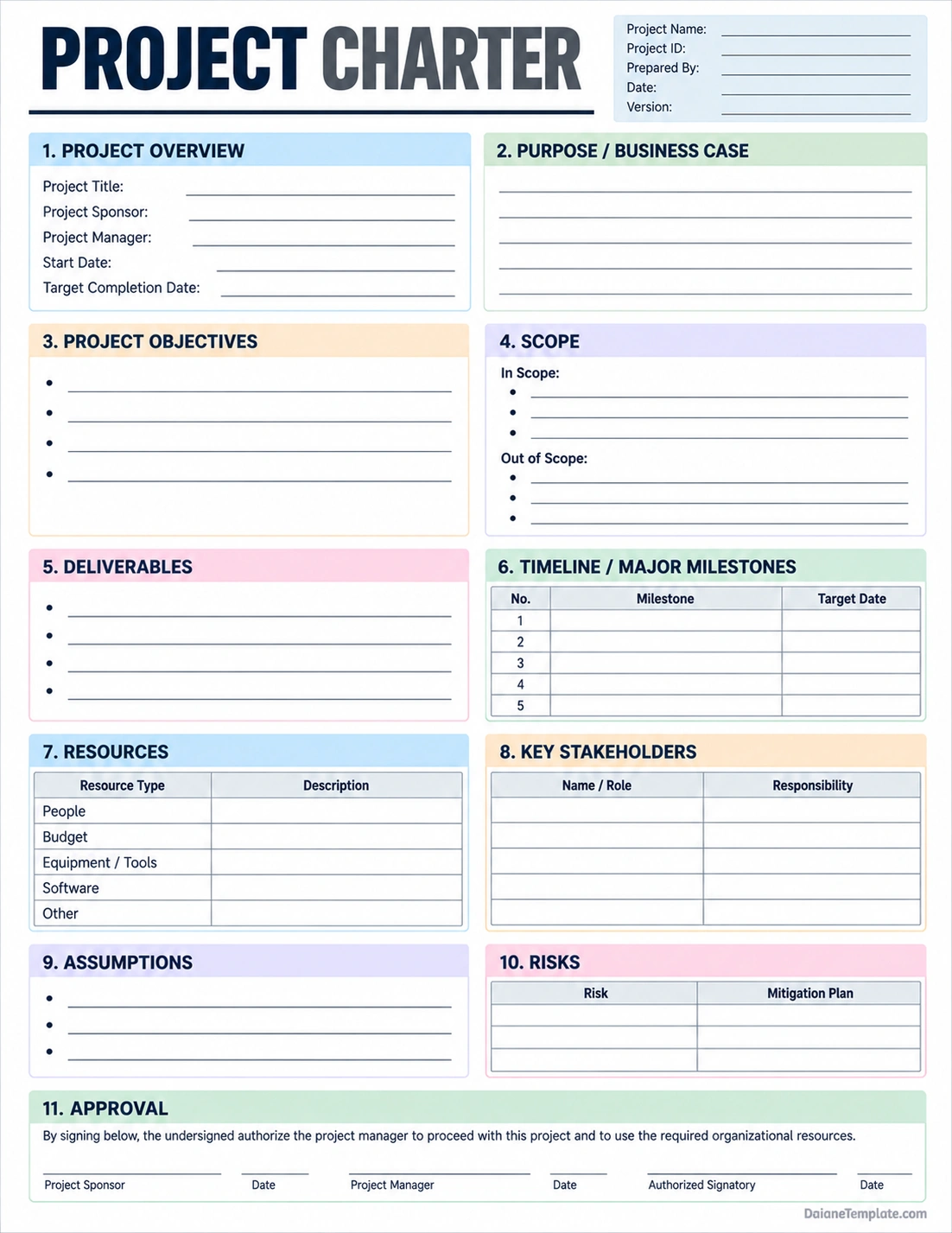
A project charter template makes this process easier by organizing the essential information into a consistent format. Instead of creating a document from scratch, you can use predefined sections to record project objectives, milestones, resource requirements, risks, and approval details. This guide explains what a project charter is, why it matters, what to include, and how to create one effectively.
What Is a Project Charter?
A project charter is a formal document that establishes a project’s existence and authorizes the project manager to coordinate the approved work. It provides a high-level description of what the project intends to achieve, why it is needed, and which people or resources may be involved.
In many organizations, a project sponsor or another authorized decision-maker approves the charter. Once approved, it serves as an initial reference for the project manager, team members, and stakeholders. The charter also helps confirm that the project supports broader organizational priorities.
A project charter typically includes:
- Project purpose: The business need, problem, or opportunity behind the project.
- Objectives: The results the project is expected to achieve.
- Scope: A high-level description of what is included and excluded.
- Deliverables: The main products, services, or outcomes the project should produce.
- Stakeholders: The sponsor, project manager, team, and other key participants.
- Milestones: Major target dates or phases.
- Resources: Initial expectations for people, funding, equipment, and tools.
- Risks and assumptions: Important uncertainties and conditions that may affect the project.
- Approval: The authorization needed to proceed.
The charter is generally created during project initiation. It is not intended to replace the detailed project management plan, which is developed later to explain how the work will be delivered and controlled.
Why Is a Project Charter Important?
A well-written project charter provides structure before significant time, money, and effort are committed. It helps the organization confirm the project’s purpose and gives the team a shared understanding of the intended outcome.
Provides Formal Project Authorization
The charter documents that the project has been approved by the appropriate authority. It also clarifies the project manager’s role and authority within the organization’s policies. This reduces confusion about whether work can begin and who is responsible for key decisions.
Aligns Stakeholders Around Shared Goals
Projects often involve people with different priorities and expectations. A project charter summarizes the objectives, scope, and intended benefits in one place. Stakeholders can review the document and identify misunderstandings before they create delays or conflict.
Defines Boundaries and Expectations
By identifying what the project includes and excludes, the charter helps establish realistic boundaries. It provides an initial reference when stakeholders request additional features, services, or activities. Those requests can then be evaluated through an appropriate change process.
Supports Better Resource Decisions
A charter identifies the resources the project may require and the people responsible for supporting it. This helps management assess whether the proposed work is feasible and whether the necessary expertise, budget, and equipment can be made available.
Creates a Reference for Project Decisions
As the project progresses, teams can refer to the charter when evaluating priorities or resolving questions about the original purpose. If important objectives or assumptions change, the charter may need to be reviewed and updated through the organization’s approval process.
Key Components of a Project Charter Template
A project charter template should include enough information to authorize and guide the project without attempting to document every operational detail. The following sections provide a practical structure for most projects.
Project Overview
Start with the project name, identification number if applicable, sponsor, project manager, preparation date, and anticipated start and completion dates. These details make the document easier to identify, track, and reference.
Purpose and Business Case
Explain why the project is necessary. Describe the problem it addresses, the opportunity it supports, or the business need it fulfills. Where possible, connect the project to organizational goals, customer needs, operational improvements, or expected benefits.
For example, a company might initiate a customer support system project to reduce response times, improve service visibility, and centralize customer records. The business case should explain the need for these improvements rather than simply stating that a new system will be installed.
Project Objectives
Objectives describe the results the project intends to achieve. Clear objectives make it easier to assess success and guide decisions throughout the project lifecycle.
Whenever possible, make objectives specific and measurable. Instead of writing “improve customer service,” define a target such as reducing average response time by a stated percentage within an agreed period. Confirm that the target is realistic and that the team can measure the result.
Project Scope
The scope section summarizes the work included in the project and the work that falls outside it. It helps prevent confusion about deliverables and responsibilities.
For example, a website redesign may include new page layouts, updated navigation, and mobile usability improvements. It might exclude new customer relationship management software or a complete rewrite of the company’s internal systems.
Deliverables and Milestones
Deliverables are the products, services, or outcomes the project is expected to produce. Milestones mark important points in the schedule, such as approval of requirements, completion of a prototype, user testing, or launch.
Record the major deliverables and target dates in the charter. Detailed task assignments and dependencies can be developed in the project schedule later.
Resources and Stakeholders
Identify the expected resource categories, such as project team members, specialist contractors, software, equipment, and funding. Name the project sponsor, project manager, key stakeholders, and other decision-makers where appropriate.
Briefly describe each person’s role or responsibility. Detailed responsibility matrices can be created during planning if the project requires them.
Assumptions, Constraints, and Risks
Assumptions are conditions treated as true for planning purposes, while constraints are limitations such as a fixed deadline, budget ceiling, or restricted resource availability. Risks are uncertain events that could affect project objectives.
Record the most significant items rather than attempting to list every possible concern. A detailed risk register can be maintained separately as the project develops.
Approval and Authorization
The approval section identifies who must authorize the project and when approval was granted. Depending on organizational procedures, it may include the project sponsor, an executive, a department head, or another authorized representative.
Make sure the approval process follows the organization’s governance requirements. A signature section in a template does not automatically make the document legally binding or replace any required internal approvals.
How to Create a Project Charter Step by Step
Preparing a project charter is easier when you follow a structured process. The goal is to create a clear authorization document, not to complete the detailed planning before the project has been approved.
Identify the Business Need
Begin by defining the problem, opportunity, or requirement that justifies the project. Gather relevant information from the project sponsor and key stakeholders. Explain why the work matters and what may happen if the organization does not proceed.
Define the Intended Outcomes
Write down the results the project should deliver. Use measurable objectives where practical, and distinguish the desired business benefits from the outputs the project team will produce.
Establish the Initial Scope
Describe the main work, deliverables, and exclusions at a high level. Avoid unnecessary technical detail, but be specific enough that stakeholders understand the boundaries of the proposed project.
Identify Stakeholders and Resources
Determine who will sponsor, manage, approve, support, and be affected by the project. Identify the major resource requirements and confirm whether they appear achievable. Record unresolved resource questions as assumptions or issues for follow-up.
Document Milestones and Major Risks
List the main phases or milestones and their target dates. Identify significant uncertainties that could affect the objectives, budget, or schedule. These early estimates may become more precise during detailed planning.
Review and Obtain Approval
Share the draft with the project sponsor and relevant stakeholders. Check that the purpose, objectives, scope, and expectations are consistent. Resolve important disagreements before requesting formal approval.
After approval, distribute the charter to the appropriate participants and store the current version in an accessible, controlled location. Use it as a reference when preparing the project management plan.
Project Charter vs. Project Plan
A project charter and a project plan serve different purposes. The charter formally authorizes the project and establishes its high-level direction. The project plan explains how the approved work will be carried out, monitored, and controlled.
A project charter usually focuses on the business need, objectives, scope, major deliverables, key stakeholders, initial milestones, resources, risks, and authorization. A project plan typically contains more detailed information about tasks, dependencies, schedules, budgets, staffing, communications, quality, procurement, and risk management.
In simple terms, the charter explains what the project is intended to achieve and why it should proceed. The project plan explains how the team will deliver it. Both documents may be adjusted as the project evolves, but changes should follow the organization’s approval and governance procedures.
Tips for Using a Project Charter Template Effectively
A template is most useful when it keeps the document focused, readable, and consistent. Apply these practical tips when preparing a project charter:
- Keep the document concise: Focus on the decisions and information needed to authorize the project.
- Use clear language: Avoid vague objectives, unexplained acronyms, and unnecessary technical terms.
- Make objectives measurable: Define success in ways that stakeholders can understand and evaluate.
- State exclusions clearly: Identify important work that is outside the approved scope.
- Use realistic dates: Treat early milestones as initial targets when detailed scheduling is not yet complete.
- Identify decision-makers: Clarify who sponsors, manages, and approves the project.
- Document assumptions: Make uncertain conditions visible instead of treating them as confirmed facts.
- Maintain version control: Record revisions and make sure the team can identify the current approved charter.
- Review when circumstances change: Follow the appropriate process when major objectives, scope, or authorization requirements change.
For a small internal initiative, a one- or two-page charter may be sufficient. Larger projects may need more detail, supporting business case documents, or additional approval records. Adapt the template to the project’s complexity and organizational requirements.
Frequently Asked Questions About Project Charters
What is the main purpose of a project charter?
The main purpose of a project charter is to formally authorize a project and establish its high-level objectives, scope, stakeholders, and expectations. It gives the project manager an approved starting point and clarifies the project’s purpose.
Who prepares a project charter?
The project sponsor, project manager, business analyst, or another designated representative may prepare the document, depending on the organization’s process. The project sponsor or an authorized decision-maker typically approves it.
When should a project charter be created?
A project charter is generally prepared during project initiation, before detailed project planning begins. It helps establish the project’s purpose and authorization before substantial work or resource commitments are made.
Is a project charter the same as a project proposal?
No. A project proposal typically presents an idea or recommended solution for consideration. A project charter documents the formal authorization and high-level direction of an approved project. In some organizations, information from a proposal or business case is used to prepare the charter.
Does every project need a project charter?
Many organizations use project charters for formal projects, but the exact requirement depends on internal policies, project size, risk, and governance needs. Small tasks may use a simplified approval document, while larger initiatives often require a more detailed charter.
Can a project charter change after approval?
Yes. Important changes may require the charter to be reviewed or revised, particularly when objectives, scope, resources, or major expectations change. Follow the organization’s change-control and approval procedures, and keep a record of the current approved version.
How long should a project charter be?
There is no universal length. A simple project may need only one or two pages, while a complex initiative may require additional sections or supporting documents. The charter should be detailed enough to support authorization without duplicating the full project plan.
Conclusion
A project charter establishes the foundation for a successful project by documenting its purpose, objectives, scope, stakeholders, resources, and approval requirements. It helps align expectations, clarify responsibilities, and authorize the project manager to begin the approved work.
Using a project charter template makes it easier to organize the essential information and maintain a consistent format. Adapt the sections to the project’s needs, define measurable objectives, identify important risks, and obtain approval from the appropriate decision-makers. With a clear charter in place, the team can move into detailed planning with a stronger understanding of what the project must accomplish and why it matters.
Download: Project Charter Template
