A clear project scope is essential for keeping a project organized, manageable, and aligned with its intended goals. It explains what a project will accomplish, which deliverables are expected, what work is included, and what falls outside the agreed boundaries. Without a well-defined scope, teams may face missed deadlines, unexpected costs, unclear responsibilities, and continuous requests for additional work.
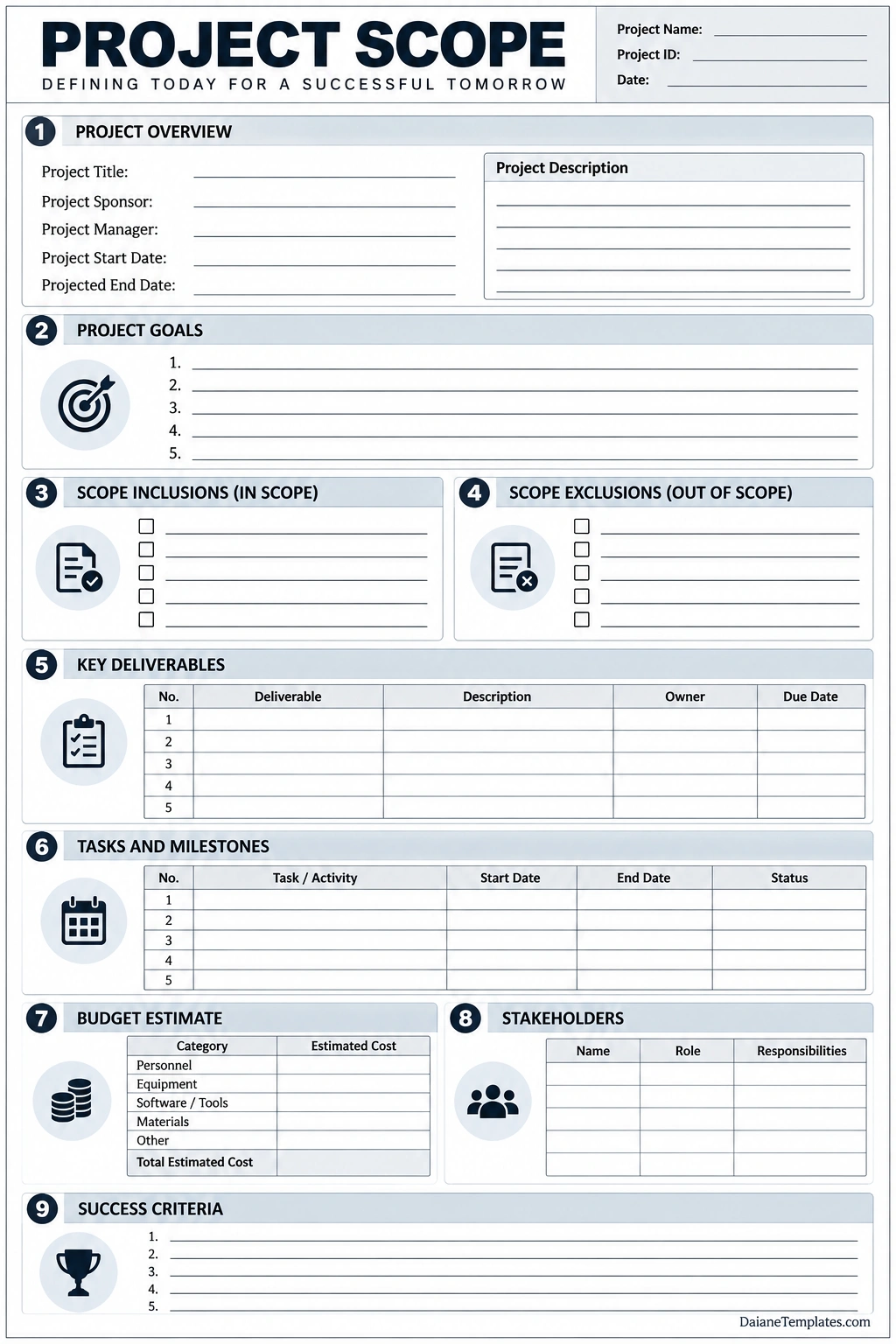
A project scope template makes this planning process easier by providing a structured place to document project objectives, tasks, deliverables, deadlines, budgets, and stakeholder expectations. Whether you are managing a business initiative, launching a website, coordinating a marketing campaign, or overseeing an internal improvement project, a written scope helps everyone understand what success looks like.
In this guide, you will learn what project scope means, which elements to include in a scope document, how to create one step by step, and how to prevent scope creep throughout the project lifecycle.
What Is Project Scope?
Project scope defines the work required to deliver a project’s intended results. It establishes the project’s boundaries by identifying its objectives, deliverables, tasks, requirements, constraints, and exclusions.
A well-defined project scope helps project managers determine what needs to be completed, who is responsible for the work, and how success will be evaluated. It also provides a reference point when stakeholders request changes or when the team needs to make decisions about priorities.
For example, the scope of a website redesign project might include updating five existing pages, improving mobile usability, and revising the navigation menu. Developing a mobile application or creating an entirely new online store might be excluded unless those activities are specifically approved.
Defining these boundaries early helps prevent misunderstandings and keeps the project focused on its agreed objectives.
What Is a Project Scope Template?
A project scope template is a reusable document that helps teams define and record the essential details of a project before work begins. Instead of building a scope document from scratch, you can use a consistent format to capture the information needed for planning, approval, and execution.
A printable project scope worksheet can be especially useful during planning meetings, stakeholder discussions, and project kickoff sessions. Teams can write down requirements, identify exclusions, assign responsibilities, and review important deadlines in one place.
Depending on the project’s complexity, the template may be a one-page worksheet or part of a more detailed project scope statement. Larger projects may also require separate schedules, budgets, risk registers, and requirements documents.
Why Is Project Scope Important?
Defining project scope provides a shared understanding of what the team is expected to deliver. It also supports better decisions throughout the project lifecycle.
1. Establishes Clear Project Objectives
A documented scope connects project activities to specific business or organizational goals. Team members can use those objectives to prioritize tasks and evaluate whether proposed work contributes to the intended outcome.
2. Controls Project Costs
When the required work is clearly defined, project managers can estimate the resources, materials, staffing, and tools needed. This makes budgeting more realistic and helps identify requests that could increase costs beyond the original plan.
3. Improves Scheduling
Identifying deliverables and tasks early helps the team develop a practical project timeline. Dependencies become easier to recognize, and important milestones can be scheduled before the project begins.
4. Clarifies Roles and Responsibilities
A project scope document can identify the people responsible for delivering work, approving decisions, and providing essential information. Clear ownership reduces duplicated effort and helps prevent important tasks from being overlooked.
5. Prevents Scope Creep
Scope creep occurs when additional work enters a project without appropriate review or approval. A clear baseline makes it easier to distinguish between agreed requirements and new requests that may affect deadlines, costs, or resources.
Key Elements of a Project Scope Document
A useful project scope document contains enough detail to guide the team without making the planning process unnecessarily complicated. Consider including the following sections.
Project Overview
Start with the project name, project sponsor, project manager, start date, projected completion date, and a brief description. This information identifies the project and provides context for anyone reviewing the document.
Project Goals and Objectives
Describe the results the project is intended to achieve. Whenever possible, make objectives specific and measurable so the team can evaluate progress and determine whether the project has met its goals.
For example, instead of writing “improve the company website,” specify a measurable objective such as reducing the average page loading time to an agreed target by the end of the project.
Scope Inclusions and Exclusions
Clearly separate the work that belongs to the project from work that is not included. This distinction establishes boundaries and reduces the risk of different stakeholders making conflicting assumptions.
- In scope: Activities, features, services, or deliverables the team has agreed to provide.
- Out of scope: Activities, features, or services that are not part of the approved project.
For example, a marketing campaign might include email newsletters and social media content while excluding paid television advertising. Explicit exclusions are particularly useful when stakeholders have different expectations.
Project Deliverables
List the tangible outputs or results the project must produce. Each deliverable should have a clear description and, where appropriate, an assigned owner and due date.
Common project deliverables include reports, software features, training materials, website pages, marketing assets, product prototypes, and completed installations.
Tasks and Milestones
Break the required work into manageable activities and identify important milestones. A milestone represents a significant event or checkpoint, such as completing a design review, approving a prototype, or launching a finished product.
Include start dates, end dates, dependencies, and task owners when those details are available. A separate project schedule may be necessary for complex projects with many interdependent activities.
Budget and Resource Requirements
Estimate the resources required to complete the agreed work. Depending on the project, this may include labor, equipment, software, materials, external services, and other expenses.
Document budget assumptions and clarify whether contingency funds are included. A scope document should help explain what the project needs, while the detailed budget can be maintained in a separate financial planning document.
Stakeholders and Responsibilities
Identify the people or groups who influence the project or are affected by its results. Record their roles, responsibilities, approval authority, and involvement where relevant.
Important stakeholders may include the project sponsor, project manager, team members, customers, department leaders, suppliers, and end users.
Success Criteria and Acceptance Requirements
Define how the team and stakeholders will determine whether the project has been completed successfully. Acceptance criteria should describe the required conditions, quality standards, or measurable results that deliverables must meet.
Clear criteria reduce subjective judgments at the end of the project and help teams identify issues before final approval.
How to Create a Project Scope Step by Step
Creating a project scope does not need to be complicated. Follow these steps to build a practical document that supports effective project planning.
Step 1: Gather Requirements
Talk with the project sponsor, stakeholders, and people who will use or deliver the final result. Ask what problem the project should solve, what outcomes are expected, and which requirements are essential.
Record assumptions, constraints, dependencies, and unresolved questions. Confirming these details early reduces the chance of expensive misunderstandings later.
Step 2: Define the Project Objectives
Translate stakeholder expectations into clear project goals. Identify the outcomes that matter most and determine how progress or success will be measured.
Make sure the objectives are realistic given the available budget, schedule, team capacity, and technical requirements.
Step 3: Identify Deliverables
List the outputs needed to achieve each objective. Describe what each deliverable should contain, who will be responsible for producing it, and how it will be reviewed or accepted.
Step 4: Set Project Boundaries
Document included activities and explicitly identify excluded work. If an item is uncertain, resolve the question with the relevant stakeholders rather than leaving it open to interpretation.
Step 5: Estimate Tasks, Time, and Costs
Break deliverables into the tasks required to complete them. Estimate the effort, resources, and duration of each task, then use those estimates to develop a schedule and budget.
Account for dependencies, approval periods, resource availability, and reasonable contingency allowances where appropriate.
Step 6: Define Acceptance Criteria
Specify how each major deliverable will be evaluated. Criteria may include functionality, completeness, performance, quality standards, compliance requirements, or formal stakeholder approval.
Step 7: Review and Approve the Scope
Share the completed scope document with the appropriate stakeholders. Confirm that the objectives, deliverables, exclusions, budget assumptions, and deadlines reflect a shared understanding.
Record the approval and store the document where the project team can access the current version.
Step 8: Manage Changes Throughout the Project
Use the approved scope as a baseline for monitoring progress. When a new request arises, evaluate its impact on costs, timing, resources, quality, and existing commitments before approving the change.
Update the relevant project documents after a change is authorized, and communicate the decision to affected stakeholders.
Project Scope vs. Project Plan
Project scope and project plan are related, but they serve different purposes. Understanding the distinction helps you choose the right document for each planning activity.
- Project scope: Defines what the project will deliver, which work is included, and what is excluded.
- Project plan: Explains how the work will be carried out, including schedules, resources, responsibilities, communication, and risk management.
- Project scope statement: A formal description of the project boundaries, deliverables, assumptions, constraints, and acceptance requirements.
- Work breakdown structure: Organizes the total project scope into smaller, manageable components.
These documents complement one another. The scope establishes the agreed work, while the project plan describes how the team intends to complete it.
Tips for Preventing Scope Creep
Even well-planned projects can change as new information becomes available. The goal is not to prevent every change but to make sure changes are evaluated and approved appropriately.
- Document requirements: Keep a written record of agreed deliverables and boundaries.
- Establish a change process: Specify who can request, review, and approve changes.
- Assess the impact: Evaluate how each proposed change affects time, cost, quality, and resources.
- Communicate decisions: Inform affected stakeholders when requests are accepted, postponed, or rejected.
- Monitor progress: Compare completed work against the approved scope and milestones.
- Maintain version control: Keep the current scope document clearly identified so the team does not rely on outdated information.
For smaller projects, a simple written approval process may be sufficient. Larger projects may require formal change requests, impact assessments, and review by a project governance group.
Common Project Scope Mistakes to Avoid
Several planning mistakes can make a scope document less effective. Watch for these problems when defining a new project.
- Vague objectives: General statements make it difficult to measure progress or confirm success.
- Missing exclusions: Unstated boundaries can create conflicting expectations about what the team will deliver.
- Unrealistic deadlines: Schedules that ignore dependencies and approval periods can cause delays.
- Incomplete requirements: Missing stakeholder input can lead to rework and unexpected expenses.
- Unclear ownership: Tasks without assigned responsibility may be delayed or forgotten.
- No acceptance criteria: Stakeholders may disagree about whether the final work meets expectations.
- Uncontrolled changes: Adding work without reviewing its impact can undermine the original plan.
Reviewing these areas before project approval can make the scope more reliable and easier to manage.
Frequently Asked Questions About Project Scope
What is the main purpose of project scope?
The main purpose of project scope is to define the work required to achieve a project’s objectives. It establishes deliverables, boundaries, requirements, and exclusions so stakeholders understand what the project will and will not provide.
What should a project scope statement include?
A project scope statement typically includes project objectives, deliverables, work requirements, inclusions, exclusions, assumptions, constraints, and acceptance criteria. Depending on the project, it may also summarize milestones, budget expectations, and stakeholder responsibilities.
Who is responsible for defining project scope?
The project manager often coordinates scope development, but the process should involve the project sponsor, relevant stakeholders, subject matter experts, and delivery team. The appropriate sponsor or authorized decision-maker usually approves the scope according to the organization’s governance process.
What is the difference between scope and objectives?
Project objectives describe the results the project aims to achieve. Project scope defines the work and deliverables required to achieve those results, along with the boundaries that determine what is included and excluded.
How does a project scope template help project managers?
A project scope template provides a consistent structure for documenting goals, deliverables, tasks, budgets, milestones, exclusions, and acceptance criteria. It saves planning time, improves communication, and gives the team a shared reference throughout the project.
What is scope creep in project management?
Scope creep is the gradual expansion of project requirements or work beyond the approved scope without appropriate evaluation or control. It can increase costs, delay completion, and strain available resources. A documented scope and clear change approval process help manage this risk.
When should project scope be documented?
Project scope should be documented during the planning phase, before the team commits to substantial execution work. It may be refined as requirements become clearer, but the approved baseline should be maintained and changes should follow the agreed process.
Can a project scope template be used for small projects?
Yes. A project scope template can be simplified for small projects by focusing on the objective, deliverables, included and excluded work, owner, deadline, estimated cost, and success criteria. The level of documentation should match the project’s complexity and risk.
Conclusion
A clearly defined project scope helps teams understand their responsibilities, manage resources, set realistic expectations, and deliver the intended results. By documenting objectives, deliverables, exclusions, milestones, costs, and acceptance criteria, you create a practical foundation for effective project management.
A printable project scope template makes this process easier by keeping essential planning information organized in one place. Use it at the beginning of a project, review it with stakeholders, and update it whenever an approved change affects the agreed work.
With clear boundaries and a consistent change management process, you can reduce misunderstandings, control scope creep, and keep your project focused on its most important goals.
Download: Project Scope Template
