A relationship agreement helps couples establish clear expectations, communicate their needs, and build a stronger partnership. By discussing important topics such as finances, household responsibilities, personal boundaries, and long-term goals, partners can reduce misunderstandings and develop a shared understanding of their relationship.
Every relationship is different. Some couples need to clarify how they will manage shared expenses, while others want to establish expectations around communication, personal space, or resolving disagreements. A written relationship agreement gives both partners an opportunity to discuss these topics openly and record the commitments they choose to make.
Whether you are starting a new relationship, moving in together, or strengthening a long-term partnership, creating an agreement can encourage honest conversations. This guide explains what a relationship agreement is, what to include, and how to create a practical document that reflects your shared values and individual needs.
What Is a Relationship Agreement?
A relationship agreement is a document that outlines the expectations, boundaries, responsibilities, and commitments two partners agree to follow in their relationship. It can serve as a shared reference for everyday decisions and help couples communicate more clearly about what matters to them.
Unlike a traditional legal contract, a personal relationship agreement is often designed primarily for communication and mutual understanding. It may cover emotional needs, financial arrangements, household duties, privacy, conflict resolution, and plans for the future.
The agreement can be informal or more structured, depending on the couple’s preferences. Some partners write a simple list of shared commitments, while others use a printable relationship agreement template with dedicated sections for different topics.
Why Is a Relationship Agreement Important?
Many relationship disagreements begin with different assumptions. One partner may expect expenses to be shared equally, while the other believes contributions should reflect individual income. Similarly, couples may have different expectations about personal time, household chores, or communication during disagreements.
A relationship agreement creates an opportunity to discuss these differences before they become recurring sources of frustration.
1. Encourages Open Communication
Writing an agreement encourages partners to explain their needs, listen to each other, and ask questions. It can make difficult conversations easier by giving both people a clear topic to discuss.
2. Establishes Healthy Boundaries
Boundaries help partners understand each other’s comfort levels, privacy needs, and personal limits. An agreement can document expectations around alone time, friendships, digital privacy, and respectful communication.
Healthy boundaries should be discussed collaboratively. They should not be used to control, isolate, threaten, or intimidate a partner.
3. Clarifies Shared Responsibilities
Couples who live together often benefit from discussing chores, shopping, meal preparation, childcare, and other daily responsibilities. A written plan can make these expectations more visible and reduce the risk that one person carries an unfair share of the workload.
4. Helps Manage Financial Expectations
Money can be a sensitive topic, especially when partners have different incomes, spending habits, or financial goals. A relationship agreement can outline how shared bills will be handled, how savings goals will be approached, and when financial decisions should be discussed together.
5. Provides a Framework for Resolving Conflict
Disagreements are a normal part of relationships. An agreement can help couples decide how they want to approach difficult conversations, take breaks when emotions run high, and return to unresolved issues respectfully.
What Should a Relationship Agreement Include?
The contents of a relationship agreement should reflect the couple’s circumstances and priorities. You do not need to address every possible issue. Start with the topics that are most important to your relationship.
1. Shared Vision and Relationship Goals
Begin by discussing what you want your relationship to look and feel like. You might focus on trust, companionship, emotional support, personal growth, family life, or shared experiences.
Consider questions such as:
- What does a healthy relationship mean to each of us?
- Which values do we want to prioritize?
- What are our short-term and long-term goals?
- How can we support each other’s personal ambitions?
Recording a shared vision helps establish a common direction while allowing each partner to maintain individual goals.
2. Communication Expectations
Communication provisions describe how partners want to share information, express feelings, and discuss concerns. They may include expectations about regular check-ins, listening without interruption, or discussing important decisions before acting.
Couples may also agree to avoid insults, threats, or dismissive behavior during disagreements. The aim is not to eliminate every conflict but to create a respectful way to address it.
3. Personal Boundaries and Privacy
Discuss what privacy and personal space mean to each partner. Relevant topics may include access to personal devices, social media, private conversations, friendships, and time spent independently.
Both partners should be able to express their boundaries freely. An agreement should support mutual respect rather than demand unrestricted access to another person’s private information.
4. Financial Responsibilities
If you share expenses, clarify how you intend to manage them. You might discuss rent, utilities, groceries, transportation, subscriptions, savings, and larger purchases.
Possible arrangements include splitting expenses equally, contributing according to income, or assigning responsibility for particular bills. Choose a method that both partners understand and consider fair.
For significant financial or property arrangements, remember that a personal relationship agreement may not create legally enforceable rights. Separate legal or financial documents may be necessary.
5. Household Chores and Daily Tasks
Partners can use an agreement to clarify who handles routine responsibilities. Consider cleaning, cooking, laundry, grocery shopping, maintenance, and scheduling appointments.
Rather than assuming responsibilities will divide themselves naturally, discuss each person’s availability, preferences, and workload. Review the arrangement when work schedules or other circumstances change.
6. Emotional Needs and Quality Time
Every person experiences connection differently. One partner may value regular conversations, while another feels most connected through shared activities or practical support.
Discuss how you each prefer to give and receive affection, what helps you feel supported, and how you want to spend meaningful time together. Treat these preferences as opportunities to understand each other rather than fixed rules that cannot change.
7. Independence and Personal Growth
A healthy partnership can make room for individual interests and friendships. Consider how you will support hobbies, professional goals, family relationships, personal development, and time alone.
Agreeing to respect independence can help both partners maintain their identities while continuing to build a shared life.
8. Conflict Resolution
Discuss what you will do when disagreements arise. You might agree to speak calmly, avoid personal attacks, take a short break when necessary, and return to the conversation when both partners are ready.
It can also help to identify when outside support, such as couples counseling, may be useful. If either partner feels unsafe, threatened, or controlled, personal safety should take priority over following an agreement.
9. Future Plans and Changing Circumstances
Couples may want to discuss marriage, living arrangements, children, career changes, relocation, or caring for family members. These subjects can involve different expectations, so an honest conversation can help identify areas of agreement and uncertainty.
You do not need to make every decision immediately. Record what you have agreed on and identify which topics need further discussion.
How to Create a Relationship Agreement Step by Step
Creating a relationship agreement does not need to be complicated. A thoughtful conversation and a clear structure are usually enough to get started.
Step 1: Choose the Right Time
Set aside time when both partners can talk without unnecessary distractions. Avoid introducing major topics in the middle of an argument or when one person feels pressured to agree.
Step 2: Identify Your Priorities
Each partner should independently consider their needs, boundaries, and expectations. Compare your answers and identify topics that deserve attention.
Step 3: Discuss Each Topic Together
Take one subject at a time. Explain your perspective, ask questions, and listen carefully to your partner’s concerns. Focus on finding workable arrangements rather than winning an argument.
Step 4: Write Clear, Practical Commitments
Use simple language to describe what you have agreed to do. For example, instead of writing that both partners will communicate better, you might agree to set aside time each week to discuss schedules, concerns, and shared plans.
Make sure the wording reflects a genuine mutual decision rather than a demand imposed by one person.
Step 5: Review the Agreement Together
Read the complete document and confirm that both partners understand each section. Discuss any wording that feels unclear, unfair, unrealistic, or inconsistent with either person’s boundaries.
Step 6: Keep a Copy and Schedule Reviews
Store the agreement somewhere both partners can access it. Consider reviewing it every few months or whenever a significant life change affects your relationship.
A relationship agreement should be flexible enough to evolve as your needs, circumstances, and understanding of each other change.
Tips for Making Your Relationship Agreement Work
A written document is most useful when it supports everyday behavior. These practical tips can help you turn shared intentions into habits.
- Keep it realistic: Choose commitments that both partners can reasonably maintain.
- Use positive language: Describe what you want to encourage rather than focusing only on restrictions.
- Make room for differences: Partners do not need identical preferences to build a healthy relationship.
- Respect consent: Both people should be free to raise concerns, suggest changes, or decline terms they are uncomfortable with.
- Review responsibilities fairly: Adjust financial contributions and household tasks when circumstances change.
- Focus on progress: Treat the agreement as a guide for learning and improvement rather than a tool for criticizing mistakes.
- Protect privacy: Share the document only when both partners are comfortable doing so.
Relationship Agreement Template: How to Use One
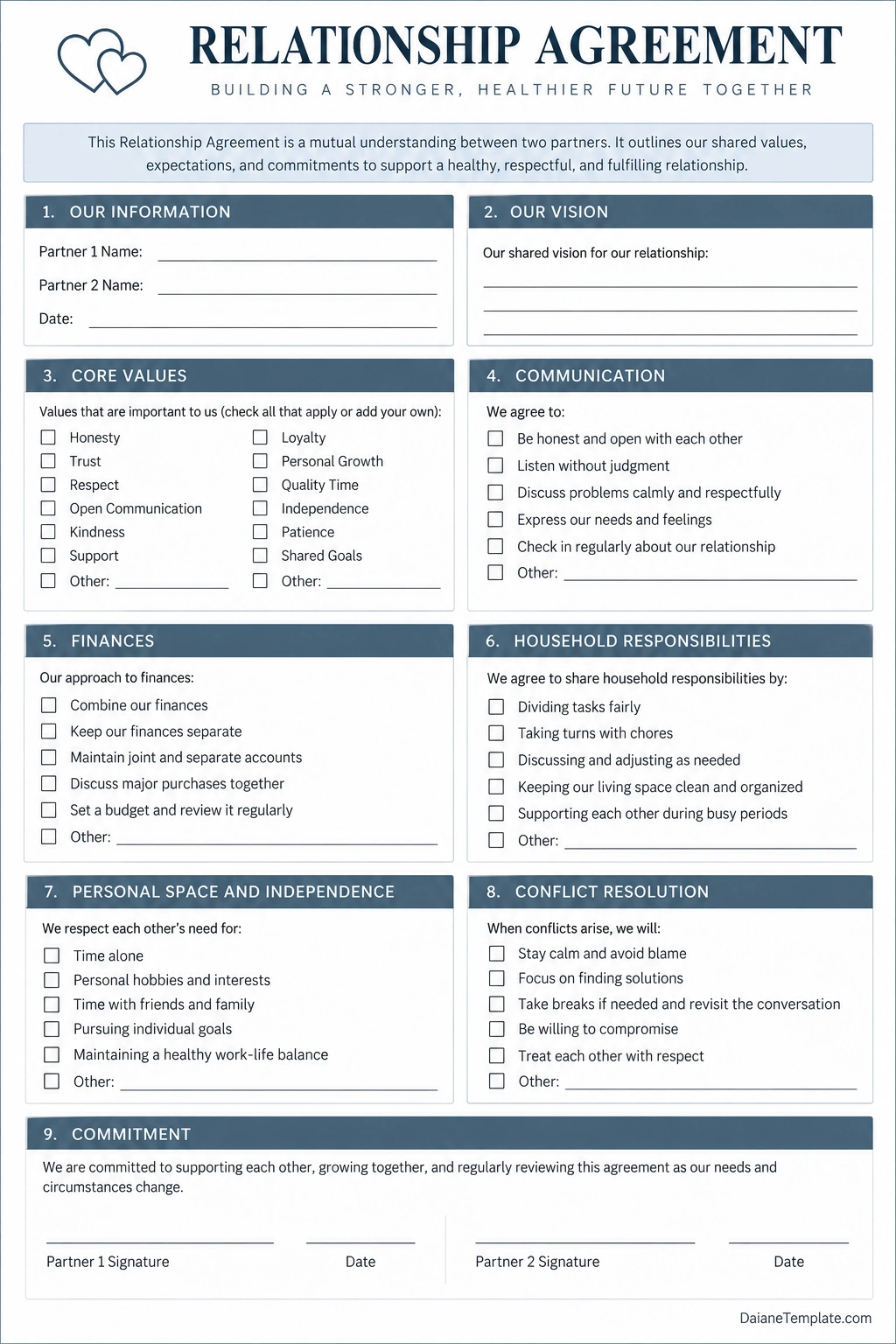
A relationship agreement template provides a structured starting point for discussing important topics. It can include sections for partner information, shared values, communication, finances, household responsibilities, personal space, conflict resolution, and commitments.
Start by reviewing each section together. Complete only the parts that are relevant to your relationship and add space for any topics that need more attention.
Use the template to guide discussion, not to force agreement. If you disagree about a topic, leave room for further conversation rather than recording a commitment that one partner does not genuinely accept.
Remember that a printable relationship agreement is generally a personal planning tool. If you intend to create legally binding financial, property, cohabitation, or other arrangements, consult a qualified legal professional about the appropriate document and requirements in your jurisdiction.
Frequently Asked Questions About Relationship Agreements
What is the purpose of a relationship agreement?
A relationship agreement helps partners clarify expectations, communicate boundaries, and document shared commitments. It can support discussions about finances, household responsibilities, privacy, emotional needs, and future goals.
Are relationship agreements legally binding?
A personal relationship agreement is often intended as a communication tool rather than a legal contract. Its legal effect depends on its contents, the circumstances, and applicable law. Formal arrangements involving property or finances may require separate legal documents.
When should couples create a relationship agreement?
Couples can create an agreement at any stage of a relationship. It may be especially useful when moving in together, combining finances, planning major life changes, or addressing recurring misunderstandings.
What is the difference between a relationship agreement and a relationship contract?
The terms are sometimes used interchangeably in everyday conversation. However, a personal relationship agreement generally focuses on shared expectations, while a relationship contract may refer to a document intended to establish specific legal obligations. The actual legal effect depends on the document and applicable law.
Can a relationship agreement cover finances?
Yes. Partners can discuss shared expenses, savings goals, budgeting, and financial responsibilities. However, a personal agreement may not establish enforceable property rights or override existing legal obligations.
How often should a relationship agreement be updated?
Review it periodically and whenever important circumstances change. Moving, changing jobs, having children, or combining finances may create new needs that deserve discussion.
Can unmarried couples use a relationship agreement?
Yes. Unmarried couples can use a personal agreement to clarify expectations and responsibilities. If they want legally enforceable arrangements involving property, expenses, or shared assets, they should seek advice about the relevant local requirements.
Conclusion
A relationship agreement provides a practical way for couples to discuss expectations, establish boundaries, and build a shared understanding of their partnership. By addressing communication, finances, household responsibilities, personal space, and future goals, partners can reduce avoidable misunderstandings and approach important decisions more confidently.
Start with an honest conversation, focus on realistic commitments, and make sure both partners have a genuine voice in the process. Review the agreement as your relationship evolves, and treat it as a flexible guide rather than a rigid set of rules.
With a clear relationship agreement template, couples can turn important conversations into practical commitments that support trust, mutual respect, and a healthier relationship.
Download: Relationship Agreement Template
