When applying for jobs, scholarships, or research opportunities, having a well-crafted curriculum vitae (CV) can make all the difference.
Your CV acts as a marketing tool, showcasing your academic, professional, and personal history to potential employers, universities, or grant committees. It is essentially a snapshot of your qualifications and achievements, aiming to secure an interview or acceptance by highlighting your unique skills and experiences relevant to the specific opportunity.
What is a Curriculum Vitae?
A curriculum vitae, commonly referred to as a CV, is a detailed document that provides a comprehensive overview of your background and accomplishments. Unlike a resume, which is typically concise and tailored to a specific job application, a CV is more in-depth and covers a broader range of information.
Your CV should include details about your education, work history, publications, awards, and skills, all to demonstrate why you are the best candidate for a particular role.
Why is a Curriculum Vitae Important?
Your curriculum vitae serves as a vital first impression for potential employers or academic institutions. It allows them to quickly assess your qualifications and determine if you are a good fit for the opportunity. A well-crafted CV can set you apart from other candidates by highlighting your accomplishments and showcasing your expertise in a particular field. In academia, research, or medicine, where competition can be fierce, having a strong CV can be the key to securing the position you desire.
Creating a Lasting Impression
Your CV is often the first point of contact between you and potential employers or reviewers. By presenting a well-organised and compelling document, you can make a lasting impression that sets you apart from other candidates. A strong CV demonstrates your professionalism, attention to detail, and commitment to excellence, all of which are qualities that employers value in their candidates.
Highlighting Your Accomplishments
One of the primary purposes of a CV is to showcase your achievements and qualifications. By detailing your education, work experience, publications, awards, and skills, you can provide a comprehensive overview of your background and demonstrate why you are the best candidate for the opportunity. Your accomplishments serve as evidence of your capabilities and potential contributions to the role you are pursuing.
Establishing Credibility and Expertise
A well-crafted CV not only highlights your achievements but also establishes your credibility and expertise in your field. By showcasing your educational background, work experience, and publications, you can demonstrate your knowledge and proficiency to potential employers or reviewers. This credibility can significantly influence their decision-making process and increase your chances of success.
Standing Out in a Competitive Environment
In competitive fields such as academia, research, or medicine, having a strong CV is essential to stand out from the crowd. With numerous qualified candidates vying for limited opportunities, your curriculum vitae can be the determining factor that sets you apart and secures you the interview or acceptance you desire. By carefully crafting a compelling and well-organized CV, you can increase your visibility and competitiveness in the job market.
Building Your Professional Brand
Your CV is an essential tool for building your professional brand and reputation. It serves as a reflection of your accomplishments, skills, and qualifications, communicating your value to potential employers, universities, or grant committees. By consistently updating and enhancing your CV with new experiences and achievements, you can strengthen your professional brand and position yourself as a top candidate in your field.
What to Include in Your Curriculum Vitae?
When creating your CV, there are several key components that you should include to ensure it effectively markets your qualifications and achievements. These components provide a comprehensive overview of your background and serve as a roadmap for potential employers or reviewers to assess your suitability for the opportunity.
Personal Information
The personal information section of your CV should include essential details about yourself, such as your full name, contact information, and any relevant personal details. This section serves as the introduction to your CV and provides a brief overview of who you are as a candidate. Make sure to customize this information based on the context of the opportunity you are pursuing.
Education
Your educational background is a critical component of your CV, especially for academic or research positions. List your degrees, institutions attended, dates of graduation, and any relevant coursework or academic achievements. Highlighting your educational qualifications demonstrates your expertise in a particular field and provides insight into your academic background.
Work Experience
Detailing your work experience is essential for showcasing your professional accomplishments and skills. Include information about your job titles, responsibilities, achievements, and the organizations you have worked for. Highlight specific projects or initiatives that demonstrate your expertise and contributions to your field. Your work experience provides valuable insight into your professional background and capabilities.
Publications
If you have authored or co-authored any publications, articles, or research papers, be sure to include them in your CV. Publications can significantly enhance your credibility and demonstrate your expertise in a particular subject area. Provide details about each publication, such as the title, publication date, journal or publisher, and any relevant co-authors. Highlighting your publications showcases your research skills and contributions to your field.
Awards and Honours
Highlighting any awards, scholarships, or honors you have received throughout your academic or professional career can distinguish you from other candidates. Include information about each award, the criteria for selection, and the significance of the recognition. Awards and honors serve as a testament to your dedication, excellence, and accomplishments in your field, providing validation of your skills and contributions. Including awards and honors in your CV demonstrates your commitment to excellence and can reinforce your qualifications for the opportunity you are pursuing.
Skills
Highlighting your skills and abilities is essential for demonstrating your qualifications and expertise. Include a section that showcases relevant skills, such as languages spoken, software proficiency, technical skills, and any other capabilities that are relevant to the opportunity. Tailor this section to align with the requirements of the position and emphasize the skills that set you apart as a candidate.
Professional Development
Professional development activities, such as certifications, continuing education courses, workshops, or seminars, can further enhance your qualifications and demonstrate your commitment to ongoing learning and growth. Include any relevant professional development activities in your CV to showcase your dedication to expanding your skills and knowledge in your field.
Research Experience
If you have conducted research projects, studies, or investigations, be sure to include details about your research experience in your CV. Highlight the objectives, methodologies, findings, and outcomes of your research projects, as well as any publications or presentations resulting from your work. Research experience demonstrates your analytical, critical thinking, and problem-solving skills, which are valuable assets in many academic and research roles.
Teaching Experience
If you have experience as a teacher, instructor, tutor, or mentor, include information about your teaching experience in your CV. Detail the courses you have taught, the institutions or organizations where you have taught, and any teaching methodologies or techniques you have employed. Teaching experience showcases your communication skills, subject matter expertise, and ability to educate and inspire others.
Professional Affiliations
Membership in professional organizations, associations, or societies can demonstrate your active involvement in your field and commitment to professional development. Include any relevant professional affiliations in your CV to showcase your connections within the industry, access to resources and networking opportunities, and engagement in ongoing professional development activities.
Volunteer Work
Volunteer work and community service can be an important aspect of your background and provide insight into your values, interests, and commitment to giving back. Include any volunteer experiences in your CV, highlighting the organizations you have volunteered with, the roles you have undertaken, and the impact of your volunteer work. Volunteering can demonstrate your leadership, teamwork, and interpersonal skills, as well as your dedication to making a positive difference in the community.
Professional References
Including professional references in your CV can provide additional validation of your qualifications and expertise. Select references who can speak to your skills, accomplishments, and work ethic, and ensure they are willing to provide a positive recommendation if contacted. Include the contact information for your professional references or indicate that references are available upon request.
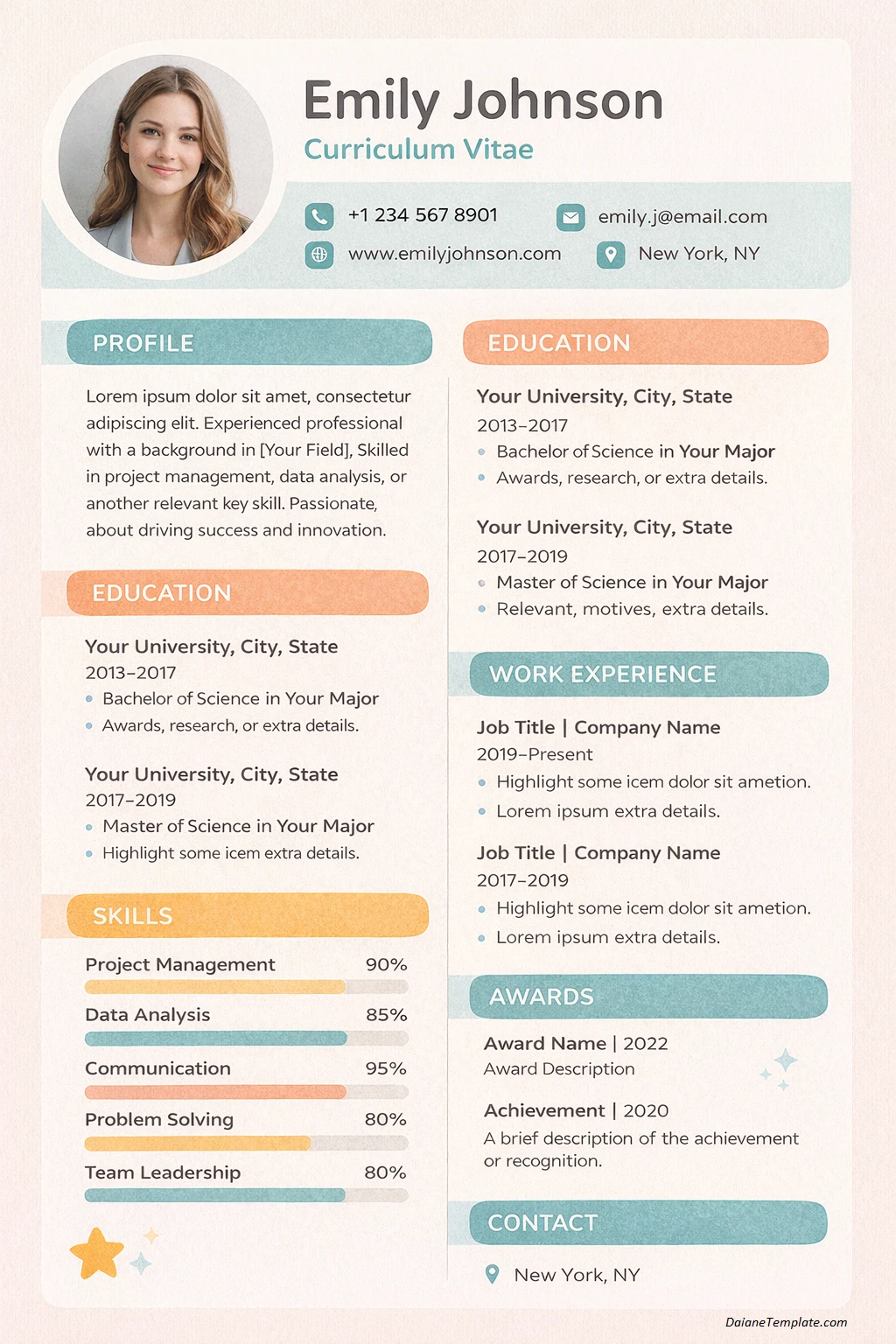
Free Curriculum Vitae Template
A Curriculum Vitae helps you present your academic, professional, and research experience in a clear and structured format. It provides organized sections for education, work history, skills, publications, and achievements, making it easier to showcase your qualifications effectively. With a well-designed template, you can create a polished CV that meets professional and academic standards.
Download our Curriculum Vitae Template today to present your credentials clearly and confidently.
Curriculum Vitae Template – DOWNLOAD
