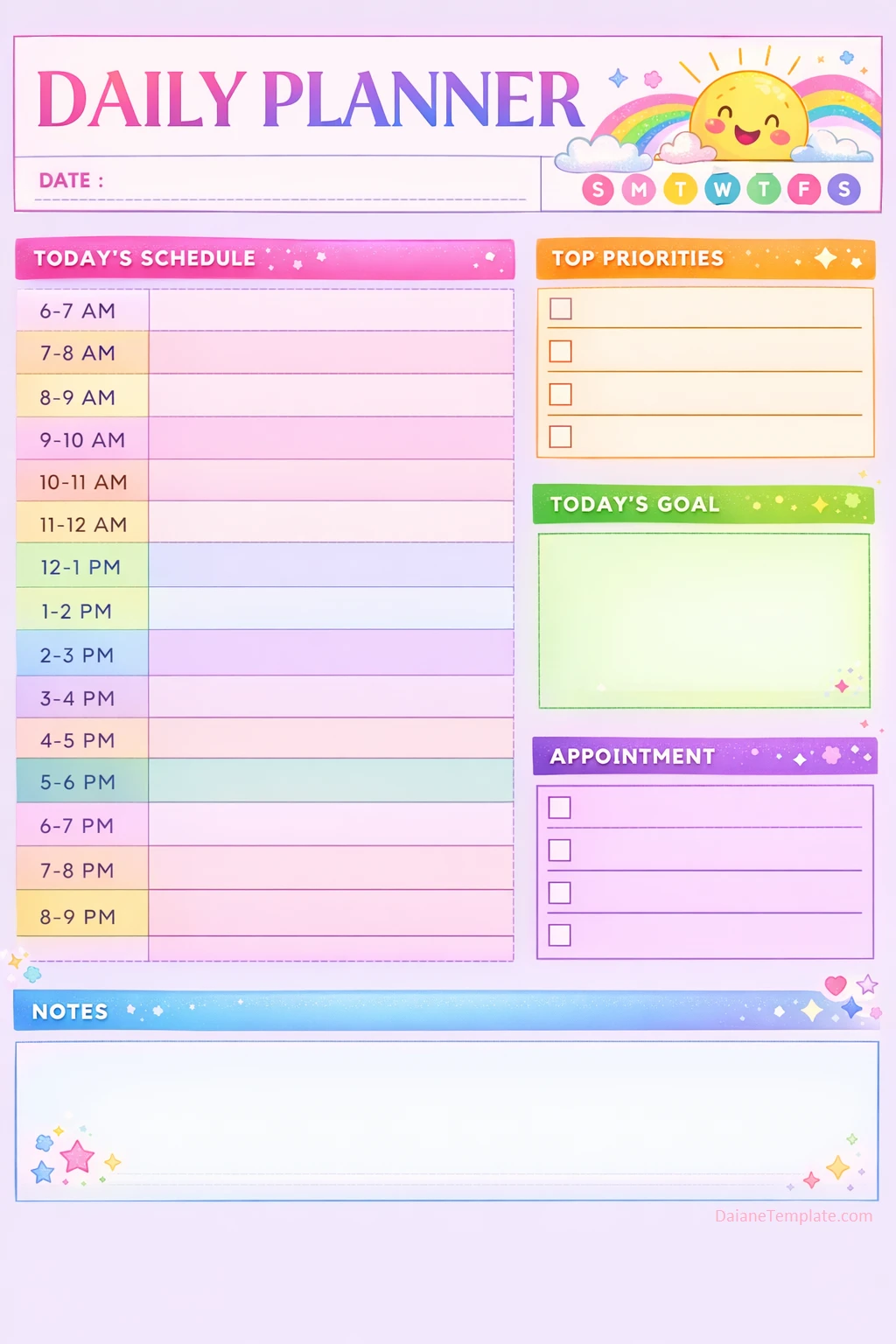
What is a Day-to-Day Planner?
A day-to-day planner is more than just a simple notebook; it is a powerful tool that serves as the cornerstone of effective time management and organization. At its core, a day-to-day planner is a structured system that allows individuals to track their daily tasks, appointments, and goals in one centralized location.
By providing a visual representation of your schedule, a planner gives you a bird’s eye view of your day and helps you plan and prioritize your activities efficiently.
Why Use a Day-to-Day Planner?
The benefits of using a day-to-day planner extend far beyond simple task management. Here are some compelling reasons why incorporating a planner into your daily routine can transform your productivity and overall well-being:
Reduced Mental Clutter
One of the greatest advantages of using a day-to-day planner is that it helps declutter your mind by providing a designated space for all your tasks and commitments. Rather than trying to remember everything off the top of your head, you can offload your thoughts onto paper or a digital interface, freeing up mental bandwidth for more creative and strategic thinking.
When your tasks are clearly laid out in front of you, you can approach them with a sense of clarity and focus, knowing exactly what needs to be done and when. This can alleviate the cognitive load associated with trying to keep track of multiple responsibilities simultaneously, reducing stress and enhancing your overall mental well-being.
Minimized Stress
In today’s fast-paced world, stress is an ever-present companion for many individuals. From looming deadlines to competing priorities, it’s easy to feel overwhelmed by the demands of daily life. A day-to-day planner acts as a buffer against stress by allowing you to prioritize and plan your tasks.
By breaking down your day into manageable chunks and allocating specific time slots for each activity, you can approach your schedule with a sense of calm and control. This proactive approach to time management helps prevent last-minute scrambles and reduces the likelihood of forgetting important tasks, ultimately leading to a more relaxed and stress-free mindset.
Improved Focus
One of the key benefits of using a day-to-day planner is that it helps you stay focused on your priorities and long-term goals. By mapping out your tasks and commitments in advance, you can ensure that your time and energy are directed towards activities that align with your overarching objectives.
Moreover, a day-to-day planner serves as a visual reminder of what matters most to you, whether it’s advancing in your career, spending quality time with loved ones, or pursuing personal hobbies. By keeping your goals at the forefront of your mind, you are less likely to get distracted by trivial matters and more likely to make progress towards your aspirations.
Effective Time Allocation
Time is a finite resource, and how you choose to allocate it can make a significant difference in your productivity and success. A day-to-day planner aids in effective time management by allowing you to block out dedicated time slots for each task and appointment.
By assigning specific start and end times to your activities, you create a structured framework that prevents tasks from bleeding into one another and helps you make the most of every moment. This intentional approach to time allocation ensures that you are working on the right tasks at the right times, maximizing your efficiency and output.
Enhanced Productivity
Ultimately, the primary goal of using a day-to-day planner is to enhance your productivity and accomplish more in less time. By breaking down large projects into smaller, actionable steps and setting realistic deadlines, you can make daunting tasks more manageable and approachable.
Moreover, a day-to-day planner enables you to track your progress, celebrate your wins, and identify areas for improvement. This continuous feedback loop empowers you to refine your approach, optimize your workflow, and ultimately achieve your objectives more efficiently.
What to Include in Your Day-to-Day Planner?
When setting up your day-to-day planner, it’s essential to include key elements that will help you stay organized, focused, and productive. Here are some components to consider incorporating into your planner:
Calendar
The calendar section of your day-to-day planner is where you will schedule your appointments, meetings, deadlines, and other time-sensitive commitments. Depending on your preference, you can opt for a monthly, weekly, or daily calendar layout to suit your planning style.
For long-term planning, the monthly calendar provides an overview of upcoming events and obligations, allowing you to see the bigger picture at a glance. The weekly calendar, on the other hand, offers a more detailed view of your week ahead, enabling you to allocate time for specific tasks and activities. Lastly, the daily calendar provides a granular breakdown of your schedule, helping you plan out your day hour by hour.
To-Do List
A to-do list is a staple feature of any day-to-day planner and serves as a central hub for tracking your tasks and responsibilities. Write down all the tasks you need to complete, whether they are work-related, personal, or recurring errands, and prioritize them based on their importance and urgency.
When creating your to-do list, consider categorizing tasks by project, deadline, or level of effort required. This segmentation can help you tackle similar tasks together, streamline your workflow, and prevent important items from slipping through the cracks.
Goals Section
Setting goals is an essential part of personal and professional development, and your day-to-day planner can be a valuable tool for defining, tracking, and revising your objectives. Include a dedicated goals section in your planner where you can articulate your short-term and long-term goals, break them down into actionable steps, and monitor your progress over time.
When setting goals, ensure they are specific, measurable, achievable, relevant, and time-bound (SMART). This framework helps you create goals that are clear, attainable, and aligned with your overarching aspirations, increasing your motivation and drive to succeed.
Notes Section
In addition to scheduling appointments and tracking tasks, your day-to-day planner should have a designated space for notes, ideas, and miscellaneous information. Use this section to jot down meeting minutes, brainstorm new project ideas, record important contact information, or capture inspirational quotes that resonate with you.
Having a notes section in your planner allows you to centralize all relevant information in one place, making it easily accessible when you need to reference it later. Whether you prefer handwritten notes or digital annotations, this section serves as a repository for valuable insights and thoughts that can inform your decision-making and creativity.
How to Use Your Day-to-Day Planner
Now that you have set up your day-to-day planner with the essential components, it’s time to leverage this powerful tool to optimize your organization, time management, and productivity. Here are some strategies for using your planner effectively:
Fill Out Your Planner Daily
Make it a habit to review and update your planner each morning before you start your day. Take a few minutes to assess your schedule, add new tasks or appointments, and adjust your plan as needed based on any new information or priorities that have arisen.
By starting your day with a clear understanding of what needs to be accomplished, you set yourself up for success and ensure that you are making intentional choices about how to allocate your time and energy.
To-Do List
When populating your to-do list, prioritize tasks based on their urgency and importance. Consider using a system such as the Eisenhower Matrix, which categorizes tasks into four quadrants: urgent and important, important but not urgent, urgent but not important, and neither urgent nor important. By categorizing tasks in this way, you can focus your attention on high-priority items and delegate or defer less critical tasks accordingly.
Remember that not all tasks need to be completed on the same day. Be realistic about what you can accomplish within a given time frame and be willing to adjust your priorities as new information or deadlines emerge.
Break Down Large Projects
Large projects can often feel overwhelming, leading to procrastination and paralysis. To combat this, break down big projects into smaller, more manageable tasks that you can tackle incrementally. By dividing a project into bite-sized action steps, you create a roadmap for progress that prevents you from feeling daunted by the sheer size of the undertaking.
Consider using project management techniques such as task dependencies, milestones, and deadlines to structure your project plan effectively. This structured approach not only makes the project more manageable but also provides a sense of accomplishment as you complete each subtask along the way.
Review Your Progress
Regularly reviewing your progress is essential for staying on track and making adjustments as needed. Set aside time at the end of each day or week to reflect on what you have accomplished, what obstacles you encountered, and what lessons you learned. Use this feedback to refine your planning process, improve your time management skills, and set yourself up for success in the future.
Consider incorporating a weekly or monthly review session into your routine where you assess your goals, evaluate your performance, and identify areas for growth. By taking a proactive approach to reflection, you can continuously iterate on your planning process and enhance your productivity over time.
Tips for Successful Day-to-Day Planning
While the benefits of using a day-to-day planner are clear, mastering the art of effective planning requires practice, patience, and perseverance. Here are some additional tips to help you make the most out of your day-to-day planner and maximize your productivity:
Consistency is Key
Establishing a consistent planning routine is essential for reaping the full benefits of your day-to-day planner. Make it a daily habit to review your planner, update your tasks, and plan out your schedule for the day ahead. Consistency breeds discipline and helps you build momentum towards achieving your goals.
Consider setting aside a dedicated time each day to engage with your planner, whether it’s first thing in the morning, during a lunch break, or before winding down for the night. By integrating planning into your daily routine, you signal to your brain that organization and productivity are non-negotiable priorities.
Stay Flexible
While planning is important for structure and clarity, it’s equally essential to remain flexible and adaptable in the face of unexpected events or changing priorities. Life is unpredictable, and plans are meant to be guides, not rigid mandates. Embrace uncertainty as an opportunity for growth and learning, and be willing to adjust your plan as circumstances evolve.
When unexpected challenges arise, resist the urge to panic or abandon your plan altogether. Instead, assess the situation, reassess your priorities, and make informed decisions about how to pivot and adapt. Flexibility is a valuable skill that allows you to navigate obstacles with grace and resilience.
Set Realistic Goals
Goal-setting is a powerful motivator for driving progress and achievement, but it’s essential to set goals that are realistic and attainable. Unrealistic goals can lead to frustration, burnout, and a sense of failure, undermining your confidence and motivation in the long run.
When setting goals, consider your current capabilities, resources, and timeframe, and create objectives that stretch you just beyond your comfort zone. Break larger goals into smaller milestones and celebrate each achievement along the way to maintain momentum and build confidence in your abilities.
Celebrate Your Wins
Recognizing and celebrating your accomplishments, no matter how small, is essential for maintaining motivation and momentum in your day-to-day planning. Take time to acknowledge your progress, reflect on your achievements, and reward yourself for reaching milestones along the way.
Whether it’s treating yourself to a small indulgence, sharing your successes with a friend or colleague, or simply taking a moment to bask in the satisfaction of a job well done, celebrating your wins reinforces positive behavior and encourages continued effort towards your goals.
Find What Works for You
Day-to-day planning is a personal process, and what works for one person may not necessarily work for another. Experiment with different planner formats, layouts, and techniques until you find a system that resonates with your preferences and aligns with your workflow.
Whether you prefer a minimalist bullet journal, a detailed digital planner app, or a hybrid approach that combines both analog and digital tools, the key is to find a system that supports your unique planning style and enhances your productivity. Don’t be afraid to customize your planner to suit your needs and make adjustments as you discover what works best for you.
By incorporating these tips and strategies into your day-to-day planning routine, you can harness the full potential of your planner to enhance your organization, time management, and productivity. Remember that effective planning is not just about checking off tasks; it’s about aligning your actions with your values, priorities, and aspirations to create a purposeful and fulfilling life.
Day-to-day Planner Template – DOWNLOAD
