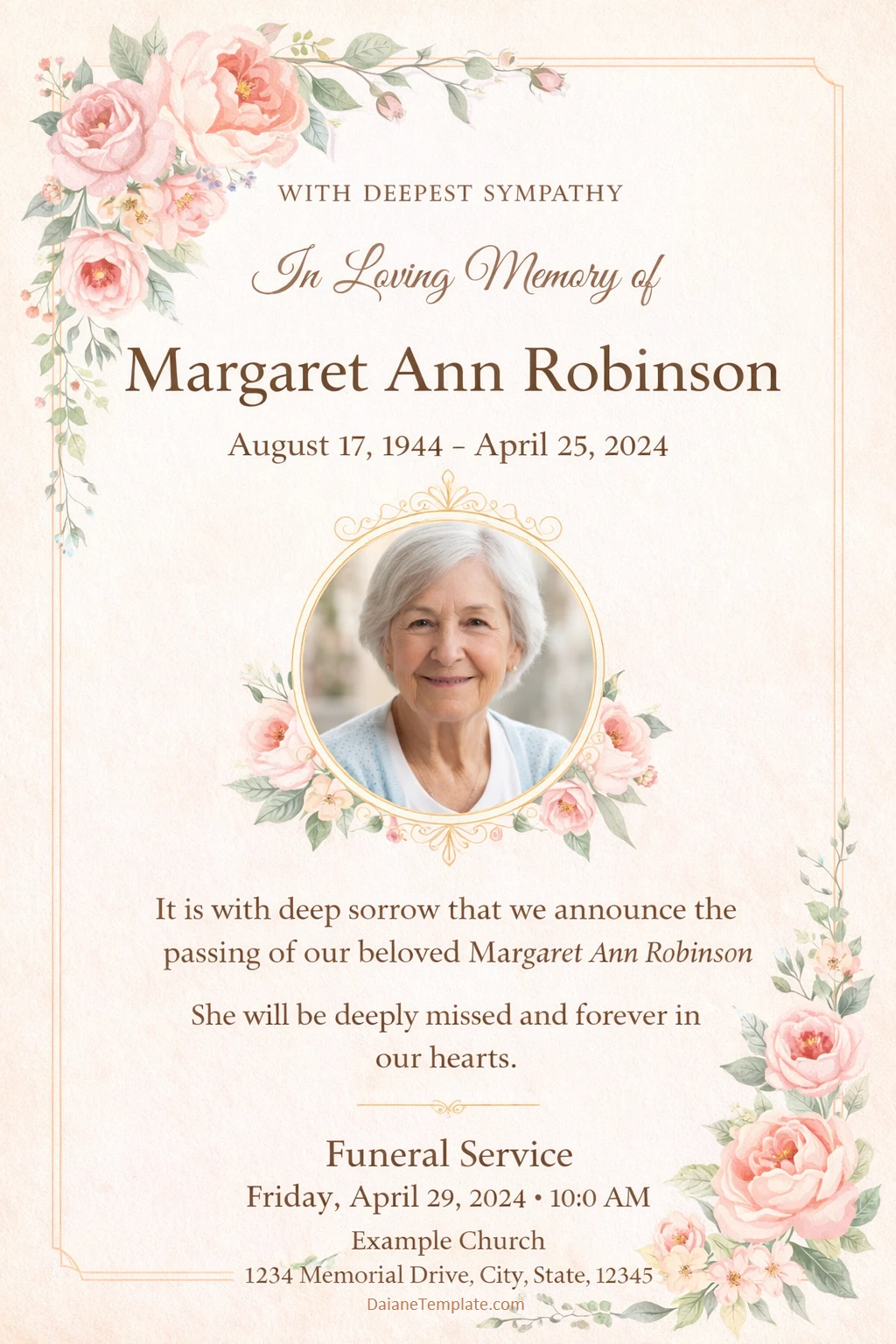
What is a Death Announcement?
When a loved one passes away, it can be a challenging and emotional time for family and friends. One way to formally inform the public, especially those who knew the deceased, about their passing is through a death announcement.
This serves as a notification, sharing essential details such as the date of death, funeral arrangements, and occasionally a brief message about the individual. Death announcements provide an opportunity for people to acknowledge the loss, pay their respects, and offer support to the grieving family.
Why are Death Announcements Important?
Death announcements play a crucial role in the grieving process. They serve as a way to inform a wider circle of acquaintances, friends, and community members about the passing of a loved one. This formal notification allows individuals to come together in support of the grieving family and to honor the memory of the deceased.
Furthermore, death announcements serve as a means of sharing important information regarding funeral arrangements, memorial services, and any other details that individuals may need to know to pay their respects or offer condolences. By providing these details, death announcements help to ensure that the community can come together to support the family during their time of loss.
Moreover, death announcements can also serve as a way to celebrate the life and legacy of the deceased. Including a brief message or tribute in the announcement allows friends and acquaintances to reflect on the impact that the individual had on their lives and on the community as a whole.
Where are Death Announcements Published?
Death announcements can be published in a variety of media, including local newspapers, online obituary websites, and social media platforms. Each of these media offers a different reach and audience, allowing for the announcement to reach a wide range of individuals who may have known the deceased.
- Local newspapers remain a traditional and widely used method for publishing death announcements. They provide a platform for the announcement to reach the local community, including friends, neighbors, and acquaintances who may not be active on social media or online platforms. Additionally, newspapers often have dedicated sections for obituaries and death announcements, making it easy for individuals to find the information.
- Online obituary websites have become increasingly popular for publishing death announcements. These platforms offer a more accessible and searchable way for individuals to find information about the deceased and to leave condolence messages for the family. Online obituaries can also include photos, videos, and guest books, providing a more interactive and personalized way to remember the deceased.
- Social media platforms such as Facebook, Twitter, and Instagram have also become common channels for sharing death announcements. These platforms allow for the announcement to reach a wider audience, including friends and acquaintances who may be geographically distant. Social media also provides a space for individuals to share memories, photos, and messages of condolence more immediately and interactively.
How to Write a Death Announcement
Writing a death announcement is a delicate and important task. It requires careful consideration of the language used, the details shared, and the overall tone of the message. Here are some tips on how to write a thoughtful and respectful death announcement:
1. Start with the Basics
Begin the announcement by stating the full name of the deceased, followed by the date of death. These basic details provide the necessary information for readers to understand the purpose of the announcement.
2. Include Personal Details
Share some personal details about the deceased, such as their age, hometown, and any significant relationships or achievements. These details help to paint a more complete picture of the individual and their life.
3. Share Funeral Arrangements
Provide information about the funeral or memorial service, including the date, time, and location. If there are any specific requests from the family, such as donations or flowers, be sure to include that information as well.
4. Add a Personal Message
Consider including a brief message or tribute to the deceased. This can be a favorite quote, a special memory, or a reflection on the impact that the individual had on others. A personal message adds a touch of warmth and humanity to the announcement.
5. Proofread and Edit
Before publishing the announcement, carefully proofread the text for any spelling or grammatical errors. Ensure that all details are accurate and that the tone of the message is appropriate for the occasion. It may also be helpful to have someone else read over the announcement for a fresh perspective.
6. Consider the Audience
Think about who will be reading the announcement and tailor the message to suit their expectations and needs. Consider the relationship that the readers had with the deceased and adjust the tone and content of the announcement accordingly.
7. Provide Contact Information
Include contact information for the family or a designated person who can be reached for condolences or further information. This allows individuals to offer their support and sympathy directly to the family during their time of loss.
8. Share on Multiple Platforms
Consider publishing the death announcement on multiple platforms to reach a wider audience. By sharing the announcement in local newspapers, online obituary websites, and social media platforms, you can ensure that the information reaches as many people as possible.
Overall, writing a death announcement is a deeply personal and meaningful task. By following these tips and guidelines, you can create a thoughtful and respectful announcement that honors the memory of the deceased and provides comfort to those who are grieving.
Death Announcement Template – DOWNLOAD
